Attractions and Places To See around Santa Olalla - Top 11
Best attractions and places to see around Santa Olalla include historical landmarks and religious sites. This municipality in the province of Toledo, Spain, is situated on a hill amidst agricultural fields, characterized by cereal fields and olive groves. The area offers insights into its historical importance and preserved heritage, with structures reflecting its seigneurial past. Visitors can explore a range of cultural and historical points of interest.
Best attractions and places to see around Santa Olalla
- The most popular attractions is Plaza de España and Monument to the Cross, Torrijos, a man-made monument that serves as a central point in Torrijos, a town known for its historical importance and services. It features various infrastructures including shops and hotels.
- Another must-see spot is Parish Church of Our Lady of the Assumption, a religious building. This 16th-century Renaissance-style church is a prominent feature of the town, standing on a hill amidst cereal fields and olive groves.
- Visitors also love San Silvestre Castle, a castle. The ruins of this 15th-century castle were built by Commander Gutierre de Cárdenas and are notable for their facade and layout.
- Santa Olalla is known for its historical buildings, religious sites, and castles. The area offers a variety of attractions to see and explore, from ancient churches to castle ruins.
- The attractions around Santa Olalla are appreciated by the komoot community, with more than 10 upvotes and 5 photos shared by visitors.
Last updated: June 24, 2026
Plaza de España and Monument to the Cross, Torrijos
Highlight • Monument
Its monuments, such as the palace of Pedro I or its collegiate church, testify to its historical importance since the Middle Ages.
Translated by Google •
Tip by

View of Caudilla's church and castle
Highlight • Castle
Translated by Google •
Tip by

Sign up now to discover places like this
Get recommendations on the best single tracks, peaks, & plenty of other exciting outdoor places.
Sign up for free
Parish Church of Our Lady of the Assumption
Highlight • Religious Site
Translated by Google •
Tip by
San Silvestre Castle
Highlight • Castle
Translated by Google •
Tip by
Cebolla Castle Ruins
Highlight • Castle
Translated by Google •
Tip by
Sign up for free to discover even more attractions around Santa Olalla.
Sign up for free
Already have an account?
Start today with a free account
Your next adventure awaits.
Login or Signup
Tips from the Community

Torrijos gives its name to its region in the plain between the Tajo and Alberche rivers. It is the natural center of trade in goods and services in this area of Toledo. With its population of almost 13,000 inhabitants, it has all the services of a small city and has direct communications by train and bus with the main cities of Toledo and Extremadura. Its monuments, such as the palace of Peter I or its collegiate church, testify to its historical importance since the Middle Ages.
1
0

Although the town of Caudilla is uninhabited, the ruins of the church remain there and even more striking are those of the Rivadeneyra castle, which was built in the 15th century and which curiously, after centuries of wars and attacks of the climate, is still standing. the figure of Christ at the top of its tower that makes it a very curious and striking place for many, especially for photography lovers looking for their best shot at night under a starry sky.
1
0
The ruins of the castle of San Silvestre date from the 15th century and it was built by Commander Gutierre de Cárdenas. Unlike the various castles that surround it, this one lacks a keep, although its façade and layout are similar to the others.
1
0
Although the town of Caudilla is uninhabited, the ruins of the church remain there and, even more striking, those of the castle of Rivadeneyra, which was built in the 15th century and which, curiously, after centuries of wars and harsh weather, still stands the figure of Christ at the top of its tower that makes it a very curious and striking site for many, especially for photography lovers who seek their best shot at night under a starry sky.
2
0
The parish church of San Cipriano stands on top of the hill where the town lies, standing out among olive and cereal fields irrigated with the waters of the nearby Tagus riverbed. Cebolla is part of the region of Talavera de la Reina and, among its narrow and twisting streets, you can find a variety of services for the intern.
1
0
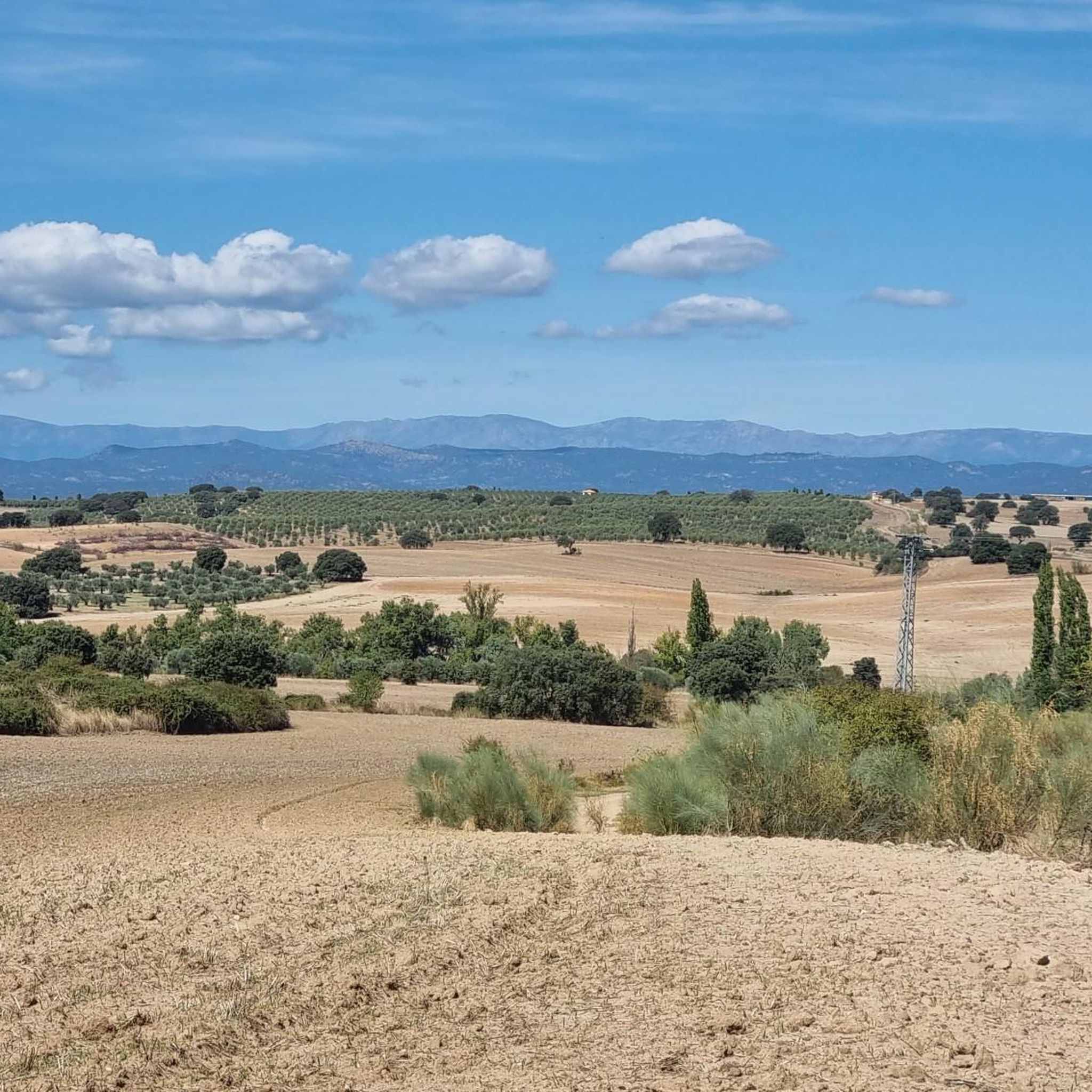
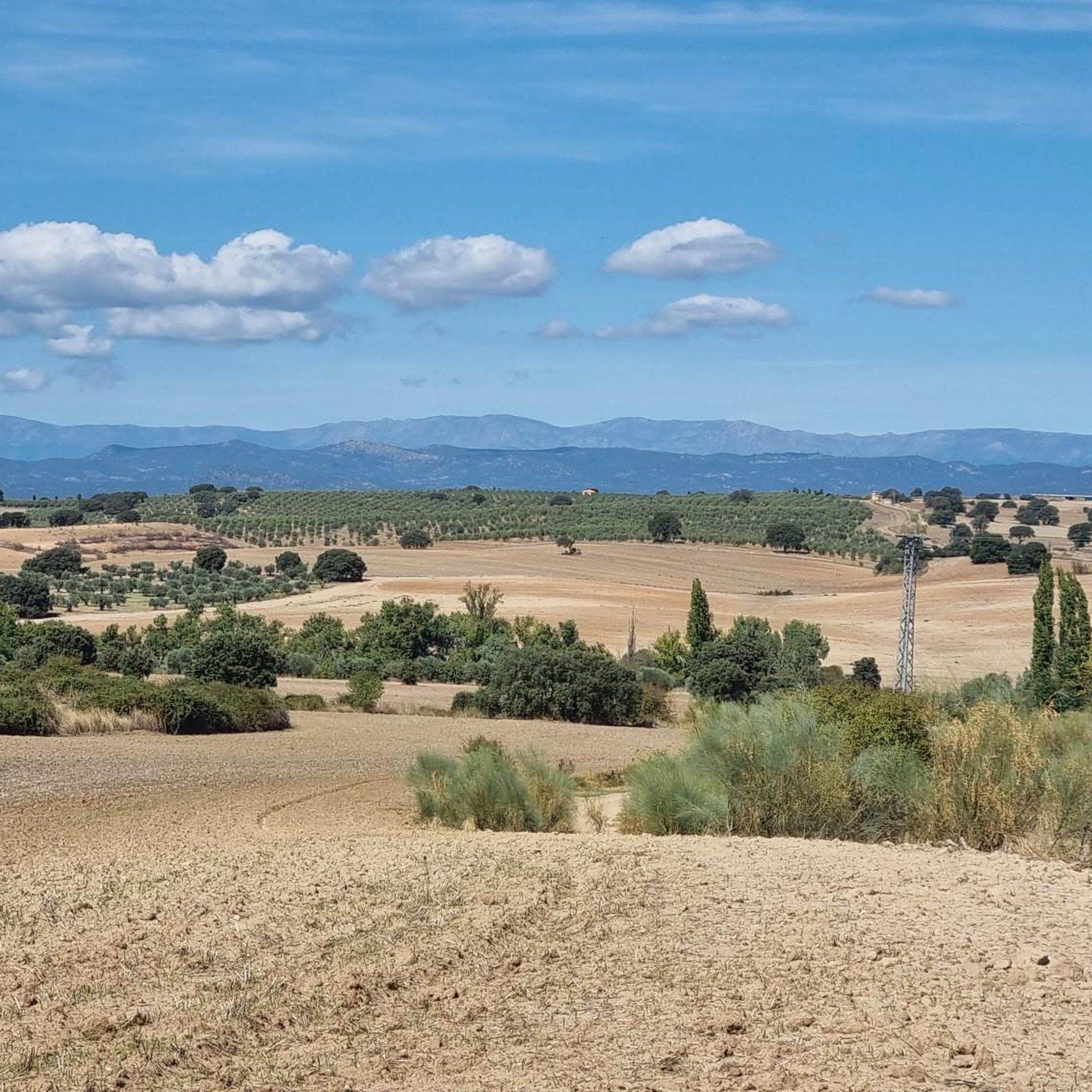
The town stands out on a hill in the middle of the cereal fields and olive groves. It is the typical rural enclave of the Toledo plain in which its parish church and the Quevedo house from the 16th century or the stately manor houses characterized by their double height, stately coats of arms and Arab tiles stand out.
1
0
Torrijos gives its name to its region in the plain between the Tagus and Alberche rivers. It is the natural center of trade in goods and services in this area of Toledo. With its population of almost 13,000 inhabitants, it has all the services of a small city and has direct communications by train and bus with the main cities of Toledo and Extremadura. Its monuments, such as the palace of Pedro I or its collegiate church, testify to its historical importance since the Middle Ages.
1
0

Highlight: Villalba Castle. The Palace of the Dukes of Frías. The hermitage of San Illán, where the Virgen de la Antigua, patron saint of the municipality, is found in a carving made in the 18th century by Luis Corsón. There is also an altarpiece and a collection of tiles from the same century; These tiles narrate episodes from the (legendary) life of San Illán, who is identified as the son of San Isidro Labrador, without knowing the origin of this tradition, which is very late.[4] The hermitage of San Blas. The parish church of San Cipriano. The roll of Justice.
1
0
Frequently Asked Questions
What historical landmarks can I explore around Santa Olalla?
Santa Olalla and its surroundings are rich in history. You can visit the ancient San Silvestre Castle, dating from the 15th century, notable for its unique facade and layout. Another significant site is the Cebolla Castle Ruins, which also offers a glimpse into the region's past. Within Santa Olalla itself, the Iglesia de San Pedro Apóstol, with origins from the 11th century and a distinctive Mudejar-style bell tower, is the oldest building.
Are there any religious sites or churches worth visiting in the area?
Yes, the region features several notable religious buildings. The Parish Church of Our Lady of the Assumption, a 16th-century Renaissance-style church, stands prominently on a hill. In Santa Olalla, you can also find the Ermita de San Illán, which houses the Virgen de la Antigua and features 18th-century carvings and tiles. The Ermita de San Blas, known for its devotion to Saint Blas, and the Ermita de San Sebastián, which contains a carving attributed to El Greco's son, are also significant.
What are some family-friendly attractions near Santa Olalla?
For family outings, the Plaza de España and Monument to the Cross, Torrijos is a central point in Torrijos with various infrastructures including shops and hotels, making it a convenient stop. The Torrijos Town Center itself is also considered family-friendly, offering a chance to explore the town's architectural heritage.
What kind of outdoor activities can I do around Santa Olalla?
The area around Santa Olalla is suitable for various outdoor activities. You can find numerous routes for road cycling, touring cycling, and running. For instance, there are easy road cycling routes like 'Villamiel, Huecas y Fuensalida – circular from Torrijos' and moderate touring cycling routes such as 'Torrijos a Carmena – circular route'. Runners can enjoy routes like the 'Torrijos Town Center loop from Torrijos'. You can explore more options on the dedicated guides for Road Cycling Routes around Santa Olalla, Cycling around Santa Olalla, and Running Trails around Santa Olalla.
Are there any specific walking or hiking trails near Santa Olalla?
While specific hiking trails are not detailed, the region offers several running and cycling routes that can be adapted for walking. For example, the 'Running loop from Santa Olalla' is a moderate 5.12 km route that provides a good option for a walk. You can find more walking-friendly routes in the Running Trails around Santa Olalla guide.
What natural features characterize the Santa Olalla region?
Santa Olalla is situated on a hill amidst agricultural fields, primarily characterized by cereal fields and olive groves. The broader region of Toledo, where Santa Olalla is located, is known for its plains between the Tagus and Alberche rivers, offering a typical rural landscape of the Toledo plain.
What is the significance of the Ayuntamiento de Santa Olalla?
The Ayuntamiento de Santa Olalla (Town Hall) is housed in a modern building inaugurated in 1980. Its facade uniquely features the Canseco clock, with its bell and belfry, which is the only surviving element from the old town hall buildings. This tower clock, manufactured by Antonio Canseco Escudero, was installed in 1900 and its old machinery was restored and put on display in 2020.
Are there any monuments related to justice or local governance in Santa Olalla?
Yes, the Rollo de Justicia (Pillory of Justice) is a historical monument listed among the notable sites in Santa Olalla. These types of monuments historically symbolized the administrative and judicial autonomy of a town.
What do visitors enjoy most about the attractions around Santa Olalla?
Visitors appreciate the historical importance and preserved heritage of the area. The attractions, ranging from ancient churches to castle ruins, offer insights into Santa Olalla's seigneurial past. The komoot community has shown its appreciation with over 10 upvotes and 5 photos shared, highlighting the appeal of these cultural and historical points of interest.
Are there any attractions that are wheelchair accessible?
Yes, the Plaza de España and Monument to the Cross, Torrijos is categorized as wheelchair accessible, making it a suitable option for visitors with mobility needs.
What is the best way to experience the historical importance of Torrijos?
To experience the historical importance of Torrijos, you should visit the Torrijos Town Center. It boasts an enormous architectural heritage, including the train station, the parish church with its ancient organ, and the palace of Pedro I, all testifying to its significance since the Middle Ages.
Most popular attractions around Santa Olalla

Get inspired with the komoot mobile app


Explore more
Still not found the Highlight you’re looking for? See guides of the top attractions in other regions:
