The best cycling routes around Terrades
4.2
(244)
2,440
riders
209
rides
Touring cycling routes around Terrades are situated within the Alt Empordà region of Catalonia, characterized by a small valley nourished by the Rissec and Murga rivers. The landscape features a mix of cultivated lands and natural environments, providing varied terrain for cyclists. The area is part of the Consorci Salines-Bassegoda, offering routes that traverse diverse natural settings. Cyclists can expect paths that wind through agricultural fields and natural areas, with some elevation changes.
Best touring cycling routes around Terrades
- A…
Last updated: August 20, 2026
5.0
(4)
28
riders
40.8km
03:09
220m
400m
Moderate bike ride. Good fitness required. Mostly paved surfaces. Suitable for all skill levels.
4.7
(10)
72
riders
31.0km
02:39
630m
630m
Hard bike ride. Very good fitness required. Mostly paved surfaces. Suitable for all skill levels.

Sign up for free
26
riders
38.7km
02:41
680m
680m
Hard bike ride. Very good fitness required. Mostly paved surfaces. Suitable for all skill levels.
5.0
(1)
24
riders
Moderate bike ride. Good fitness required. Mostly paved surfaces. Suitable for all skill levels.
16
riders
43.5km
04:25
1,290m
1,290m
Hard bike ride. Very good fitness required. You may need to push your bike for some segments of this route.
Get access to more routes and recommendations from other explorers.
Sign up for free
Already have an account?
Our route recommendations are based on thousands of hikes, rides, and runs completed by other people on komoot.
Start today with a free account
Your next adventure awaits.
Login or Signup
Tips from the Community


This pass was important as a passage between regions, especially in activities such as transhumance or the transport of goods. The snow wells that give the place its name were also key elements in the economy of the mountainous areas. The term "Pou de la Neu" refers to the snow or ice wells that were traditionally used to store snow during the winter. These structures, dug into the ground or built with stones, served to preserve ice that was later transported to the lower areas for use in food, medicine or food preservation.
1
0

La Resclosa del Molí de Calvet, located in the charming town of Pont de Molins, is a place of great natural beauty and historical value. This dam, built on the Muga River, originally served to divert water to the old Calvet mill, which was an integral part of the agricultural and economic life of the region. Today, the resclosa is a point of tourist interest and an excellent example of Girona's hydraulic heritage, offering visitors a glimpse into the ingenuity and history of the ancient irrigation systems and mills. In addition to its historical interest, the Resclosa del Molí de Calvet is a perfect place for rest and recreation. Next to the rest area, there is a rest area equipped with tables, ideal for enjoying a picnic in a quiet and picturesque environment. This space offers visitors the opportunity to relax by the river, enjoy nature and recharge before continuing to explore the region. It is a popular destination for families as well as hikers and cyclists who travel the nearby routes, providing a welcoming respite amidst the natural landscape of Pont de Molins.
1
0
The Muga Natural Trail is a spectacular route that invites hikers and cyclists to discover the beauty of the Girona regions. This trail follows the course of the Muga River, offering a route of approximately 40 kilometers that connects the mouth in Empuriabrava with the Pyrenees mountains. One of the most notable features of this path is the impressive panoramic view of the Pyrenees. The path passes through a variety of landscapes, from forested areas and agricultural fields to charming rural villages, allowing users to enjoy the biodiversity and cultural richness of the region. The combination of varied landscapes and impressive views of the Pyrenees makes this path a gem to discover in Girona.
0
0
The Muga River is a natural jewel that winds its way through the region of l'Alt Empordà, offering varied landscapes and rich biodiversity. Born in the foothills of the Pyrenees, the Muga River flows for approximately 58 kilometers before reaching its final destination in the Mediterranean Sea, specifically in the urbanization of Empuriabrava, in the municipality of Castelló d'Empúries. The mouth of the Muga River in Empuriabrava is a spectacle in itself. Empuriabrava is known as the "Venice of the Mediterranean" due to its extensive network of navigable canals, and the point where the river meets the sea becomes a meeting point of fresh and salt waters. This area is particularly popular among water sports enthusiasts, such as sailing and kitesurfing, thanks to the favorable wind and water conditions. Furthermore, the mouth of the Muga and its surroundings are part of the Aiguamolls de l'Empordà Natural Park, one of the most important wetlands in Catalonia. This park is a vital refuge for numerous species of migratory birds and a spectacular display of the region's natural beauty.
0
0

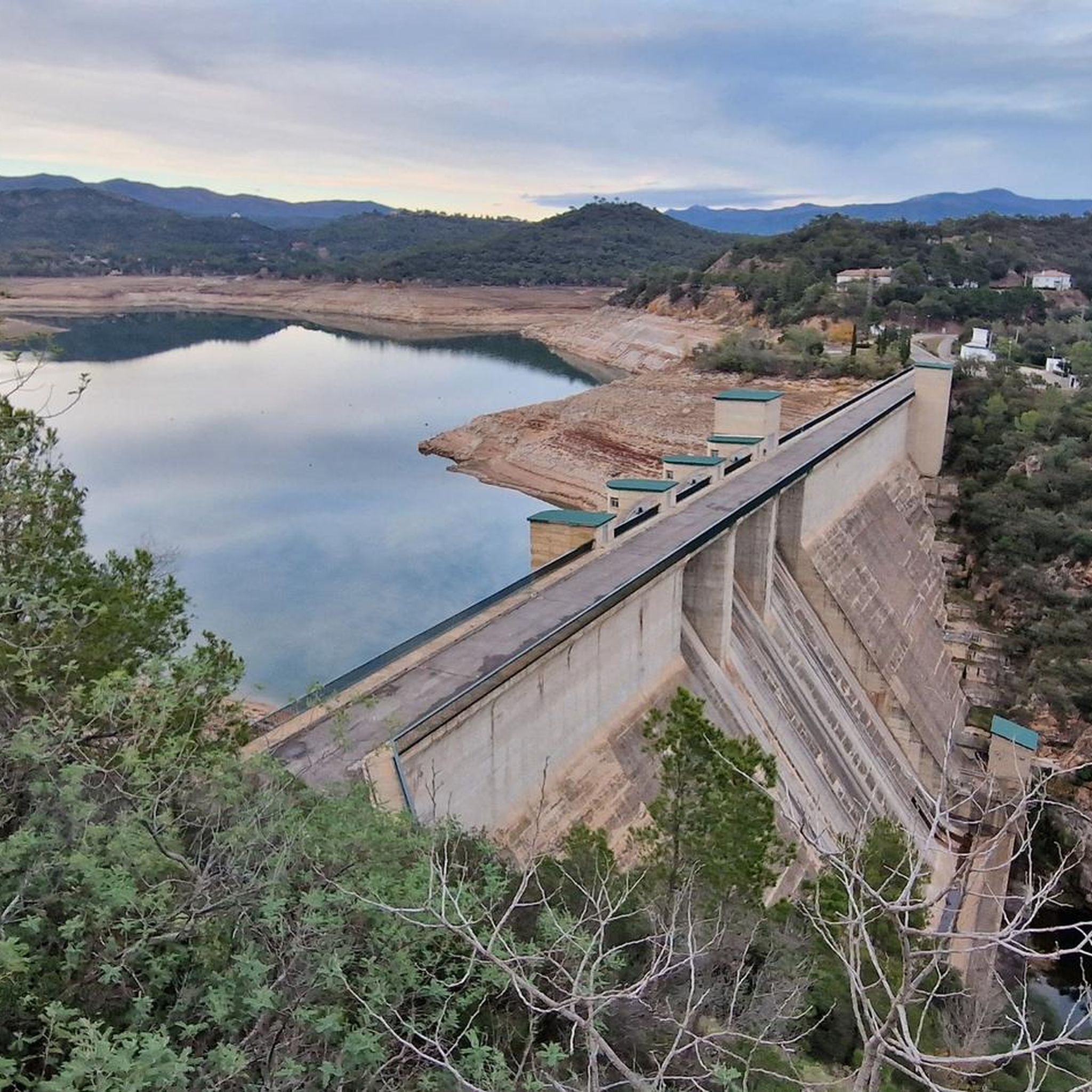
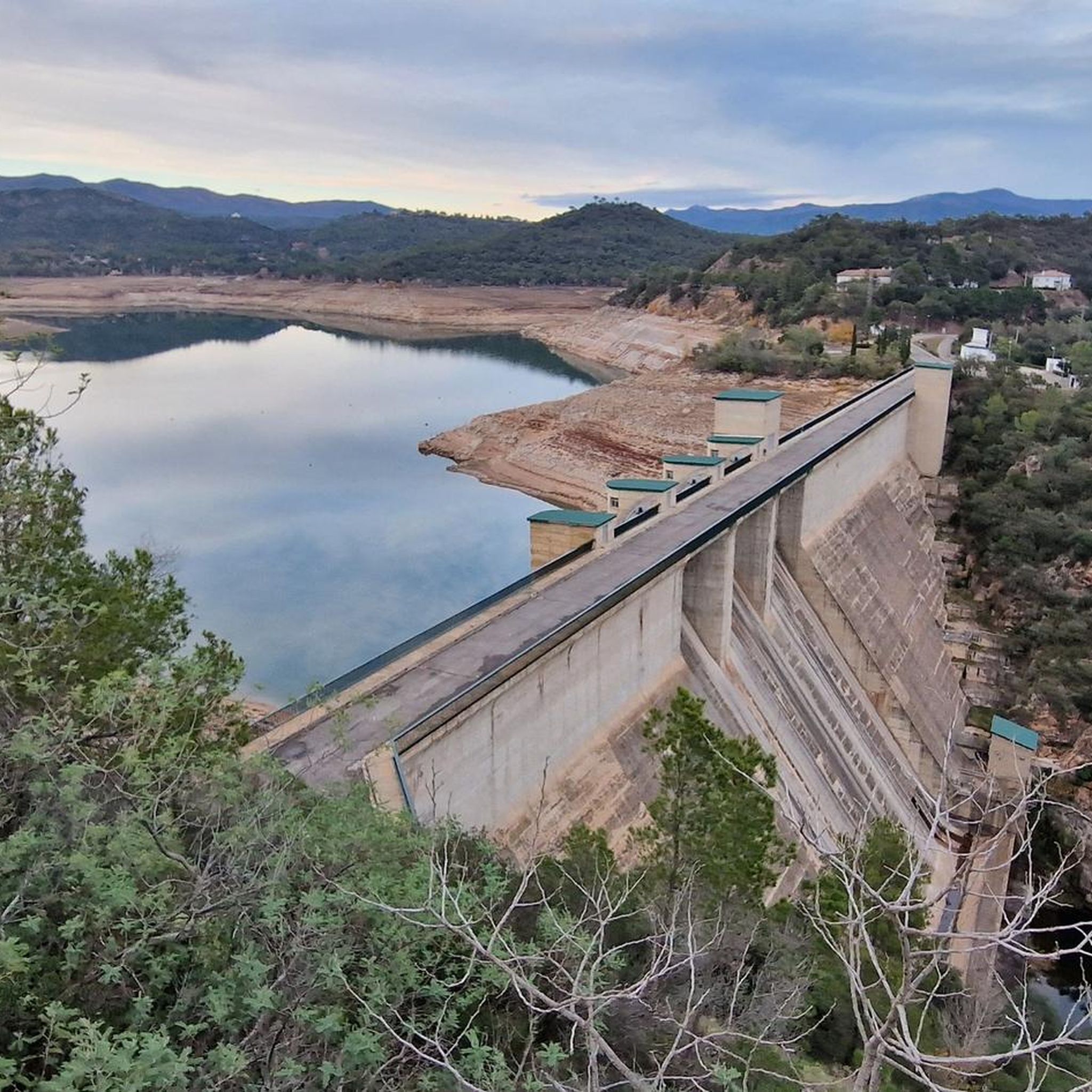
the dam of the reservoir
0
0
A few years ago, the route of the road was moved about 200 m to the east and a new bridge was built. Part of the three-arched structure from the 16th century is preserved from the old bridge. XVIII. The old town of Molins, also called Molins de Dalt, is located 1 km west of Pont de Molins. Near the church there is a small group of houses from the 17th and 18th centuries. The parish church of San Sebastián was completed in 1789, a date that appears on the door lintel. A few meters north of the canonical church of El Roble, is the sanctuary of the Virgen del Roble (17th century). We find the ruins of the monastery of Santa Maria del Roure 1 km north of Molins, at the top of a hill. It is worth highlighting the parish church of San Sebastián (18th century), and, near the Muga, in different places in the area, remains of old mills, the best preserved of those found to the left of the river, between Pont de Molins and Molins. Molins Castle is located in front of the Molins neighborhood. Several elements remain, such as the tower, walls and the remains of its Romanesque chapel. It was part of the defensive system of Llers (the term to which it belonged) and was one of the eleven castles that surrounded this town. It is known for the Buac tower. In this half-destroyed castle there are remains from the 11th-12th centuries.
1
0
The Old Bridge of Puente de Molins, over the Muga River, is a historical work that gave its name to the municipality and that linked the new town with the old town of Molins. It is protected as a cultural asset of local interest. It is located in the center of the town, on the Muga. A few years ago, the route of the road was moved about 200 m to the east and a new bridge was built. Part of the three-arched structure from the 16th century is preserved from the old bridge. XVIII. The old town of Molins, also called Molins de Dalt, is located 1 km west of Pont de Molins. Near the church there is a small group of houses from the 17th and 18th centuries. The parish church of San Sebastián was completed in 1789, a date that appears on the door lintel. A few meters north of the canonical church of El Roble, is the sanctuary of the Virgen del Roble (17th century). We find the ruins of the monastery of Santa Maria del Roure 1 km north of Molins, at the top of a hill. It is worth highlighting the parish church of San Sebastián (18th century), and, near the Muga, in different places in the area, remains of old mills, the best preserved of those found to the left of the river, between Pont de Molins and Molins. Molins Castle is located in front of the Molins neighborhood. Several elements remain, such as the tower, walls and the remains of its Romanesque chapel. It was part of the defensive system of Llers (the term to which it belonged) and was one of the eleven castles that surrounded this town. It is known for the Buac tower. In this half-destroyed castle there are remains from the 11th-12th centuries.
3
0
Frequently Asked Questions
How many touring cycling routes are available around Terrades?
There are over 200 touring cycling routes around Terrades, offering a wide variety of options for different skill levels and preferences. The komoot community has explored these routes over 2000 times.
What is the general difficulty level of touring cycling routes in Terrades?
The routes around Terrades cater to various abilities. You'll find approximately 30 easy routes, over 100 moderate routes, and around 80 difficult routes, ensuring options for beginners to advanced cyclists.
What kind of terrain can I expect on touring cycling routes around Terrades?
Touring cycling routes in Terrades traverse a diverse landscape. You can expect paths winding through cultivated agricultural fields, natural environments, and river valleys nourished by the Rissec and Murga rivers. The region, part of the Consorci Salines-Bassegoda, features picturesque surroundings with some elevation changes.
Are there any circular touring cycling routes in the area?
Yes, many routes are designed as loops. For example, the Darnius-Boadella Reservoir – Camino Serra d'en Jordà loop from les Escaules is a popular moderate option, and the more challenging Pou de la Neu Pass – Puig del Faig loop from Darnius offers extensive views.
What natural attractions or scenic viewpoints can I see while cycling around Terrades?
The region offers several natural highlights. You can cycle past the Gorges of Albanyà, or visit the La Caula Waterfall. For panoramic views, the Hermitage of Santa Magdalena, perched on a rocky promontory, provides impressive vistas of the region. Some routes, like the Old Bridge – Darnius-Boadella Reservoir loop from Darnius, offer views of the Darnius-Boadella Reservoir.
Are there any historical landmarks or points of interest along the touring cycling routes?
Yes, the area features several points of interest. You might encounter the Bac Grillera Castle or the Sanctuary of Mare de Déu del Mont. The Hermitage of Saint Anthony – Gorges of Albanyà loop from Sant Llorenç de la Muga specifically passes by the Hermitage of Saint Anthony.
What do other touring cyclists enjoy most about cycling in Terrades?
The area is highly rated by the komoot community, with an average score of 4.3 stars from over 200 reviews. Cyclists often praise the varied terrain, the mix of cultivated lands and natural environments, and the serene atmosphere that makes Terrades an excellent base for exploring the Alt Empordà region.
Are there any easy touring cycling routes suitable for beginners or families?
Yes, there are approximately 30 easy routes available. While specific family-friendly routes are not detailed, many of the easier options that traverse cultivated fields and river valleys would be suitable for those seeking a less strenuous ride. Look for routes with lower elevation gain and shorter distances.
What is the best time of year for touring cycling around Terrades?
Given its location in Catalonia, Terrades generally offers pleasant cycling conditions for much of the year. Spring and autumn typically provide mild temperatures and beautiful scenery, making them ideal for touring cycling. Summers can be warm, so early morning or late afternoon rides are recommended during peak season.
Are there options for more challenging touring cycling routes?
Absolutely. For experienced riders seeking a challenge, there are around 80 difficult routes. An example is the Refugi Bassegoda Can Galan – View of Bassegoda loop from Sant Llorenç de la Muga, which features significant elevation changes and covers a longer distance.
Can I find cafes or accommodation along the cycling routes in Terrades?
Terrades is a tranquil village, and while specific cafes or accommodations directly on every route are not listed, the village itself and surrounding towns in the Alt Empordà region offer amenities. Cyclists can plan their routes to pass through villages for refreshment stops or to find lodging.
Most popular attractions around Terrades

Get inspired with the komoot mobile app


Explore more
Browse the best Cycling routes in other regions.
