Attractions and Places To See around Marquina-Jeméin - Top 20
Best attractions and places to see around Marquina-Jeméin include a rich tapestry of historical, cultural, and natural sites. The town features a medieval urban plan with numerous architectural treasures and is a significant stop on the Northern Way of the Camino de Santiago. Situated between the Artibai and Urko rivers, it is surrounded by hills and mountains, offering diverse landscapes. This region provides a blend of well-preserved historical buildings and unique natural features for exploration.
Best attractions and places to…
Last updated: August 30, 2026
Monastery of Santa María de Zenarruza
Highlight • Religious Site
Translated by Google •
Tip by

Artzubi Bridge
Highlight • Bridge
The itinerary of the Camino de Santiago from the north or from the coast runs over it.
Translated by Google •
Tip by

Sign up now to discover places like this
Get recommendations on the best single tracks, peaks, & plenty of other exciting outdoor places.
Sign up for free
Oma Forest
Highlight • Forest
Translated by Google •
Tip by

Old Railway Tunnel
Highlight • Structure
Translated by Google •
Tip by

Strand van Karraspio
Highlight • Beach
Translated by Google •
Tip by

Sign up for free to discover even more attractions around Marquina-Jeméin.
Sign up for free
Already have an account?
Start today with a free account
Your next adventure awaits.
Login or Signup

Tips from the Community


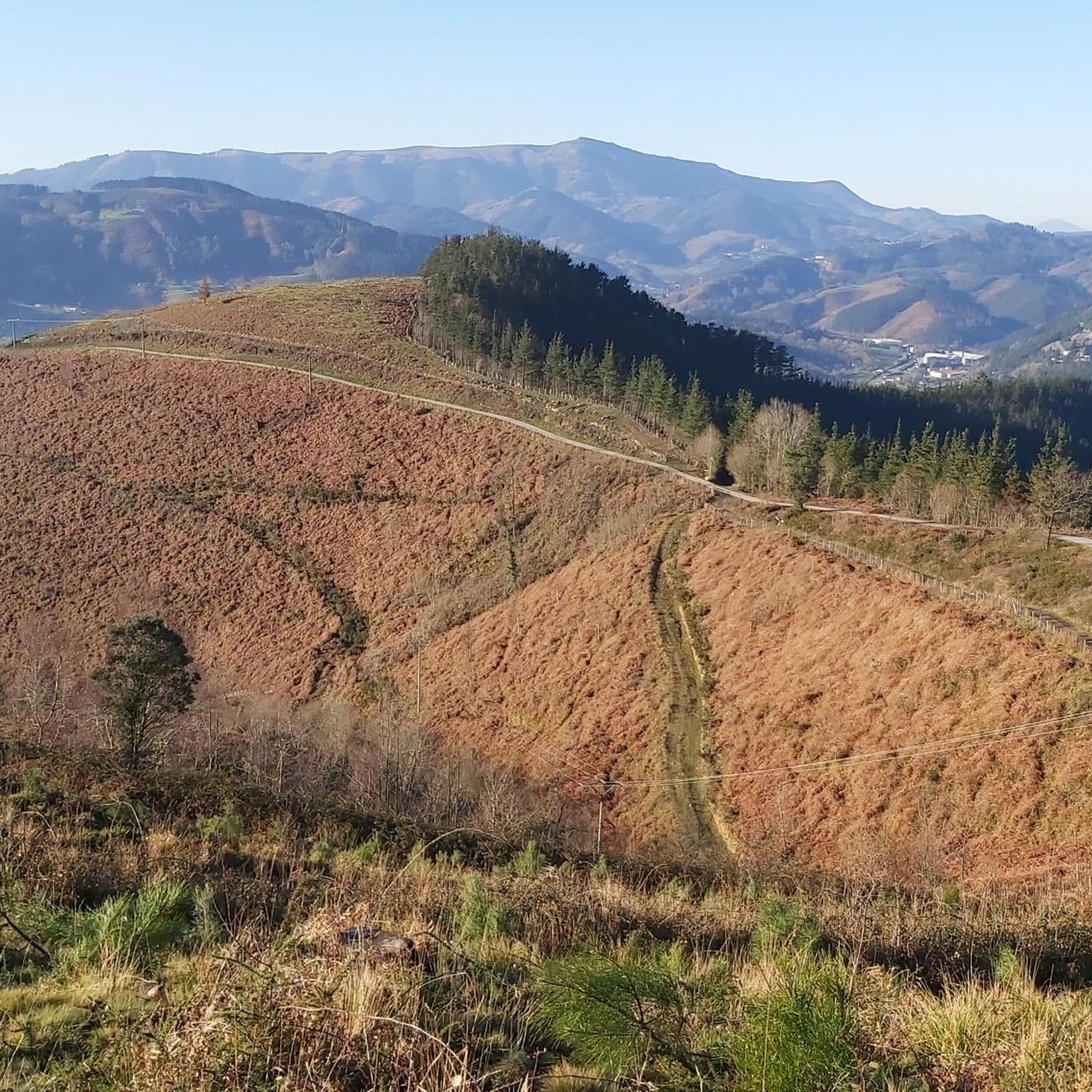
Enjoy this 8.9-kilometer route near Deba, Gipuzkoa. The route is generally classified as difficult and can usually be completed in 3 hours 17 minutes. Although the route is ideal for trekking and hiking and is often busy, you can enjoy a bit of peace here at the right time of day. This linear route is recommended for experienced hikers who want to enjoy beautiful views in the protected biotope of the Deba-Zumaia coastal section/arteko itsasertzeko Babestutako Biotopoa. The hike starts in Elorriaga and goes along the "GR®121 Gipuzkoa Tour"/"GR®121 Gipuzkoako bira" to Deva, passing by Sakoneta, the Mendata waterfall, Arranomendi, the hermitage of Santa Katalina and the Santiago de Deba beach
1
0
The Oma Forest - Omako basoa in Basque - is also known as the painted forest, the enchanted forest or even the Ibarrola Forest. Its most common name - Oma Forest - refers to the district in which it is located, which belongs to the municipality of Kortezubi. This original work of art was created between 1982 and 1985, when the Basque painter and sculptor Agustín Ibarrola used the trunks of trees as a kind of canvas for a total of 47 images. On them he painted animals, geometric figures and people, or just parts of them, such as eyes and lips. In addition, many of the compositions do not consist of a single tree, but must be viewed in the context of several tree trunks. To do this, you must pay attention to the signs on the ground that tell the viewer where to stand in order to enjoy the whole image.
1
0

A peaceful, pretty and quiet walk. Recommended with children.
0
0

In 1982, artist Agustín Ibarrola began painting the pine trees in the forest near his homestead with the intention of using the landscape as a canvas to give continuity to his artistic expression. It is at this moment when he decides to break the law of perspective and transgress the three-dimensionality of a white line until it becomes two-dimensional. From then on, he explored the possibilities offered by the arrangement of the forest trees, playing with the different planes of depth and creating artistic sets composed of human figures, curves or straight lines, and circles of intense colors. The ideas and concepts that it develops become more complex and advances in various directions as the painted forest expands. With the help of two students from the Faculty of Fine Arts of the UPV/EHU, he carried out a large part of the work that was open to the public until 2018, at which time the biological cycle of the forest came to an end. Given the importance that the work had acquired, the Provincial Council of Bizkaia began the process of making the Forest last, for which it had from the first moment the support of the artist who had made clear his desire for the forest to survive. In this way and in order to preserve El Bosque de Oma, the Ibarrola work has been moved to a new location, also recovering original artistic ensembles lost due to felling, attacks and natural tree falls. Today we can enjoy El Bosque de Oma more complete and more faithful to the artist's original idea.
1
0
The Forest of Oma is one of the best-known works of the Basque artist Agustín Ibarrola and is an expression of the artistic movement known as Art and Nature, which emerged in the late sixties of the 20th century and whose purpose is to convey artistic work to the natural environment, using the landscape as a framework, support and raw material for the artist. The work, located in the town of Kortezubi (Bizkaia), is made up of several sets of geometric motifs and figures painted on the trunk of radiata pine trees. The use of natural living supports, the play of two-three-dimensionality and the experience of placing the visitor at the center of the work of art through his discovery, as well as the diversity of responses it proposes, make this work a reference of the Art and Nature movement and of Basque Art in particular.
1
0

You can easily walk through the old railway tunnel.
1
0

This bridge is an incredible find in the middle of the forest. It is covered with ivy and in summer it is so green that it is hardly visible. If you go down next to the river you can take some great photos with the water and the bridge. For many years this bridge has had to survive numerous floods. It's amazing that he's still here.
1
0
Frequently Asked Questions
What unique natural attractions can I explore around Markina-Xemein?
You can visit the Oma Forest, also known as the painted forest, where geometric motifs and figures are painted on tree trunks, creating a unique art and nature experience. The region is also characterized by the convergence of the Artibai and Urko rivers, surrounded by hills and mountains, offering picturesque natural scenery.
What historical and cultural sites are prominent in Markina-Xemein?
Markina-Xemein boasts a rich history. Key sites include the 16th-century Iglesia Parroquial de Nuestra Señora de la Asunción, a National Monument with a striking Renaissance altarpiece. The adjacent Cemetery of Markina-Xemein is another National Monument, showcasing Neoclassic design. You can also explore the Monastery of Santa María de Zenarruza, an ancient collegiate church and significant stop on the Camino de Santiago.
Are there any family-friendly attractions or activities in the area?
Yes, the Oma Forest is considered family-friendly, offering an engaging outdoor art experience. The Monastery of Santa María de Zenarruza is also recommended for families, providing a peaceful and pretty walk. Additionally, Markinako zelaia is a local park suitable for walking and family activities, featuring natural scenery and a playground.
What outdoor activities, like hiking or running, are available near Markina-Xemein?
The area around Markina-Xemein offers various outdoor activities. For hiking, you can explore trails like the 'Urregarai and Santa Eufemia Trail' or the 'Ansotegui Palace loop from Markina-Xemein'. Runners can find routes such as the 'Sanmartinburu – Urko loop from Ermua'. You can find more details and routes on the Hiking around Marquina-Jeméin and Running Trails around Marquina-Jeméin guide pages.
Can I find cycling routes around Markina-Xemein?
Yes, there are several cycling routes available. You can try the 'Itsasaurre Bridge – Lekeitio loop from Ziortza-Bolibar' or the 'Coastal Road Ondarroa–Lekeitio – Old Bridge of Ondarroa loop from Berriatua'. For more options and detailed routes, visit the Cycling around Marquina-Jeméin guide page.
What is the significance of the Hermitage of San Miguel de Arretxinaga?
The Hermitage of San Miguel de Arretxinaga is unique for its altar, which is formed by three huge natural rocks. Local legends suggest that those who pass under these rocks three times without touching them will find a partner within a year, adding a mystical element to this site.
Are there any notable bridges or architectural marvels in the region?
Yes, the Artzubi Bridge is a beautiful 16th-century Romanesque bridge that blends seamlessly with its natural surroundings and is part of the Camino de Santiago route. Markina-Xemein is also known for its majestic mansions and palaces, such as Solariekua Palace (now the Town Hall) and Murga Palace.
What is the 'University of Pelota' and its connection to Markina-Xemein?
Markina-Xemein is renowned for its strong connection to Basque handball (pelota). Its pelota court is famously known as the 'University of Pelota' because of the large number of professional players, especially in Jai alai, who have originated from this town. Jai alai is a fast-paced sport played with a wicker basket.
What is the best time to visit Markina-Xemein for outdoor activities?
Markina-Xemein's location between the sea and mountains makes it appealing for outdoor activities throughout much of the year. Spring and autumn generally offer pleasant temperatures for hiking, cycling, and exploring the natural landscapes without the intense heat of summer or the chill of winter. The Camino de Santiago route is also popular during these seasons.
What can I expect from the Camino de Santiago route through Markina-Xemein?
Markina-Xemein is a significant stop on the Northern Way of the Camino de Santiago. The route through the municipality offers beautiful countryside and spectacular views as it winds between the Lea and Artibai rivers, providing a blend of natural beauty and historical pilgrimage experience.
Are there any coastal attractions near Markina-Xemein?
While Markina-Xemein is inland, it's not far from the coast. You can visit Strand van Karraspio (Lekeitio beach), which offers walking areas, bars, restaurants, and amenities like lifeguards and public facilities. It's known for its different scenery during low and high tide.
What are some lesser-known or 'hidden gems' to discover?
Beyond the main attractions, consider exploring the Sendero del Urko, a path running parallel to the Urko stream. It showcases natural landscapes, old watermills, ancient walls, and abandoned ironworks, offering a glimpse into the region's industrial past amidst nature. The Goiko Portala Fountain, a civil work from 1787 in the main square, also represents a historical engineering feat.
Most popular routes around Marquina-Jeméin
Most popular attractions around Marquina-Jeméin

Get inspired with the komoot mobile app


Explore more
Still not found the Highlight you’re looking for? See guides of the top attractions in other regions:
