The best cycling routes around Hueva
5.0
(1)
35
riders
9
rides
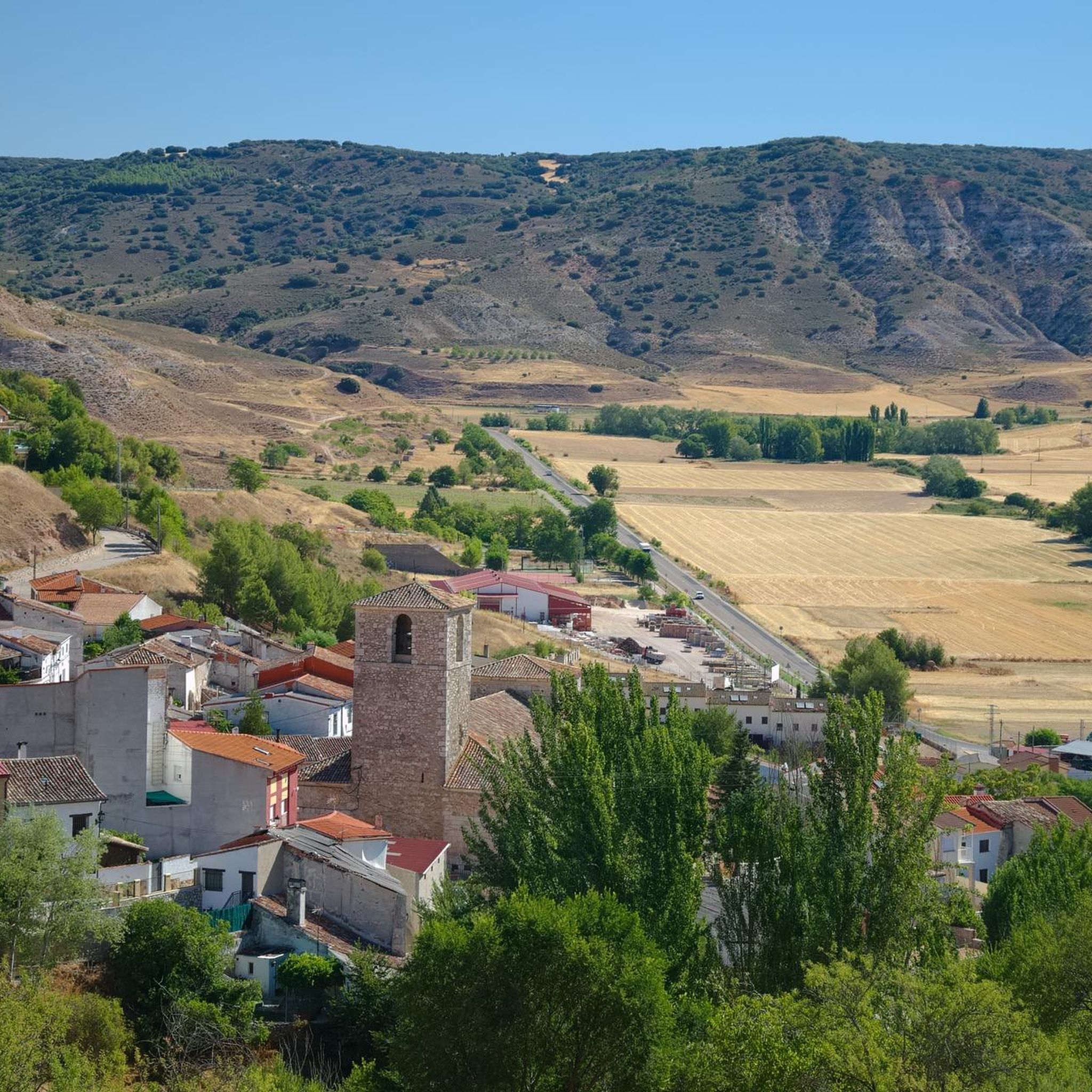
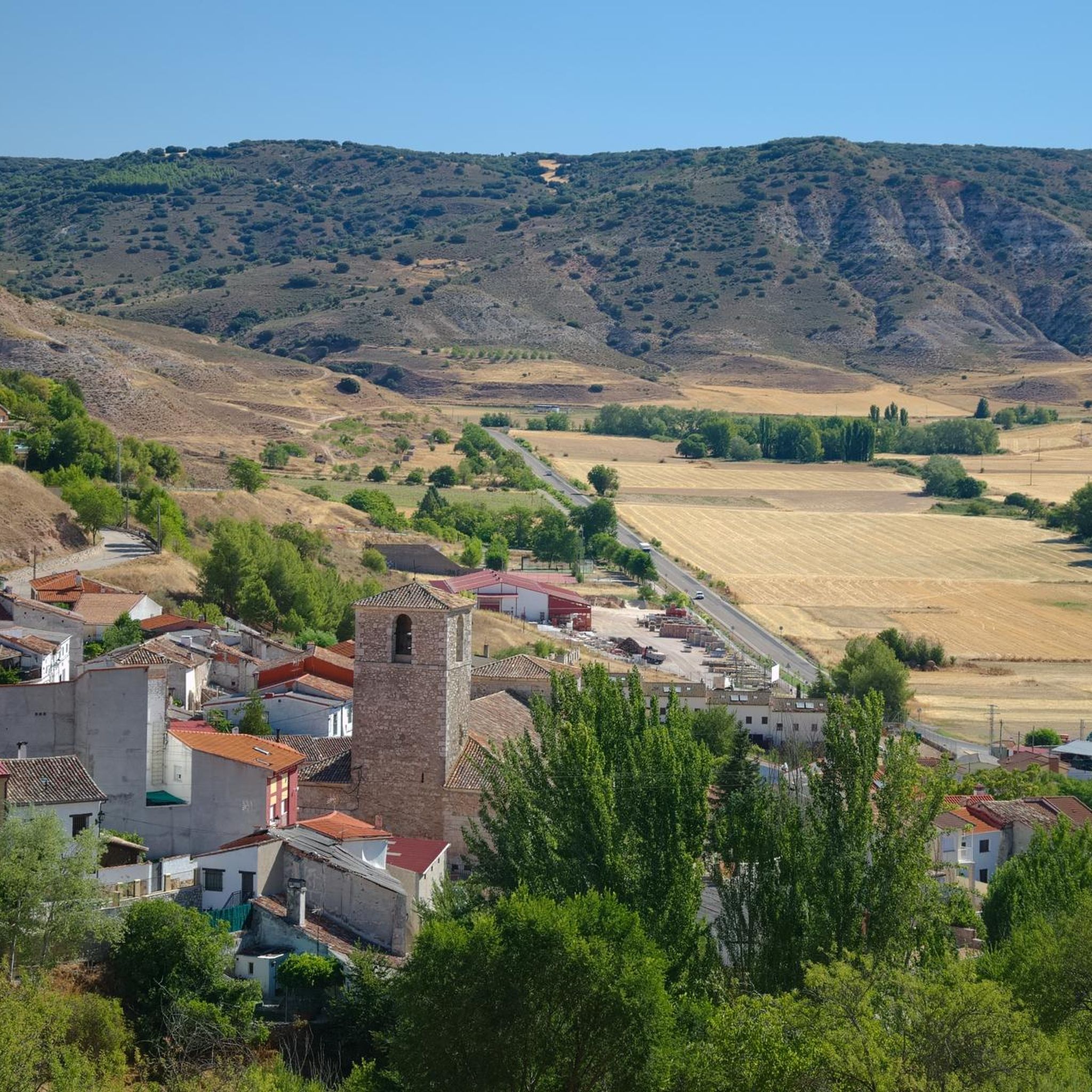
Touring cycling routes around Hueva traverse a landscape characterized by rolling hills and rural villages, offering varied terrain for cyclists. The region features routes that often include significant elevation gains, indicating a hilly environment. These paths connect various local points of interest, such as village centers and natural features, providing a blend of physical challenge and scenic exploration.
Best touring cycling routes around Hueva
- The most popular touring cycling route is Pastrana – Pastrana Village Center loop from Pastrana,…
Last updated: July 11, 2026
13
riders
44.7km
04:34
1,040m
1,030m
Hard bike ride. Very good fitness required. Mostly paved surfaces. Suitable for all skill levels.
4
riders
30.7km
01:56
320m
320m
Moderate bike ride. Good fitness required. Mostly paved surfaces. Suitable for all skill levels.

Sign up for free
5.0
(1)
4
riders
40.9km
02:40
570m
570m
Hard bike ride. Very good fitness required. Mostly paved surfaces. Suitable for all skill levels.
3
riders
57.4km
03:37
650m
660m
Hard bike ride. Very good fitness required. Mostly paved surfaces. Suitable for all skill levels.
3
riders
60.5km
03:48
690m
690m
Hard bike ride. Very good fitness required. Mostly paved surfaces. Suitable for all skill levels.
Get access to more routes and recommendations from other explorers.
Sign up for free
Already have an account?
Our route recommendations are based on thousands of hikes, rides, and runs completed by other people on komoot.
Start today with a free account
Your next adventure awaits.
Login or Signup
Popular around Hueva

Tips from the Community

The town square is charming, with a fountain and a bar where we can cool off.
0
0

Pastrana, known for the Duchess of Éboli, in an environment frozen in time, with narrow streets and good hotels. I was at Hotel los Telares, very good price and quality. The perfect menu of the day.
0
0

The church dedicated to San Pedro is from the 13th century but important reforms were carried out in it during the 15th century, the main nave was redone and two other lateral ones were added, for example. It preserves its original Romanesque head, the belfry and the presbytery. Inside, don't miss the Gothic ornaments, the Mudejar pair and knuckle armor; and the small ivory carving of the Virgen de los Llanos. It was declared B.I.C with the category of Monument in 1990.
3
0
In the plain of the Arles river, between the Tagus and the Tajuña, the Villa Ducal de Pastrana welcomes us. Its multiple samples of artistic and cultural heritage have given it the title of Artistic Historical Site. Pastrana is enriched with figures and literary stories; Thus, its Carmelite convents were founded by Saint Teresa and Saint John of the Cross. Moratín later settled in the town for long periods of time and, closer to our days, Camilo José Cela immortalized it by portraying it in his Viaje a la Alcarria. The Plaza de la Hora is governed by the imposing Ducal Palace, in Renaissance style and with an abundance of Mannerist elements. Some wonderful coffered ceilings also designed by Alonso de Covarrubias, in Plateresque style, have been preserved. Likewise, the skirting boards of Toledo tiles in the Mudejar style stand out. It offers its visitors the opportunity to visit various museums and emblematic monuments of the town. DUCAL PALACE TAPESTRY MUSEUM SANTA TERESA V CENTENARY MUSEUM
18
0

Catholic temple located in the main square of the Spanish town of Hontoba, belonging to the province of Guadalajara
1
0
Also known as Convento de la Concepción Francisca, it is a convent and inn located on the outskirts of Pastrana (Guadalajara, Spain). It is located to the south of the town, next to the Arles river valley.
0
1

Hontoba is a municipality in the province of Guadalajara and is located between Hueva and Loranca de Tajuña. The church is in perfect condition and right next to the road that passes through the town.
0
0
Pastrana is a Spanish town and municipality in the south of the province of Guadalajara and is located in the region of La Alcarria, where it had its peak between the 16th and 17th centuries. It was declared a historical-artistic complex in 1966.
0
0
Frequently Asked Questions
How many touring cycling routes are available in Huelva?
There are around 9 touring cycling routes in Huelva, offering a variety of experiences for cyclists. These routes are highly rated by the komoot community, with an average score of 5.0 stars.
What is the typical terrain like for touring cycling in Huelva?
Touring cycling in Huelva is characterized by rolling hills and rural landscapes, often featuring significant elevation gains. The region offers varied terrain, from coastal paths and wetlands to the more mountainous inland areas of the Sierra de Aracena, providing a blend of physical challenge and scenic exploration.
What is the best time of year for touring cycling in Huelva?
Huelva's mild winters and warm, non-extreme summers make it suitable for touring cycling year-round. Spring and autumn are particularly pleasant, offering comfortable temperatures for exploring the diverse landscapes without the peak summer heat.
Are there touring cycling routes suitable for beginners or families in Huelva?
While Huelva's touring cycling routes generally feature rolling hills and varied elevation, there are no routes specifically classified as 'easy' in the current selection. However, moderate routes like the Horche Washhouse – Abánades Entrance loop from Aranzueque, which covers 19.1 miles with over 1,000 feet of ascent, could be suitable for cyclists with some experience or families looking for a moderate challenge.
What natural features can I expect to see while cycling in Huelva?
Huelva offers a stunning array of natural features. You can cycle along the Costa de la Luz with its sandy beaches, explore the wetlands and marshes of the Marismas del Odiel Natural Park, or venture inland to the lush, rolling hills of the Sierra de Aracena and Picos de Aroche Natural Park. The region is also home to parts of the Doñana National Park, a UNESCO World Heritage site known for its diverse ecosystems and wildlife.
Are there historical or cultural landmarks to explore along the cycling routes in Huelva?
Yes, Huelva is rich in history and culture. You can encounter charming villages and historical sites. For instance, the Pastrana Village Center, with its Collegiate Church and Old Palace, is a notable stop. The region also has strong ties to Christopher Columbus, with sites like the Monastery of La Rábida and Palos de la Frontera nearby, offering a cultural element to your cycling experience.
Are there challenging touring cycling routes in Huelva?
Yes, Huelva offers several challenging touring cycling routes. For example, the Pastrana – Pastrana Village Center loop from Pastrana is a difficult 27.7-mile route with over 3,400 feet of elevation gain. Other difficult options include the Abánades Entrance – Church of San Pedro (Hontoba) loop from Aranzueque and the Pastrana – Pastrana Village Center loop from Fuentelencina, both offering substantial climbs and rewarding views.
Can I find circular touring cycling routes in Huelva?
Yes, many of the touring cycling routes in Huelva are designed as loops, allowing you to start and end in the same location. Examples include the Pastrana – Pastrana Village Center loop from Pastrana and the Horche Washhouse – Abánades Entrance loop from Aranzueque, which are convenient for day trips.
What kind of wildlife might I encounter while cycling in Huelva?
Huelva is a haven for wildlife, especially in its natural parks and wetlands. In areas like the Marismas del Odiel Natural Park and Doñana National Park, you can expect to see a wide variety of bird species, including flamingos, spoonbills, and ospreys. Doñana is also home to critically endangered species like the Iberian lynx, though sightings are rare.
Are there any unique geological or industrial heritage sites to see in Huelva?
Yes, Huelva's history includes a significant mining past. The Riotinto Mining Landscape, with its distinct red and orange river due to its chemical makeup, offers a unique, surreal environment. You can explore this industrial heritage through routes like the Vía Verde del Odiel, which provides a glimpse into the province's past.
What do other touring cyclists enjoy most about cycling in Huelva?
The touring cycling routes in Huelva are highly rated by the komoot community, with an average score of 5.0 stars. Cyclists often praise the region's diverse landscapes, from coastal views to rolling hills and charming villages, as well as the blend of physical challenge and scenic exploration offered by the routes.
Most popular routes around Hueva
Most popular attractions around Hueva

Get inspired with the komoot mobile app


Explore more
Browse the best Cycling routes in other regions.
