Attractions and Places To See around Épernay - Top 20
Best attractions and places to see around Épernay include its renowned Champagne houses and historical landmarks. Situated in the heart of the Champagne region, Épernay is surrounded by extensive vineyards, a UNESCO World Heritage landscape, and the Marne Valley. The area features a blend of cultural sites, impressive architecture, and natural spaces like the Montagne de Reims Regional Natural Park. Visitors can explore a rich history tied to Champagne production and diverse outdoor environments.
Best attractions and places to see around Épernay
- The most popular attractions is Avenue de Champagne, an avenue that is a UNESCO World Heritage site lined with grand 19th-century mansions housing renowned Champagne houses. Beneath the surface, an extensive network of chalk cellars stores millions of bottles of Champagne.
- Another must-see spot is Town Hall, a historical site. Originally the private mansion of the Auban-Moët family, this impressive building from 1858 features beautiful public gardens. The park around the town hall is laid out in both French and English styles, featuring statues, pools, and a temple of love.
- Visitors also love Champagne Wine and Regional Archaeology Museum (Château Perrier), a historical site housed in the Château Perrier. This museum offers over 2,000 exhibits detailing the history of the wine industry and regional archaeology.
- Épernay is known for its iconic Champagne houses, historical landmarks, and cultural sites. The region offers a variety of attractions, from exploring extensive chalk cellars to visiting museums and enjoying panoramic vineyard views.
- The attractions around Épernay are appreciated by the komoot community, with 168 upvotes and 30 photos shared by visitors.
Last updated: August 16, 2026
Blue Bridge and Saint-Hilaire Church, Mareuil-sur-Ay
Highlight • Bridge
Translated by Google •
Tip by

Abbaye de Hautvillers
Highlight • Historical Site
Translated by Google •
Tip by
Sign up now to discover places like this
Get recommendations on the best single tracks, peaks, & plenty of other exciting outdoor places.
Sign up for free
Avenue de Champagne
Highlight • Historical Site
Translated by Google •
Tip by
Town Hall
Highlight • Historical Site
Translated by Google •
Tip by

Champagne Wine and Regional Archaeology Museum (Château Perrier)
Highlight • Historical Site
Translated by Google •
Tip by
Statue of Dom Pérignon at Moët & Chandon
Highlight • Monument
Translated by Google •
Tip by
Monument to the Martyrs of the Resistance (Épernay)
Highlight • Monument
The extensive foundation and earthworks, as well as the transportation of 90 tons of stone from Euville (Meuse), were carried out by former resistance fighters and volunteer construction workers.
It was financed by collections, a grant from the city of Épernay, and the sale of stamps.
The result of a public competition with a prize, the monument is the work of an Épernay architect, André Schnell. The statuary is by Marius Giot, a sculptor from Gionges, and the inscriptions were engraved or sculpted by Roger Chatelain. The site manager who oversaw the construction of the monument was Lucien KIEFFER.
Translated by Google •
Tip by
Saint Peter and Saint Paul Church of Épernay
Highlight • Religious Site
* Simon, nicknamed Peter (Rock), was a fisherman on the Sea of Galilee when he - together with his brother Andrew - was called by Jesus Christ to be "fishers of men". According to Catholic understanding, he is the supreme apostle, and the two millennia-long line of popes - currently Francis - are his successors. On statues and paintings, Peter is almost always depicted with two keys in his hand; this attribute refers to the biblical saying in Matthew: “I will give you the keys of the kingdom of heaven; Whatever you bind on earth will be bound in heaven, and whatever you loose on earth will be loosed in heaven” (Chapter 16, verse 19).
* Paul was initially an opponent of the Christian movement and was not called to the apostleship by Jesus Christ during his lifetime like the other apostles, but was only converted later with the famous "Damascus experience". His attribute is the sword with which he was executed. According to Roman law at the time, such a sentence was a “privilege” (quick death and not associated with a long, painful agony like other types of execution) that the citizens of Rome were entitled to.
Translated by Google •
Tip by

Pierre Cheval Park
Highlight • Other
However, our village lacked a public space to represent Dom Pierre Pérignon.
Erecting a statue in his likeness in the heart of the village: a project that has become a reality!
This monumental work was erected within the grounds of Pierre Cheval Park and inaugurated on Saturday, June 11, 2022.
This work by sculptor Juan Carlos Carrillo combines the "weight of history and originality."
Both traditional and modern, this creation symbolizes all the sensations evoked by the name Champagne: voluptuousness, conviviality, sharing, joy, and lightness!
A character, a story, a village, and an essential beverage were commemorated and honored during this colorful and surprising inauguration.
The Dom Pérignon statue has become a must-see during your visit to the village: come and toast with Dom Pérignon!
(c) hautvillers.fr/oenotourisme/hautvillers-en-france/92-statue-dom-perignon-parc-pierre-cheval
Translated by Google •
Tip by

Saint-Brice Church in Ay
Highlight • Other
Translated by Google •
Tip by

Sign up for free to discover even more attractions around Épernay.
Sign up for free
Already have an account?
Start today with a free account
Your next adventure awaits.
Login or Signup
Popular around Épernay

The Grand Est without a car – cycling from station to station
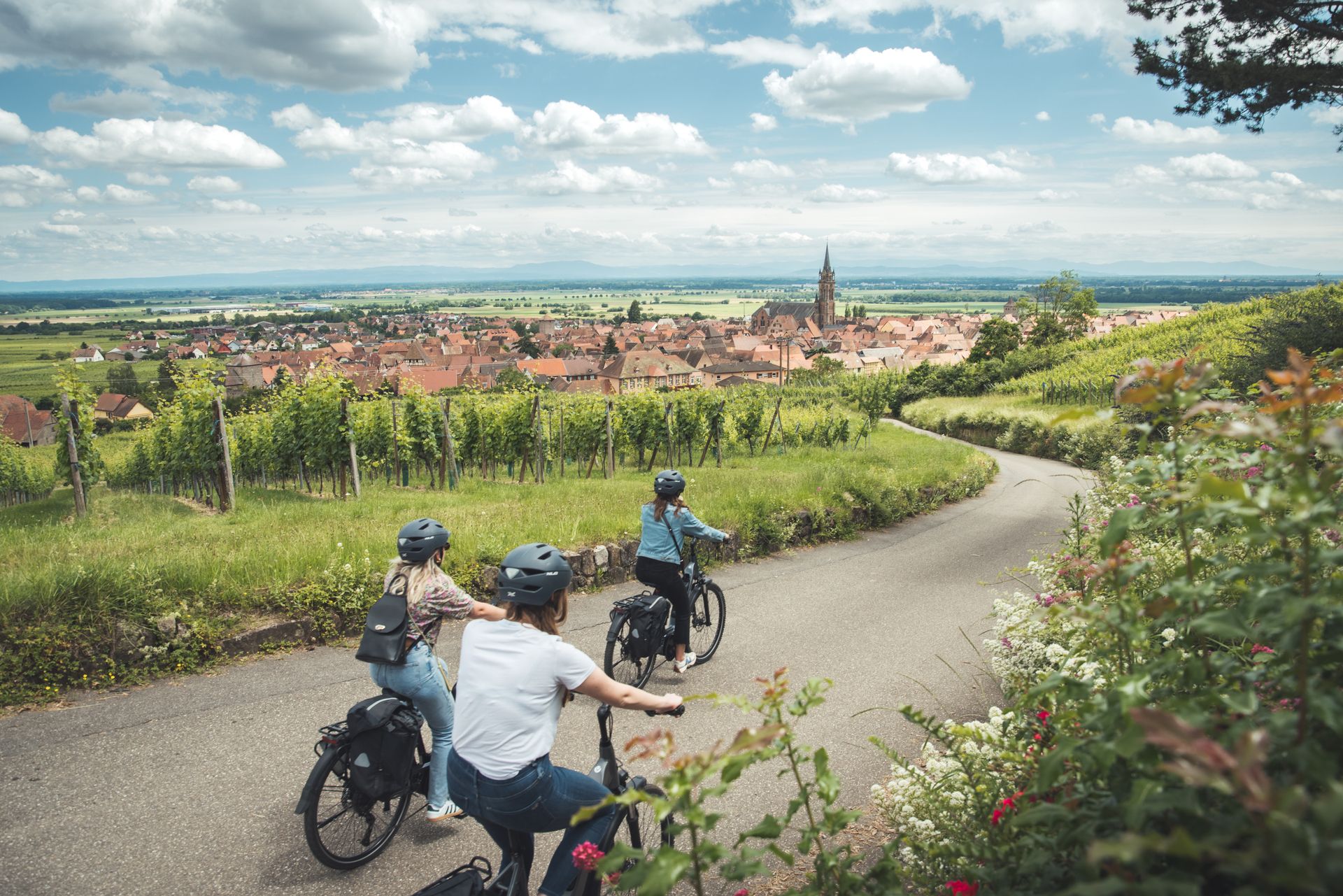
Wine getaways in the Grand Est — cycling between hillsides and traditions
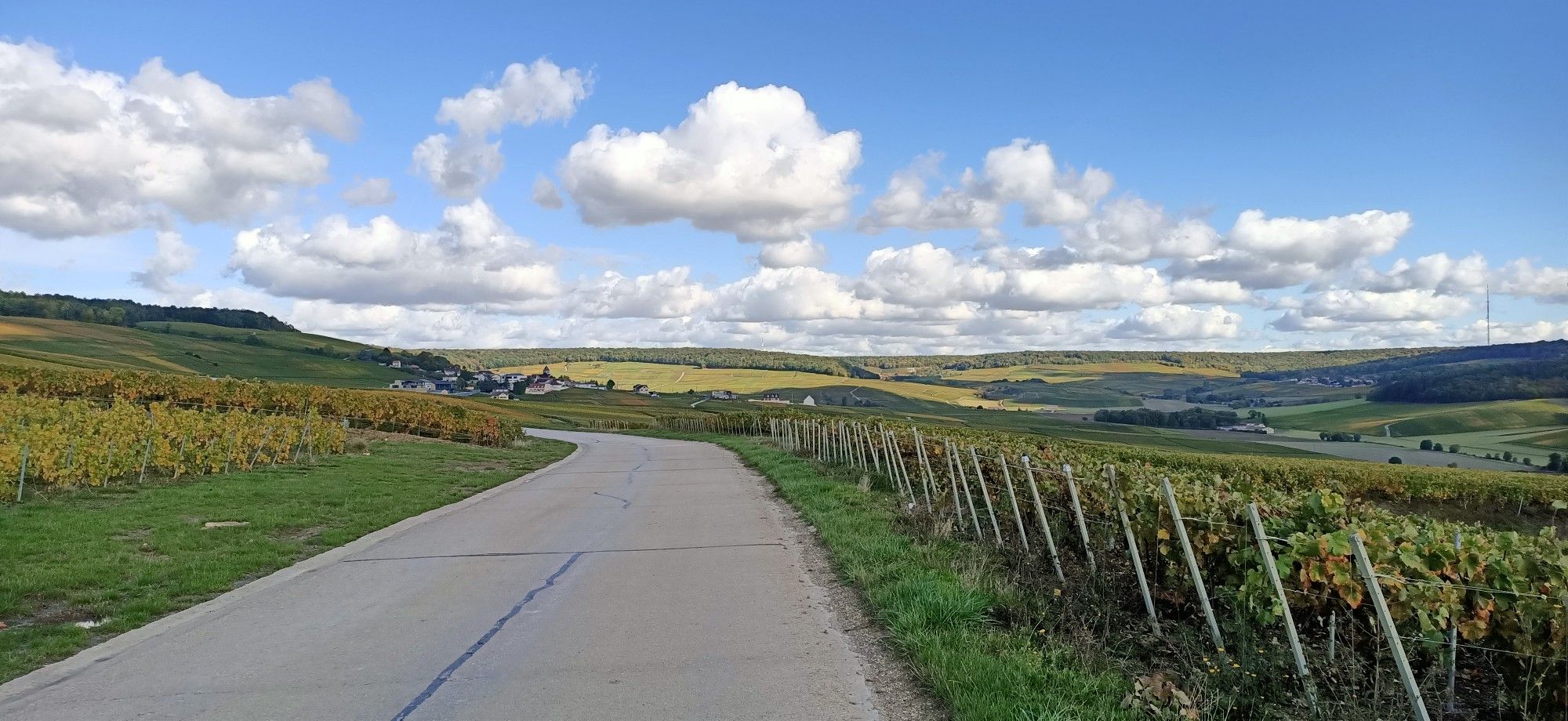
On the Champagne trails — discover the Montagne de Reims
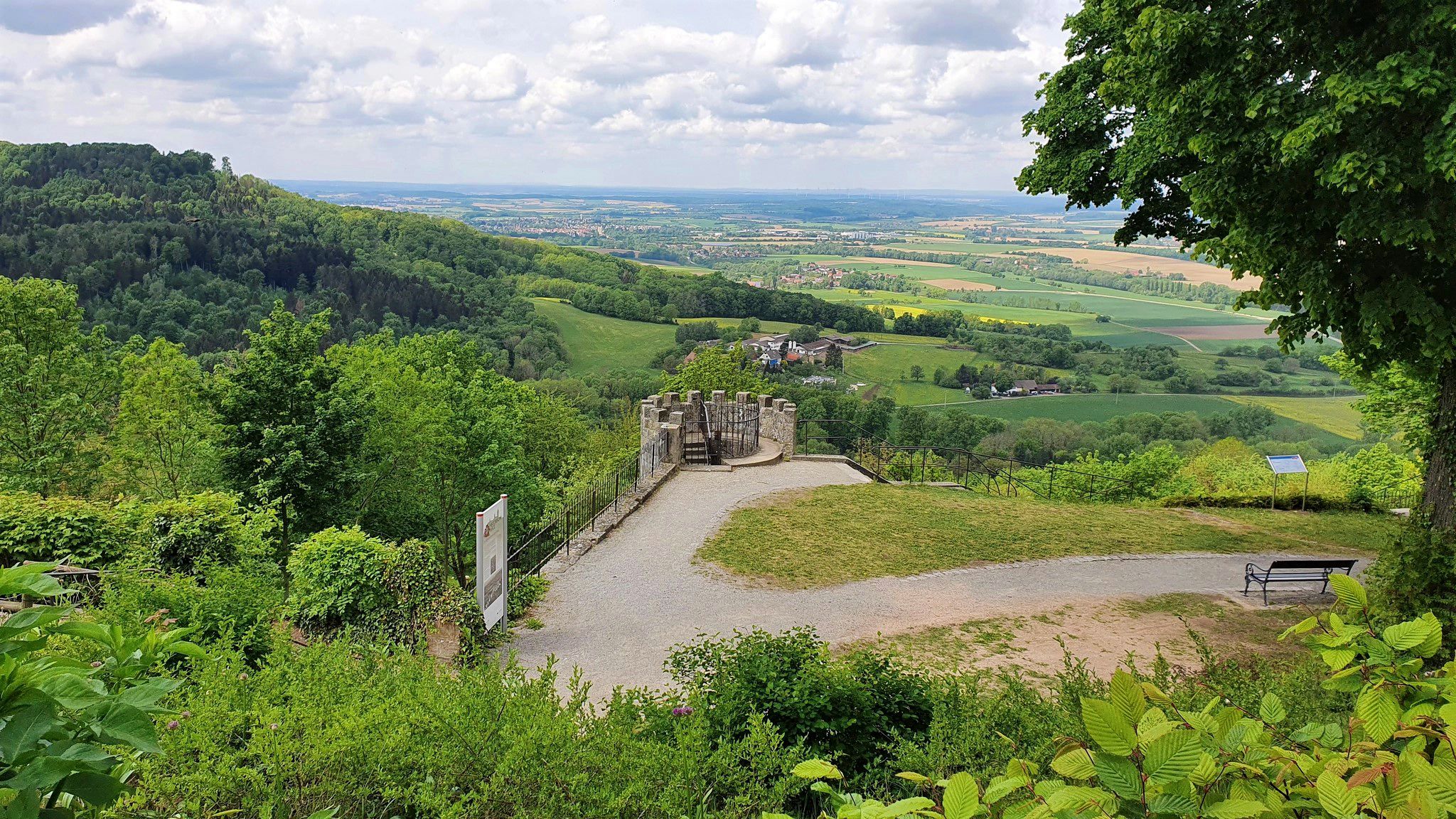
A cycling adventure from Paris to Prague – Pan-European Cycle Route
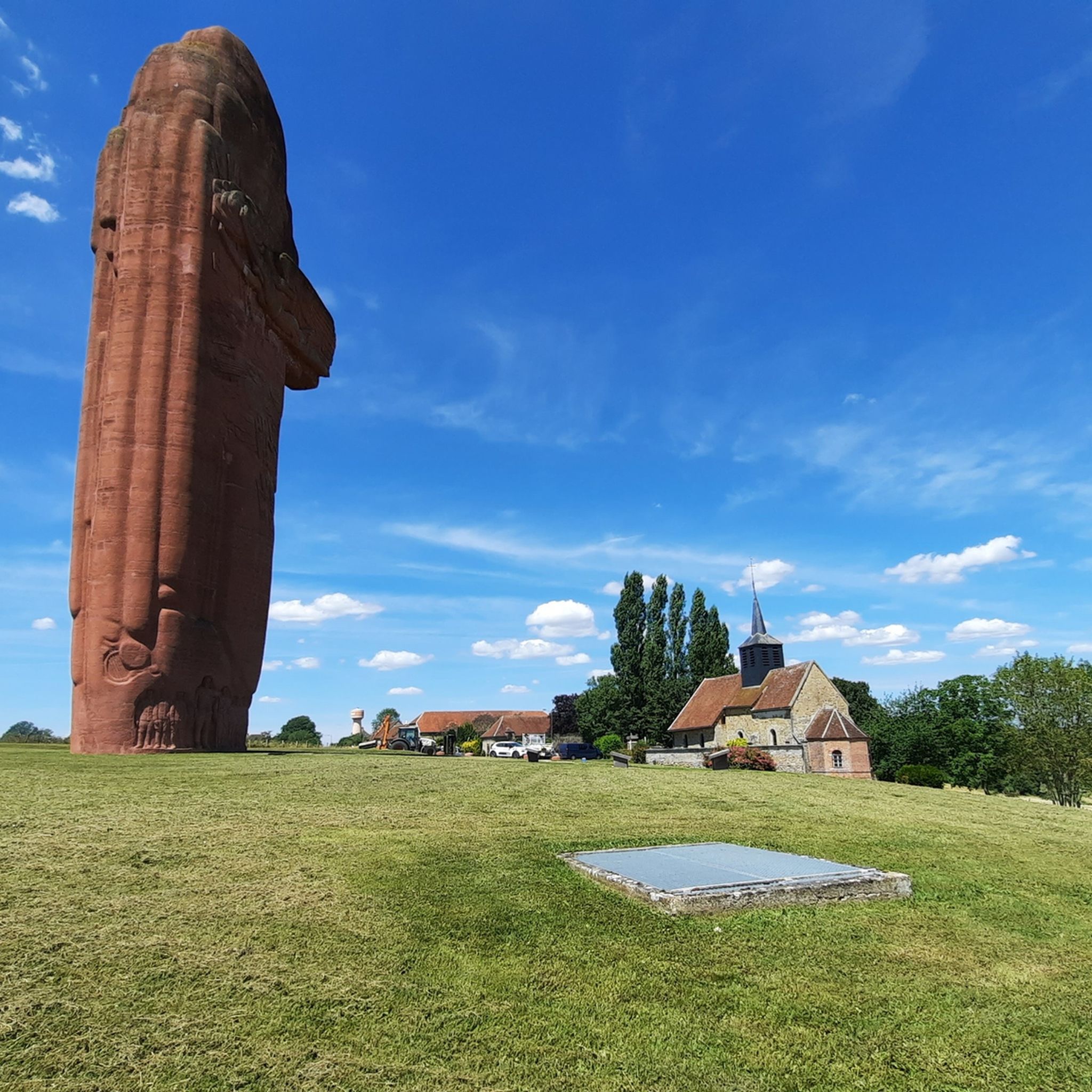
Hiking around Épernay
Cycling around Épernay
Road Cycling Routes around Épernay
Running Trails around Épernay
MTB Trails around Épernay

Gravel biking around Épernay
Other adventures around Épernay


Tips from the Community

Some of the buildings are monumental and an expression of capital - but even the small winemakers have very good champagnes to offer that are in no way inferior to the big houses!
1
0

Hautvillers, the birthplace of Champagne, is known worldwide for the presence of Dom Pierre Pérignon's tomb within its church and his undeniable role in the birth of Champagne. However, our village lacked a public space to represent Dom Pierre Pérignon. Erecting a statue in his likeness in the heart of the village: a project that has become a reality! This monumental work was erected within the grounds of Pierre Cheval Park and inaugurated on Saturday, June 11, 2022. This work by sculptor Juan Carlos Carrillo combines the "weight of history and originality." Both traditional and modern, this creation symbolizes all the sensations evoked by the name Champagne: voluptuousness, conviviality, sharing, joy, and lightness! A character, a story, a village, and an essential beverage were commemorated and honored during this colorful and surprising inauguration. The Dom Pérignon statue has become a must-see during your visit to the village: come and toast with Dom Pérignon! (c) https://hautvillers.fr/oenotourisme/hautvillers-en-france/92-statue-dom-perignon-parc-pierre-cheval
0
0
This church was built on the site of an older building around the 15th century. Listed as a Historic Monument, the Gothic church of Aÿ, built on the foundations of a structure dating back to the 15th century, has a rich and eventful history. About fifty years after its construction, a stone tower was erected, crowned by an elegant spire. Unfortunately, an early fire ravaged the newly completed vaults. The church houses a magnificent French Baroque-style organ dating from 1749, providing an ideal setting for the classical concerts held there every week in May. (c) https://www.petitfute.com/v12870-ay-champagne-51150/c1173-visites-points-d-interest/c925-edifice-religieux/c927-eglise-cathedrale-basilique-chapelle/107155-eglise-saint-brice.html
0
0

In 2011[9], the idea for the current Museum of Champagne and Regional Archaeology was born. The project was approved by the French Ministry of Culture in 2014, and in 2016 the renovation work was entrusted to the architectural firm Frenak + Jullien. Work began in 2018, under the supervision of the chief architect of historical monuments Lionel Dubois. Château Perrier has now been restored and contains one of the most important archaeological exhibits in France, with some 80,000 regional artefacts (dating from the Paleolithic to the Early Middle Period) and 4,000 artefacts relating to the history of Champagne wine (since 1960).[10]
4
0
The Château Perrier, at number 13, was built from 1852 to 1857[9] by the architect Pierre-Eugène Cordier, in an eclectic Louis XIII style. In 1854[10], the couple Pierre-Nicolas Perrier, a cork manufacturer, and Adèle Jouët (the founders of the Perrier-Jouët champagne house), who had married in 1811, commissioned the construction of this castle. The four facades are inspired by the architecture of the French Renaissance, to the Parisian image of the Palais du Luxembourg, the Palais des Tuileries or the Lescot of the Louvre. The facades are a play of colours with materials such as brick, natural stone, slate and glass.
4
0
Between 1872 and 1884, the concierge and the orangery were built on the outer edge of a vast park, according to plans by the architect Alphonse Gosset (1835-1914)[5]. In 1920, the park was acquired by the municipality with the Auban-Moët mansion and opened to the public. The part of the park around the town hall is laid out in the French style, to emphasise the classical and sober facade of the building. It consists of a grass path and two symmetrical access paths arranged in a horseshoe shape around a fountain. It is decorated with two bronze lions, cast iron statues of ancient gods and various other statues. The other part of the park is laid out in the English style: it is crossed by hilly paths, groves, two pools of water, an artificial island and a rocky grotto with a waterfall. On this side of the garden is a temple of love, built of limestone. This belvedere with Corinthian columns has a coffered ceiling. It is inspired by the Temple of Love in the Petit Trianon in Versailles. The City Hall Park has the label "Remarkable Garden".🪴 In
7
1
Épernay Town Hall is located at number 7bis in the former Auban-Moët mansion, built in 1858 by Victor Moët (1797–1881)[5] to a design by the architect Victor Le Noir, who also designed the Montparnasse railway station in Paris. In the early 19th century, Jean-Baptiste Isabey had the building redesigned in a classical style for Jean-Remy Moët, owner of the Hôtel Auban-Moët and mayor of Épernay. The current layout dates from 1857 and is the work of the brothers Denis and Eugène Bühler. It was donated to the city in 1919, which took it into use as a town hall in 1920. The building houses luxurious rooms, including the wedding hall and the council chamber. The building has been listed as a French Historical Monument since 26 June 2012.[5][6]
7
1
In his day, the fermentation of wine in the bottle, which produces sparkling wine, was a huge problem for winemakers. When colder weather arrived in autumn, the fermentation process would sometimes halt before all the fermenting sugar in the wine had been converted into alcohol. If this wine was bottled at this stage, it literally became a time bomb. When the weather warmed in spring, the remaining yeast would begin to work again, producing carbon dioxide, which would at least force the cork out of the bottle and often cause the bottle to explode, setting off a chain reaction in nearby bottles. This posed a danger to workers and sometimes destroyed an entire year's worth of wine production.[citation needed] Dom Pérignon sought to prevent this imperfect fermentation and introduced several improvements that are still in use in the Champagne region today, such as the extensive blending of wines from different winemakers.
4
0
Frequently Asked Questions
What historical landmarks can I explore in Épernay?
Épernay is rich in history. You can visit the iconic Avenue de Champagne, a UNESCO World Heritage site lined with grand Champagne houses. Another significant site is the Town Hall, originally the Auban-Moët family mansion, featuring beautiful public gardens. Don't miss the Abbaye de Hautvillers, considered the birthplace of the Champenoise method, where Dom Pérignon is buried.
Are there any museums or cultural sites related to Champagne in the area?
Absolutely. The Champagne Wine and Regional Archaeology Museum (Château Perrier) offers over 2,000 exhibits detailing the history of the wine industry and regional archaeology. For an immersive experience, consider Pressoria - Sensory Journey to the Heart of Champagne, located in nearby Aÿ-Champagne.
What natural features or viewpoints can I enjoy around Épernay?
The region is surrounded by the stunning Champagne vineyards, a UNESCO World Heritage landscape. You can find excellent panoramic views from specific viewpoints like Mont Bernon. The Montagne de Reims Regional Natural Park, a 'green lung' of the region, offers dense forests, hillsides, and waterways for exploration.
What outdoor activities are available near Épernay's attractions?
The area around Épernay is perfect for outdoor enthusiasts. You can find numerous routes for cycling, gravel biking, and running. For example, explore the 'Route du Champagne Epernay' on a touring bicycle or discover the vineyards on a gravel bike. You can find detailed routes and guides for cycling, gravel biking, and running around Épernay.
Are there family-friendly attractions in Épernay?
Yes, several attractions are suitable for families. The public gardens of the Town Hall are a pleasant spot for a stroll. The Avenue de Champagne is also family-friendly for walking and admiring the architecture. Additionally, the Champagne Wine and Regional Archaeology Museum (Château Perrier) offers engaging exhibits for various ages.
What is the best time of year to visit Épernay?
The best time to visit Épernay is generally from late spring to early autumn (May to October). During these months, the weather is pleasant for exploring the vineyards and outdoor attractions. The harvest season in September and October offers a unique experience, though it can be busier.
Where can I see unique sculptures or art installations in Épernay?
You can discover the Vineyard Worker Sculptures Along the Marne, which depict various steps in the winemaking craft. Also, look for the Statue of Dom Pérignon at Moët & Chandon on the Avenue de Champagne.
Are there any accessible attractions for visitors with mobility considerations?
While specific accessibility details vary, many main avenues and public spaces like the Avenue de Champagne and the gardens around the Town Hall are generally accessible. The Statue of Dom Pérignon at Moët & Chandon and the Monument to the Martyrs of the Resistance are also noted as wheelchair accessible.
What are some lesser-known historical sites or architectural gems in Épernay?
Beyond the famous Champagne houses, explore the Portail Saint-Martin, a 16th-century stone archway and the oldest monument in Épernay. The Épernay Synagogue, built in 1890, features unique Moorish-Byzantine architecture, and Maison de la Lune is an charming Art Nouveau building from 1896.
Can I find peaceful nature spots or gardens for relaxation?
Yes, Épernay offers several tranquil spots. The public gardens of the Town Hall are beautifully maintained. You can also visit the Pierre Cheval Park, or explore various 'nature stops' and gardens around Épernay, such as Parc Vix in Avize or the Wet Garden in Chouilly, which offer peaceful strolls and wetland biodiversity.
What is the Le Ballon d'Épernay and what does it offer?
Le Ballon d'Épernay is a tethered aerostat balloon located near the Avenue de Champagne. It offers unique panoramic views of Épernay and the surrounding vineyards from 150 meters up, often accompanied by a glass of Champagne for a memorable experience.
Most popular routes around Épernay

Get inspired with the komoot mobile app


Didn’t find what you were looking for?
Are you keen on exploring more awesome places nearby? Browse our guides:
Explore more
Still not found the Highlight you’re looking for? See guides of the top attractions in other regions:
