Top 20 Castles around Sainte-Croix-Aux-Mines
Castles around Sainte-Croix-Aux-Mines offer a journey through diverse historical periods and architectural styles. The region features both well-preserved medieval fortifications and elegant early 20th-century châteaux. These sites are often situated on strategic rocky outcrops, providing historical context and scenic views of the surrounding valleys. The landscape combines forested areas with historical landmarks, making it suitable for exploration.
Best castles around Sainte-Croix-Aux-Mines
- The most popular castles is Saint-Ulrich Castle, a castle that is the largest and best preserved of the…
Last updated: October 10, 2026
Saint-Ulrich Castle
Highlight • Castle
Translated by Google •
Tip by

Girsberg Castle
Highlight • Castle
Translated by Google •
Tip by

Sign up now to discover places like this
Get recommendations on the best single tracks, peaks, & plenty of other exciting outdoor places.
Haut-Ribeaupierre Castle
Highlight • Castle
Translated by Google •
Tip by
Château du Haut-Kœnigsbourg
Highlight • Climb
Built in the 12th century, it has undergone …
Translated by Google •
Tip by

Oedenburg
Highlight • Castle
Translated by Google •
Tip by

Sign up for free to discover even more castles around Sainte-Croix-Aux-Mines.
Already have an account?
Start today with a free account
Your next adventure awaits.
Tips from the Community


During the week and outside of the holidays, the crowds are bearable
5
0

The large wall at the rear of the ruins has been reinforced. The keep is also now dilapidated. To prevent anyone from climbing the tower, the lower staircase has been removed.
7
1
Saunt Ulric Castle is the largest of the three ruins. It is currently undergoing partial renovation. A small section is cordoned off, and caution is advised in other areas. However, the keep is accessible.
6
0
One of the most beautiful rooms in the castle. Weapons and armor can be admired here.
10
0
Actually, everything that needs to be said about the castle has already been said. I would like to mention the entrance fees as a positive point. Adults €12, with a guided tour €14 All parking is free, whether in the forest parking lot or on the access road. When I think of Hohenzollern Castle in Hechingen, though...🙆
6
0

The ruins are located about 400 meters from Haut-Koenigsburg Castle on the same ridge, at an altitude of approximately 721–722 meters above sea level. They can be reached in about 5 minutes on foot via a signposted hiking trail. The structure likely dates back to the 12th century, possibly originating as a simple tower castle, mentioned as part of a castle complex in 1174. Around 1267, it was expanded by the Lords of Rathsamhausen during the Interregnum. Around 1300, a Gothic residential wing was added – protected by a curtain wall and featuring a massive main tower on the opposite side. As early as 1417, it is referred to in sources as an "abandoned castle" (desolate castle).
2
0

The castle of Haut-Ribeaupierre (Hohrappoltstein) was probably built during the turmoil of the Interregnum around the mid-13th century. It served as an outpost at a time when the King of France was planning to invade Alsace. Later, it served as an observation tower for early warning of forest fires. The entire castle complex is dominated by an imposing circular keep, which offers a magnificent view of the Alsatian plain and the surrounding mountain ridges.
6
1
Frequently Asked Questions
What types of castles can I find around Sainte-Croix-Aux-Mines?
The region offers a diverse range, from ancient medieval ruins like Saint-Ulrich Castle, Haut-Ribeaupierre Castle, and Girsberg Castle, which provide historical context and scenic views, to more recent architectural monuments such as the elegant neo-baroque Château Burrus.
What are some notable castles directly in Sainte-Croix-Aux-Mines?
Sainte-Croix-Aux-Mines is home to two distinct castles: the elegant Château Burrus, a neo-baroque monument from 1900, and the ancient ruins of Château d'Échéry, a medieval fortified castle.
What is the historical significance of Château Burrus?
Château Burrus was built in 1900 as the family residence of Maurice Burrus, a prominent tobacco industrialist. Its neo-baroque style showcases early 20th-century luxury. It also played a role during WWII, being requisitioned as a training center for SS officers. The château is currently undergoing renovation, offering a glimpse into its revival.
What can I expect when visiting Château d'Échéry?
Château d'Échéry is a former medieval fortified castle, now largely in ruins. Located on a rocky outcrop, it offers a tangible connection to the region's medieval past and its strategic importance. While in disrepair, it provides an evocative site for those interested in exploring ancient fortifications and imagining their former glory, along with panoramic views of the surrounding area.
Are there hiking trails to castles around Sainte-Croix-Aux-Mines?
Yes, many castles, especially the ruins, are accessible via hiking trails. For example, you can find routes that lead to the castles of Ribeauvillé. You can explore various options on the Hiking around Sainte-Croix-Aux-Mines guide, including a 'Castle ruin loop from Sainte-Croix-aux-Mines'.
What outdoor activities can I combine with a castle visit?
The region around Sainte-Croix-Aux-Mines is excellent for combining castle visits with various outdoor activities. You can find numerous hiking trails, running routes, and gravel biking tours that pass by or lead directly to these historical sites, allowing you to enjoy both nature and history.
Are there viewpoints near the castles?
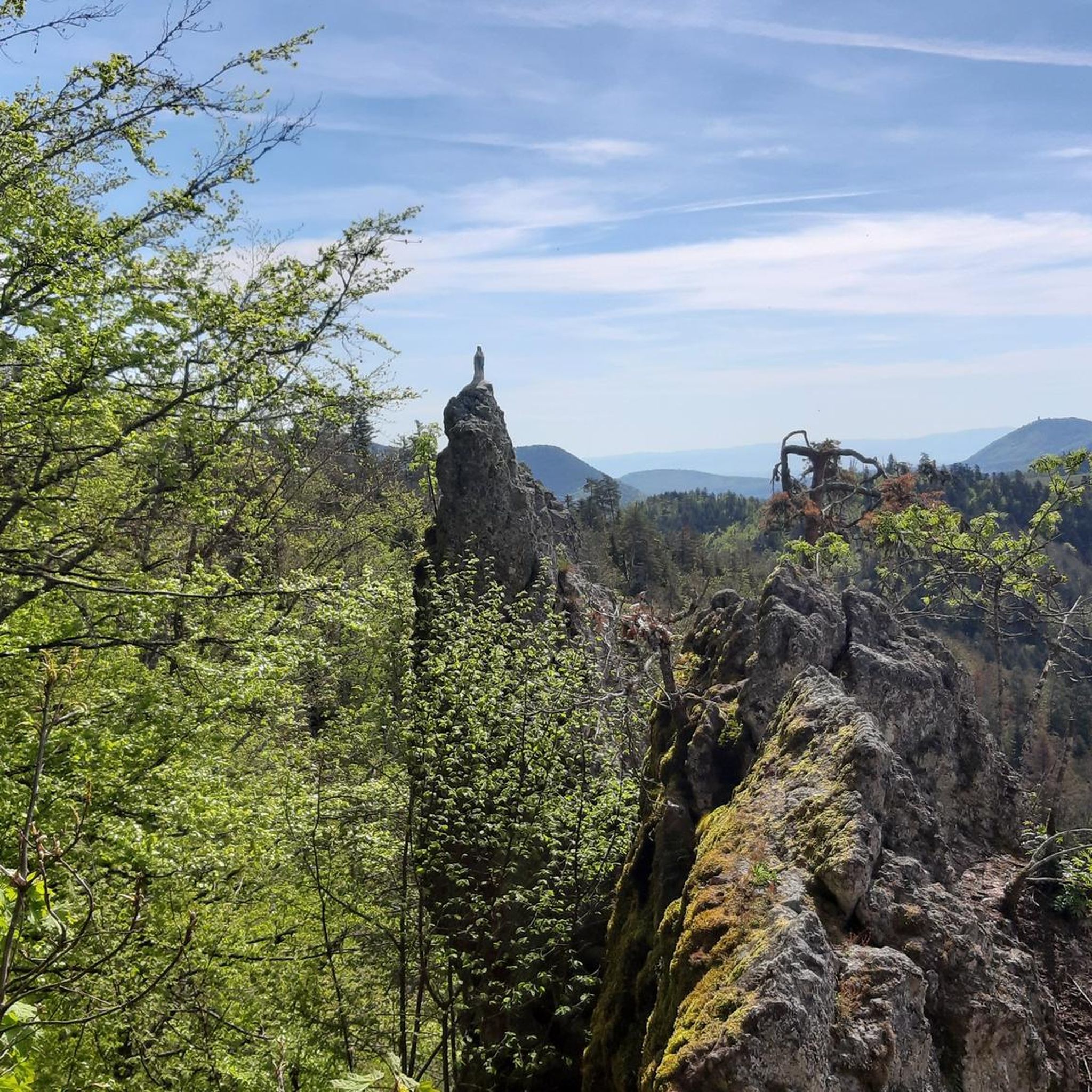
Many castles, particularly those situated on rocky outcrops like Saint-Ulrich Castle, Haut-Ribeaupierre Castle, and Girsberg Castle, offer fantastic panoramic views of the surrounding valleys, vineyards, and the Rhine plain. Frankenbourg Castle also provides magnificent views in all directions.
What is the best time of year to visit the castles around Sainte-Croix-Aux-Mines?
The best time to visit is generally during spring (April-May) and autumn (September-October) when the weather is mild and the natural scenery is particularly beautiful, with blooming flowers or vibrant fall foliage. Summer can also be pleasant, but it can be warmer and more crowded. Winter visits are possible, but some paths might be slippery, and certain facilities may have reduced hours.
Are the castles around Sainte-Croix-Aux-Mines family-friendly?
Yes, many of the castle ruins, especially those accessible via hiking trails, are suitable for families. Exploring the ancient walls and imagining medieval life can be an engaging experience for children. The outdoor settings provide space for kids to explore. Always check specific access details for each site, as some ruins might have uneven terrain.
Can I bring my dog to the castle areas?
Generally, dogs are welcome on leashes in the outdoor areas and hiking trails leading to the castle ruins. For specific policies regarding Château Burrus or other privately owned sites, it's advisable to check directly with the property. Always ensure your dog is under control and that you clean up after them.
Is there parking available near the castles?
Parking availability varies by castle. For the more popular sites like the Ribeauvillé castles, there are often designated parking areas at the start of hiking trails leading to them. For Château Burrus, there is likely on-site parking for visitors or guests. For remote ruins like Château d'Échéry, you might need to park in a nearby village and hike to the site.
Are there any lesser-known or 'hidden gem' castles to explore?
While less prominent than the Ribeauvillé castles, Oedenburg, also known as the Little Royal Castle, offers a glimpse into a 12th-century ruin, though it's largely fenced off due to its dangerous state. Frankenbourg Castle is another beautiful ruin, freely accessible and wonderfully situated with great views.
Most popular routes around Sainte-Croix-Aux-Mines
Most popular attractions around Sainte-Croix-Aux-Mines

Get inspired with the komoot mobile app


Explore more
Looking for the best castles somewhere else? Discover other guides around Sainte-Croix-Aux-Mines:
