The best cycling routes around La Regrippière
4.5
(82)
350
riders
92
rides
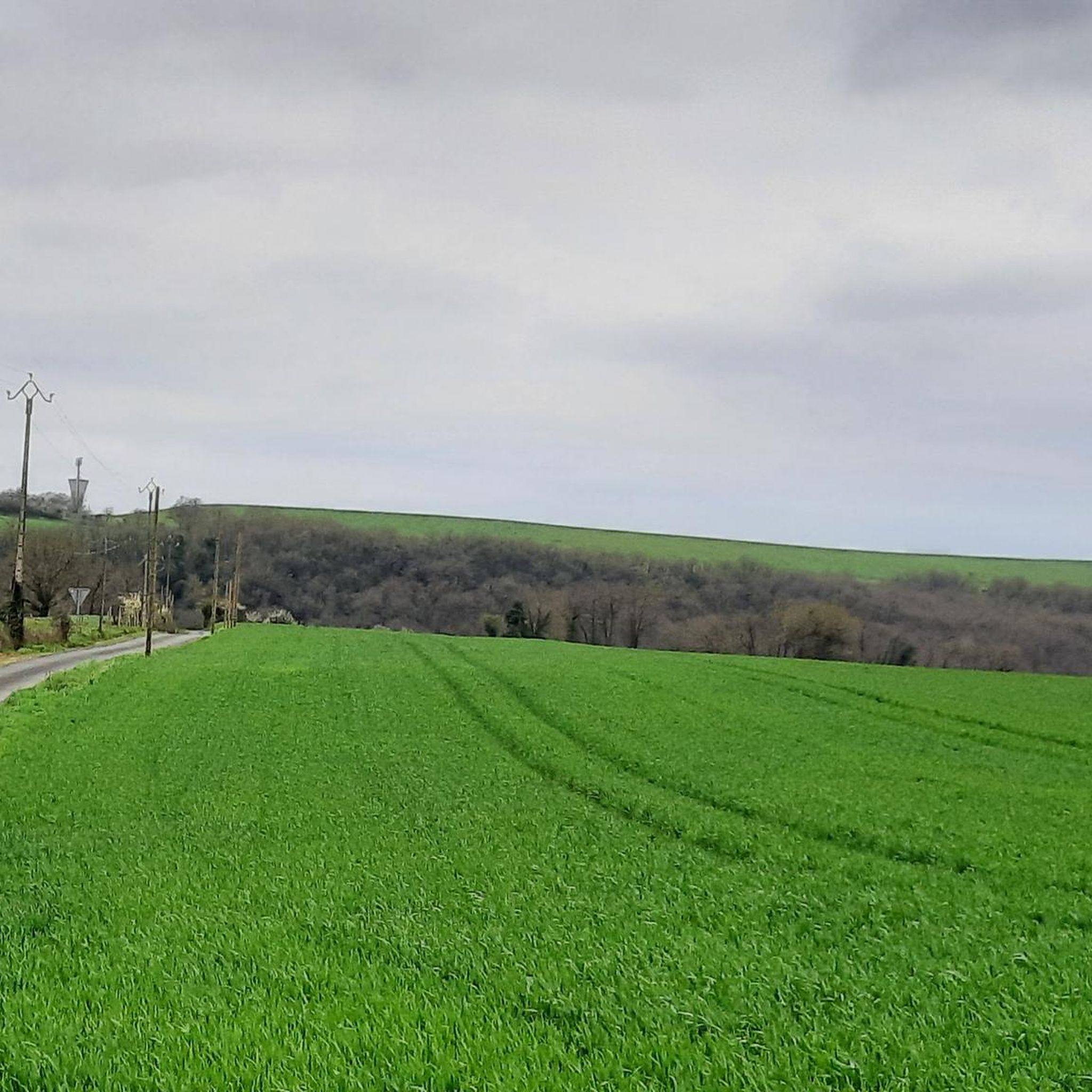
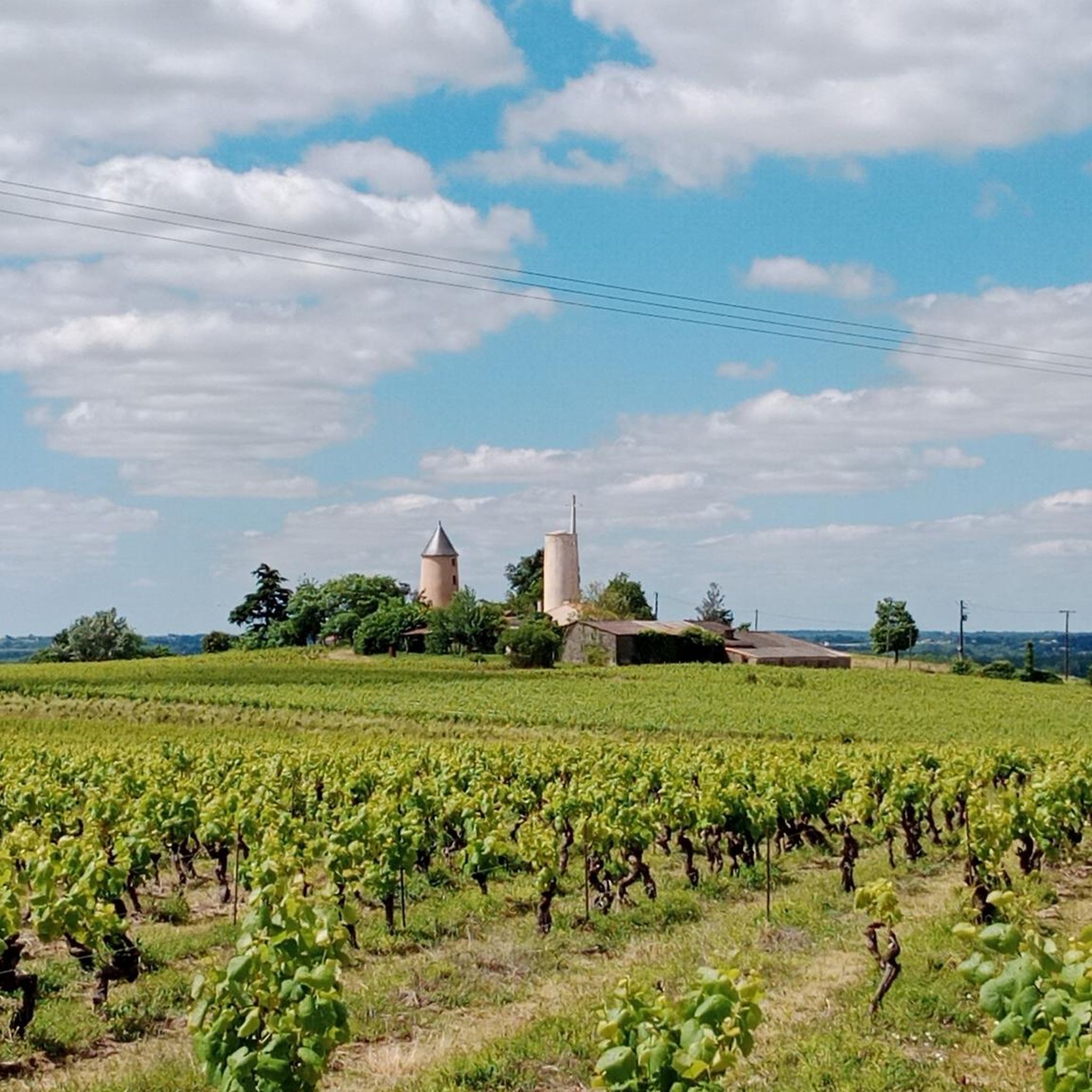
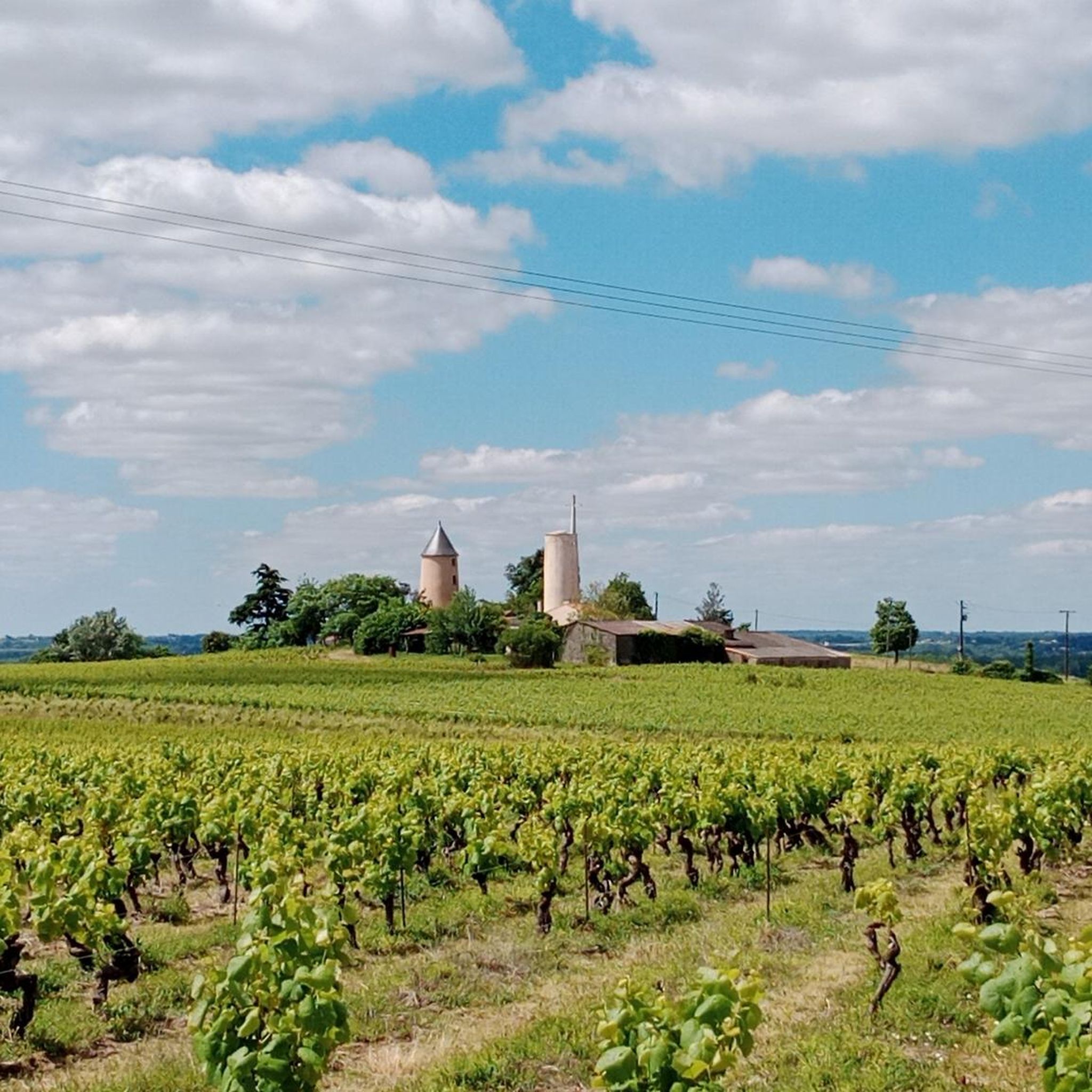
Touring cycling around La Regrippière offers routes through a harmonious blend of vineyard landscapes and diverse natural features in western France. The terrain is characterized by an interplay of vineyards, fields, prairies, and bocages, creating varied scenery. The Sanguèze River is a notable feature, and the area includes clay quarries, adding distinct colors to the landscape. While generally easy, some routes feature slightly marked relief, with elevations ranging from 42 to 101 meters.
Best touring cycling routes around La Regrippière
…Last updated: July 6, 2026
4.5
(4)
18
riders
35.6km
02:20
330m
330m
Moderate bike ride. Good fitness required. Mostly paved surfaces. Suitable for all skill levels.
5.0
(2)
20
riders
38.3km
02:59
290m
290m
Moderate bike ride. Good fitness required. Mostly paved surfaces. Suitable for all skill levels.

Sign up for free
5.0
(2)
4
riders
18.5km
01:07
100m
100m
Easy bike ride. Great for any fitness level. Mostly paved surfaces. Suitable for all skill levels.
4.0
(4)
4
riders
36.3km
02:14
190m
190m
Moderate bike ride. Good fitness required. Mostly paved surfaces. Suitable for all skill levels.
5.0
(2)
4
riders
Hard bike ride. Great for any fitness level. You may need to push your bike for some segments of this route.
Get access to more routes and recommendations from other explorers.
Sign up for free
Already have an account?
Our route recommendations are based on thousands of hikes, rides, and runs completed by other people on komoot.
Start today with a free account
Your next adventure awaits.
Login or Signup

Tips from the Community

I often pass by the Chapelle-Heulin church. This spot offers a great place to take a break in the shade and has restrooms nearby.
1
0

12th century church, burned down during the Vendée wars and restored under Napoleon.
0
0

This temple, built on the Saint-Gilles hillside, has been listed as a Historic Monument since March 14, 1988. It owes its name to the friendship between the Cacault brothers and the sculptor François-Frédéric Lemot, initiators and creators of Clisson's Italianate architecture in the early 19th century. Pierre Cacault wanted to build a mausoleum in memory of his brother François, who died in Clisson on October 10, 1805, but he lacked sufficient financial means. ➢ It was François-Frédéric Lemot who helped his friend carry out his project. He purchased the former Saint-Gilles-et-Saint-Brice chapel and its outbuildings at the end of 1808. The buildings are part of the cemetery, which has long been used for the burial of parishioners from all over Clisson, except for La Trinité. ➢ Paul de Berthou states in his work "Clisson and its Monuments" that "...the church of St. Gilles and St. Brice had been large and beautiful, but a lord of Clisson had its proportions reduced because it overlooked the castle too closely and posed a danger to him in the event of a siege." ➢ The remodeled church includes two chapels forming arms of the cross, one dedicated to the Blessed Virgin and the other to St. John the Evangelist, whose brotherhood once sat on this site. A small bell tower, containing two bells, stands at the crossing of the transept. ➢ Pierre Cacault died on January 29, 1810. François-Frédéric Lemot took over the project and decided that the monument would be dedicated to the memory of the two brothers. In 1811, he acquired land on the Saint-Gilles hillside and commissioned the architect Mathurin Crucy to draw up the plans. ➢ The first project was inspired by Greek temples. Mr. Crucy proposed a plan representing a peripteral temple of the Doric order, without a base, with six columns on the façade, surmounted by a pediment. F.F. Lemot simplified the plan, retaining a "cella" and four Doric columns surmounted by a triangular pediment on the façade. This choice recalls the Temple of the Sybil in Tivoli and is found in other contemporary monuments (the Temple of Friendship in Belz, the memorial monument to the victims of Quiberon in Auray). ➢ The Temple of Friendship was built between 1812 and 1824 on the former foundations of the parish church of Saint Gilles. The side chapels were razed, their foundations later serving to build a small, asymmetrical transept. The old nave was demolished and the walls rebuilt in line with those of the choir, with the entrance door on the side of the current cemetery. ➢ It took several years before the roof was laid and the plastering completed (1824). ➢ This temple was to house the tombs of the Cacaults. Antoine Peccot (1766-1814), a friend of Mr. Crucy, the Cacaults, and F.F. Lemot, had proposed, before 1814, that a dedication be inscribed to the Cacault brothers. The poem invited passersby to remember the talents, virtues, and prodigal benefits of these two brothers. The inscription was never engraved. The tombs were never built because the heirs of the Cacault brothers did not authorize the transfer of the ashes of Pierre and François (buried in Nantes). .➢ On May 6, 1827, François-Frédéric Lemot died in Paris. His body, repatriated to Clisson on May 18, was buried in the Temple of Friendship. ➢ On September 17, 1829, this tomb was blessed by the vicar of Notre-Dame. From then on, the site was designated: "Lemot Chapel" or "Chapel of the Blessed Virgin." Permission was granted to sing the station mass there on St. Mark's Day, as well as on Rogation Day, and to say devotional low masses. ➢ The monument underwent restoration in 1995.
0
0
The Trinity Church is getting a makeover in the heart of Clisson Off-limits since 2018, the Trinity Church in Clisson is undergoing extensive restoration work until 2027, accompanied by reinforcement and safety work. The Trinity Church in Clisson has been off-limits since 2018 due to pieces of tufa stone found on the floor of the building, raising concerns about safety issues. The restoration has been decided upon, along with reinforcement and safety work. This work is expected to continue until 2027. The construction site will soon be explained to the residents of Clisson, using signs. The artwork and furnishings have been protected and stored, tarpaulins protect the building and the workers, the vaults and framework will be restored, and the wall plasterwork will be examined and redone where necessary. The work will concern the side aisles until next summer, the nave for the following twelve months. Then it will be the turn of the choir and transepts between January 2026 and spring 2027, then the sacristy, the bell tower and the outbuildings.
2
0
The Church of the Trinity was originally a Benedictine priory, with a parish, dependent on the abbeys of Saint-Martin-de-Vertou and Saint-Jouin-de-Marnes. In the 11th century, it was occupied by the canons regular of the Order of Saint Augustine. In 1645, Fontevrist nuns from La Regrippière en Vallet settled there. The convent burned down in 1794 by the infernal columns of the Republican armies. From the 11th century onwards, the church had a choir with an apse, side chapels, and a square bell tower. In the 17th century, the Benedictine nuns replaced the Romanesque choir with an elongated one, featuring a remarkable Baroque altarpiece. They demolished the southern part of the choir to build their oratory. During the French Revolution, the church returned to the parish. Around 1867/1868, work was undertaken. The façade was redone in a neo-Romanesque style, while the neo-Gothic style was preferred for the interior of the religious monument.
1
0

The so-called "Gallo-Roman" bridge was a stage on the Celtic road Rouen-Ancenis-Bordeaux. It is sometimes called the Gallo-Roman bridge or the Julius Caesar bridge on the pretext that the Roman general would have used a bridge prior to this one, intended only for pedestrians. However, during work carried out in 2017, the architect of Historical Monuments and that of Buildings of France called on a historian and the so-called Gallo-Roman bridge is rather attested as a bridge from the early Middle Ages. Remains of a Roman road nearby, as well as the materials used, wrongly gave its name to this bridge which, according to the results of this historical study, does not date from the Roman era, but is much more recent. It would in fact date from the Romanesque era (7th century). It has four unequal arches. Each pier is flanked by a spur. Downstream, this spur does not rise to the deck; it rises above it, which gives it a very particular appearance and makes it unique in the west. It was partly restored in the Middle Ages. An ogival arch is proof of this. It was listed in the inventory of Historic Monuments by decree dated May 14, 1925. Following floods that weakened it in 2014-2015, it was completely restored in 2018 and now allows a gentle connection with a pedestrian and secure crossing. https://www.levignobledenantes-tourisme.com/patrimoine-culturel/pont-gallo-romain/
1
0
15th century medieval bridge which offers some of the most beautiful views of Clisson.
2
0

This ancient church here in Clisson was not dedicated to one of the many people we venerate as saints, but rather the ONE God in THREE persons - God the Father, God the Son (Jesus Christ) and God's Holy Spirit - was chosen as its patron saint. Father Reinhard Körner writes about the mystery of the Holy Trinity: "Among the great prayer-givers in the history of Christianity... I found prayer texts in which each of the divine three was explicitly addressed - in the same prayer. When I tried to recite the texts, I could sense that these people had not only had God the Father, Jesus Christ and the Holy Spirit in mind individually - they were addressing a divine community. And it seemed to me that they could only do this in their written prayers because they did it otherwise, quietly in their hearts."
1
0
Frequently Asked Questions
How many touring cycling routes are available around La Regrippière?
There are nearly 100 touring cycling routes around La Regrippière, offering a wide variety of options for exploring the region's vineyard landscapes and natural features. These routes are highly rated by the komoot community, with an average score of 4.5 stars.
What kind of terrain can I expect on touring cycling routes in La Regrippière?
The terrain around La Regrippière is characterized by a harmonious blend of vineyards, fields, prairies, and bocages (hedged farmland). While generally considered easy, some routes feature slightly marked relief, with elevations ranging from 42 to 101 meters (138 to 331 ft). You'll find a mix of flat sections and gentle climbs.
Are there any easy touring cycling routes suitable for beginners or a relaxed ride?
Yes, La Regrippière offers many easy routes perfect for a relaxed touring cycling experience. For instance, the Pretty path with ponds loop from La Regrippière is an easy 18.5 km (11.5 miles) path that allows for a gentle immersion in the area's natural beauty, passing by tranquil ponds. Another easy option is the Bike loop from La Boissière-du-Doré, which is just under 9 km.
Can I find circular touring cycling routes in La Regrippière?
Absolutely. Many touring cycling routes in La Regrippière are designed as loops, allowing you to start and finish at the same point. Examples include the popular Saint Martin's Church – Logne Greenway loop from Tillières and the Cleray Castle – Saint Martin's Church loop from La Chalousière, both offering scenic circular journeys through the region.
What natural attractions can I see along the touring cycling routes?
As you cycle, you'll encounter diverse natural features. The Sanguèze River is a significant natural landmark, and you might spot clay quarries with their distinct colors. L'étang des Douves is a developed body of water known for its tranquil setting. You can also explore Les terrasses du midi, ancient stone terraces offering panoramic views of the valley and rich biodiversity.
Are there any historical or cultural landmarks to visit while cycling?
Yes, the region is rich in history. You can visit the 19th-century Pé Mill, which offers panoramic vineyard views from its platform. The area also boasts religious heritage sites like the church and the Chapelle de la Fleurancellerie. Keep an eye out for the Gallo-Roman bridge over the Sanguèze River and remnants of a Roman road in the Ducherie area.
What is the best time of year for touring cycling in La Regrippière?
La Regrippière offers beautiful scenery throughout the year, but autumn is particularly vibrant. The landscapes transform with yellow-orange hues as the vineyards change color, providing a stunning backdrop for your rides. Spring and summer also offer pleasant conditions for cycling through the green countryside.
Are there any routes that offer a more challenging experience for athletic cyclists?
While many routes are easy, some feature slightly marked relief that can appeal to more athletic cyclists. For example, the Château de la Pommeraie – Pretty path with ponds loop from Les Landes is classified as difficult, offering a more demanding ride with varied elevation changes over its 19.38 km (12 miles) length.
What do other touring cyclists enjoy most about cycling in La Regrippière?
The area is highly rated by the komoot community, with an average score of 4.5 stars from over 100 reviews. Touring cyclists often praise the picturesque vineyard landscapes, the peaceful bocage scenery, and the well-maintained paths that allow for a pleasant exploration of the region's natural and cultural heritage.
Are there opportunities to experience local winemaking along the routes?
La Regrippière is an integral part of the Vignoble Nantais (Nantes vineyard). Many cycling routes wind through these vineyards, offering opportunities to discover local winemaking expertise. You can find nearby domains that offer wine-related activities, such as tasting workshops, allowing you to immerse yourself in the region's viticultural culture.
Are there family-friendly amenities or activities near the cycling routes?
Yes, L'étang des Douves is a natural, developed body of water that offers a tranquil setting suitable for families. It's known for fishing, picnicking areas, and playgrounds, making it a great spot for a break or an outing with children after a ride.
Where can I find information about parking or access points for the cycling routes?
Many routes are designed as loops, often starting and ending in villages or towns like La Regrippière, Tillières, or La Chalousière, where public parking is typically available. Information panels are also often present along cycling routes, which can provide details on local access points and facilities.
Most popular routes around La Regrippière
Most popular attractions around La Regrippière

Get inspired with the komoot mobile app


Explore more
Browse the best Cycling routes in other regions.
