Attractions and Places To See around Thiennes - Top 20
Best attractions and places to see around Thiennes, a commune in the Nord department of France, include its religious heritage and local infrastructure. Situated near the Lys River, the area offers a blend of historical sites and natural waterways. Visitors can explore local landmarks within Thiennes and discover a broader range of activities in the surrounding region.
Best attractions and places to see around Thiennes
- The most popular attractions is The Thiennes Bridge, a bridge that spans the Lys…
Last updated: August 16, 2026
Saint-Pierre Collegiate Church of Aire-sur-la-Lys
Highlight • Religious Site
Translated by Google •
Tip by

Aire-sur-la-Lys Belfry
Highlight • Historical Site
Translated by Google •
Tip by
Sign up now to discover places like this
Get recommendations on the best single tracks, peaks, & plenty of other exciting outdoor places.
Sign up for free
Moulin des Invalides
Highlight • Other
Translated by Google •
Tip by
View from the Thiennes bridge
Highlight • Bridge
Showing Translation
Tip by
Canal de Neufossé
Highlight • Other
Translated by Google •
Tip by
Sign up for free to discover even more attractions around Thiennes.
Sign up for free
Already have an account?
Start today with a free account
Your next adventure awaits.
Login or Signup


Tips from the Community

The belfry of Aire-sur-la-Lys (in Dutch: Ariën-aan-de-Leie) is a historic, baroque belfry in the French department of Pas-de-Calais that has been on the UNESCO World Heritage list since 2005. The striking tower is attached to the town hall and dominates the skyline of the historic town.
0
0

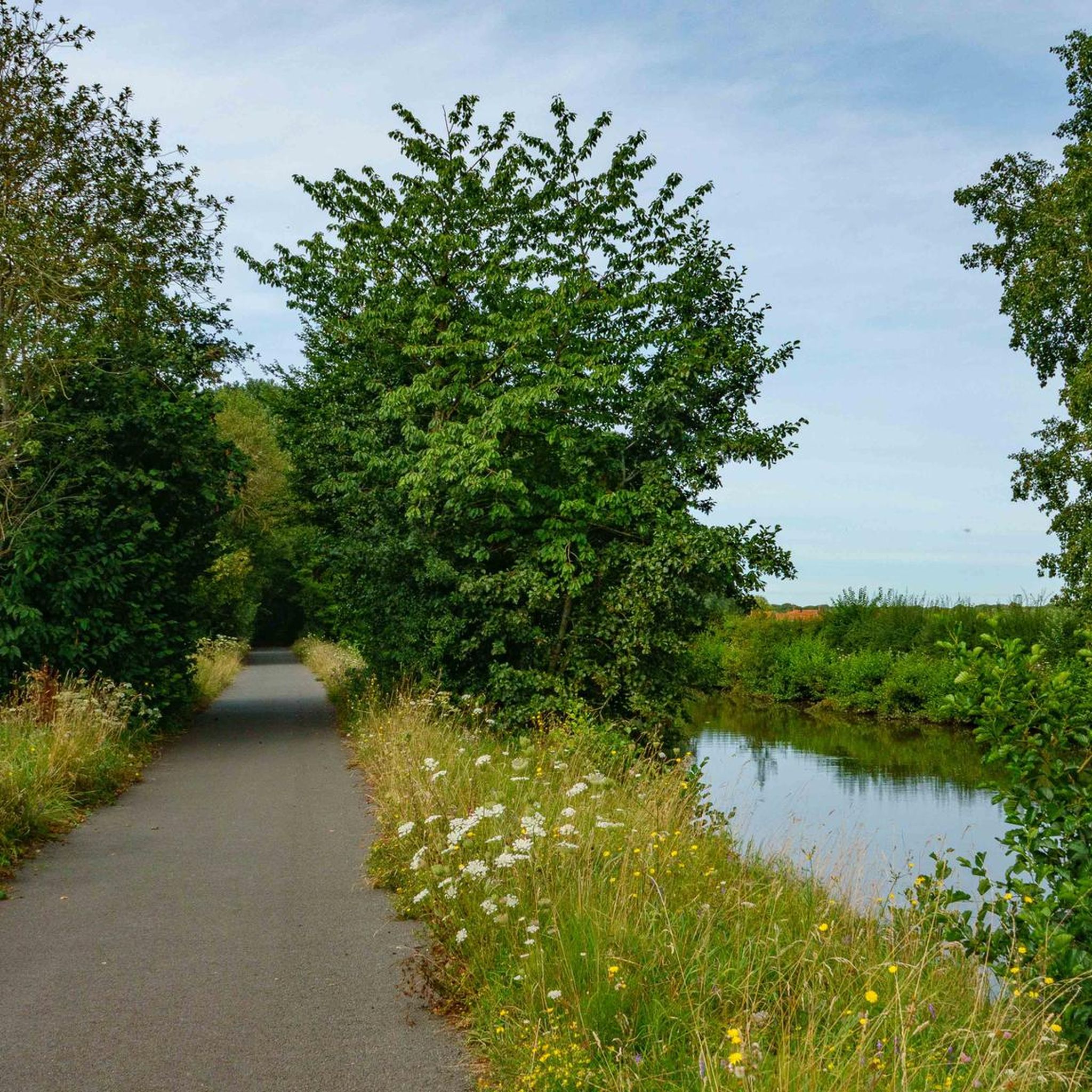
Beautiful cycle path along the canal, EV5.
0
0

Many centuries ago, our ancestors discovered the possibility of harnessing the power of the elements—which, on the one hand, were helpful and useful, but on the other hand, as untamed forces of nature, could also be a threat—for various purposes, thus eliminating the need for human or animal muscle power. Mills such as these are a good example of the human engineering skills of earlier generations: The heavy millstones used to grind grain or press oil, for example, could be powered by wind or—as in this case—water.
1
0

The Pont de Thiennes is a traffic bridge located on the Leie, connecting the municipalities of Thiennes and Aire-sur-la-Lys. The bridge was inaugurated in 2014. It is built of Soignies granite and was financed by the state (33.9%) for war damage, by the department of Pas-de-Calais (33.05%) and by the department of Nord (33.05%). The bridge is equipped with a lifting system to allow the passage of boats.
7
0
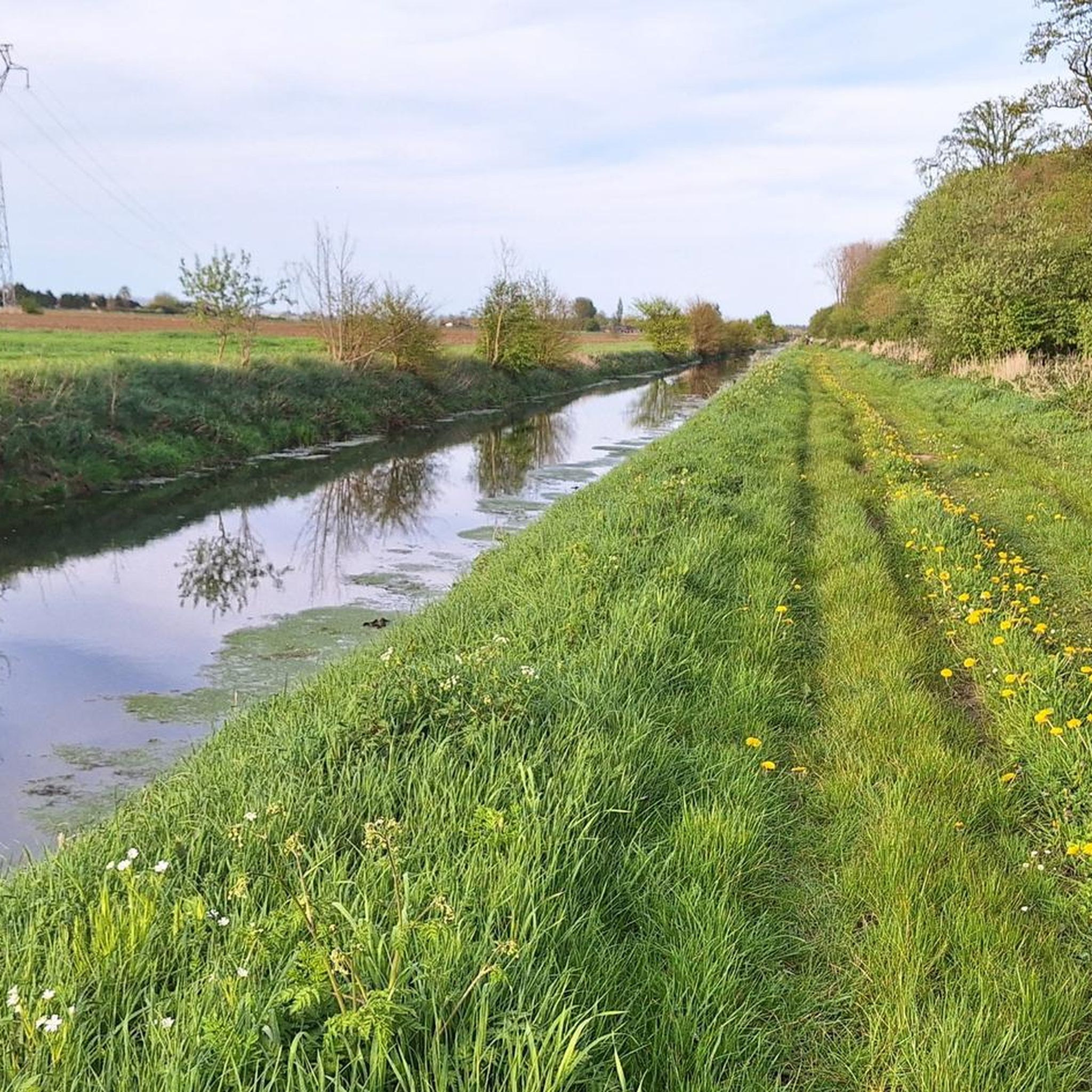
Canal de Neufossé: The Canal de Neufossé is an artificial canal located in northern France, between the River Aa at Arques and the Canal d’Aire at Aire-sur-la-Lys. The canal is part of the Canal Dunkerque-Escaut and is approximately 18 kilometres long. The canal was built in 1760 to connect the River Lys to the River Aa, giving Lille and other inland cities a French route to the sea. The canal has a maximum height of 19 metres and a minimum height of 3 metres. The canal has a number of historic features, including three locks from the eighteenth century and a double lock from 1887 called the Ascenseur des Fontinettes.
12
0
The Beffroi d'Aire-sur-la-Lys is a monument that is part of the heritage of Aire-sur-la-Lys. It was first built in 1355 and rebuilt between 1716 and 1724 by the architect Hérogue. It has been listed as a historic monument since 1947 together with the adjacent town hall1. The beffroi is 45 meters high and rests on four large pillars of brick and stone, two meters thick, which demarcate an interior space of six meters wide. It is of Baroque style and is part of the list of 23 belfries inscribed on the UNESCO World Heritage List in 2005 as part of the list of "Belfries of Belgium and France".
10
0
This is one of the finest examples of the Flamboyant Gothic and Renaissance in French Flanders. The imposing tower (62m) resembles that of Notre-Dame in Saint-Omer. Inside, the pattern of the ribs of the vaults has been transferred to the floor. The choir is closed by a beautiful rood screen; on the left is the gilded statue of Notre-Dame Panetière. The oak organ case comes from the abbey church of Clamarais. Choir and apse suffered from a bombardment in 1944. In the back you can see a beautiful Virgin and Child (15th century)
9
0
The Moulin des Invalides is a watermill on the Laquette, located in the city of Aire-sur-la-Lys, part of the French department of Pas-de-Calais. The mill functioned as a flour mill. The mill was built in 1682 for Count De Robelin, who was an engineer for the French king. The builders were soldiers who were no longer fit for military service due to their injuries. In 1790 it was reported that the mill had two paddle wheels, but the current was too weak to turn both wheels. In 1840 the mill was partly rebuilt and enlarged. A winch was also installed to hoist the bags of grain. Mechanization followed in the course of the 19th century and the current building was erected in 1878. Electric propulsion arrived in the 20th century. In 1979 the company was closed down. In 1996 a new water wheel was installed, which had the same diameter of 5.2 meters as in 1790.
11
0
Frequently Asked Questions
What historical and cultural sites can I visit in Thiennes and its immediate surroundings?
Within Thiennes, you can explore the Église Saint-Pierre, a Flemish Gothic church built in 1550, and several local chapels, each with its own history. Just 5 km away in Aire-sur-la-Lys, don't miss the impressive Saint-Pierre Collegiate Church, a significant Flamboyant and Renaissance monument. Also nearby is the historic Moulin des Invalides, a watermill showcasing early engineering skills.
Are there any notable natural features or waterways to explore near Thiennes?
Yes, the Canal de Neufossé, an 18-kilometer artificial waterway, is part of the Dunkerque-Escaut Canal system and offers beautiful cycle paths. The Lys River also flows through the area, spanned by The Thiennes Bridge. Further afield, the Réserve naturelle nationale des étangs du Romelaëre near Saint-Omer provides an opportunity to experience natural beauty.
What outdoor activities are popular around Thiennes?
The region around Thiennes is excellent for various outdoor activities. You can find numerous routes for road cycling, running, and hiking. For example, there are moderate road cycling routes, including a 20 km loop from Thiennes. Running trails range from 5 km to 14 km, and hiking paths offer easy to moderate options, such as the 'Footbridge to go to the woods' loop from Steenbecque.
Are there family-friendly attractions in the Thiennes area?
Yes, The Thiennes Bridge, with its lifting system for boats, is considered family-friendly. Exploring the Canal de Neufossé by bike or on foot can also be a pleasant family activity. The nearby town of Aire-sur-la-Lys, with its market and historic church, offers a relaxed atmosphere for families.
What are some unique architectural features to look out for in Thiennes?
Thiennes is home to the Église Saint-Pierre, notable for its Flemish Gothic style and 'hallekerke' design with three naves. The detached square tower and hexagonal turret are distinctive. The modern Thiennes Bridge, constructed from Soignies granite with a lifting system, is also a unique piece of local infrastructure.
Can I find any UNESCO World Heritage sites near Thiennes?
While Thiennes itself doesn't host a UNESCO site, the region is known for its historic belfries, many of which are UNESCO World Heritage sites. The Beffroi d'Aire-sur-la-Lys is just 5 km away, and the Beffroi de Béthune is 18 km distant, offering opportunities to visit these significant landmarks.
What are some recommended day trips from Thiennes?
Several charming towns are within a short drive. Aire-sur-la-Lys (5 km) is a recommended detour for its collegiate church and market. Cassel (16 km) offers scenic views from the highest hill in Flanders. Saint-Omer (18 km) has an attractive center and is close to a nature reserve. For a vibrant urban experience, Lille (42 km) is easily accessible, and Arras (47 km) is known for its belfry and baroque architecture.
Are there any gardens or parks worth visiting in the vicinity of Thiennes?
Yes, the region boasts several remarkable gardens. La ferme du mont des Récollets is about 16 km away, Parc du château de Sericourt is 41 km, and Le jardin des Lianes is 48 km from Thiennes. These offer beautiful natural settings for a leisurely visit.
What do visitors particularly enjoy about the attractions around Thiennes?
Visitors appreciate the blend of historical sites and natural waterways. The Thiennes Bridge is noted for its modern engineering and connection to the Lys River. The Saint-Pierre Collegiate Church in Aire-sur-la-Lys is admired for its impressive architecture and historical significance. The Moulin des Invalides offers a glimpse into historical industrial heritage.
Is Thiennes Bridge accessible for everyone?
Yes, The Thiennes Bridge is categorized as wheelchair accessible, making it an inclusive point of interest for all visitors.
Can I find long-distance cycling routes starting near Thiennes?
Absolutely. For road cyclists, there are several long-distance routes available. Options include a moderate 108 km loop to the Waterfall of Nave river in Bourecq and the Source of the River Lys, or a challenging 130 km route to Mont de la Calique and Ouelmes Village Entrance, both starting from Thiennes. You can find more details on road cycling routes around Thiennes.
Are there any historical sites related to World War I near Thiennes?
Yes, the nearby town of Saint-Venant, whose Town Hall is a highlight, played a significant role during World War I. It was located close to the front and served as a logistical center for the Allies, including a health center for British and Indian soldiers and a base for a Portuguese army corps. This area offers a poignant connection to wartime history.
Most popular routes around Thiennes

Get inspired with the komoot mobile app


Explore more
Still not found the Highlight you’re looking for? See guides of the top attractions in other regions:
