The best MTB trails around Cabanac-Et-Villagrains
4.1
(101)
398
riders
39
rides
Mountain biking around Cabanac-et-Villagrains, located in the Gironde department of Nouvelle-Aquitaine, offers diverse natural features for riders. The area is characterized by extensive forested landscapes, providing shaded trails and a sense of natural immersion. The region also features the Gat Mort stream and its lagoons, offering varied terrain and picturesque scenery. The terrain includes wide, gravel forest trails and some singletrack, with moderate elevation changes suitable for different skill levels.
Best mountain bike trails around Cabanac-Et-Villagrains
- The most popular mountain…
Last updated: July 13, 2026
3.5
(2)
4
riders
52.0km
03:36
170m
170m
Moderate mountain bike ride. Good fitness required. Advanced riding skills necessary.
4.6
(10)
15
riders
38.6km
02:50
180m
180m
Moderate mountain bike ride. Good fitness required. Advanced riding skills necessary.

Sign up for free
4.0
(2)
20
riders
32.5km
02:15
180m
180m
Moderate mountain bike ride. Good fitness required. Suitable for all skill levels.
4.0
(1)
18
riders
40.2km
02:49
110m
110m
Moderate mountain bike ride. Good fitness required. Suitable for all skill levels.
5.0
(3)
14
riders
14.1km
00:58
30m
30m
Easy mountain bike ride. Great for any fitness level. Suitable for all skill levels.
Get access to more routes and recommendations from other explorers.
Sign up for free
Already have an account?
Our route recommendations are based on thousands of hikes, rides, and runs completed by other people on komoot.
Start today with a free account
Your next adventure awaits.
Login or Signup

Tips from the Community

Budos Castle is the work of Raymond Guilhem de Budos, nephew of Pope Clement V. Largely supported by his uncle, he rebuilt the old family castle in 1306, adopting the architectural features of the neighboring Château de Villandraut, as evidenced by the following document from King Edward I, written from Wynten on March 9, 1306, to the Seneschal of Gascony[4]: "The Knight of Budos, nephew of Clement V, Sovereign Pontiff, has begged us to allow him to crenellate his house in Budos, to surround it with walls, towers, moats, and finally to fortify it. Out of respect for the Sovereign Pontiff, and because a fortress of this nature will protect not only our possessions in this part of Guienne, but also the subjects of the Pope's nephew, we grant the aforementioned Raymond permission to fortify his castle and we grant it to him, his heirs, and successors in perpetuity, and we undertake not to disturb him in any way in this possession." In 1422-23, the King of England took possession of the castle and placed Pons, Lord of Castillon, in charge. Around 1433, Henry VI granted the lands and the castle to the Duke of Gloucester. In 1446-47, Budos was given to Gaston IV of Foix-Béarn, Count of Foix, following the death of the Earl of Gloucester. After the conquest of Guyenne, the Budos family, which had supported the cause of France, regained possession of its lordships in Guyenne. Purchased from the Budos family by Raymond de La Roque in 1571, Budos Castle suffered a severe assault in 1652 during the Fronde Wars. Lasserre ransacked, pillaged, and burned its archives. The Budos lordship remained in the La Roque family until the Revolution, which nearly destroyed it. It was sold as national property and used as a quarry to build dikes on the Ciron. In 1841, the Gironde Historical Monuments Commission was informed of this by Léo Drouyn. In 1860, it became the property of Léon de Brivazac, son of Delphine Catherine de La Roque de Budos (born at the castle in 1789). Five descendants (including Savary de Beauregard) entrusted it to the Adichats association, which brings together young people to enhance and preserve what can be preserved. The castle was registered as a historic monument in 1988
0
0

Magnificent castle, and production of a very good wine in Pessac-Léognan. The detour from the road to the castle is worth it.
0
0

little natural value and surrounded by attractions. The French also dump non-natural material here and there, which contributes little to the experience
0
0

Super descent on dirt then cycle path in front of St. Selve college
0
0

Old train station, unfortunately no use for the Bahntrassenradweg.
1
0
Very nice railway track cycle path between La Brège and Hostens.
3
0
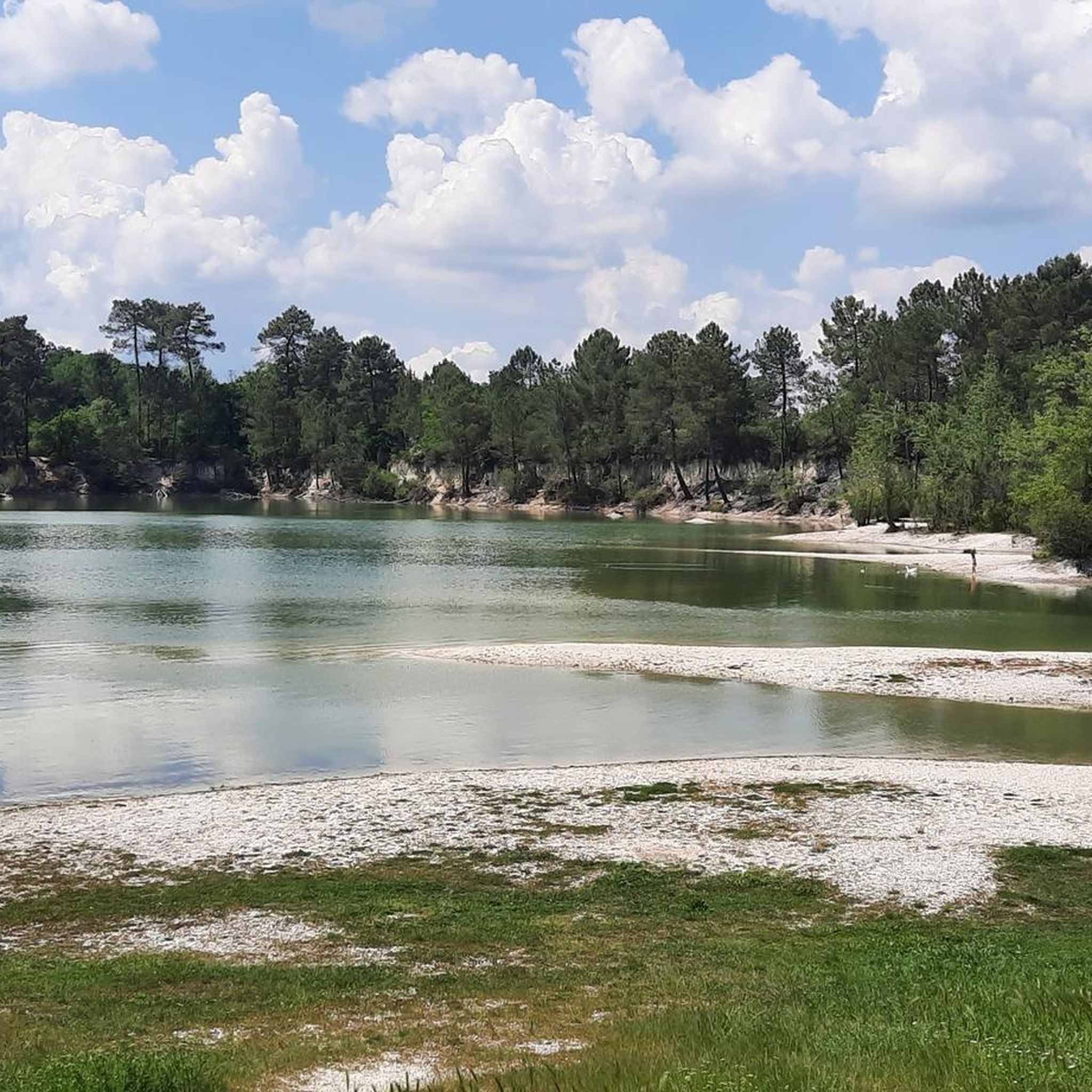
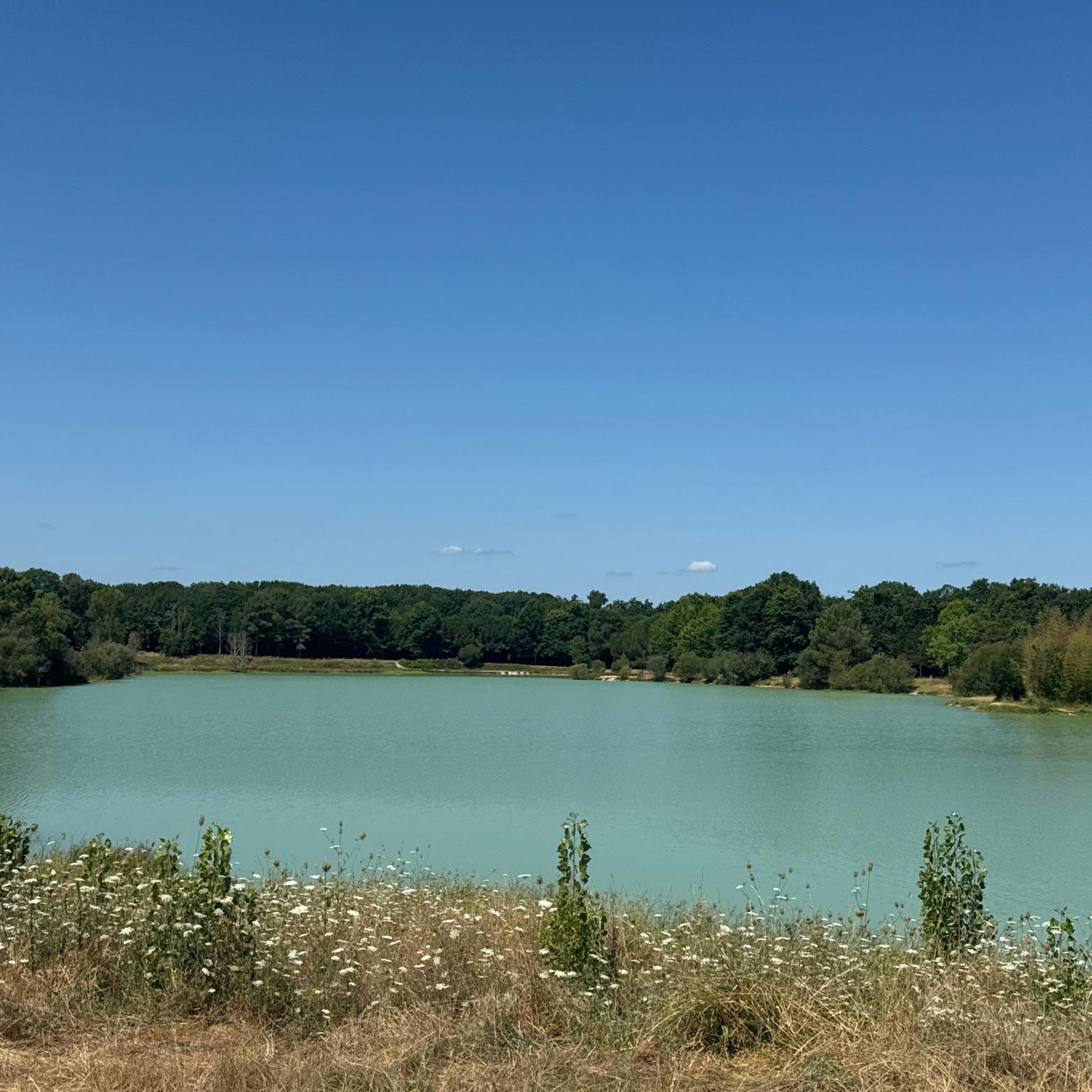
Old brown coal mine, popular swimming lake. The bistro is at the other end of the lake.
5
0
Frequently Asked Questions
How many mountain bike trails are available in Cabanac-Et-Villagrains?
There are over 40 mountain bike trails around Cabanac-Et-Villagrains, offering a variety of experiences for riders. The majority of these routes are rated as easy or moderate.
What kind of terrain can I expect on the mountain bike trails in this region?
The terrain around Cabanac-Et-Villagrains is characterized by extensive forested areas, offering shaded trails. You'll find a mix of wide, gravel forest paths and some singletrack sections. The winding Gat Mort stream and its lagoons also contribute to varied and picturesque scenery.
What is the best time of year to go mountain biking in Cabanac-Et-Villagrains?
The region's forested landscapes provide natural shade, making it enjoyable during warmer months. However, the diverse terrain is generally accessible throughout much of the year, with spring and autumn offering particularly pleasant conditions due to milder temperatures and vibrant natural colors.
Are there any circular mountain bike routes in Cabanac-Et-Villagrains?
Yes, many of the mountain bike routes in the area are designed as loops. For example, the Landiras and Budos Castles Loop is a popular circular route that explores local countryside and historical sites.
What are the typical distances and elevation gains for mountain bike trails here?
The trails vary in length, with many moderate routes ranging from approximately 30 km to over 50 km. For instance, the St. Selve water tower – Water tower loop from Saint-Selve is about 38.6 km with around 176 meters of elevation gain, while the Old Cabanac Station – Le Saucats loop from Saint-Michel-de-Rieufret covers about 45.9 km with around 201 meters of elevation gain.
What natural features or landmarks can I see while mountain biking?
You can explore diverse natural features, including the clear waters of the Gat Mort stream and the unique Lagunes du Gât Mort. The Singletrack Along Saucats Airfield offers a specific trail experience, and the region is also home to the nationally recognized geological heritage site, the Anticlinal de Villagrains.
Are there any interesting points of interest along the mountain bike routes?
Yes, you can encounter various points of interest. The Hostens cycle path - Forêts infinies and Hostens Cycle Path – Endless Forests are notable cycling infrastructures. You might also pass by the Hostens Station, adding a historical touch to your ride.
What do other mountain bikers enjoy about the trails in Cabanac-Et-Villagrains?
The trails in Cabanac-Et-Villagrains are highly rated by the komoot community, with an average score of 4.1 stars from nearly 100 reviews. Riders often praise the extensive forested areas, the varied terrain including gravel paths and singletrack, and the sense of natural immersion the routes provide.
Are there family-friendly mountain bike trails in Cabanac-Et-Villagrains?
Yes, the region offers several easy and moderate trails suitable for families. The presence of wide, gravel forest paths makes many routes accessible for different skill levels, allowing families to enjoy the natural surroundings together.
Can I bring my dog on the mountain bike trails?
While many natural areas in France are dog-friendly, it's always recommended to keep dogs on a leash, especially in forested areas to protect wildlife and ensure the safety of other trail users. Specific regulations can vary, so check local signage.
Where can I park my car when visiting the mountain bike trails?
Parking is generally available near trailheads and in the villages surrounding Cabanac-Et-Villagrains. Many routes, such as the Mountainbike loop from La Brède, start from accessible locations where parking can be found.
Is public transport available to reach the mountain bike trailheads?
While Cabanac-Et-Villagrains is primarily accessed by car, some regional bus services might connect to nearby towns. For specific trailheads, public transport options may be limited, so planning your journey in advance is advisable.
Are there cafes or places to eat near the mountain bike trails?
You can find cafes and restaurants in the villages and towns surrounding the trail areas, such as Cabanac-Et-Villagrains itself, La Brède, or Saint-Selve. These offer opportunities to refuel before or after your ride.
Most popular routes around Cabanac-Et-Villagrains
Most popular attractions around Cabanac-Et-Villagrains

Get inspired with the komoot mobile app


Explore more
Browse the best MTB trails in other regions.
