The best road cycling routes around Frayssinet-Le-Gélat
4.6
(87)
1,819
riders
179
rides
Road cycling around Frayssinet-Le-Gélat, nestled in the Lot department of southwestern France, offers diverse landscapes for exploration. The region is characterized by the limestone plateau of Causse du Quercy, the sandy, hilly terrain of Bouriane Forest, and scenic river valleys like the Lot and Célé. Cyclists will find a mix of rolling countryside, quiet roads, and well-paved surfaces, with local terrain featuring sandy and granitic elements.
Best road cycling routes around Frayssinet-Le-Gélat
- The most popular road cycling route is Boulangerie…
Last updated: November 1, 2026
5.0
(1)
32
riders
59.2km
02:41
600m
600m
Moderate road ride. Good fitness required. Mostly well-paved surfaces and easy to ride.
5.0
(1)
18
riders
44.1km
02:24
650m
650m
Moderate road ride. Good fitness required. Some segments of this route may be unpaved and difficult to ride.

7
riders
51.0km
02:24
620m
620m
Moderate road ride. Good fitness required. Mostly well-paved surfaces and easy to ride.
13
riders
Moderate road ride. Good fitness required. Mostly well-paved surfaces and easy to ride.
8
riders
27.6km
01:24
350m
350m
Moderate road ride. Good fitness required. Mostly well-paved surfaces and easy to ride.
Get access to more routes and recommendations from other explorers.
Already have an account?
Our route recommendations are based on thousands of hikes, rides, and runs completed by other people on komoot.
Start today with a free account
Your next adventure awaits.




Other adventures around Frayssinet-Le-Gélat

Tips from the Community

The name of the village comes from the Celtic word Puech (meaning high place) and from Guillaume de Cardaillac, count-bishop of Cahors, who took possession of the fort in 1228 during the Albigensian Crusade. The city became a highly strategic point for controlling river trade on the Lot, where wine and local goods were transported on barges.
0
0
The name of the village comes from the Celtic word Puech (meaning high place) and from Guillaume de Cardaillac, count-bishop of Cahors, who took possession of the fort in 1228 during the Albigensian Crusade. The city became a highly strategic point for controlling river trade on the Lot, where local wine and goods were transported on barges.
0
0
The Voie verte et véloroute de la Vallée du Lot (V86) is a major, safe cycling route stretching for approximately 430 to 480 km, connecting La Canourgue in Lozère to Aiguillon in Lot-et-Garonne. The route follows the meanders of the Lot river through varied landscapes of limestone cliffs, vineyards, orchards, and causses.
0
0
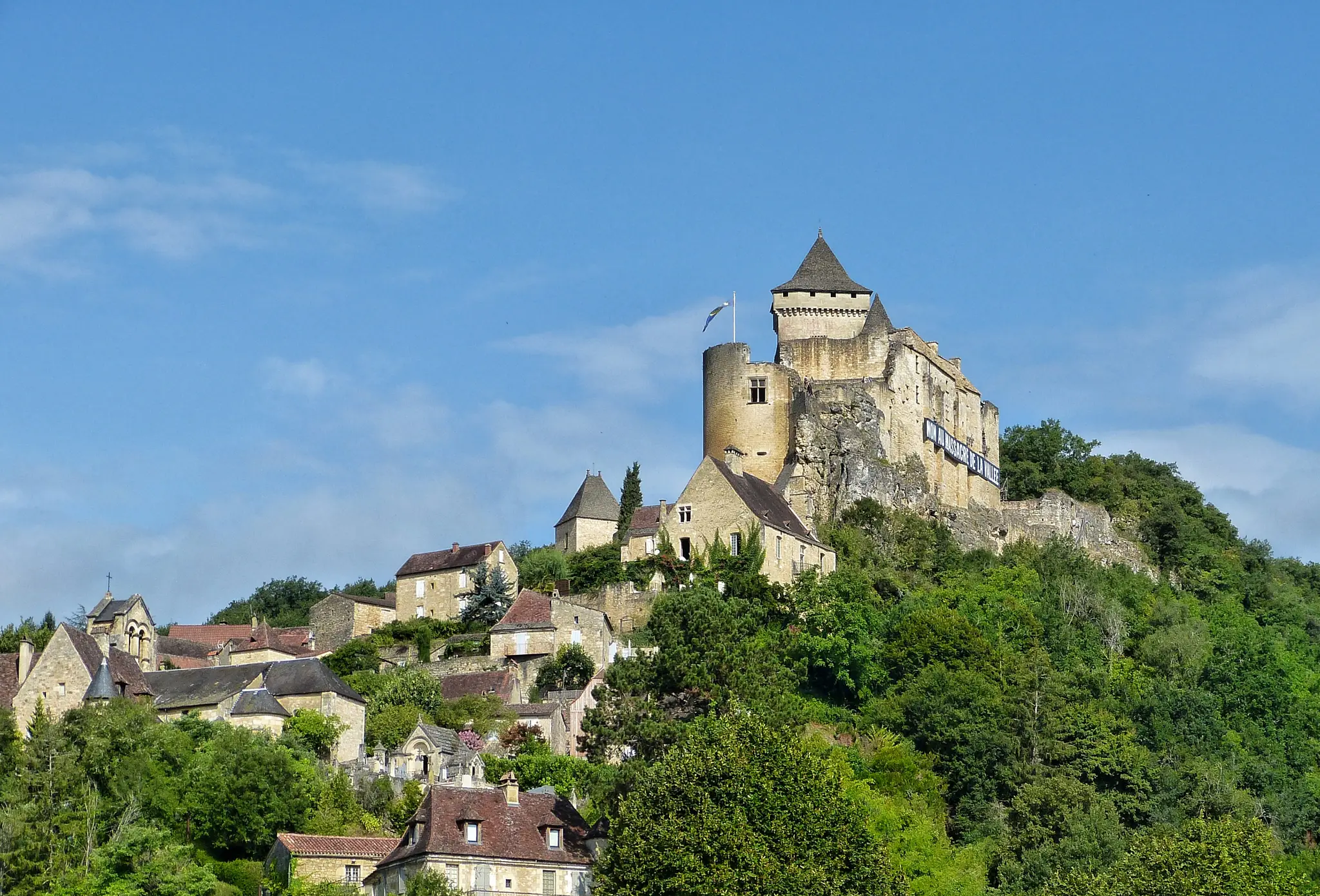
The greatest paradox of Bonaguil is that it appeared totally obsolete as soon as it was completed (at a time when kings were building the peaceful châteaux of the Loire). Situated away from the main strategic routes, it was never attacked or besieged, which explains why it has come down to us almost intact. A war machine... that never served!
0
0
The Notre-Dame-de-l'Assomption church of Villefranche-du-Périgord is a 19th-century religious building located in the heart of the medieval bastide The current church was built between 1864 and 1865 based on plans by architect Paul Abadie, famous for being the architect of Sacré-Cœur de Montmartre. It features a neo-Romanesque style, replacing an older building damaged over the centuries by the Hundred Years' War and the Wars of Religion. The interior space is vast, bright, and sober, characterized by a clear nave lit by stained-glass windows.
0
0
SauveTerre Museum of Prehistory: A modern space that reconstructs the daily life, environment, and evolution of prehistoric populations following major excavations in the region. Le Site du Martinet: Classified as a historic monument, this open-air archaeological site is located less than a kilometer from the museum and can be discovered independently. Le Château des Rois Ducs: A dominant medieval fortress built at the end of the 13th century by Edward I, a witness to ancient Franco-English rivalries. L'Église Saint-Barthélemy: 12th-century Romanesque building located in the heart of the historic town, of which a magnificent original apse remains. La Croix du Chemin: A remarkable 15th-century wrought iron artwork classified as a Historic Monument.
0
0

Bonaguil is home to an ancient 13th-century fortified castle of the same name. The town offers a beautiful setting for a stopover. It also hosts a festival every August, featuring wonderful plays.
0
1

Bridge that passes over the lot. We are on a dedicated site so we can enjoy it in peace!!
1
0
Frequently Asked Questions
How many road cycling routes are available around Frayssinet-Le-Gélat?
There are nearly 200 road cycling routes around Frayssinet-Le-Gélat, offering a wide variety of options for different skill levels. You'll find everything from easy rides to more challenging ascents.
What kind of terrain can I expect on road cycling routes in this region?
The region features diverse terrain, including the limestone plateau of Causse du Quercy, the sandy and hilly Bouriane Forest, and scenic river valleys like the Lot and Célé. The local terrain around Frayssinet-le-Gélat itself is characterized by sandy and granitic elements, providing a mix of rolling countryside and quiet, well-paved roads.
Are there routes suitable for beginners or those looking for an easier ride?
Yes, Frayssinet-Le-Gélat offers 20 easy road cycling routes. These routes are designed to be less strenuous, allowing you to enjoy the beautiful landscapes at a comfortable pace. The region's network includes options for various ability levels, ensuring there's something for everyone.
What are some challenging road cycling routes for experienced riders?
For experienced riders seeking a challenge, there are 38 difficult routes available. These routes often feature more significant elevation gains and longer distances, providing a rewarding experience through the region's varied topography. While specific challenging routes are not listed here, you can explore the full range on komoot.
Can I find circular road cycling routes around Frayssinet-Le-Gélat?
Yes, many of the routes around Frayssinet-Le-Gélat are circular. For example, the Boulangerie Soleil d'Oc – Sauveterre-la-Lémance loop from Frayssinet-le-Gélat is a popular moderate loop covering 39.1 miles (62.9 km) through the scenic countryside.
Are there any historical landmarks or scenic viewpoints along the cycling routes?
Absolutely. Many routes pass by significant landmarks and offer scenic views. For instance, the Château de Bonaguil – Frayssinet-le-Gélat loop from Cassagnes takes you past the formidable Château de Bonaguil. You can also find routes with panoramic viewpoints, such as the Panoramic viewpoint — Puy-l'Évêque loop from Cassagnes, which offers views towards the medieval town of Puy-l'Évêque.
What is the best time of year for road cycling in Frayssinet-Le-Gélat?
The region is generally pleasant for cycling during spring and autumn, when temperatures are milder. Summer can also be enjoyable, but it's advisable to start early in the day to avoid the midday heat. The quiet roads and smooth trails are accessible for much of the year.
Are there family-friendly road cycling options?
While specific 'family-friendly' routes are not explicitly categorized, the 20 easy routes available are generally suitable for families looking for a relaxed ride. These routes often follow quieter roads and dedicated cycle paths, providing a safer and more enjoyable experience for all ages.
What do other cyclists say about road cycling in Frayssinet-Le-Gélat?
The area is highly rated by the komoot community, with an average score of 4.2 stars from over 60 reviews. More than 1,600 road cyclists have used komoot to explore Frayssinet-Le-Gélat's varied terrain, often praising the beautiful landscapes, historic villages, and the peaceful setting of the quiet roads.
Is there parking available near the starting points of these routes?
Yes, parking is generally available in and around Frayssinet-le-Gélat and the various starting points of the routes. Many routes begin from villages or towns where public parking can be found, making it convenient to access the trails.
Can I reach Frayssinet-Le-Gélat by public transport with my bike?
While Frayssinet-le-Gélat is a rural area, some regional public transport options might allow bikes, particularly trains to larger nearby towns in the Lot department. It's recommended to check specific bus or train schedules and their bike policies in advance, as services can be limited.
What are the typical distances and elevations for road cycling routes in the area?
Routes vary significantly in distance and elevation. Moderate routes, like the Le Château – Church of Prats-du-Périgord loop from Pomarède, can be around 31.2 miles (50.2 km) with approximately 613 meters of elevation gain. Shorter routes, such as the Panoramic viewpoint — Puy-l'Évêque loop from Cassagnes, are about 27.6 km with 344 meters of elevation, while longer ones can exceed 60 km.
Are there any routes that explore the Bouriane Forest or Causse du Quercy?
Yes, the road cycling network around Frayssinet-le-Gélat is defined by these distinct natural features. Routes often traverse the sandy, hilly terrain of the Bouriane Forest, rich in oak and chestnut trees, and wind through the traditional dry stone architecture of the Causse du Quercy limestone plateau, offering unique regional experiences.
Most popular routes around Frayssinet-Le-Gélat
Most popular attractions around Frayssinet-Le-Gélat

Get inspired with the komoot mobile app


Explore more
Browse the best Road cycling routes in other regions.
