The best cycling routes around Durfort-Lacapelette
4.5
(203)
1,259
riders
107
rides
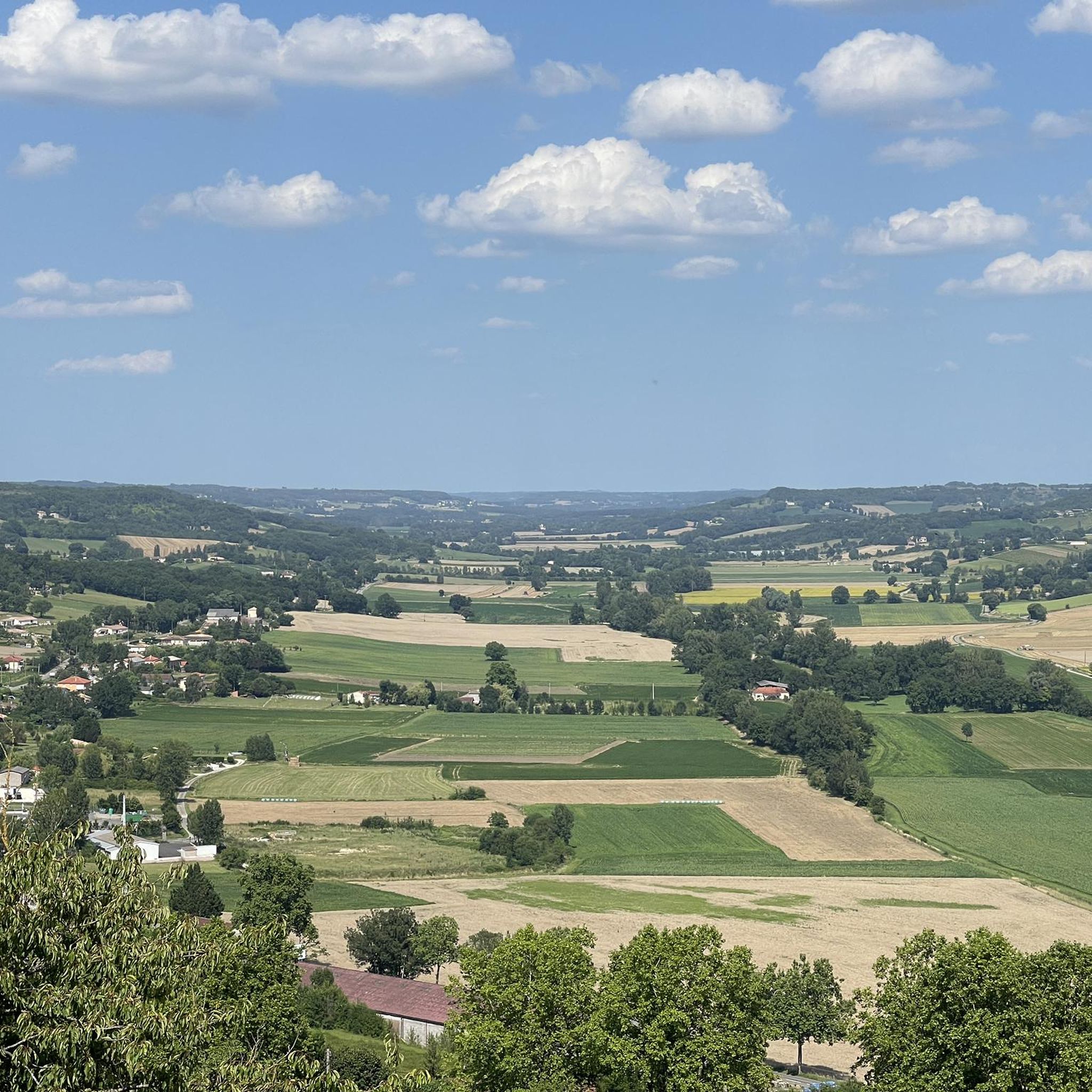
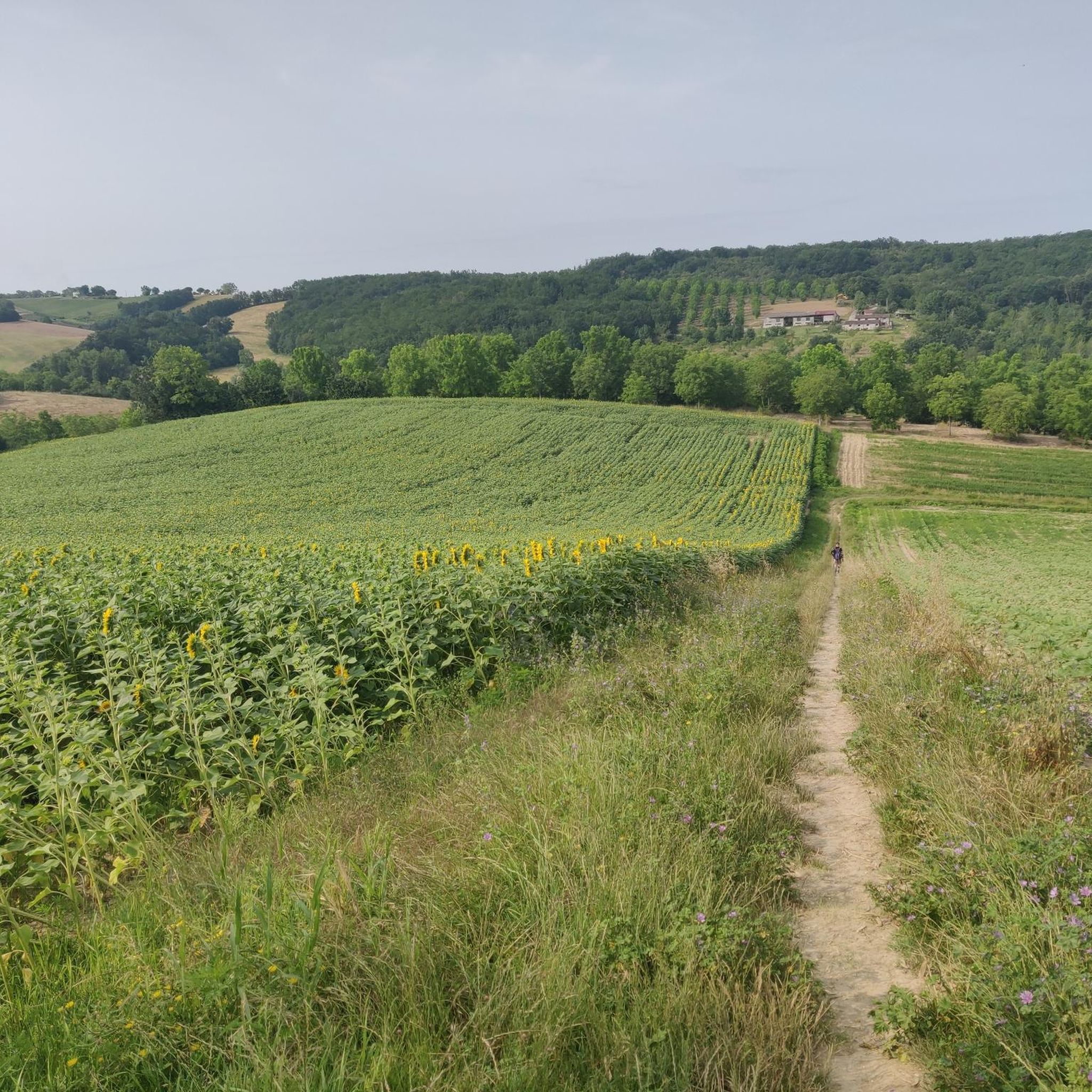
Touring cycling around Durfort-Lacapelette offers a diverse landscape, ranging from the challenging ascents of the Black Mountain foothills to the gentler, rolling terrain of the Lauragais plain. The region is characterized by picturesque river valleys, including the Sor river, and extensive forests primarily composed of oak, chestnut, and walnut trees. This varied topography provides a range of gradients and scenic backdrops for cyclists.
Best touring cycling routes around Durfort-Lacapelette
- The most popular touring cycling route is Moissac – Auvillar loop…
Last updated: October 25, 2026
5.0
(8)
75
riders
20.5km
01:15
40m
40m
Easy bike ride. Mostly paved surfaces.
4.8
(8)
26
riders
49.0km
02:54
190m
190m
Moderate bike ride. Good fitness required. Mostly paved surfaces.

3.0
(2)
11
riders
42.7km
02:38
240m
240m
Moderate bike ride. Good fitness required. Mostly paved surfaces.
4.0
(1)
12
riders
Hard bike ride. Very good fitness required. Mostly paved surfaces.
7
riders
43.8km
02:50
560m
560m
Hard bike ride. Very good fitness required. Mostly paved surfaces.
Get access to more routes and recommendations from other explorers.
Already have an account?
Our route recommendations are based on thousands of hikes, rides, and runs completed by other people on komoot.
Start today with a free account
Your next adventure awaits.

Tips from the Community

Built at the end of the 13th century and remodelled in the 18th century following a fire in 1562, then again in 1881, the village church forms a single-nave stone vessel with a polygonal apse. The choir (Radiant Gothic) is covered. The stained glass windows, in very vivid colour ranges, depict the lives of Christ and Saint-Hilaire.
0
0
Montcuq is a superb medieval hilltop village with a rich heritage in the heart of Quercy Blanc: La Tour de Montcuq: A majestic 12th-century keep that proudly overlooks the village. Built between the late 12th and early 13th centuries under the authority of the Counts of Toulouse.Destruction of the castle: During the Albigensian Crusade and the treaties with the King of France, the local lord had to dismantle the ramparts. Only this keep survived.Particularities: It has a rectangular (or trapezoidal) shape and a square turret housing a unique spiral staircase. Scientifically, the name has nothing lewd about it: it comes from the Occitan Moncuc, which simply means a conical hill or a fortified hill.
0
0
Lauzerte is a magnificent medieval bastide from the 12th century perched on a rocky spur. Lauzerte is an unmissable and mythical stop for pilgrims on the Via Podensis (the route from Puy-en-Velay). Founded by the Count of Toulouse, this ancient strategic city features a checkerboard architecture typical of the bastides of the Southwest.
0
0
Lauzerte is a magnificent medieval bastide from the 12th century perched on a rocky outcrop. Lauzerte is an essential and mythical stop for pilgrims on the Via Podensis (the path from Le Puy-en-Velay). Founded by the Count of Toulouse, this ancient strategic town has a checkerboard architecture typical of the bastides of the Southwest.
0
0
Lauzerte is a magnificent medieval bastide from the 12th century perched on a rocky spur. Lauzerte is an essential and mythical stop for pilgrims on the Via Podensis (the route from Puy-en-Velay). Founded by the count of Toulouse, this ancient strategic city features a checkerboard architecture typical of the bastides of the Southwest.
0
0
The abbey and its cloister, the historic center, the Art Deco buildings, the Napoleon bridge, the towpath, and the Cacor canal bridge are must-sees. Everything can be easily discovered on foot. Moissac is a major stop on the Camino de Santiago thanks to its exceptional heritage, particularly its abbey, a UNESCO World Heritage site. Its Romanesque cloister and sculpted tympanum make it an emblematic place for pilgrims from all over the world.
0
0
Abbey founded in the mid-7th century. After its affiliation with Cluny in 1047, the abbey was consecrated in 1063. Cloister built at the end of the 11th century (high altar consecrated by Urban II), portal completed between 1115 and 1135, fortifications and cloister arcades in the 13th century. After the troubles of the Hundred Years' War and the looting due to the Wars of Religion, the abbey came under commendatory abbots in the 17th century. After the Revolution, the abbey was bought back as national property and saved by the town hall secretary. The church was returned to worship in 1801 and was restored at the initiative of Viollet-le-Duc in 1847. In 1856, the conventual buildings located on the site of the seminary were destroyed and divided for sale. The repurchase of the plots allowed for the construction of the minor seminary and a chapel between 1860 and 1865. The seminary is built on medieval remains of the abbey, particularly the cistern and the Hall of the Dead, which retains painted decoration from the 14th century.
1
0
The abbey and its cloister, the historic center, the Art Deco buildings, the Napoleon bridge, the towpath, and the Cacor canal bridge are must-sees. Moissac is a major stop on the Camino de Santiago thanks to its exceptional heritage, notably its abbey, a UNESCO World Heritage site. Its Romanesque cloister and sculpted tympanum make it an emblematic place for pilgrims from all over the world.
0
0
Frequently Asked Questions
How many touring cycling routes are available around Durfort-Lacapelette?
There are over 100 touring cycling routes in the Durfort-Lacapelette area, offering a wide range of options for different skill levels and preferences. You'll find everything from gentle rides to more challenging ascents.
What kind of terrain can I expect when touring cycling in this region?
The region around Durfort-Lacapelette offers a diverse landscape. You can expect challenging ascents in the Black Mountain foothills, gentler rolling terrain across the Lauragais plain, and picturesque river valleys like the Sor river. The routes often pass through extensive forests of oak, chestnut, and walnut trees, providing varied scenic backdrops.
Are there touring cycling routes suitable for beginners or families?
Yes, Durfort-Lacapelette offers 17 easy touring cycling routes, perfect for beginners or families looking for a relaxed ride. These routes typically feature gentler gradients and less demanding terrain. For a moderate option, consider the Cacor Canal Aqueduct in Moissac – Cacor Canal Bridge loop from La Megère Nord, which is 35 km long and has minimal elevation gain.
What are some challenging touring cycling routes in the area?
For experienced touring cyclists seeking a challenge, there are 39 difficult routes available. One such route is the Castelsagrat – Perfect place for lunch break – View of Lauzerte loop from Lauzerte, which covers 49.1 km with significant elevation changes, offering panoramic views. Another demanding option is the Shelters, shelter loop from Lauzerte, a 43.4 km route with over 500 meters of ascent.
What do other cyclists say about the touring routes in Durfort-Lacapelette?
The touring cycling routes in Durfort-Lacapelette are highly regarded by the komoot community, with an average rating of 4.5 out of 5 stars from over 190 reviews. More than 1300 touring cyclists have explored the varied terrain using komoot, often praising the diverse landscapes and well-maintained paths.
Are there any circular touring cycling routes in the region?
Many of the touring cycling routes around Durfort-Lacapelette are designed as loops, allowing you to start and end at the same point. For example, the popular Moissac – Auvillar loop from Rullet is a 49.3 km moderate route that brings you back to your starting point.
What interesting sights or landmarks can I see along the touring cycling routes?
Along the touring cycling routes, you can discover several interesting landmarks. Highlights include the historic Cacor Canal Bridge, the charming town of Moissac with its impressive Saint Peter's Abbey Church and Cloister, and the picturesque Place des Cornières de Lauzerte. You might also spot a typical local dovecote.
Are there any routes that offer panoramic views?
Yes, several road cycling routes in the broader region provide stunning panoramic views. You can find vistas over the Pyrenees and even a majestic Cathar castle. The Col de Fontbruno is also highlighted as a beautiful pass offering scenic views, often with good shade.
Are there places to refill water bottles or take a break along the routes?
Yes, the region is cyclist-friendly with several convenient stops. The Chapelle de Saint-Sernin-du-Bosc de Lauzerte offers a drinking water point. Additionally, the Eau Potable de l'Église de Massaguel is another spot for water. You might also find a small pilgrim restaurant directly on the Camino, providing a convenient place for refreshments.
Which touring cycling routes are less crowded?
While specific crowd levels can vary, routes that venture into the extensive forests or less-traveled parts of the Black Mountain foothills tend to be quieter. Exploring some of the 17 easy routes or the 39 difficult routes, which cater to specific preferences, might lead you to less crowded paths compared to the most popular moderate options.
Can I find routes that pass through river valleys or forests?
Absolutely. The landscape around Durfort-Lacapelette is rich with picturesque river valleys, including the Sor river, and extensive forests primarily composed of oak, chestnut, and walnut trees. Many touring routes are designed to showcase these natural features, offering shaded sections and appealing vistas.
Are there any routes that connect to other towns or points of interest?
Yes, many routes connect various towns and points of interest. For instance, the Bordebasse Lock – Montauban loop from Lafrançaise is a moderate 43.5 km path that winds through the region's rolling landscapes, connecting different areas and offering a consistent cycling experience between towns.
Most popular routes around Durfort-Lacapelette
Most popular attractions around Durfort-Lacapelette

Get inspired with the komoot mobile app


Explore more
Browse the best Cycling routes in other regions.
