The best road cycling routes around Chiry-Ourscamp
4.5
(51)
1,663
riders
380
rides
Road cycling around Chiry-Ourscamp, situated in the Oise department, offers diverse landscapes for cyclists. The region features easy-to-cycle narrow roads and country lanes within the Parc naturel régional Oise – Pays de France. Cyclists can explore expansive state-owned forests, valleys with tree-covered hillsides, and open plains, often alongside the River Oise. The routes are predominantly on paved surfaces, providing a smooth experience for road cyclists.
Best road cycling routes around Chiry-Ourscamp
- The most popular road cycling route is Le lavoir – Montagne du Paradis loop from Ribécourt, a 42.1 miles (67.8 km) trail that takes 3 hours 27 minutes to complete, offering varied terrain through the local countryside.
- Another top favourite among local road cyclists is Varesnes Church – Notre-Dame d'Ourscamp Abbey loop from Ribécourt, a moderate 28.5 miles (45.8 km) path that passes historical sites and scenic parkland.
- Local road cyclists also love the Armistice Glade – Rethondes Church loop from Ribécourt, a 29.6 miles (47.7 km) trail leading through historical landmarks and rural landscapes, often completed in about 2 hours 0 minutes.
- Road cycling around Chiry-Ourscamp is defined by expansive forests, picturesque riverbanks along the Oise, and rolling hillsides. The network offers options for various fitness levels, from moderate rides with minimal elevation to more challenging excursions.
- The routes in Chiry-Ourscamp are highly rated by the komoot community with an average score of 4.3 stars from over 60 reviews. More than 1,800 road cyclists have used komoot to explore Chiry-Ourscamp's varied terrain.
Last updated: July 2, 2026
28
riders
68.5km
03:30
830m
830m
Moderate road ride. Good fitness required. Some segments of this route may be unpaved and difficult to ride.
4.0
(6)
27
riders
45.8km
02:03
180m
180m
Moderate road ride. Good fitness required. Some segments of this route may be unpaved and difficult to ride.

Sign up for free
21
riders
47.1km
02:01
240m
240m
Moderate road ride. Good fitness required. Some segments of this route may be unpaved and difficult to ride.
13
riders
64.5km
02:43
330m
330m
Moderate road ride. Good fitness required. Mostly well-paved surfaces and easy to ride.
12
riders
53.6km
02:16
210m
210m
Moderate road ride. Good fitness required. Mostly well-paved surfaces and easy to ride.
Get access to more routes and recommendations from other explorers.
Sign up for free
Already have an account?
Our route recommendations are based on thousands of hikes, rides, and runs completed by other people on komoot.
Start today with a free account
Your next adventure awaits.
Login or Signup



Tips from the Community


The sight of military cemeteries is always very sad, but we must not forget history.
0
0

The National Military Cemetery of Vic-sur-Aisne, created in 1921, is an impressive necropolis containing the remains of 3,046 French soldiers, mainly killed during the Battles of the Aisne in World War I. Of these, 932 are buried in two ossuaries, and seven others died during World War II. Among the thousands of French soldiers is Ma Yi Pao, a young Chinese legionnaire who died of wounds on September 2, 1918, at the age of 24. He was one of the few Chinese to actually serve as a soldier in the French Foreign Legion, while most of his compatriots were employed as laborers. His grave (plot F, grave 59) is unique: he is the only officially recognized Chinese soldier to have died for France in this war.
8
0
Rethondes is associated with the armistice of 1918. On Sunday 10 November, Foch and Weygand attended mass in the small church. Outside hangs a commemorative plaque. Inside, the portraits of the two commanders are included in the stained glass window of the apse.
4
0
This impressive cemetery was built in 1920-1921 on a site that was heavily contested during the First World War. It contains the remains of 1,258 French soldiers, 547 of whom are buried in two ossuaries. One French soldier from the Second World War is also buried here. Adjacent is a German military cemetery with the remains of 1,095 soldiers, 388 of whom are buried in collective graves, together with four British and two French soldiers. The necropolis is located in a region where the German advance towards Paris passed through in 1914, and where fierce fighting took place in 1918 during the Battle of Matz. Today it is a serene place of remembrance and reconciliation, in the middle of a landscape that was once the scene of devastating battles.
4
0

The church is believed to have been built in the 12th century under the authority of the Knights Templar[2]. The church was almost completely destroyed during the First World War and was rebuilt identically in its original Romanesque style. It received its new blessing on March 6, 1932. It is characterized by its two-story bell tower, one square and the other octagonal, the capitals in the shape of heads perched on small columns, numerous sculptures along the gutters, and the modillions carved with fantastical figures. Source: Wikipedia
0
0
Anecdote: Among the thousands of French soldiers lies Ma Yi Pao, a young Chinese legionnaire who died of his wounds on September 2, 1918 at the age of 24. He was one of the few Chinese who actually served as a soldier in the French Foreign Legion, while most of his compatriots were deployed as laborers. His grave (plot F, grave 59) is unique: he is the only officially recognized Chinese soldier who died for France in this war.
1
0
The National Military Cemetery of Vic-sur-Aisne, created in 1921, is an impressive necropolis containing the remains of 3,046 French soldiers, mainly killed during the Battles of the Aisne in World War I. Of these, 932 are buried in two ossuaries, and seven others died during World War II.
1
0
Frequently Asked Questions
How many road cycling routes are available around Chiry-Ourscamp?
There are over 370 road cycling routes around Chiry-Ourscamp, offering a wide variety of options for cyclists of all levels. The komoot community has explored these routes over 1,800 times.
What kind of terrain can I expect on road cycling routes in Chiry-Ourscamp?
The region features easy-to-cycle narrow roads and country lanes, predominantly on paved surfaces, ensuring a smooth ride. You'll cycle through expansive state-owned forests, valleys with tree-covered hillsides, and open plains, often alongside the picturesque River Oise.
Are there routes suitable for beginners or less experienced road cyclists?
Yes, Chiry-Ourscamp offers 71 easy road cycling routes. These routes typically have minimal elevation gain and are perfect for those looking for a relaxed ride or just starting out. For example, the Varesnes Church – Notre-Dame d'Ourscamp Abbey loop from Ribécourt is a moderate option that passes historical sites and scenic parkland.
Are there challenging road cycling routes for experienced cyclists?
While most routes are moderate, there are 11 difficult road cycling routes for those seeking a greater challenge. These routes often feature longer distances and more significant elevation changes, such as the Le lavoir – Montagne du Paradis loop from Ribécourt, which covers 42.1 miles with over 800 meters of elevation gain.
What natural features can I expect to see while cycling?
You'll encounter diverse natural beauty, including huge state-owned forests, valleys with tree-covered hillsides, intimate groves, and endless plains. Many routes also follow the banks of the River Oise, providing beautiful riverside scenery. The area is part of the Parc naturel régional Oise – Pays de France, known for its rich landscapes.
Are there any historical landmarks or attractions along the road cycling routes?
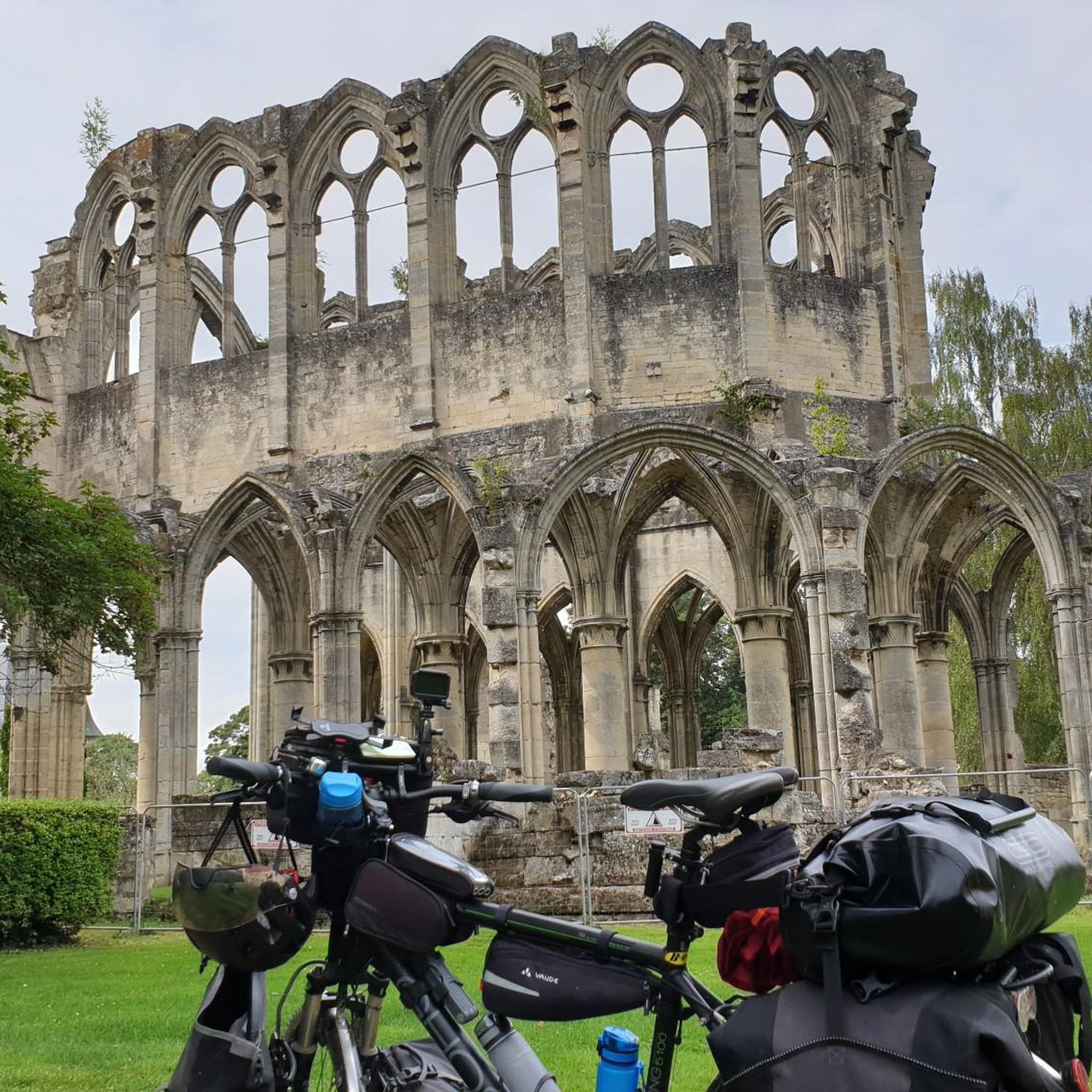
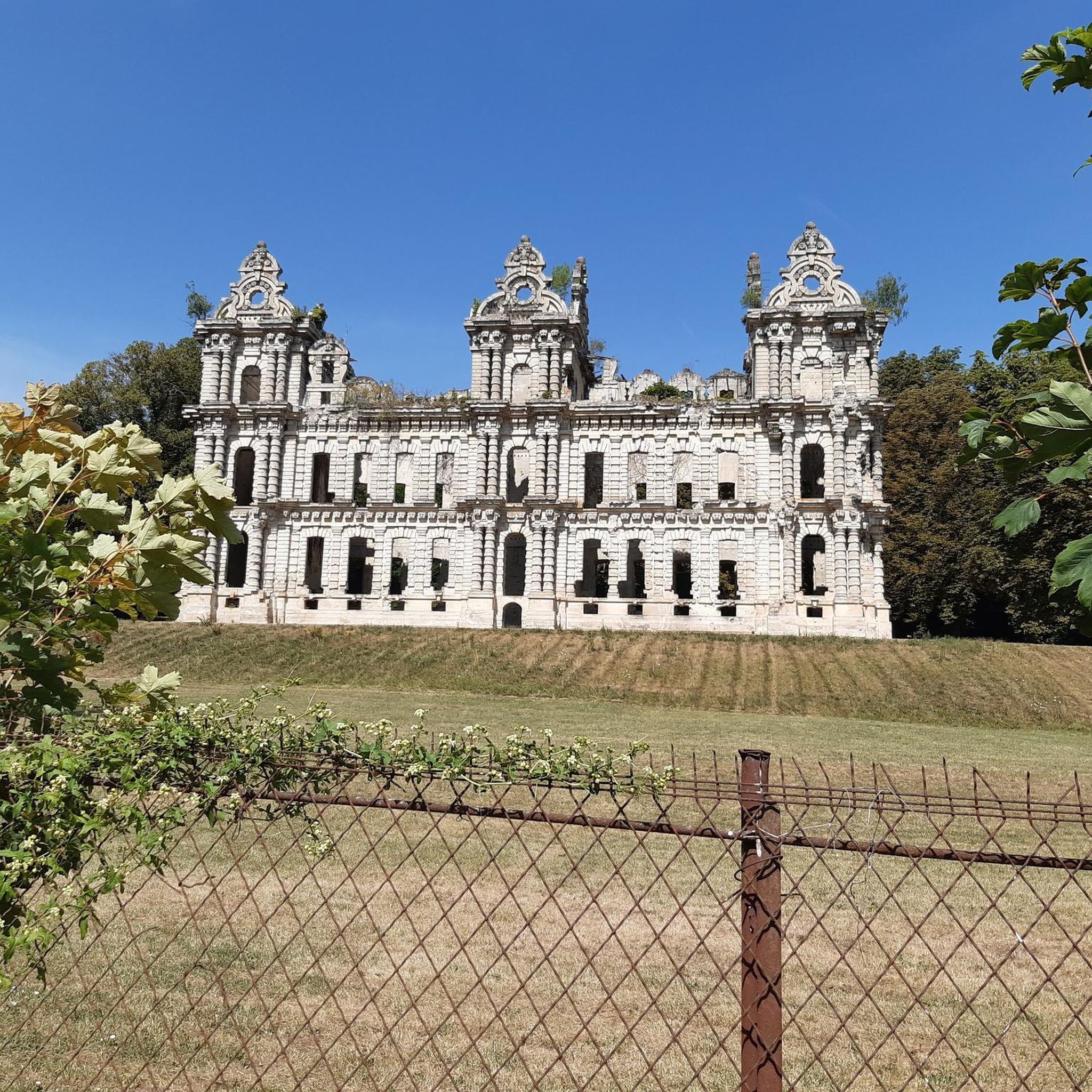
Absolutely. The region is rich in history. You can cycle past the evocative ruins of Ourscamp Abbey, or the 19th-century Château Mennechet, which offers panoramic views. Nearby, you can also visit the impressive Notre-Dame de Noyon Cathedral, an early example of Gothic architecture, or the significant Armistice Clearing (Clairière de l’Armistice) in Compiègne.
Are there scenic viewpoints along the road cycling routes?
Yes, the ruined Château Mennechet provides commanding views of Mont-Conseil and the Oise valley, making it a notable scenic stop. Many routes also offer vistas over the rolling hillsides and expansive plains characteristic of the Parc naturel régional Oise – Pays de France.
What do other road cyclists enjoy most about cycling in Chiry-Ourscamp?
The area is highly rated by the komoot community, with an average score of 4.3 stars from over 60 reviews. Cyclists often praise the quiet country lanes, the varied terrain through forests and along rivers, and the blend of natural beauty with historical landmarks like Ourscamp Abbey.
Are there circular road bike routes available?
Many of the road cycling routes around Chiry-Ourscamp are designed as loops, allowing you to start and finish at the same point. For instance, the Armistice Glade – Rethondes Church loop from Ribécourt is a popular circular trail leading through historical landmarks and rural landscapes.
Is parking available for road cyclists in Chiry-Ourscamp?
While specific parking areas for cyclists are not always signposted, you can typically find parking in the villages and towns where routes often begin, such as Ribécourt-Dreslincourt. Always check local signage for parking regulations.
Can I reach the cycling routes by public transport?
Public transport options to Chiry-Ourscamp and surrounding areas are available, though they might require some planning. For detailed information on train and bus services that can accommodate bicycles, it's best to consult local transport providers for the Oise department.
What is the best time of year for road cycling in Chiry-Ourscamp?
Spring and autumn generally offer the most pleasant conditions for road cycling, with milder temperatures and beautiful scenery as the foliage changes. Summer can also be enjoyable, but it's advisable to cycle earlier in the morning or later in the afternoon to avoid the midday heat.
Most popular routes around Chiry-Ourscamp
Most popular attractions around Chiry-Ourscamp

Get inspired with the komoot mobile app


Explore more
Browse the best Road cycling routes in other regions.
