The best cycling routes around Le Boullay-Mivoye
4.8
(64)
251
riders
109
rides
Touring cycling around Le Boullay-Mivoye offers routes through the Eure Valley and past various ponds, characterizing the region's gentle, rural landscape. The terrain primarily consists of open fields and woodlands, with minimal elevation changes, making it suitable for a range of cycling abilities. The area features a network of paths that connect small villages and natural water bodies.
Best touring cycling routes around Le Boullay-Mivoye
- The most popular touring cycling route is Eure Valley Greenway – The finish line in…
Last updated: July 2, 2026
5.0
(7)
32
riders
119km
06:50
410m
410m
Hard bike ride. Very good fitness required. Mostly paved surfaces. Suitable for all skill levels.
5.0
(1)
10
riders
50.2km
02:55
240m
240m
Moderate bike ride. Good fitness required. Mostly paved surfaces. Suitable for all skill levels.

Sign up for free
9
riders
4.91km
00:20
10m
10m
Easy bike ride. Great for any fitness level. Mostly paved surfaces. Suitable for all skill levels.
4.0
(1)
8
riders
26.9km
01:34
100m
100m
Easy bike ride. Great for any fitness level. Mostly paved surfaces. Suitable for all skill levels.
6
riders
Hard bike ride. Very good fitness required. Mostly paved surfaces. Suitable for all skill levels.
Get access to more routes and recommendations from other explorers.
Sign up for free
Already have an account?
Our route recommendations are based on thousands of hikes, rides, and runs completed by other people on komoot.
Start today with a free account
Your next adventure awaits.
Login or Signup



Tips from the Community


There were once two parishes in Maintenon: "St. Nicholas," a parish serving the castle and its dependent houses. The church of St. Nicholas, adjoining the castle, now deconsecrated, still stands on Maintenon's main square. "St. Peter," a parish covered by the surveys in this table, is a current parish in the commune. In addition, there was a priory, founded in 1220 under the name of the Priory of Our Lady of Maintenon. The church of Saint-Pierre in Maintenon is mentioned at the beginning of the 12th century, but nothing appears to have survived from this period. Indeed, the Count of Montgomery, a Huguenot, passed through Maintenon in 1567 and ruined the church. In 1692, Madame de Maintenon rebuilt the church of Saint-Pierre, which had fallen into ruin and had become too small for a population that had grown from 700 to 1,100 with the arrival of labor for the construction of the aqueduct. However, there is no evidence that the new church was built on the site of the old one. The foundation stone of the new church of Saint-Pierre was laid on June 4, 1692, by the Vicar General. The blessing took place on July 17, 1694. Bishop Godet des Marais subsequently consecrated the building. In 1736, the large "Henriette" bell was blessed by Mr. Jean François DEREYROLES, parish priest, in the presence of "the Most High and Most Powerful Lord, Monsignor Jean Paul François de NOAILLES, Count of AYEN" and by "the Most High and Most Powerful Lady, Madame Henriette Louise DAGUESSEAU de FRESNE, Countess of AYEN." From 1805 to 1813, Duke Jean-Paul de NOAILLES and his wife refurnished and decorated the Saint-Pierre church (the woodwork, credenzas, and pews were redone). The church's embellishment continued until 1899. The church's architecture is unremarkable. However, it is listed as one of the few Baroque churches in the department. The choir is flanked on one side by a sacristy and on the other by a room called "the vault." This is because, until the 1990s, it contained the bodies of some members of the Noailles family, who were buried there in stacked boxes that are still visible, but disused. The organ, installed in the gallery, is no longer in use. It had been partially dismantled for a renovation that proved too expensive, and some of the pipes were stolen. During the 1939-1945 war, almost all of the old stained-glass windows were destroyed and replaced with modern ones, the work of a master glassmaker from the region: Victor Cot-Dezan.
0
0
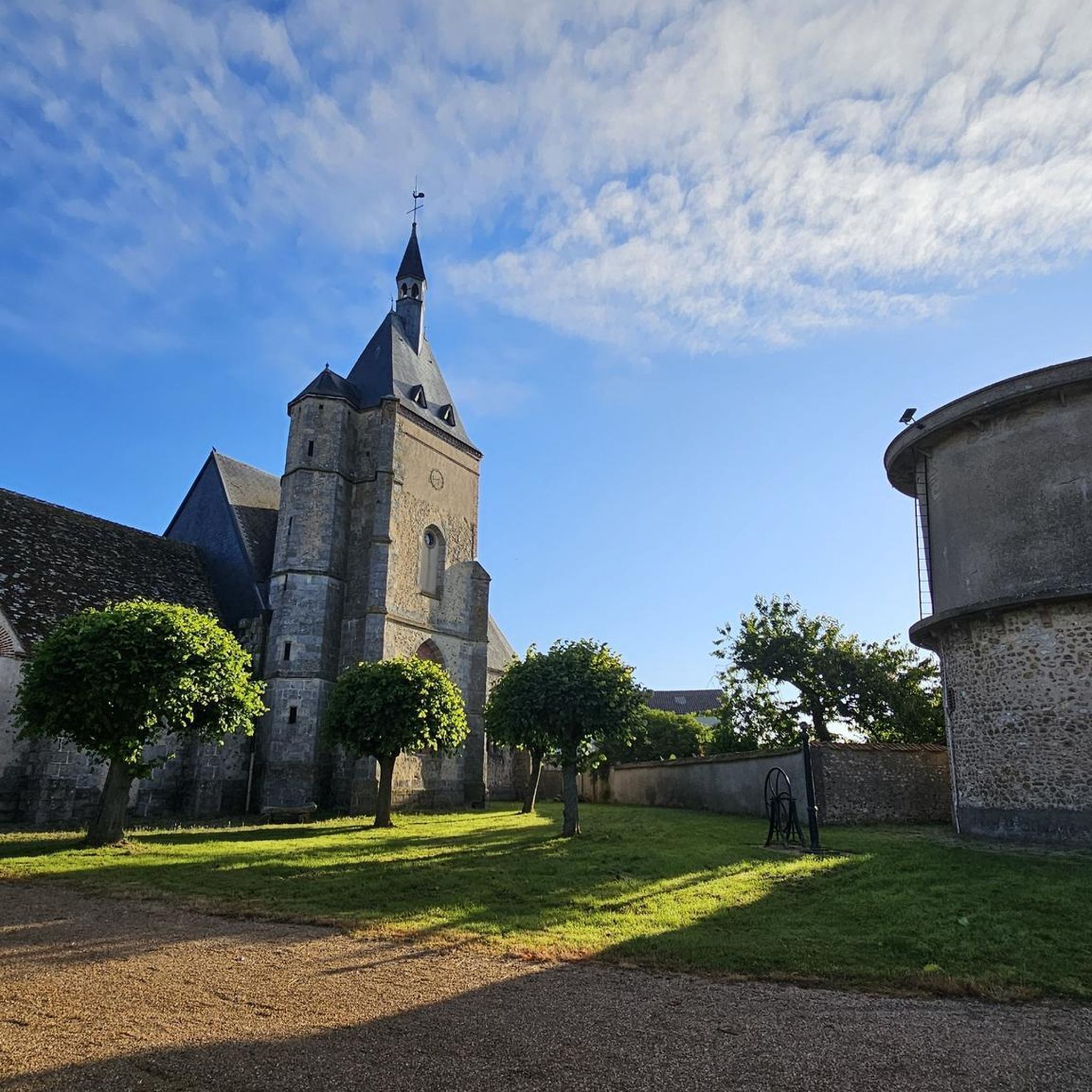
According to tradition, the church choir covers the remains of an older building, possibly dating back to the 6th century, which was built to house the saint's body. According to current knowledge, the commune of Saint-Piat (Sanctus Piatus in Latin) officially appeared in 1087, mentioned in a charter of the Nottonville Priory (Eure-et-Loir), on which it depended. The current building was rebuilt during the time of Francis I, as suggested by the date 1535 engraved on two buttresses of the apse and the date 1542 engraved on a piece of wood from the vault. This is according to a study by the SAEL (Eure-et-Loir Archaeological Society). The three-sided apses, the dripstone towers (horizontal members projecting from a wall), and the sculpted roof structures are a testament to the importance of the reconstructions carried out in the department during the 16th century. The church of Saint-Piat is one of them. While the church has not been officially recognized, it nevertheless contains objects that have attracted attention both for their antiquity and quality, but not always for good reason. Their artistic value, far from attracting only religious or aesthetic interest, has also aroused a covetousness that, unfortunately, remains for some of them. Fortunately, those still in place are carefully cared for and offer the curious a story to discover, a beauty to slowly ponder as they progress toward the choir.
0
0

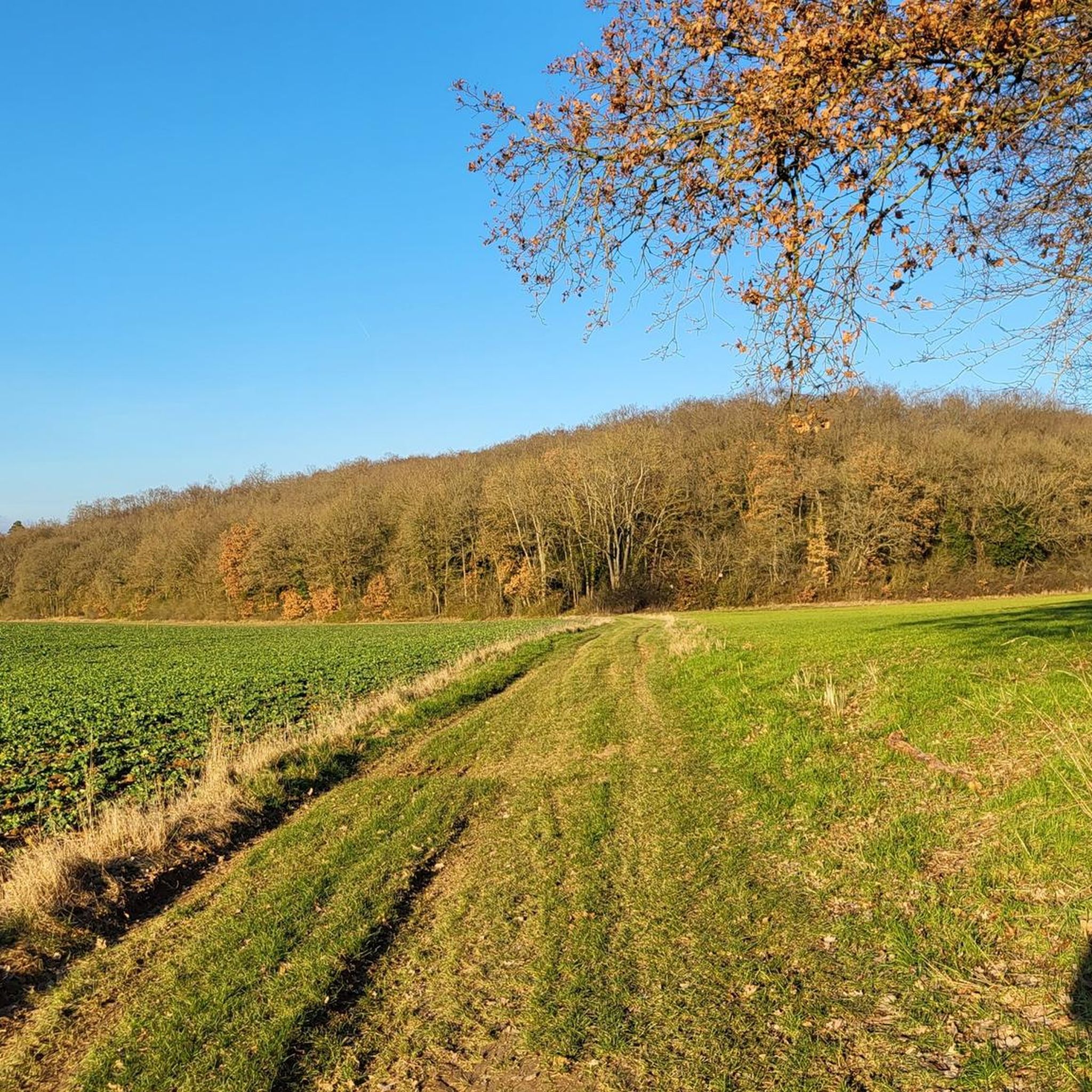
A short stroll through fields, suitable for a walk of about two hours for all levels, pleasant, but nothing more, quite "flat". The visit to the park and the castle of Maintenon deserve more attention than this walk.
0
0


The current remains are those of the 15th-century gate and its barbican or artillery boulevard. The earliest remains on the site date back to the 1st century, with the remains of an ancient domus, a street, and its wooden gutter. The first Guillaume Gate was built around 1185; a wall can still be seen a little further along Rue de la Porte Guillaume. Source: https://journals.openedition.org/cem/14214?lang=en
0
0


Just a stone's throw from Dreux, the Écluzelles lake stretches through the heart of a vast, protected natural area. Popular with windsurfers and paddleboarders, it offers a pleasant setting for strolling along its tranquil banks.
0
0
Frequently Asked Questions
How many touring cycling routes are available in Le Boullay-Mivoye?
There are over 100 touring cycling routes around Le Boullay-Mivoye, offering a wide range of options for different skill levels. You'll find approximately 57 easy routes, 51 moderate routes, and 7 more challenging options.
Are there family-friendly touring cycling routes in Le Boullay-Mivoye?
Yes, the region is well-suited for family cycling due to its generally flat terrain and minimal elevation changes. Routes like the Plan d'eau d'Ecluzelles loop from Écluzelles are easy and offer pleasant views, making them ideal for families.
What kind of terrain can I expect on touring cycling routes around Le Boullay-Mivoye?
The terrain primarily consists of open fields and woodlands, with routes often following the Eure Valley and passing by various ponds. The landscape is generally gentle with minimal elevation changes, making it suitable for relaxed touring cycling.
Are there any circular touring cycling routes?
Yes, many routes in the area are designed as loops, allowing you to start and finish at the same point. For example, the Pond of Boullay-Thierry – The Châtelains cemetery loop from Le Boullay-Thierry offers a pleasant circular ride through pond areas and rural settings.
What are some easy touring cycling routes for beginners?
Beginners will find plenty of easy options with low elevation gain. The Plan d'eau d'Ecluzelles loop from Écluzelles is a short, easy path circling the lake, perfect for a gentle ride. Another accessible option is the Pond of Boullay-Thierry – The Châtelains cemetery loop from Cherville.
Are there challenging touring cycling routes for experienced cyclists?
While the region is generally flat, there are longer routes that offer a significant challenge. The Eure Valley Greenway – The finish line in Chartres loop from Villemeux-sur-Eure is a difficult 78.6-mile (126.5 km) trail that follows the Eure Valley Greenway, providing a substantial ride for experienced touring cyclists.
What can I see along the touring cycling routes in Le Boullay-Mivoye?
The routes often pass through charming rural landscapes, small villages, and alongside ponds. You can also explore historical sites nearby, such as the Château de Mormoulins, the Saint-Sulpice Church of Châteaudun, or the Nogent-le-Roi Castle.
What do other touring cyclists say about the routes in Le Boullay-Mivoye?
The touring cycling routes in Le Boullay-Mivoye are highly rated by the komoot community, with an average score of 4.8 stars from over 90 reviews. Cyclists often praise the peaceful rural settings, the well-maintained paths, and the variety of routes suitable for different abilities.
When is the best time of year for touring cycling in Le Boullay-Mivoye?
The temperate climate of the region makes spring, summer, and early autumn ideal for touring cycling. During these seasons, you can enjoy pleasant temperatures and lush landscapes. Always check local weather forecasts before heading out.
Are there options for parking near the cycling routes?
Many routes start from villages or specific points of interest where public parking is generally available. For example, routes originating from Écluzelles or Le Boullay-Thierry typically have convenient parking options nearby, especially if you're starting from a town center or a designated recreational area.
Can I reach the cycling routes by public transport?
While Le Boullay-Mivoye itself is a smaller commune, regional bus services might connect to larger towns in the Eure-et-Loir department, which could serve as starting points for some routes. For specific public transport options to route starting points, it's best to consult local transport schedules for the Eure-et-Loir region.
Are there any hidden gems or less-known routes worth exploring?
Beyond the most popular trails, the extensive network of paths connecting small villages and natural water bodies often reveals quieter, less-trafficked routes. Exploring the smaller loops around local ponds or through agricultural fields can lead to peaceful discoveries away from the main thoroughfares, such as the Jacques Potiers Route – Saint-Pierre Church loop from Le Boullay-Thierry.
Most popular routes around Le Boullay-Mivoye
Most popular attractions around Le Boullay-Mivoye

Get inspired with the komoot mobile app


Explore more
Browse the best Cycling routes in other regions.
