The best road cycling routes around Le Boullay-Mivoye
4.4
(26)
445
riders
156
rides
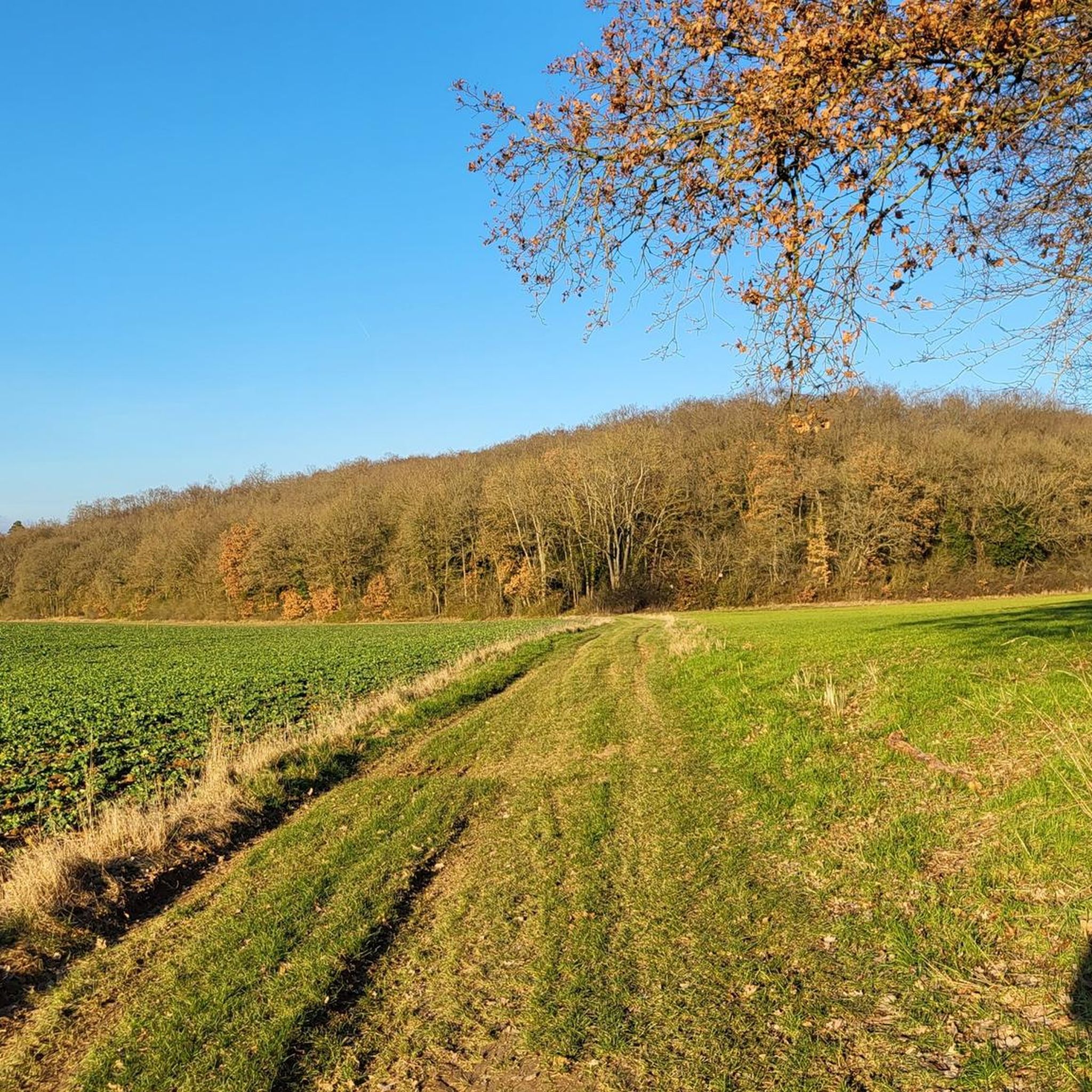
Road cycling around Le Boullay-Mivoye is characterized by its relatively flat terrain, with elevations generally ranging between 115 and 162 meters. The wider Eure-et-Loir region, where Le Boullay-Mivoye is situated, features expansive agricultural plains, gentle rolling hills, and scenic river valleys. This landscape provides varied road cycling routes, from leisurely rides through cultivated fields to longer distances along tranquil waterways.
Best road cycling routes around Le Boullay-Mivoye
- The most popular road cycling route is Château de Mormoulins – Half-timbered house…
Last updated: May 21, 2026
4.0
(1)
6
riders
59.3km
02:19
200m
200m
Moderate road ride. Good fitness required. Some segments of this route may be unpaved and difficult to ride.
3.0
(3)
7
riders
49.9km
01:57
190m
190m
Easy road ride. Great for any fitness level. Mostly well-paved surfaces and easy to ride.

Sign up for free
9
riders
38.1km
01:32
180m
180m
Easy road ride. Great for any fitness level. Mostly well-paved surfaces and easy to ride.
5.0
(2)
5
riders
20.3km
00:50
130m
130m
Easy road ride. Great for any fitness level. Mostly well-paved surfaces and easy to ride.
4
riders
Moderate road ride. Good fitness required. Mostly well-paved surfaces and easy to ride.
Get access to more routes and recommendations from other explorers.
Sign up for free
Already have an account?
Our route recommendations are based on thousands of hikes, rides, and runs completed by other people on komoot.
Start today with a free account
Your next adventure awaits.
Login or Signup



Tips from the Community


The Moulin de Mormoulins is a watermill located on the Eure River in the hamlet of Mormoulins. This mill dates back to the 18th and 19th centuries and is a listed historical monument. You can admire the old stone building, the wooden wheel, and the canal that diverts water from the river as you pass in front of the mill. The mill is surrounded by green fields and trees, creating a peaceful and relaxing atmosphere.
0
0

Very beautiful pond
0
0

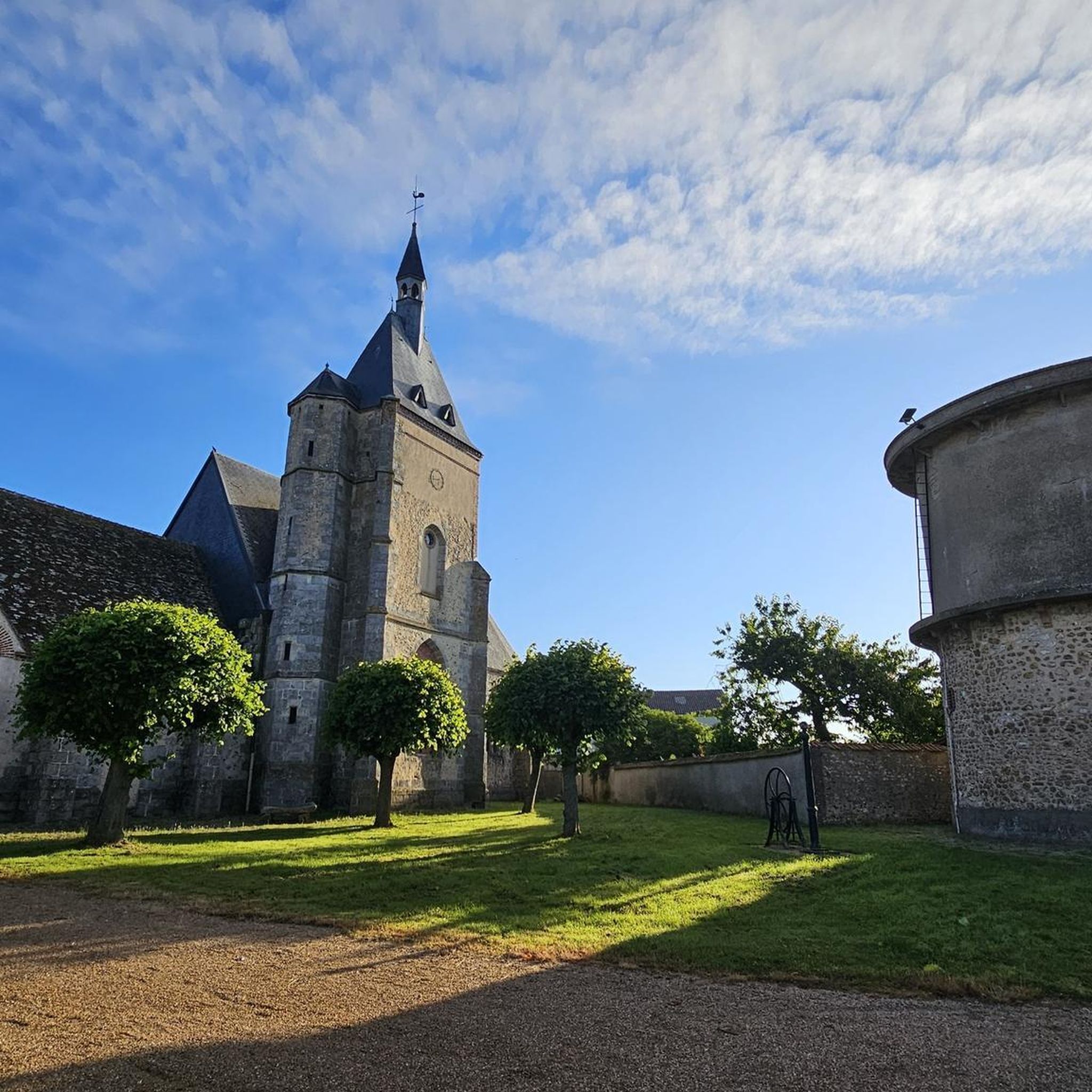
Mentioned in 1159 as a possession of the chapter of Chartres, the oldest parts of the church of Saint-Léger, the nave and western façade, must date back to the 11th century. The nave, 15 m long and 7 m wide, is built from small rubble stones embedded in mortar. Only the corner quoins of the façade and the semicircular arch of the entrance door are made of dressed stone. In 1514, a larger choir (10 m X 10 m) finished by a flat wall, was added to the east. Some of its pointed arched bays have retained their beautiful tracery. The entire choir and nave are covered by a beautiful framework in the shape of an inverted hull. A significant decoration, created in the 18th century, woodwork, stalls, work bench, glory arch, lectern, and communion railing have been fortunately preserved. Traces of medieval wall paintings and a coat of arms were spotted on the walls, as well as ancient graffiti on the exterior. A 12th-century stone baptismal font and a 15th-century stone statue of Saint Léger are listed as Historic Monuments. A slate bell tower, topped with a slate spire, rises above the slightly recessed gable of the western façade. The Sauvegarde de l'Art Français (French Art Protection Agency) granted aid of 100,000 francs in 1992 and then 40,000 francs in 1993 for essential work on the framework and roof.
0
0

large bird reserve and nautical activities
0
0
Every year, during the Heritage Days, the association "Au Cœur de Nos Villages" opens the doors of the Saint-Pierre church. A building from the 12th and 15th centuries, listed as a historical monument, whose bell tower, clock, and five renovated altarpieces, including Saint Michael slaying the dragon, are to be discovered. For the benefit of the Restos du Cœur Walkers will also be able to get to know the Atelier Arc-en-ciel (plastic arts) which exhibits the works of the adult group. Paintings, in red chalk, white pencil, sepia, etc., representing views of the church, statues, etc., will be put on sale for the benefit of the association Au Cœur de Nos Villages.
0
0
The church corresponds to the typology highlighted in the canton of Nogent-le-Roi: a single-aisle building, a dripstone tower punctuating the floors and an adjoining access turret. The architectural decorations belong to late Gothic art. The church was built, or rebuilt, at the end of the 15th century thanks to donations from the Trie and Pillavoine families. To the east, the choir is surrounded, on the north side, by a low construction going around the semi-circular apse to lead to the sacristy. The bell tower is covered with a four-sided dome. The staircase turret adjoining it is hexagonal. To the south, the chapel opening onto the choir was that of the castellans, built in the 19th century by the Boquestant family, and communicating directly with the outbuildings of the castle.
0
0
The construction could date back to the beginning of the 12th century. The nave ends with a chancel with a four-sided apse. A bell tower outside the work is located against the west wall. A seigneurial chapel was built to the north of the chancel. The study of the framework has made it possible to determine several construction phases: 1117-1190, 1274, 1487-1520. The interior walls retain a painted historiated decoration on the back of the west portal, probably representing a dance of death, which could date back to the 1500s. The large funeral chapel built between 1577 and 1585 probably goes back to the architect Métezeau. Its decoration is representative of the end of Mannerism and the Henri IV style. The stained glass windows were restored by the master glassmaker Raphaël Lardeur and were installed in 1947. Lardeur also created the mosaic Stations of the Cross.
0
0
Frequently Asked Questions
What kind of terrain can I expect when road cycling around Le Boullay-Mivoye?
The region around Le Boullay-Mivoye is characterized by relatively flat terrain, with elevations typically ranging between 115 and 162 meters. You'll find expansive agricultural plains, gentle rolling hills, and scenic river valleys, offering a mix of environments for road cycling.
Are there road cycling routes suitable for beginners or those looking for an easy ride?
Yes, there are plenty of options for easy road cycling. Out of 161 routes in the area, 72 are classified as easy. An example is the Avre Aqueduct – Cocherelle Dolmen loop from Villemeux-sur-Eure, which is an easy 49.9 km path.
What are some notable historical sites or landmarks I can see along road cycling routes?
Many routes pass by historical points of interest. You might encounter sites like the Château de Mormoulins, various half-timbered houses, or the ancient Cocherelle Dolmen. The village of Le Boullay-Mivoye itself has historical roots, including an 8th-century church.
Are there longer road cycling routes for more experienced cyclists?
Absolutely. While the terrain is generally gentle, you can find longer routes for endurance. For instance, the The Donjon of Gilles – Nonancourt, historic center loop from Le Boullay-Mivoye is a moderate 97.1 km route that offers a substantial ride.
What do other cyclists say about road cycling in Le Boullay-Mivoye?
The road cycling routes around Le Boullay-Mivoye are highly rated by the komoot community, with an average score of 4.5 stars from over 30 reviews. Cyclists often appreciate the tranquil rural landscapes and the variety of routes available.
Can I find circular road cycling routes in the area?
Yes, many of the road cycling routes around Le Boullay-Mivoye are designed as loops, allowing you to start and finish in the same location. Examples include the Château de Mormoulins – Half-timbered house loop from Charpont and the Half-timbered house – Château de Mormoulins loop from Charpont.
What is the best time of year to go road cycling in Le Boullay-Mivoye?
The Eure-et-Loir region generally offers pleasant cycling conditions from spring through autumn. Spring brings blooming fields, while autumn provides comfortable temperatures and colorful landscapes. Summer is also suitable, though it's advisable to cycle earlier in the morning or later in the afternoon to avoid the midday heat.
Are there any specific regional cycling networks or longer itineraries that pass through or near Le Boullay-Mivoye?
Le Boullay-Mivoye is situated within the Eure-et-Loir department, which is known for its cycling opportunities. The region features sections of longer itineraries like the Véloscénie and the Loir Valley by bike. These routes often follow well-paved surfaces and traverse diverse environments. For more information on regional cycling, you can visit Tourisme28.
What kind of natural landscapes will I encounter on a road bike around Le Boullay-Mivoye?
You'll primarily experience idyllic rural settings, characterized by open fields and agricultural scenery, offering panoramic views of cultivated lands. The wider region also features woodlands and river valleys, particularly along the Eure and Loir rivers, providing a tranquil immersion into the French countryside.
Are there any challenging road cycling routes with significant elevation gain?
While the immediate area around Le Boullay-Mivoye is relatively flat, the wider Eure-et-Loir region includes the rolling hills of the Perche Natural Regional Park, which can offer more challenging climbs. Within the komoot routes, you'll find moderate options that include some elevation changes, such as the Cocherelle Dolmen – Avre Aqueduct loop from Villemeux-sur-Eure with over 200 meters of ascent.
How many road cycling routes are available around Le Boullay-Mivoye?
There are over 160 road cycling routes available around Le Boullay-Mivoye on komoot, offering a wide variety of distances and difficulty levels to explore the region.
Is it possible to combine road cycling with exploring nearby towns or villages?
Yes, Le Boullay-Mivoye's location between larger towns like Dreux and Chartres means you can easily incorporate visits to charming villages and historical towns into your cycling excursions. Many routes are designed to pass through or near these points of interest, allowing for a blend of cycling and cultural exploration.
Most popular routes around Le Boullay-Mivoye
Most popular attractions around Le Boullay-Mivoye

Get inspired with the komoot mobile app


Explore more
Browse the best Road cycling routes in other regions.
