Attractions and Places To See around Ergué-Gabéric - Top 20
Best attractions and places to see around Ergué-Gabéric include a blend of natural landscapes, historical sites, and cultural heritage. This commune in Finistère, France, is characterized by its natural features, such as the Stangala Gorges carved by the Odet River, and cultural landmarks like the Notre-Dame de Kerdévot Chapel. Visitors can explore a variety of sites, from ancient religious edifices to arboretums and historical manors. The area offers opportunities for exploring both its natural beauty and its rich past.
Best…
Last updated: May 26, 2026
Concarneau–Coat Conq Greenway
Highlight (Segment) • Cycleway
Translated by Google •
Tip by

Quimper
Highlight • Other
Translated by Google •
Tip by

Sign up now to discover places like this
Get recommendations on the best single tracks, peaks, & plenty of other exciting outdoor places.
Sign up for free
Saint-Corentin Cathedral
Highlight • Other
It was in 1239 that Bishop Raynaud decided to build the current cathedral based on the foundations of an old Romanesque cathedral. In 1410, the …
Translated by Google •
Tip by

Retreat Garden
Highlight • Natural
Translated by Google •
Tip by
Saint-Mathieu Church
Highlight • Religious Site
Translated by Google •
Tip by
Sign up for free to discover even more attractions around Ergué-Gabéric.
Sign up for free
Already have an account?
Start today with a free account
Your next adventure awaits.
Login or Signup

Tips from the Community

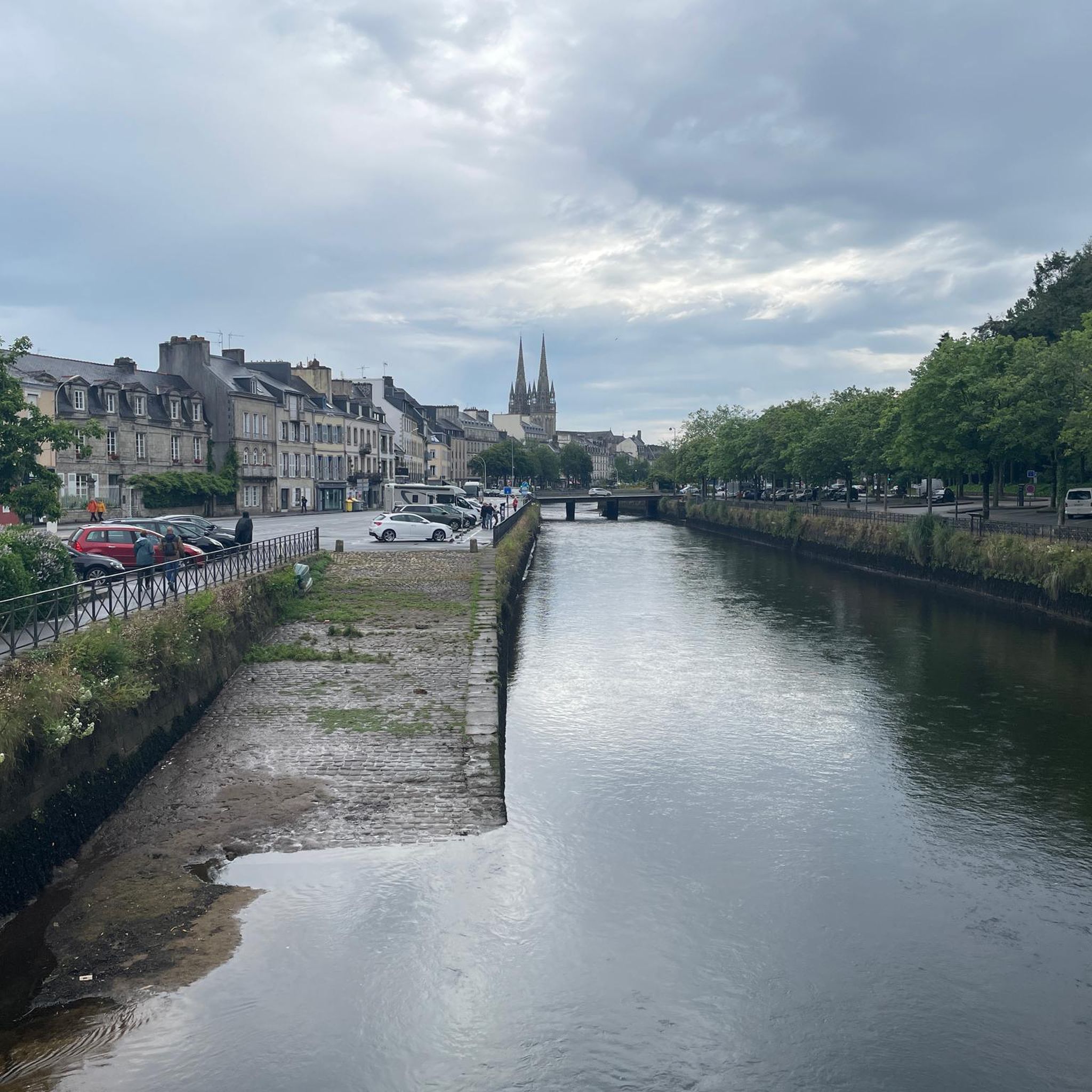
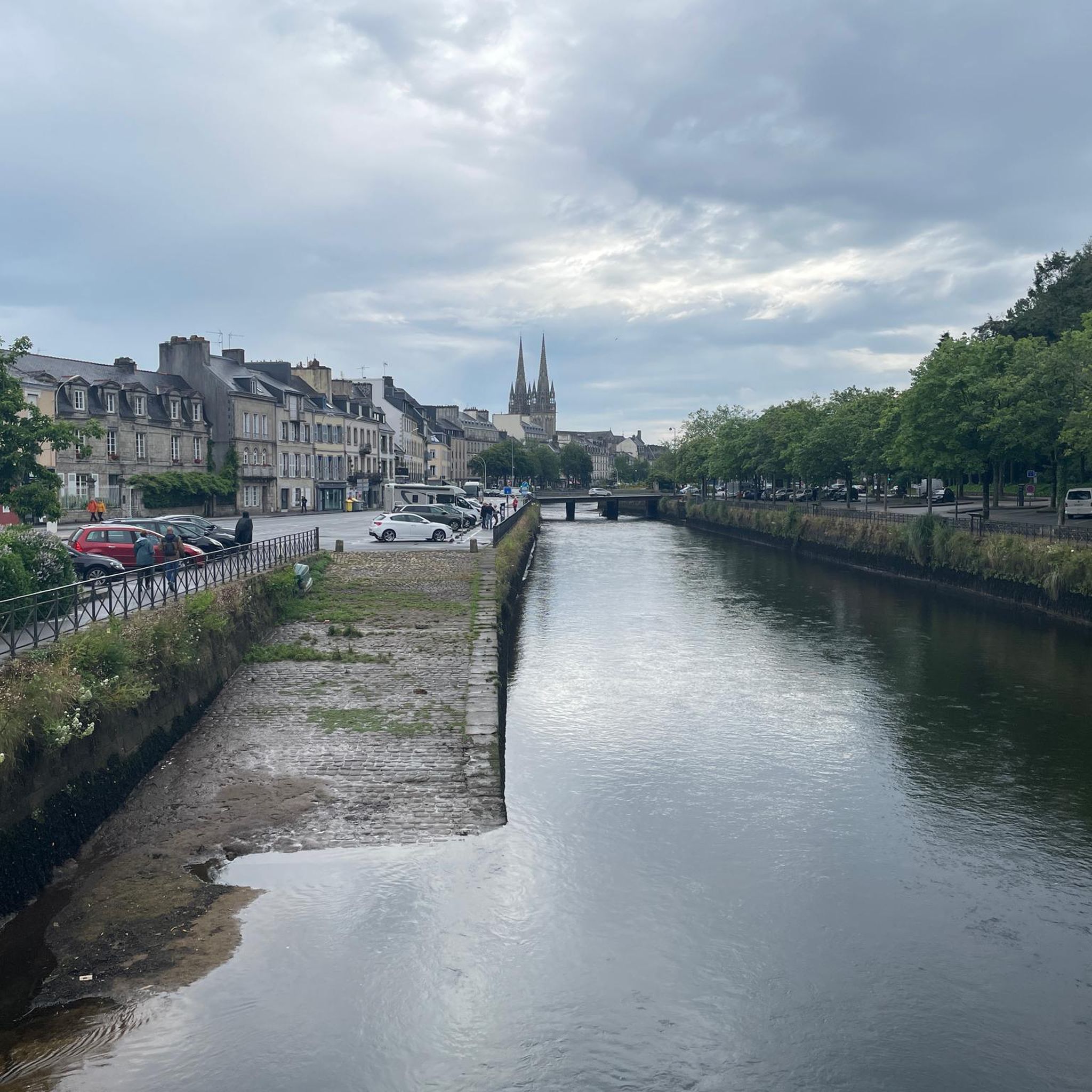
In 1239, Bishop Raynaud commissioned the construction of Saint-Corentin Cathedral. It was built on the foundations of a Romanesque cathedral. Construction lasted three centuries. In 1410, the choir vaults were completed and the windows were installed. In 1424, construction began on the nave and the two towers of the facade. The reconstruction was completed in 1515. The two towers were finally finished between 1854 and 1856. A distinctive feature is its kink in the main axis. The reason for this design element is unclear. Several theories exist. One suggests that it emphasizes the crucifix. Another posits that it is due to the stability of the foundation. Yet another suggests that the kink reflects the inclined head of the crucified Jesus. Following the completion of renovations in December 1999, the cathedral can now be admired as it was decorated at the end of the 15th century. The same colors as in the original, i.e., ochre yellow and ochre red, were used in lime plaster on the rib vaults. Numerous chapels are situated around the chancel, dating from various periods between the 13th and 16th centuries. Excerpts from https://de.wikipedia.org/wiki/Kathedrale_Saint-Corentin
3
0
"The church, consecrated in honor of the Apostle Matthew, is the third building on the current site. The church was first mentioned in writing in 1209 when it was presented to the Bishop of Quimper by Guy de Thouars, Duke of Brittany. The parish of Saint-Mathieu was probably founded at the end of the 12th century by order of the Dukes of Brittany to serve the settlement that had formed west of the walled city of Quimper. [...] The current neo-Gothic parish church replaces a late Gothic building, consecrated on October 28, 1514, which had been built in the 15th/16th centuries on the site of an earlier Romanesque church. The west tower was built in 1845 according to plans by the diocesan architect Joseph Bigot. The nave, transept, and choir were built from February 1895 to 1897 according to designs by Gustave Bigot on a cruciform ground plan on the foundations of the Gothic church. The previous Gothic church had A large stained-glass window depicting the Passion of Christ was preserved; it was transferred to the new parish church. A 17th-century Crucifixion window also survives. https://de.wikipedia.org/wiki/St-Mathieu_(Quimper)
2
1

Saint-Corentin Cathedral - Quimper Saint-Corentin Cathedral was built on the foundations of a Romanesque church in Quimper, the capital of Cornouaille in Brittany. It is one of the three oldest Gothic cathedrals in Brittany, along with the cathedrals of Saint-Pol-de-Léon and Tréguier. Saint-Corentin Cathedral in Quimper is a historic building.
1
0

Not exactly a highlight for road cyclists. But still a beautiful building.
1
0

Beautiful church near the city center.
1
1
In the middle of the city, the two towers of the cathedral rise up.
1
0
Quimper is the second largest city in the Finistère department and has a beautiful city center.
1
0

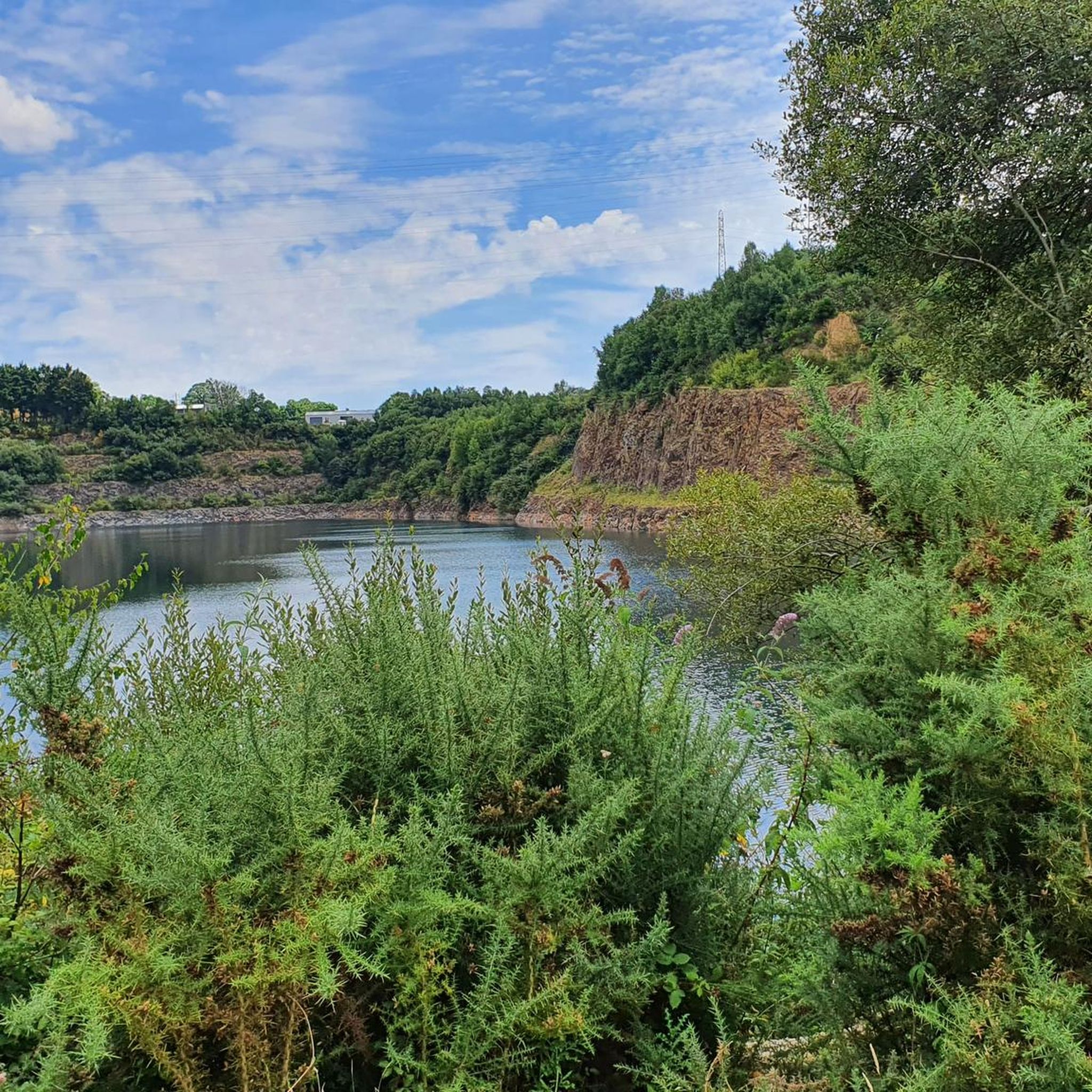
This old railway line is a boon for hikers. The path is sheltered from the sun for three-quarters of the way. The packed crushed stone ground is pleasant and barely deformed. Very good for mountain biking and gravel.
2
0
Frequently Asked Questions
What natural attractions can I explore around Ergué-Gabéric?
Ergué-Gabéric is rich in natural beauty. You can visit the Stangala Gorges, carved by the Odet River, which offer picturesque walks and mountain biking opportunities. The Kerho Arboretum in Lestonan features an 8-hectare botanical trail with 48 species, while Stang Luzigou provides tranquil wooded walks. The area also boasts over 50 km of paths suitable for hiking and mountain biking, connecting various green spaces.
Are there historical or cultural sites to visit in Ergué-Gabéric?
Yes, Ergué-Gabéric has a rich historical and cultural heritage. Key sites include the sumptuous 15th-century Notre-Dame de Kerdévot Chapel, known for its monumental calvary and Flemish altarpiece. The 16th-century Saint Guinal Church features a 17th-century organ and ossuary. You can also explore the historic Manoir de Lezergué, a listed Historic Monument that now operates as a cidrerie with an agricultural tools museum. Other notable chapels include Saint Guénolé and Saint André.
What kind of outdoor activities can I do near Ergué-Gabéric?
The region around Ergué-Gabéric offers diverse outdoor activities. You can enjoy running on trails like the 'Ergué-Gabéric Lestonan loop' or 'Traversée de ruisseau loop'. For road cycling, routes such as 'Quémé loop' or 'Coray Church loop' are popular. Gravel biking enthusiasts can explore routes like 'Pont-l'Abbé–Quimper greenway' or 'Moulin de Rossulien – Pérennou Roman Baths loop'. For more details on these and other routes, visit the Running Trails around Ergué-Gabéric, Road Cycling Routes around Ergué-Gabéric, and Gravel biking around Ergué-Gabéric guides.
Are there family-friendly attractions or activities available?
Yes, several attractions are suitable for families. The Kerho Arboretum offers an engaging botanical trail for all ages. The Concarneau–Coat Conq Greenway is a well-developed cycle path on a former railway line, perfect for family bike rides or walks. Additionally, shared green spaces like the gardens of Pen Carn and the Croas Spern leisure complex provide communal areas for recreation.
What is the Concarneau–Coat Conq Greenway?
The Concarneau–Coat Conq Greenway is a popular cycle way developed on a former railway line. It's suitable for both hiking and mountain biking, offering a sheltered route through the landscape. Visitors appreciate its well-developed path and pleasant crushed stone ground, making it ideal for a comfortable outing.
What can I see in Quimper, near Ergué-Gabéric?
Quimper, the cultural and economic center of Finistère, is a must-see. Its historic old town features many half-timbered houses, some dating from the 16th and 17th centuries. The city is dominated by the soaring spires of the Saint-Corentin Cathedral, a magnificent 13th-century Gothic structure. You can also visit the Retreat Garden, a quiet oasis with palm, subtropical, and dry garden sections, or the neo-Gothic Saint-Mathieu Church.
What makes the Saint-Corentin Cathedral unique?
The Saint-Corentin Cathedral in Quimper is a striking 13th-century Gothic cathedral. It is particularly known for its exaggerated Gothic style, beautiful gargoyles, and a distinctive bend in its main axis. This architectural feature, whose reason is debated, is thought by some to emphasize the crucifix or be due to foundation stability. Its interior features restored polychromies in yellow and red ochre, reflecting its 15th-century appearance.
Are there any restored mills or industrial heritage sites in the area?
Yes, you can visit the Rossulien Mill, which was restored in 2020 and is open to the public. Additionally, the area has industrial heritage linked to the former paper mill established in Odet in 1822, which led to the development of the Keranna workers' city.
What do visitors enjoy most about the attractions around Ergué-Gabéric?
Visitors frequently praise the blend of natural beauty and historical depth. They appreciate the well-maintained paths for walking and cycling, the tranquility of places like the Retreat Garden, and the architectural grandeur of sites like the Saint-Corentin Cathedral. The opportunity to explore both ancient religious edifices and scenic landscapes is a common highlight.
Can I find local products or markets in Ergué-Gabéric?
Yes, you can discover local products at the seasonal Market of Kerdévot. Additionally, the Manoir de Lezergué, a historic estate, operates as a cidrerie where you can learn about cider production and visit its orchards.
Are there opportunities for hiking or walking in wooded areas?
Absolutely. The Stangala Gorges offer picturesque walks along the Odet River. The wooded area of Stang Luzigou, a departmental property, is ideal for tranquil walks. Furthermore, the commune is crisscrossed with over 50 km of paths, many of which traverse green spaces and departmental forests, providing ample opportunities for hiking and walking.
Most popular routes around Ergué-Gabéric

Get inspired with the komoot mobile app


Explore more
Still not found the Highlight you’re looking for? See guides of the top attractions in other regions:
