Attractions and Places To See around Teyssières - Top 20
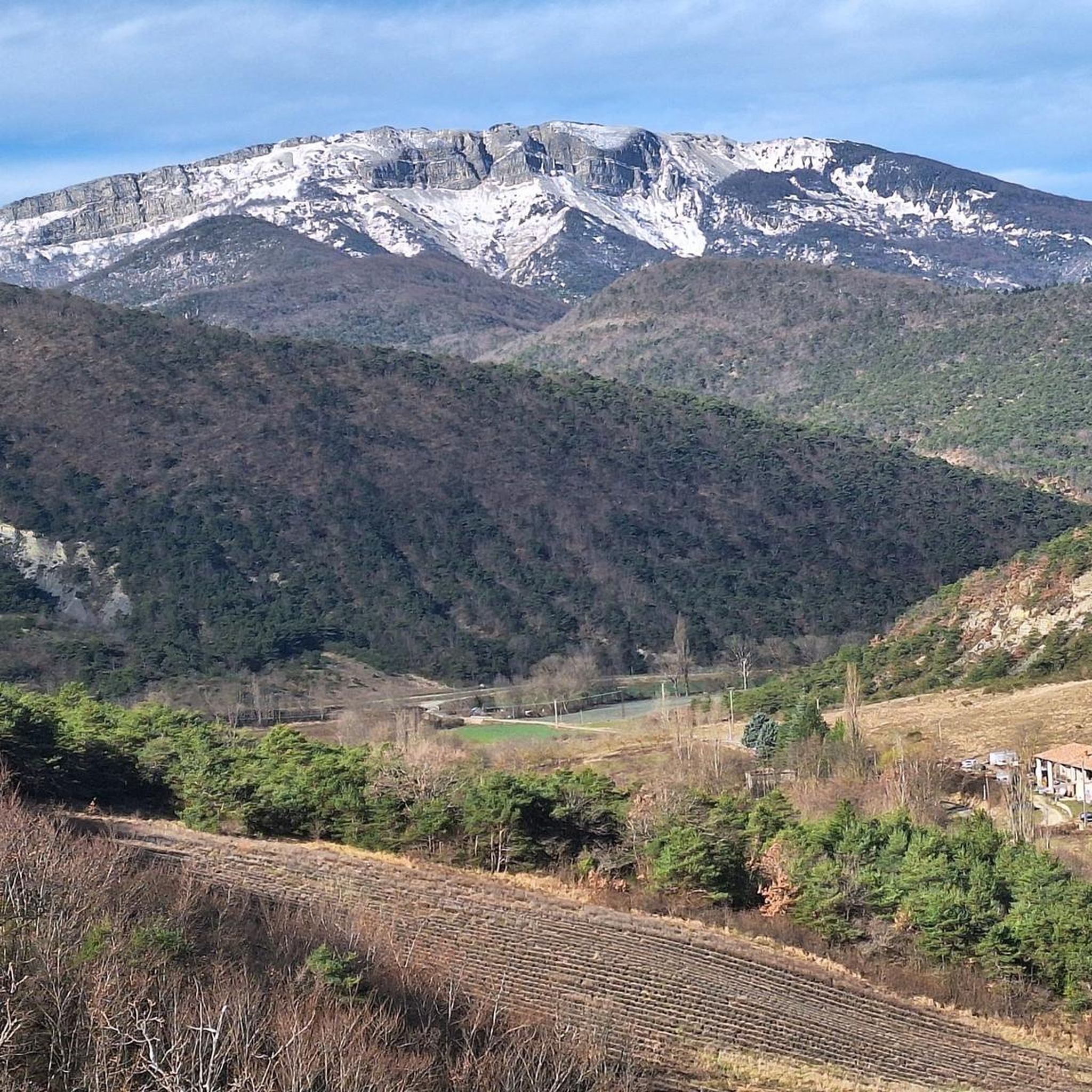
Best attractions and places to see around Teyssières include a blend of historical landmarks, natural landscapes, and cultural sites within the Drôme department of France. Situated in the Baronnies Natural Park, the area features mountains like La Lance and Miélandre, alongside fields of lavender and walnut trees. Visitors can explore traditional stone villages, ancient ruins, and the Lez river, offering diverse scenery. The region provides opportunities for outdoor activities and a glimpse into local history and traditions.
Best attractions and…
Last updated: May 25, 2026
Nyons Roman Bridge
Highlight • Bridge
Translated by Google •
Tip by

Les Pilles — village and bridge
Highlight • Settlement
Translated by Google •
Tip by

Sign up now to discover places like this
Get recommendations on the best single tracks, peaks, & plenty of other exciting outdoor places.
Sign up for free
Chapel of Our Lady of Good Help of Nyons
Highlight • Religious Site
Translated by Google •
Tip by

Venterol Village Square and Raoul Taburin Film Location
Highlight • Settlement
Translated by Google •
Tip by
Saint Peter and Saint Paul Church of Comps
Highlight • Religious Site
Translated by Google •
Tip by
Sign up for free to discover even more attractions around Teyssières.
Sign up for free
Already have an account?
Start today with a free account
Your next adventure awaits.
Login or Signup

Tips from the Community

Small village, almost squeezed into the river...
0
0

Beautiful and great location.
0
0

One of the almost obligatory attractions of Nyons, with a beautiful view.
1
1


The Romanesque bridge of Nyons, which crosses the Eygues River, was built between 1399 and 1400. It was inaugurated in 1409 by the Bishop of Vaison. Its two main architects were Guillaume de Pays, a carpenter from Romans, and Jean Felisson, a stonemason from Saint-Robert de Cornillon. While its construction was relatively rapid, its financing took several decades. A "work of the bridge" was already created in 1341. A first prize was awarded in 1361 to Thibaut de Noyx, but it does not appear that he saw its completion: at the end of the 14th century, the Eygues River was crossed using a ferry. Its single arch is one of the largest in France, with a span of 40.50 m and a height of 19 m. This bridge can be compared to the Pont du Roc in Castellane (Alpes-de-Haute-Provence), built by Jean Felisson around 1405, or the Mollans-sur-Ouvèze bridge (Drôme), which may date back to the early 15th century. Listed as a historical monument since 1925, it is the second bridge in France (after the one in Ceret) of such a pure style.
3
1
It was Father François who initiated the construction of the upper part of the monument, and the architect Adrien Boisson who designed the pedestal. It is composed of two pyramidal walls arranged diagonally and forming three floors. The first floor (the lower one) has blind arches, but the two upper floors have Neo-Gothic arcades. At the intersection of the two walls is a central shaft supporting the pedestal of the Virgin. The pedestal is very richly decorated: small columns, rose windows, trefoil arches, and small towers. Statues are placed at the edges of the different floors: 1st floor: the Saints: Saint Joseph, Saint John, Saint Bernard, and Saint Vincent; 2nd floor: the Saints: Saint Anne, Saint Elizabeth, Saint Madeleine, and Saint Theresa. On the third floor, angels have been sculpted. The architect Boisson thus intended to symbolize the prayer that springs from the earth to heaven, then is transmitted by the saints, men and women, and finally by the angels to the Virgin Mary. The statue of the Virgin Mary at the summit is 3.50 m high. It is said that she watches over the serenity and tranquility of the city. Once the construction of the pedestal was completed, the building was inaugurated on May 3, 1863 (six months after its purchase) by the Bishop of Valence, in the presence of Father Gabriel of the Abbey of Notre-Dame d'Aiguebelle, forty priests, and 15,000 faithful. The first mass at the Notre-Dame de Bon Secours chapel was held on August 14, 1864, but its consecration took place on the Feast of the Assumption on August 15, 1864. It was on that day, in the presence of a jubilant crowd, that the statue of the Virgin, the one currently inside the chapel, was placed on the altar and blessed by Father Gabriel of Aiguebelle Abbey. Inside the chapel, on the south side, is a small gilded wooden altar dating from the late 17th century. It is surmounted by the statue of the Virgin, which was placed there on August 15, 1864. Two wooden staircases, on either side of the altar, lead to the gallery, whose three tiers of seats are arranged in an amphitheater around the tower. The altar, steps, altarpiece, and tabernacle are listed as historical heritage by the Ministry of Culture, under the reference PM26000450. Numerous paintings adorn the walls, most of them the work of the painter Léon Alègre, originally from Bagnols-sur-Cèze (Gard). These paintings were created between 1867 and 1869. The paintings depict: along the east and west staircases: the Flight into Egypt and the Adoration of the Magi; on the faces of the vaulted arches: to the south, the Presentation of Mary in the Temple and Our Lady of Good Help; to the west: the Assumption and the Sorrowful Mother; to the north: the Holy Family and the Visitation; to the east: the Annunciation and the Marriage of the Virgin; On the edges of the vaulted arches, four portraits appear: to the east: Saint Mark and Saint Matthew; to the west: Saint John and Saint Luke; above the entrance door: between Saint Stephen and Saint Francis of Assisi, the Coronation of the Virgin.
0
0
The Randonne Tower, overlooking the town, is built on a sandstone mound in the center of the Nyons Forts district. It measures 8 meters on each side and 10 meters high. Its origins are said to date back to 1280. Nyons was then the capital of the Barony of Montauban. Dame Randonne de Montauban is said to have had a castle built there to serve as a military prison. Only a defensive tower, with walls 2 meters thick, remains today. This origin, which is only a hypothesis, is the most plausible: a 16th-century representation of the tower shows that it was at the center of a system of fortifications adjoining the "Maison de la Randonne," the stately home of Randonne de Montauban. This residence was destroyed in the last century during the development of the square in front of the chapel. After the Montaubans, the keep had several owners, including the dauphins in the 14th century. In 1633, the prison was dismantled when Nyons was opened and its fortifications were destroyed, in accordance with Louis XIII's wish to see the region's Protestant strongholds fall. In 1854, Father Francou suffered a serious and fatal illness. He then prayed to Mary and was cured. In gratitude for this healing, he prostrated himself before the altar of the parish church. Ten years later, during his sermon on August 15, 1862, he announced his wish to erect, on one of the tallest towers in Nyons, a pedestal upon which would rest a large and beautiful statue of the Blessed Virgin, which would, he claimed, dominate the town and be seen from afar in the countryside. The tower having been sold by the commune, Father Francou bought it back from its owners on October 21, 1862, and donated it to the Fabrique de Nyons (the parish council at the time). The Randonne Tower subsequently became the Chapel of Our Lady of Good Help. Every August 15th, the Randonne Tower is honored with a grand celebration retracing the origins of the monument, the places, deeds, people, and events that have marked the town's history. Each year, the tower, where Baroness Randonne of Montauban once lived, remembers the lives of the inhabitants of Nyons, since its construction around the mid-13th century. It tells us of all the generations of Nyons residents whose lives were born there.
0
0

Beautifully restored church, located directly on the hiking trail
3
1
Frequently Asked Questions
What kind of historical sites can I explore in and around Teyssières?
The region offers a rich history. You can visit the Nyons Roman Bridge, a remarkable 14th-century structure classified as a historic monument. Another significant site is the Chapel of Our Lady of Good Help of Nyons, converted from the medieval Tour Randonne. Within Teyssières itself, explore the old village with its traditional stone houses, the 19th-century Church of Saint-Pierre-et-Saint-Paul, and the intriguing ruins of Audefrey Castle perched on a rocky outcrop.
Are there any natural attractions or scenic landscapes to discover near Teyssières?
Absolutely. Teyssières is nestled within the Baronnies Natural Park, offering diverse and picturesque scenery. You'll find mountainous landscapes with peaks like La Lance, Miélandre, and Coucourdet, surrounded by fields of lavender and walnut trees. The Lez River also flows through the area, adding to its natural beauty. For panoramic views, consider hiking around the Col de Coucourdet.
What outdoor activities are available around Teyssières?
The area is excellent for outdoor enthusiasts. You can find numerous trails for hiking, mountain biking, and even climbing. The GR de Pays long-distance footpath passes directly through the old village of Teyssières. For specific routes, explore options like the 'Hiking around Teyssières' guide, which includes routes such as the 'Church of Teyssières – Teyssières Old Village loop' or the 'Teyssières Old Village – Garaux Rock loop'. You can find more details on the Hiking around Teyssières guide page.
Are there family-friendly attractions or activities in the Teyssières area?
Yes, several attractions are suitable for families. The charming Les Pilles — village and bridge is considered family-friendly, offering a pleasant exploration experience. The Nyons Roman Bridge is also a great spot for all ages. Additionally, wandering through the old village of Teyssières and its various hamlets provides a gentle and engaging activity for families.
When is the best time to visit Teyssières for outdoor activities and sightseeing?
The region is particularly beautiful during late spring and summer. This is when the lavender fields are in bloom, offering stunning scenery. The weather is generally favorable for hiking, running, and cycling during these months. Visiting local markets in nearby towns like Dieulefit or Nyons is also a popular summer activity.
What cultural experiences can I find in Teyssières?
You can discover the traditional method of producing organic lavender essential oil at a local family lavender distillery, offering insight into a significant regional industry. Exploring the various small hamlets that make up Teyssières, such as Les Tardieux or Les Bastardons, also provides a glimpse into local life and traditional architecture.
What do visitors enjoy most about the attractions near Teyssières?
Visitors frequently appreciate the historical significance and charm of sites like the Nyons Roman Bridge, noting its impressive architecture. The picturesque setting and geological formations of Les Pilles — village and bridge are also highly praised. Many enjoy the blend of historical exploration with the natural beauty of the surrounding landscapes.
Are there any unique villages or hamlets to explore in the Teyssières area?
Yes, Teyssières itself is composed of several charming hamlets, including Les Tardieux, Les Bastardons, Les Brocs, Les Pradiers, and Les Chauvins, each offering a glimpse into traditional village life. Nearby, the village of Venterol is also notable, known for its pleasant streets and as a filming location for the movie "Raoul Taburin".
Can I find opportunities for running or road cycling near Teyssières?
Yes, the area provides excellent routes for both running and road cycling. For runners, there are guides like 'Running Trails around Teyssières' with routes such as the 'Running loop from Valouse'. Cyclists can explore the 'Road Cycling Routes around Teyssières' guide, featuring routes like the 'Nyons Roman Bridge – Col de la croix rouge loop'. You can find more details on the respective guide pages: Running Trails around Teyssières and Road Cycling Routes around Teyssières.
What are some notable natural wonders within a reasonable distance of Teyssières?
Beyond the immediate surroundings, you can venture out to discover impressive natural formations. The dramatic Dentelles de Montmirail are approximately 31 km away, offering unique rock formations. The impressive Cirque d'Archiane is about 44 km distant, and the distinctive Mont Aiguille, known for its striking flat-topped peak, is around 55 km away.
Are there any local markets nearby where I can experience regional produce?
Teyssières is conveniently located near several towns that host vibrant local markets. You can visit markets in Dieulefit, Nyons, Valreas, and Vaison-la-Romaine to sample local produce, crafts, and experience the authentic atmosphere of the Drôme region.
What is the Old Flour Mill in Teyssières, and can I visit it?
The Old Flour Mill, located in the Moulin district, is a historical landmark recorded in the 1828 cadastre. It stands as a testament to the village's agricultural past. While it's a significant historical point of interest, specific visitor access information is not available. You can observe its exterior as part of exploring the village's heritage.
Most popular routes around Teyssières
Most popular attractions around Teyssières

Get inspired with the komoot mobile app


Explore more
Still not found the Highlight you’re looking for? See guides of the top attractions in other regions:
