The best walks and hikes around Souzay-Champigny
4.7
(301)
1,631
hikers
23
hikes
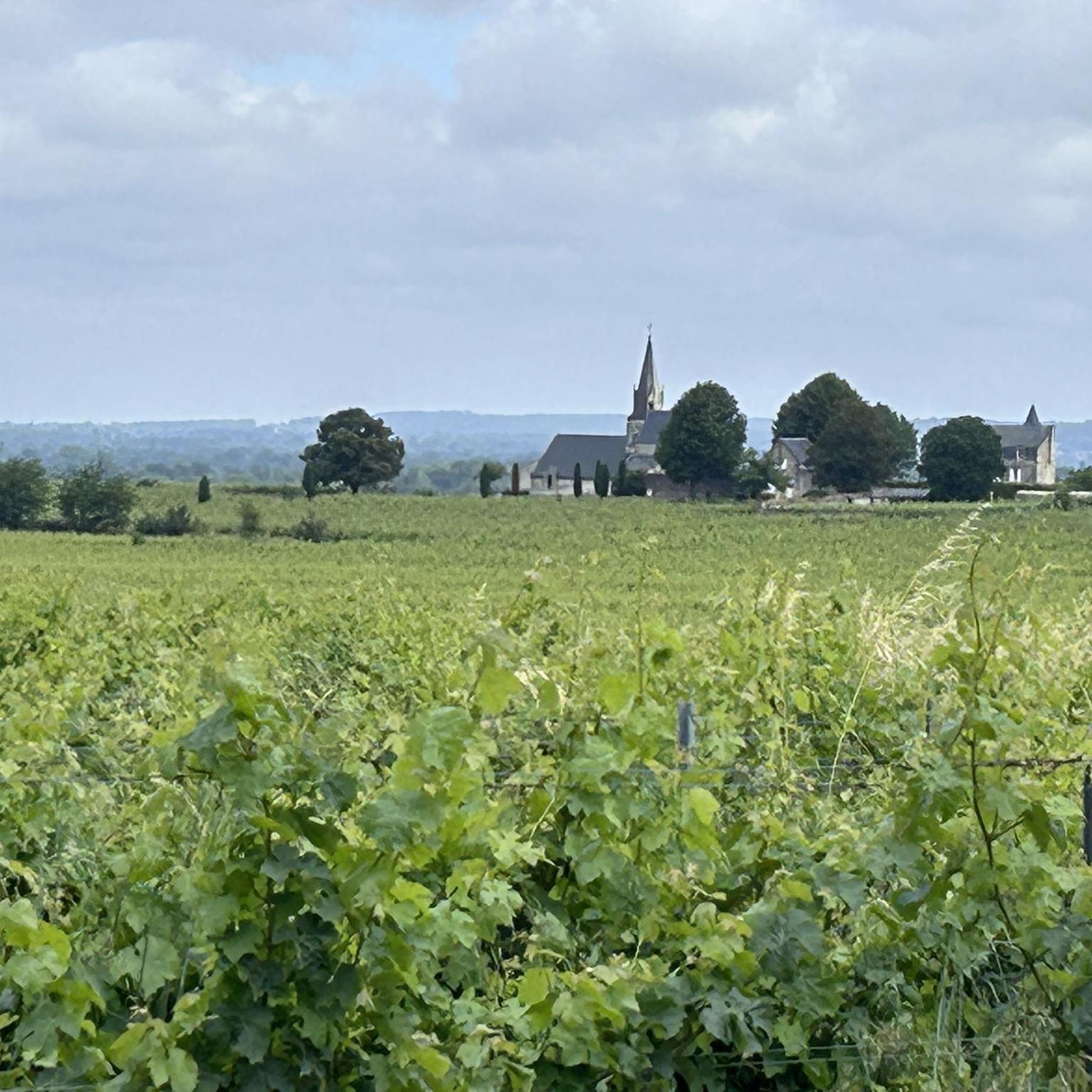
Hiking around Souzay-Champigny offers diverse terrain within France's Loire Valley, characterized by a blend of historical, viticultural, and natural landscapes. The region features routes along the Loire River banks and through the Saumur-Champigny vineyards situated on a limestone plateau. A defining characteristic is the troglodyte hillsides, where pathways are carved into Tuffeau stone cliffs, revealing ancient cave dwellings and underground passages. These physical features provide varied hiking experiences for different fitness levels.
Best hiking trails around Souzay-Champigny
- The most popular…
Last updated: May 12, 2026
5.0
(5)
27
hikers
Moderate hike. Good fitness required. Easily-accessible paths. Suitable for all skill levels.
11
hikers
14.0km
03:40
120m
120m
Moderate hike. Good fitness required. Easily-accessible paths. Suitable for all skill levels.

Sign up for free
5.0
(1)
7
hikers
1.79km
00:28
20m
20m
Easy hike. Great for any fitness level. Easily-accessible paths. Suitable for all skill levels.
3
hikers
10.1km
02:41
100m
100m
Moderate hike. Good fitness required. Easily-accessible paths. Suitable for all skill levels.
5.0
(2)
3
hikers
Moderate hike. Good fitness required. Easily-accessible paths. Suitable for all skill levels.
Get access to more routes and recommendations from other explorers.
Sign up for free
Already have an account?
Our route recommendations are based on thousands of hikes, rides, and runs completed by other people on komoot.
Start today with a free account
Your next adventure awaits.
Login or Signup

Tips from the Community

A castle-palace of the Dukes of Anjou in the 19th and 19th centuries, the Château de Saumur, where King René resided, is the last example of the princely palaces built by the Valois dynasty. It served as the residence of the city's governors, a prison, and later an arms and ammunition depot. It was purchased by the city in 1906 to house the municipal museum, now the Musée de France. Today, we discover the rich collections scattered throughout the former apartments of the Dukes of Anjou in an educational museography. Want to know more? Click here: https://www.ot-saumur.fr/en/castles-and-country-houses/Saumurcastle-5261718/
3
0
The Place Saint-Pierre in Saumur has traditionally been a haven for bistros. This is where social life meets. Sit down and enjoy the bustling life.
3
0
Behind the classical 17th-century facade lies a magnificent building that combines both Romanesque and Plantagenet Gothic styles. Saint Peter's Church is a representative example of Plantagenet Gothic (12th-13th centuries), particularly due to its strongly curved vaults. Among the furnishings is a remarkable set of 15th-century choir stalls. (Organ concerts are regularly held here). Restoration of the west facade began in November 2008. A team of stonemasons consolidated and restored this classical facade in a "composite" style. This facade had closed off the nave since the 17th century following the collapse of the first Gothic facade. The building was then completely restored! Source: https://www.ville-saumur.fr/patrimoine-architectural/l-eglise-saint-pierre-2
2
0
History: In 1454, while ploughing his field, a farmer discovered in the "ardille" (clay, a word that according to legend gave its name to Notre-Dame-des-Ardilliers) a stone statuette about thirty centimetres high representing a Pietà. The farmer took it home. Twice he discovered that the Pietà returned to its place of discovery, near a fountain that was already known for its healing properties. From that moment on, devotions developed around this statuette, which was placed in a niche under a stone arch. Jean Olivier, Bishop of Angers, laid the foundations of the Notre-Dame-des-Ardilliers chapel. Bishop Gabriel Bouvery, Bishop of Angers, opened the new church on 30 July 1553. It was a place of pilgrimage. The fountain was said to perform miracles. In 1614, thanks to the support of Marie de Medici, the management of the sanctuary was entrusted to the Order of Oratorians. In 1619, they settled in Ardilliers and founded a royal college in 1624. Louis XIII granted it the status of royal chapel and, from 1628 to 1643, the Oratorians built the buildings to the east of the chapel that would house their community, the classrooms and the students' dormitories. From 1634, Richelieu had a chapel built on the north wall of the chapel for votive and funeral purposes. The chapel was closed during the Revolution. The Oratorian house became a barracks and the rotunda was converted into an ammunition store. In 1796, the Sisters of Sainte-Anne-de-la-Providence opened a hospice there for the expelled. In 1798, the hospice became the property of the city of Saumur. The chapel was put back into use in 1799, but was damaged by damp. From 1849, architect Charles Joly-Leterme began restoring the building. The Sisters of Sainte-Anne-de-la-Providence became the owners of the former Oratorian House in 1866. During the Battle of the Cadets, in June 1940, the bombing destroyed the roof structures of the chapel and the Oratorian House. The vault of the nave collapsed. The buildings were restored between 1947 and 1957. The oak frame of the dome was replaced by a concrete shell to reduce the pressure on the walls. The Oratorian House was converted into a school in 1953. In February 2025, a fire broke out. Source Wikipedia
4
0
History: In 1454, while ploughing his field, a farmer discovered in the "ardille" (clay, a word that according to legend gave its name to Notre-Dame-des-Ardilliers) a stone statuette about thirty centimetres high representing a Pietà. The farmer took it home. Twice he discovered that the Pietà returned to its place of discovery, near a fountain that was already known for its healing properties. From that moment on, devotions developed around this statuette, which was placed in a niche under a stone arch. Jean Olivier, Bishop of Angers, laid the foundations of the Notre-Dame-des-Ardilliers chapel. Bishop Gabriel Bouvery, Bishop of Angers, opened the new church on 30 July 1553. It was a place of pilgrimage. The fountain was said to perform miracles. In 1614, thanks to the support of Marie de Medici, the management of the sanctuary was entrusted to the Order of Oratorians. In 1619, they settled in Ardilliers and founded a royal college in 1624. Louis XIII granted it the status of royal chapel and, from 1628 to 1643, the Oratorians built the buildings to the east of the chapel that would house their community, the classrooms and the students' dormitories. From 1634, Richelieu had a chapel built on the north wall of the chapel for votive and funeral purposes. The chapel was closed during the Revolution. The Oratorian house became a barracks and the rotunda was converted into an ammunition store. In 1796, the Sisters of Sainte-Anne-de-la-Providence opened a hospice for the expelled. In 1798, the hospice became the property of the city of Saumur. The chapel was put back into use in 1799, but was damaged by damp. From 1849, architect Charles Joly-Leterme began restoring the building. The Sisters of Sainte-Anne-de-la-Providence became the owners of the former Oratorian House in 1866. During the Battle of the Cadets, in June 1940, the bombing destroyed the roof structures of the chapel and the Oratorian House. The vault of the nave collapsed. The buildings were restored between 1947 and 1957. The oak frame of the dome was replaced by a concrete shell to reduce the pressure on the walls. The Oratorian House was converted into a school in 1953. A fire broke out in February 2025. Source Wikipedia
4
0
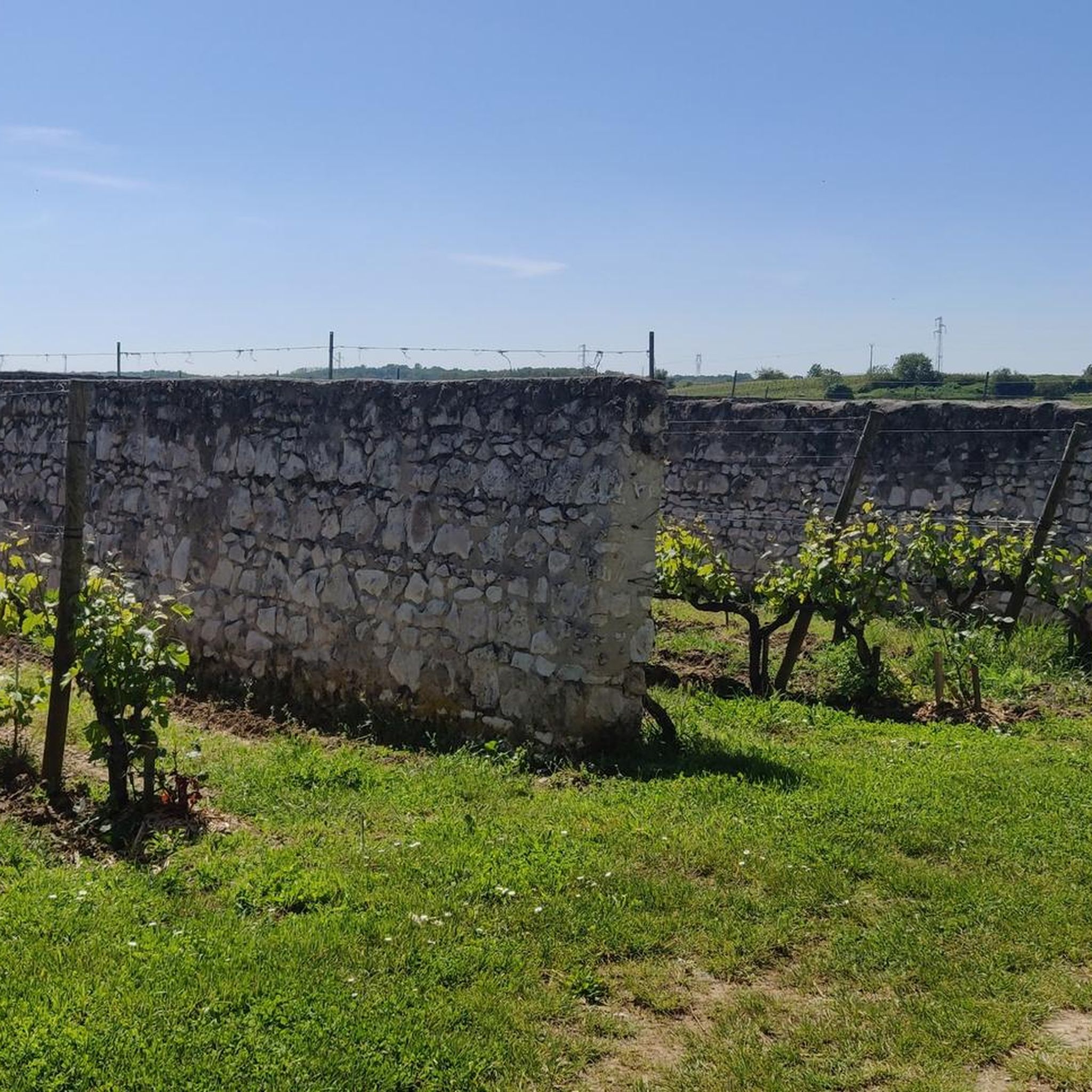
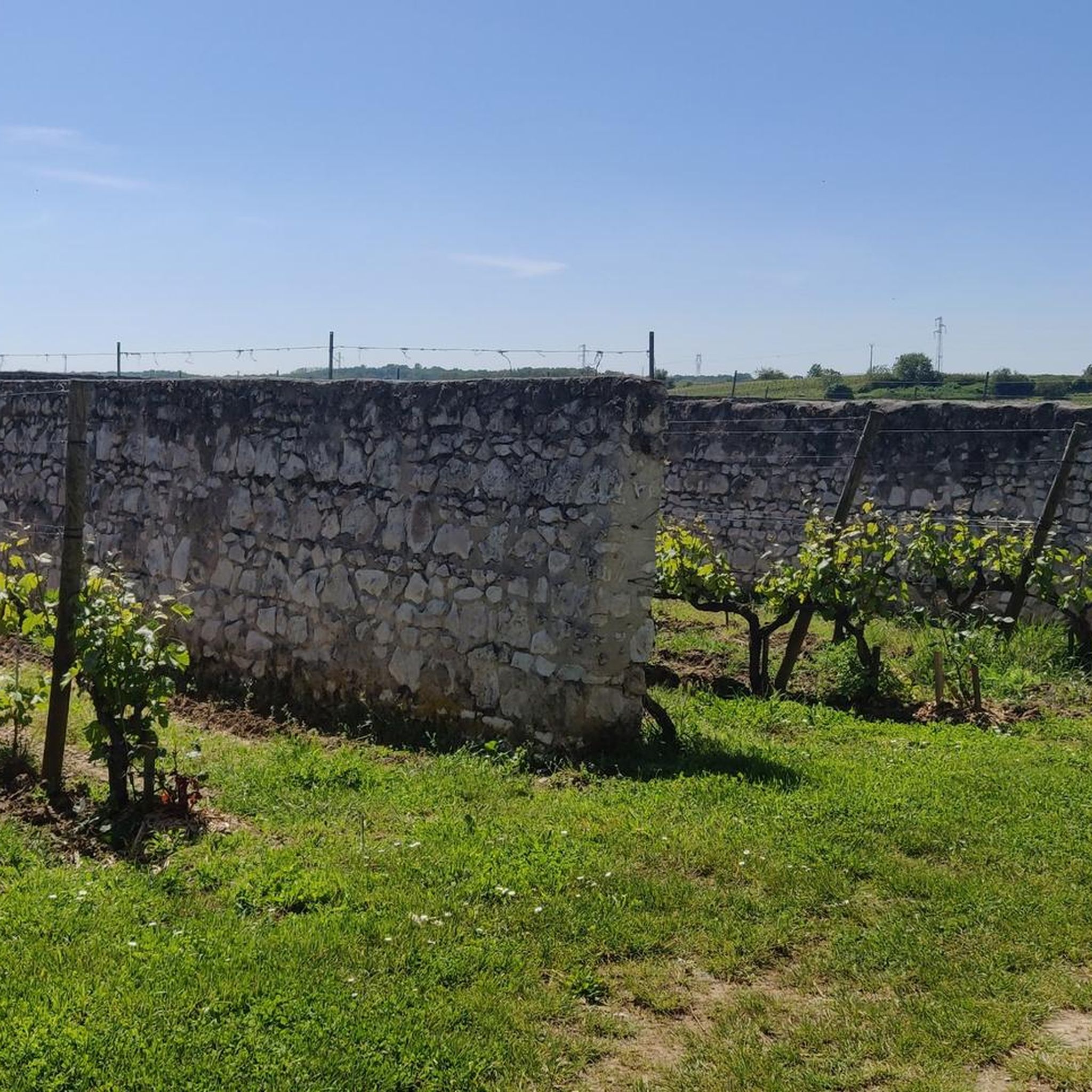
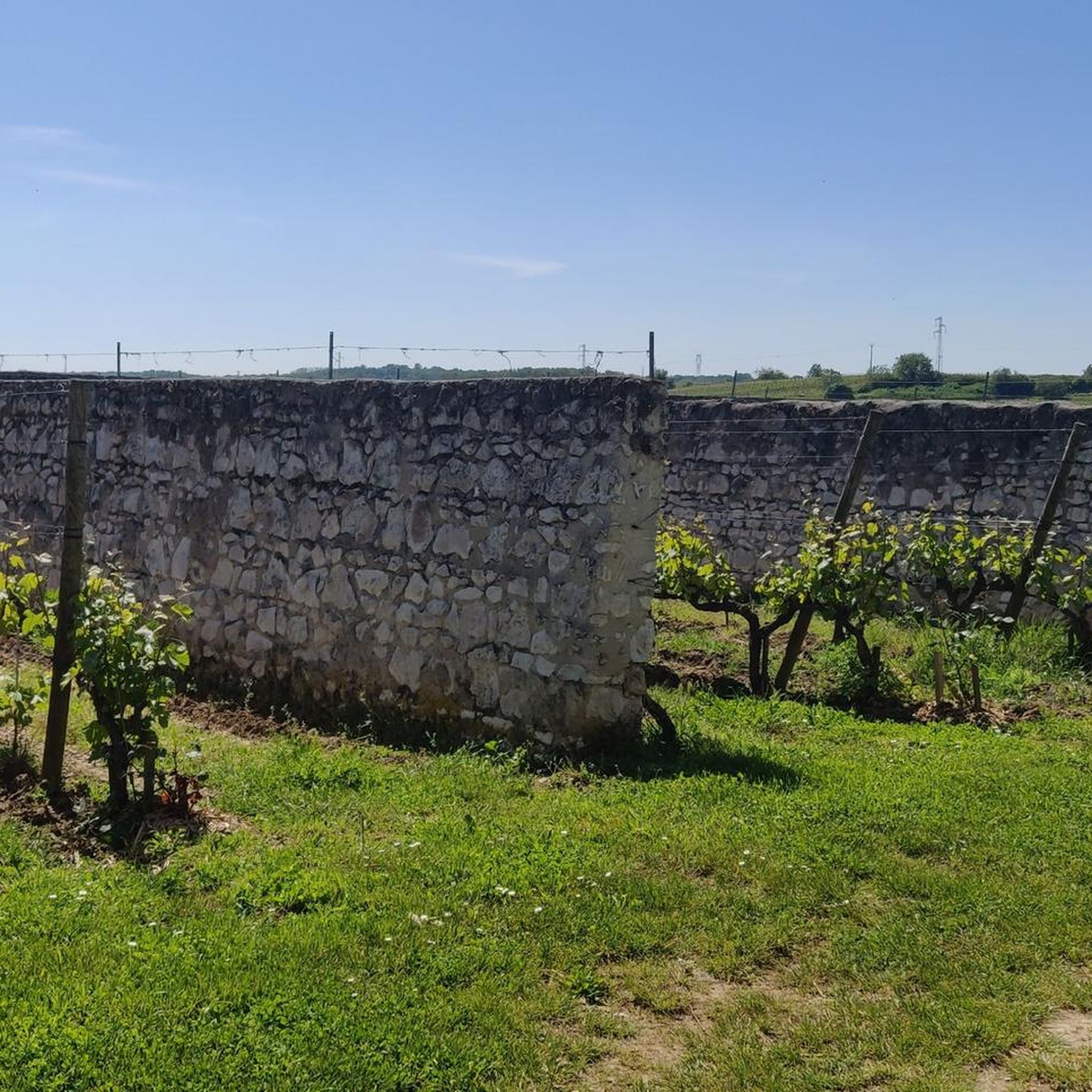
Built by Antoine Cristal in 1894, this "between walls" enclosure is a unique plot of vines in the world. It belongs to the Château de Parnay and has been classified as a historical monument since 2010. Antoine Cristal was the inventor of a unique and at the same time extravagant process. Indeed, the vines grow through a hole in a low wall. It is the principle of "cool feet, belly in the sun". Source: https://chateaudeparnay.fr/histoire/le-clos-dentre-les-murs/
3
0
Located in the heart of the best terroirs of Saumur-Champigny, the Château de Parnay offers you the opportunity to experience privileged moments by visiting and then tasting the vintages, in particular the famous "Clos d'entre les Murs", a historic Antoine Cristal plot. Regularly awarded medals at international fairs, the Château de Parnay passionately cultivates 35 hectares of vines that are now organically certified. The vineyard, consisting of 4 groups of plots, is a place steeped in history since Antoine Cristal was its illustrious owner at the time. It is also he who is at the origin of the Clos d'Entre les Murs, a unique plot of 0.56 ha and classified as a Historical Monument. This enclosure is complex in structure and consists of 11 parallel walls that stand proudly inside, allowing the vines to flow through the hollow... Come and discover the curiosities of the Château de Parnay during its events! Want to know more? Click through to https://www.ot-saumur.fr/nl/verkoop-van-wijnen-bij-de-accommodatie/kasteel-van-parnay-5353089/
2
0
From this location you have beautiful views of the Loire. Definitely worth a visit at sunset.
2
0
Frequently Asked Questions
How many hiking trails are available around Souzay-Champigny?
There are over 20 hiking trails in the Souzay-Champigny area, offering a variety of experiences from easy strolls to more challenging loops. The komoot community has recorded 23 routes in total.
What unique natural features can I expect to see while hiking in Souzay-Champigny?
Souzay-Champigny is renowned for its diverse landscapes. You'll encounter the picturesque Saumur-Champigny vineyards, the banks of the 'wild Loire' River, and fascinating troglodyte hillsides with cave dwellings and underground passages carved into the Tuffeau stone. Some routes, like the Troglodyte Trail – Clos d'Entre les Murs loop from Souzay-Champigny, specifically highlight these unique features.
Are there any family-friendly hiking options in Souzay-Champigny?
Yes, Souzay-Champigny offers several easy trails suitable for families. For instance, the Souzay Troglodyte Quarter loop from Souzay-Champigny is an easy 1.7 km route that allows families to explore the unique troglodyte sites without a strenuous hike. There are 9 easy routes in total, providing plenty of choice for all ages.
Can I bring my dog on the hiking trails in Souzay-Champigny?
Generally, dogs are welcome on hiking trails in Souzay-Champigny. However, it's always recommended to keep them on a leash, especially when passing through vineyards, near livestock, or in areas with protected wildlife. Always be mindful of local regulations and other hikers.
What kind of historical landmarks or attractions can I discover along the trails?
Hiking in Souzay-Champigny offers a journey through history. You can explore the unique Souzay-Champigny troglodyte site, which features ancient cave dwellings and underground streets. The region also boasts historical structures like the 15th-century Château de la Vignole, and the ingenious Clos Cristal vineyard, where vines grow through walls. You might also encounter centuries-old mulberry trees on the island of Souzay, remnants of past silk production.
Are there any circular hiking routes available?
Yes, many of the trails around Souzay-Champigny are designed as circular routes, allowing you to start and end at the same point. Examples include the Loire River near Dampierre – Maison des Compagnons loop from Souzay-Champigny and the Banks of the Loire – Wine Route loop from Parnay, both offering diverse scenery.
What is the best time of year to go hiking in Souzay-Champigny?
The Loire Valley, including Souzay-Champigny, is beautiful throughout much of the year. Spring and autumn offer pleasant temperatures and vibrant scenery, with blooming flowers or changing leaf colors. Summer is also popular, though it can be warmer, making riverside or shaded troglodyte paths particularly appealing. Winter hikes can be serene, especially along the Loire, but some services might be limited.
What do other hikers enjoy most about the trails in Souzay-Champigny?
The trails in Souzay-Champigny are highly rated by the komoot community, with an average score of 4.7 stars from over 300 reviews. Hikers frequently praise the unique combination of riverside views, vineyard landscapes, and the fascinating troglodyte sites. The well-marked paths and the opportunity to explore both natural beauty and historical heritage are often highlighted as key attractions.
Are there opportunities to explore castles or other historical sites nearby?
Absolutely. The region is rich in history and home to several impressive castles. While hiking, you can enjoy views towards Saumur Castle, and other notable castles like Montsoreau Castle and Château de Saumur are within easy reach, offering additional exploration opportunities.
Are there any specific trails that showcase the famous Saumur-Champigny vineyards?
Yes, the vineyards are a defining feature of the landscape. The Banks of the Loire – Wine Route loop from Parnay is an excellent choice, as it specifically passes through these renowned vineyards, offering picturesque views and insights into the region's viticultural heritage.
What are the typical difficulty levels of hikes in Souzay-Champigny?
The hiking trails in Souzay-Champigny cater to a range of abilities. You'll find 9 easy routes, perfect for a leisurely stroll, and 14 moderate routes for those looking for a bit more challenge. There are no difficult routes listed, making the area accessible for most hikers.
Is there public transport or parking available for hikers?
While specific public transport details for trailheads can vary, Souzay-Champigny is generally accessible by car, and parking is typically available in or near the village centers where many trails begin. It's advisable to check local information for specific parking areas or public transport links to your chosen starting point.
Can I find places to eat or stay near the hiking trails?
Souzay-Champigny and its surrounding villages offer various amenities for hikers. You can find local cafes and restaurants to refuel after your hike, often serving regional specialties. There are also accommodation options ranging from guesthouses to hotels, allowing you to extend your stay and explore the area further.
Most popular routes around Souzay-Champigny
Most popular attractions around Souzay-Champigny

Get inspired with the komoot mobile app


Explore more
Browse the best Hikes in other regions.
