Attractions and Places To See around Condé-Sur-Vesgre - Top 20
Best attractions and places to see around Condé-Sur-Vesgre include a blend of natural landscapes and historical sites. Situated in the Yvelines department, the area is characterized by its woods, rivers, and fields, with a significant portion covered by the Rambouillet Forest. Visitors can explore picturesque bodies of water like Rompu Pond and historical landmarks such as the Notre-Dame du Chêne Chapel and the 12th-century Donjon de Houdan. The region offers opportunities for outdoor activities and cultural exploration.
Best attractions and…
Last updated: July 7, 2026
Rompu Pond
Highlight • Lake
Translated by Google •
Tip by

Notre-Dame du Chêne Chapel
Highlight • Religious Site
Translated by Google •
Tip by

Sign up now to discover places like this
Get recommendations on the best single tracks, peaks, & plenty of other exciting outdoor places.
Sign up for free
Guiperreux Toad Crossing
Highlight • Natural Monument
Each year, during the thaw (roughly from February to April), …
Translated by Google •
Tip by

The Donjon of Houdan
Highlight • Castle
Translated by Google •
Tip by

the beautiful church of Prouais
Highlight • Other
Translated by Google •
Tip by

Sign up for free to discover even more attractions around Condé-Sur-Vesgre.
Sign up for free
Already have an account?
Start today with a free account
Your next adventure awaits.
Login or Signup



Tips from the Community

Built at the end of the 12th century by the Counts of Montfort and listed as a Historic Monument since 1889, the Houdan Tower was used to watch for enemies and defend the territory. The Keep consists of a 15 m diameter and 21 m high tower, flanked by four turrets of the same height located at the four cardinal points. From the 16th century until the French Revolution, the Keep served as a prison, and executions took place at the foot of the Tower. The first water reservoir was installed in the tower in 1880. The second, built in 1952, is still visible. Tours are available on certain days.
0
0

Church of Saint Peter and Saint Paul The construction of the church is said to have been initiated by Don Roger, abbot of the very powerful Benedictine abbey of Coulombs from 1115 to 1174. At that time, the abbey stood near Nogent-le-Roi, a former fortified town located twelve kilometers away on the banks of the Eure. Spread over more than 80 parishes, it had a considerable influence in the region until the Revolution, whether from a religious, economic or social point of view. The Romanesque style that it had adopted since its original construction was reworked in the 16th century by the opening of tall Gothic windows around the choir. Finally, in the following century, during the Wars of Religion, the church suffered serious damage. When peace returned, the entrance porch was finally rebuilt in the elegant Renaissance style. In 1950, a fire destroyed the church and all its furniture; it was restored at the end of the 20th century.
0
0

Many houses of worship in France bear the title “Notre-Dame” (in German “Our Lady”) and are therefore dedicated to the Blessed Mother Mary. Sometimes the specific patronage is made clear by an additional name, such as “Assumption of Mary” or “Immaculate Conception”. Here in Les Mesnuls, the church or chapel bears the suffix "Notre-Dame du Chêne", i.e. "to the oak". This means that it is not an event in the life of the Mother of God that is referred to in the patronage, but rather a tree that gave the immediate surroundings of the church a formative shape. In fact, you can see a tree on the left and right of the building.
0
0

At the edge of this road a pond which forms with the forest which surrounds it a protected natural area. Each year, during the thaw (roughly from February to April), a "toadstool" is installed on the road that runs along the pond. But what is a toaddrome exactly? So, it is not a place where one could indulge in clandestine bets on toad races, but a device intended to prevent these poor beasts from being crushed by cars in crossing the road to breed and lay their eggs in the pond on the other side of the road. Indeed, thousands of common toads, but also frogs and newts, begin their long prenuptial migrations around March each year. They go to the nearest pond or pond to breed. Once their duty is done, they leave the aquatic environment to return to their summering areas where they will spend most of their time feeding. In order to avoid a carnage of amphibians on the road, a tarpaulin is planted 600m on each side of the road to block their passage. In various places a hole has been made in which a bucket is buried. By looking for a passage all along the tarpaulin, the toad will inevitably end up at the bottom of a bucket. Every morning, volunteers come to collect toads and other frogs and drop them off on the other side of the road.
1
0

Monument dating from the end of the 12th century
1
0

The Tower (commonly called "The Dungeon"), built in the 12th century under the reign of the Counts of Montfort, and classified as a Historic Monument since 1840, had the function of watching out for enemies and defending the territory. But in reality, it mainly had a dissuasive role since it was reputed to be impregnable. Built on the site of an old Merovingian necropolis, it originally consisted of an enclosure and a main tower. The enclosure, which has now disappeared, had a circular turret intended for the defense of the gate. The access door, located 4 meters from the ground then raised in the 15th century to 6 meters, was the only access to the large room on the 1st floor reserved for the military chief. It was accessed via a drawbridge.
0
0

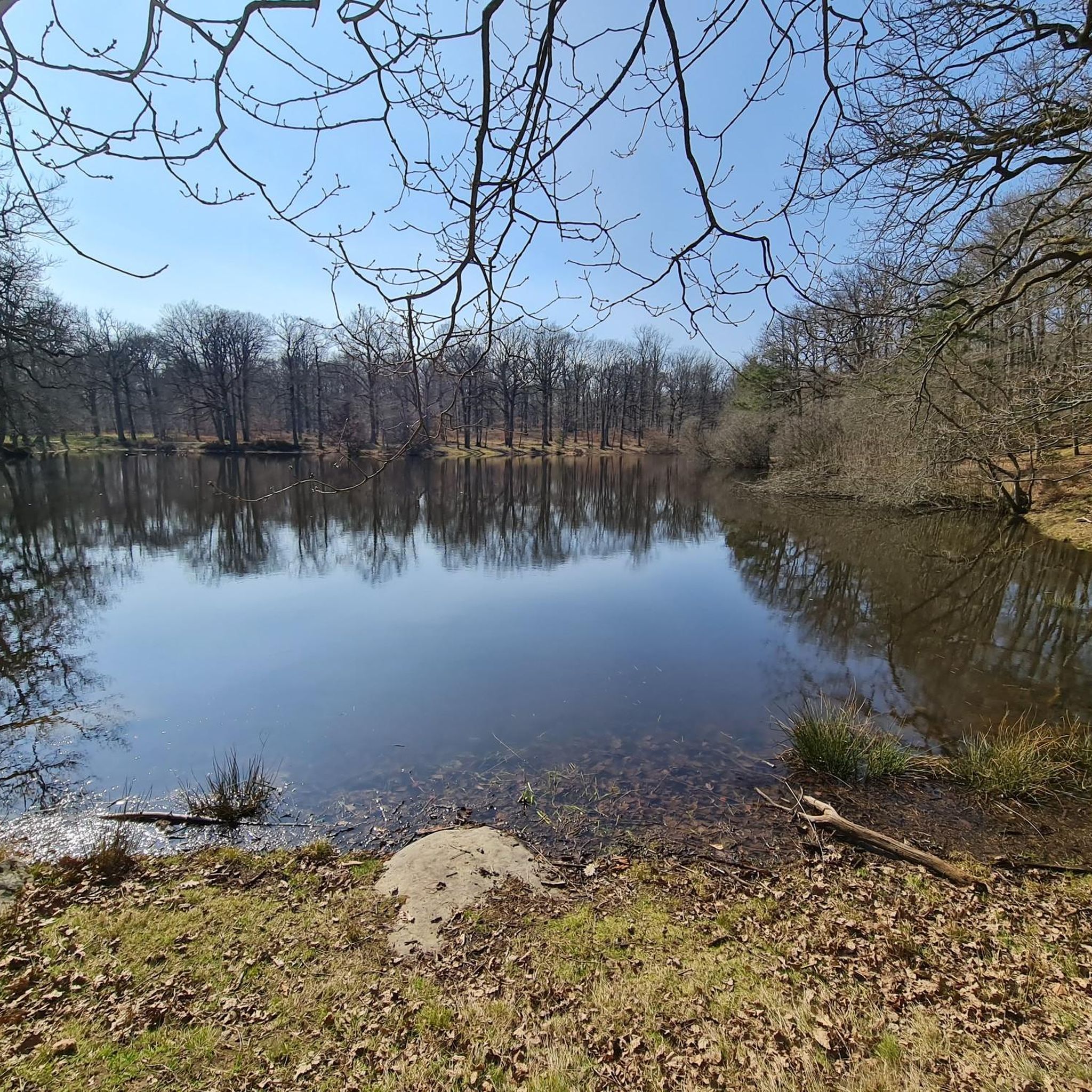
Located at an altitude of 154 meters1, the pond covers an area of 0.8 hectares. The “Ponts-Quentin stream” flows into the Rompu pond — coming from the Holland ponds located about 1 km upstream to the east — and comes out to flow, about ten kilometers further to the west, in the Vesgre, having previously changed its name twice: first under the name of “Etang-Neuf stream” then under that of “Grapelin”. The Ponts-Quentin stream passes under departmental road 138 before flowing into the pond, which justifies the undulation of the road and its bend. The pond is part of the Rambouillet national forest, a private state domain. As such, its management is ensured by the National Forestry Office (ONF). Wikipedia
1
0

Located in the Rambouillet forest in the Yvelines, the Rompu pond is a very charming little body of water. As the seasons go by, the reflections in the water constitute veritable open-air frescoes. No traditional museum but a reward for adventurous hikers!
0
0
Frequently Asked Questions
What natural attractions can I explore around Condé-Sur-Vesgre?
The region is rich in natural beauty, with a significant portion covered by the Rambouillet Forest, offering opportunities for walks amidst diverse flora and fauna like deer and wild boars. A serene spot within the forest is Rompu Pond, known for its seasonal reflections. You might also encounter the unique Guiperreux Toad Crossing during the spring thaw, a seasonal installation to help amphibians.
Are there any historical sites or landmarks to visit in the area?
Yes, Condé-Sur-Vesgre and its surroundings feature several historical landmarks. The 12th-century The Donjon of Houdan, classified as a Historic Monument, is a notable defensive tower. You can also visit Notre-Dame du Chêne Chapel, a significant pilgrimage site with a history dating back to 1646, and the beautiful church of Prouais, which showcases Romanesque, Gothic, and Renaissance architectural elements.
What outdoor activities are popular near Condé-Sur-Vesgre?
The area is excellent for outdoor enthusiasts. You can find numerous routes for gravel biking, cycling, and mountain biking. For gravel biking, explore options like the 'Hollande Pond – Route des Deux Chateaux loop'. Cyclists can enjoy routes such as the 'Charming village Gambaiseul – Four Pillars Forest loop'. Mountain bikers have trails like the 'Étang de Hollande – Rompu Pond loop'. You can find more details and routes on the Gravel biking around Condé-Sur-Vesgre, Cycling around Condé-Sur-Vesgre, and MTB Trails around Condé-Sur-Vesgre guide pages.
Are there family-friendly attractions or activities available?
Yes, several attractions are suitable for families. Rompu Pond is a great spot for a family walk in nature. The Notre-Dame du Chêne Chapel offers a glimpse into local history and culture. During early spring, children might find the Guiperreux Toad Crossing fascinating, learning about amphibian migration and conservation efforts.
What is the best time of year to visit Condé-Sur-Vesgre?
The region offers different experiences throughout the year. Spring (February to April) is unique for observing the Guiperreux Toad Crossing. The Rambouillet Forest and Rompu Pond are beautiful in spring and autumn for their reflections and changing foliage. Summer is ideal for general outdoor activities, while historical sites like The Donjon of Houdan can be visited year-round, though tour availability may vary seasonally.
What are some notable natural features in the Rambouillet Forest near Condé-Sur-Vesgre?
The Rambouillet Forest, which borders Condé-Sur-Vesgre, is a significant natural feature. It's home to diverse wildlife, including deer, wild boars, foxes, and various birds. Within the forest, you'll find picturesque spots like Rompu Pond, known for its tranquil atmosphere and stunning reflections. The larger La Colonie de Condé-sur-Vesgre estate also features woods, ponds, and lawns, providing a rich natural environment.
Are there any unique local points of interest in the area?
A truly unique and seasonal point of interest is the Guiperreux Toad Crossing. Installed during the thaw (approximately February to April), this 'toadrome' helps thousands of toads, frogs, and newts safely cross the road to reach their breeding ponds. It's a fascinating example of local conservation efforts.
What kind of terrain can I expect on trails around Condé-Sur-Vesgre?
Given the proximity to the Rambouillet Forest, many trails will feature forest paths, often with varied surfaces. Routes for gravel biking, cycling, and mountain biking range from easy to difficult, suggesting a mix of relatively flat sections and some more challenging inclines, particularly within the forest's undulating terrain. The area is characterized by woods, rivers, and fields, so you can expect a blend of natural landscapes.
What do visitors particularly enjoy about the attractions around Condé-Sur-Vesgre?
Visitors appreciate the blend of natural tranquility and historical depth. The serene experience offered by places like Rompu Pond and the rich flora and fauna of the Rambouillet Forest are highly valued. The historical significance of sites like The Donjon of Houdan and Notre-Dame du Chêne Chapel also captivates many, offering a glimpse into the region's past.
Are there any markets nearby to experience local life?
While not directly in Condé-Sur-Vesgre, you can explore local markets in nearby towns. Houdan hosts a market on Fridays, Nogent-le-Roi on Saturdays, and Maintenon on Thursdays. These markets are excellent places to experience local life, find regional produce, and interact with the community.
What are some significant regional attractions within a reasonable distance of Condé-Sur-Vesgre?
Several highly significant landmarks are within a reasonable driving distance. These include the historic Château de Rambouillet (about 17 km away), the iconic Palace of Versailles (approximately 36 km), the magnificent Chartres Cathedral (about 35 km), and La Roche-Guyon (about 38 km), which is recognized as one of France's 'most beautiful villages'.
Most popular routes around Condé-Sur-Vesgre
Most popular attractions around Condé-Sur-Vesgre

Get inspired with the komoot mobile app


Explore more
Still not found the Highlight you’re looking for? See guides of the top attractions in other regions:
