The best road cycling routes around Condé-Sur-Vesgre
4.5
(66)
1,377
riders
14
rides
Road cycling around Condé-Sur-Vesgre offers diverse landscapes and varying terrain, making it a recognized destination for cyclists. The region features a mix of woodlands, rivers, and meadows, with the extensive Rambouillet Forest covering eastern and south-eastern areas. Cyclists encounter rolling hills and valleys, providing both ascents and descents. The Vesgre River also contributes to the scenic routes available.
Best road cycling routes around Condé-Sur-Vesgre
- The most popular road cycling route is Adainville Church – Neuville Castle loop from Adainville,…
Last updated: June 27, 2026
5.0
(2)
30
riders
85.7km
03:28
470m
470m
Moderate road ride. Good fitness required. Mostly well-paved surfaces and easy to ride.
16
riders
7.48km
00:20
50m
50m
Easy road ride. Great for any fitness level. Mostly well-paved surfaces and easy to ride.

Sign up for free
7
riders
Easy road ride. Great for any fitness level. Mostly well-paved surfaces and easy to ride.
5
riders
20.4km
00:57
100m
100m
Easy road ride. Great for any fitness level. Mostly well-paved surfaces and easy to ride.
4
riders
68.8km
02:47
340m
340m
Moderate road ride. Good fitness required. Mostly well-paved surfaces and easy to ride.
Get access to more routes and recommendations from other explorers.
Sign up for free
Already have an account?
Our route recommendations are based on thousands of hikes, rides, and runs completed by other people on komoot.
Start today with a free account
Your next adventure awaits.
Login or Signup



Tips from the Community


According to tradition, the church choir covers the remains of an older building, possibly dating back to the 6th century, which was built to house the saint's body. According to current knowledge, the commune of Saint-Piat (Sanctus Piatus in Latin) officially appeared in 1087, mentioned in a charter of the Nottonville Priory (Eure-et-Loir), on which it depended. The current building was rebuilt during the time of Francis I, as suggested by the date 1535 engraved on two buttresses of the apse and the date 1542 engraved on a piece of wood from the vault. This is according to a study by the SAEL (Eure-et-Loir Archaeological Society). The three-sided apses, the dripstone towers (horizontal members projecting from a wall), and the sculpted roof structures are a testament to the importance of the reconstructions carried out in the department during the 16th century. The church of Saint-Piat is one of them. While the church has not been officially recognized, it nevertheless contains objects that have attracted attention both for their antiquity and quality, but not always for good reason. Their artistic value, far from attracting only religious or aesthetic interest, has also aroused a covetousness that, unfortunately, remains for some of them. Fortunately, those still in place are carefully cared for and offer the curious a story to discover, a beauty to slowly ponder as they progress toward the choir.
0
0
Church of Saint Peter and Saint Paul The construction of the church is said to have been initiated by Don Roger, abbot of the very powerful Benedictine abbey of Coulombs from 1115 to 1174. At that time, the abbey stood near Nogent-le-Roi, a former fortified town located twelve kilometers away on the banks of the Eure. Spread over more than 80 parishes, it had a considerable influence in the region until the Revolution, whether from a religious, economic or social point of view. The Romanesque style that it had adopted since its original construction was reworked in the 16th century by the opening of tall Gothic windows around the choir. Finally, in the following century, during the Wars of Religion, the church suffered serious damage. When peace returned, the entrance porch was finally rebuilt in the elegant Renaissance style. In 1950, a fire destroyed the church and all its furniture; it was restored at the end of the 20th century.
0
0

The cathedral is the seat of the bishop of the Roman Catholic diocese of Chartres
6
0
Saint Anne belonged to this chosen people who, in God's plans, were to give birth to the Savior of men; she was of the tribe of Judah and of the race of David. His parents, commendable by their origin, became especially famous among all their fellow citizens for the brilliance of a life full of good works and virtues. The choir of the church forms a setback from the nave. The western part, very small, dates from the 11th century while the eastern part, destroyed during the Hundred Years' War, was rebuilt in the 16th century. The sacristy was built some time later, on the north side.
0
0
Oriented east, the building follows a rectangular plan, extended by a choir. With a length of 35 meters, the building is constructed of masonry and consolidated by sandstone buttresses. The pointed vault is 13 meters high, the adjoining bell tower is around twenty meters high. The construction of the church would have been the initiative of Don Roger, abbot of the very powerful Benedictine abbey of Coulombs from 1115 to 1174. At this period, the abbey stood near Nogent-le-Roi, former fortified town located twelve kilometers on the banks of the Eure. Extended over more than 80 parishes, it had a considerable influence in the region, until the Revolution, whether from a religious, economic or social point of view. The Romanesque style that it had adopted since its original construction was remodeled in the 16th century. by the opening of high Gothic windows, around the edge of the choir. Finally, in the following century, during the wars of religion, the church suffered serious damage. When peace returned, the entrance porch was finally rebuilt in the elegant manner of the Renaissance style. In 1950, a fire destroyed the church and all its furniture; it was restored at the end of the 20th century.
0
0

A dream of a cathedral 🥰 you should definitely visit it at two different times of the day, as the glass windows look completely different depending on the position of the sun - phenomenal
4
0

A few points make Chartres Cathedral so unique: - the total of 176 original windows, which were created between 1215 and 1240 and flood the church interior with lots of light - Particularly noteworthy are the 3 rosettes on the north, south and west sides, where you can study the further development of architecture over the decades - the cathedral was never significantly destroyed and thus gives a very good impression of the High Gothic period - with her relic she represented the center of Marian veneration in Europe. The resulting flow of pilgrims was a main source of income for Chartres
3
0
Frequently Asked Questions
What is the general terrain like for road cycling around Condé-Sur-Vesgre?
The region offers a diverse and engaging terrain for road cyclists. You'll encounter a mix of woodlands, river valleys, and rolling hills, providing both enjoyable ascents and descents. The area is situated on the borders of Yvelines and Eure-et-Loir, featuring picturesque landscapes with the extensive Rambouillet Forest covering eastern and south-eastern areas.
How many road cycling routes can I find in the Condé-Sur-Vesgre area?
There are over 200 road cycling routes available around Condé-Sur-Vesgre. This includes a wide range of options, with 82 routes classified as easy, 125 as moderate, and 8 as difficult, catering to various skill levels.
Are there easy road cycling routes suitable for beginners or casual rides?
Yes, Condé-Sur-Vesgre offers many easy road cycling routes. For instance, the Adainville Church loop from Adainville is a shorter, easy trail that takes you through local villages and fields. Another accessible option is the Adainville Church loop from Condé-sur-Vesgre, which is also considered easy and provides a pleasant ride.
What options are available for more experienced road cyclists looking for a challenge?
Experienced cyclists can find more challenging routes, with 125 moderate and 8 difficult options. A notable moderate route is the Lavoir de Soulaires – Eure Riverside Walk loop from Le Village, which spans over 85 km and features varied rural landscapes and riverside scenery along the Eure River.
What natural attractions can I see while road cycling in the region?
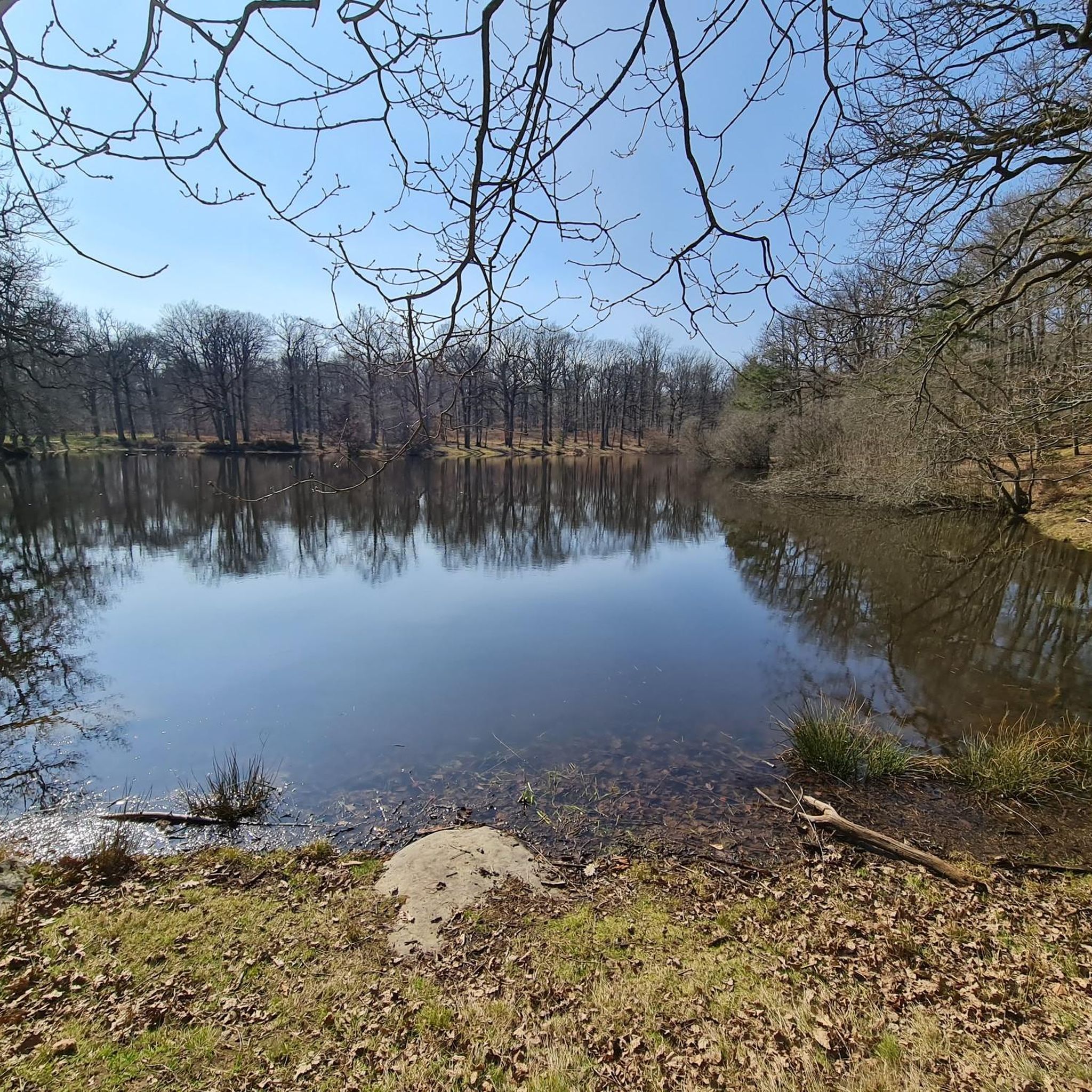
The region is rich in natural beauty. You can cycle through parts of the vast Rambouillet Forest, known for its diverse flora and wildlife. Highlights include the charming Rompu Pond within the forest, and the Guiperreux Toad Crossing, a protected area with a pond. The Vesgre River also contributes to the scenic routes.
Are there any historical landmarks or cultural sites accessible by road bike?
Yes, the area around Condé-Sur-Vesgre is steeped in history. You can explore nearby medieval towns like Houdan, with its impressive Donjon of Houdan, or Montfort l'Amaury, which features ruins of a powerful medieval castle. The Notre-Dame du Chêne Chapel is another point of interest you might encounter.
What do other cyclists say about road cycling in Condé-Sur-Vesgre?
The road cycling routes in Condé-Sur-Vesgre are highly regarded by the komoot community, with an average rating of 4.4 stars from over 50 reviews. Cyclists often praise the diverse landscapes, well-maintained paths, and the mix of woodlands and rolling hills that make for an engaging ride.
When is the best time of year to go road cycling in Condé-Sur-Vesgre?
Condé-Sur-Vesgre is suitable for road cycling across multiple seasons due to its varied terrain and natural features. Spring and autumn offer pleasant temperatures and beautiful scenery, especially with the changing colors of the Rambouillet Forest. Summer is also popular, though it can be warmer, while winter rides are possible on clear days.
Are there any long-distance road cycling routes available?
Yes, for those looking for longer rides, there are routes like the La Celle-les-Bordes – Pavilion Pond loop from Adainville, which covers over 73 km. This route offers a substantial distance for endurance training or a full day out exploring the region's diverse landscapes.
Can I find circular road cycling routes in the area?
Many of the road cycling routes around Condé-Sur-Vesgre are designed as circular loops, allowing you to start and finish at the same point. An example is the popular Adainville Church – Neuville Castle loop from Adainville, which offers views of local landmarks and the surrounding countryside on a convenient loop.
Are there options for family-friendly road cycling routes?
While road cycling routes are generally on public roads, many of the easier and shorter loops can be suitable for families with older children who are comfortable cycling on roads. The region's quiet country roads and scenic forest paths provide a pleasant environment for family outings, though caution should always be exercised.
Where can I park my car when starting a road cycling route?
Many routes start from villages or towns in the Condé-Sur-Vesgre area, where public parking is often available. It's advisable to check specific starting points of your chosen route for the most convenient parking options, typically near local amenities or village centers.
Are there places to stop for refreshments along the road cycling routes?
The routes often pass through or near small villages and towns in the region. These locations typically offer opportunities to stop for refreshments, such as local cafes, bakeries, or small shops. Planning your route with these stops in mind can enhance your cycling experience.
Most popular routes around Condé-Sur-Vesgre
Most popular attractions around Condé-Sur-Vesgre

Get inspired with the komoot mobile app


Explore more
Browse the best Road cycling routes in other regions.
