The best road cycling routes around Plouzané
4.2
(531)
12,759
riders
48
rides
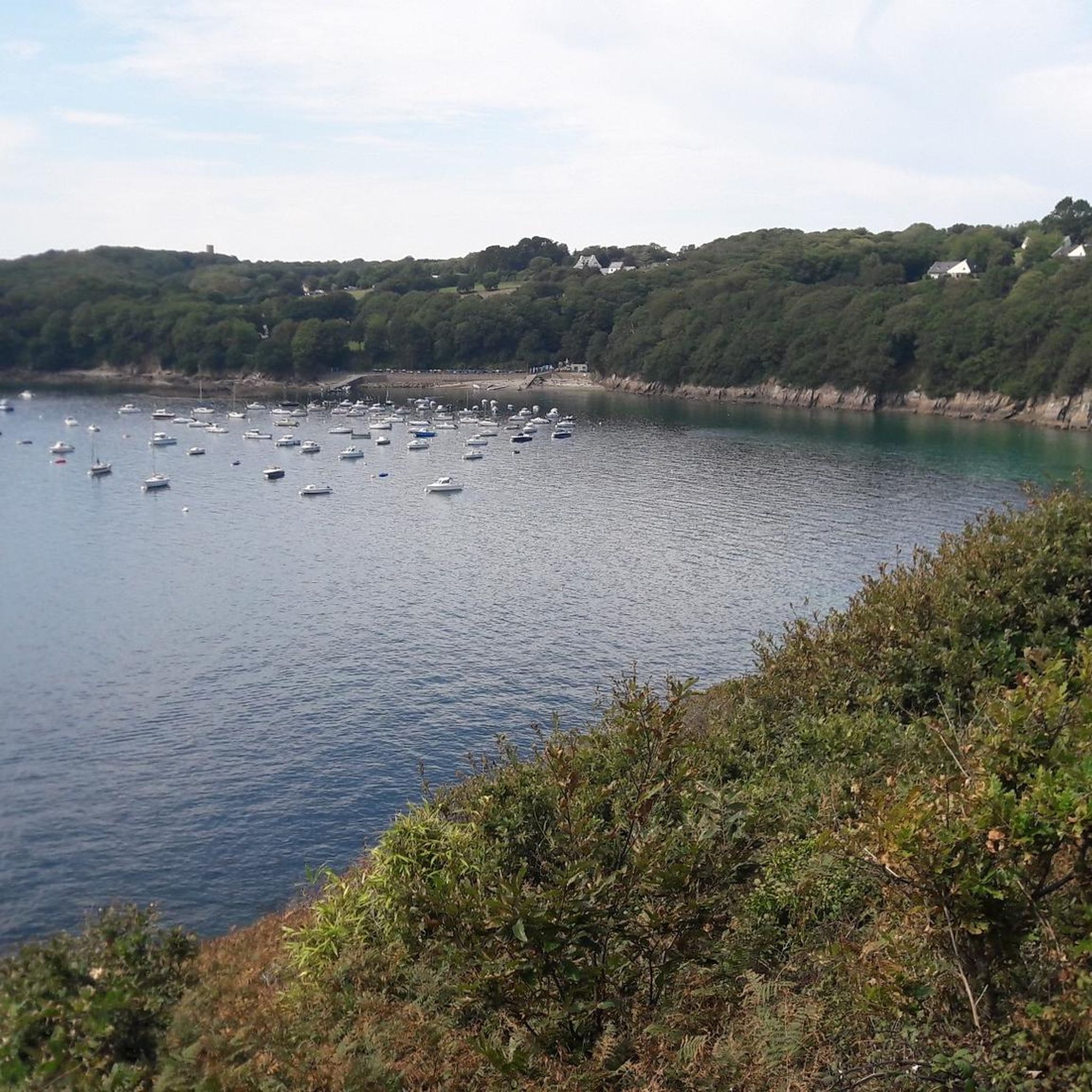
Road cycling around Plouzané offers a variety of routes through the coastal landscapes of Brittany, France. The region features a mix of undulating terrain, with some routes providing views of the sea and others winding through rural areas. Elevations are generally moderate, with no significant mountain climbs, making it accessible for various skill levels. The network of roads provides options for both shorter, flatter rides and longer routes with more sustained ascents.
Best road cycling routes around Plouzané
- The most…
Last updated: August 19, 2026
4.3
(3)
102
riders
42.7km
01:56
380m
380m
Moderate road ride. Good fitness required. Some segments of this route may be unpaved and difficult to ride.
2.0
(1)
87
riders
105km
04:51
1,230m
1,230m
Hard road ride. Very good fitness required. Mostly well-paved surfaces and easy to ride.

Sign up for free
5.0
(3)
44
riders
124km
05:54
1,620m
1,620m
Hard road ride. Very good fitness required. Mostly well-paved surfaces and easy to ride.
5.0
(2)
44
riders
Easy road ride. Great for any fitness level. Mostly well-paved surfaces and easy to ride.
3.0
(2)
25
riders
Moderate road ride. Good fitness required. Mostly well-paved surfaces and easy to ride.
Get access to more routes and recommendations from other explorers.
Sign up for free
Already have an account?
Our route recommendations are based on thousands of hikes, rides, and runs completed by other people on komoot.
Start today with a free account
Your next adventure awaits.
Login or Signup

Other adventures around Plouzané

Tips from the Community

A beautiful walk with a magnificent view.
0
0

Unfortunately, there's no restaurant. But the Breton cakes and biscuits are divine.
1
0

Best view of the harbor and the cable car.
0
0

After the collapse of the Locmaria church in 1749, new construction was necessary. It began in 1759 and was completed in 1769, the date on the bell tower. Some additional work was carried out in 1773-1774. It was renovated between 1994 and 1996; following a storm, the roof was redone at that time. To the left of the high altar stands the old statue of Our Lady of Lanvénec, the beautiful Virgin Mother, crushing the serpent beneath her feet. The three statues of Ecce Homo, Saint Michael, and Saint Margaret trampling the dragon are also of ancient design. The baptismal font, dating from 1530, and the Virgin Mary outside are listed as Historic Monuments. Saint-Sané Locmaria-Plouzané comes from the Breton "Loc Maria" (place dedicated to Mary) and "Plou" (parish) from "Saint-Sané." Like its neighbor Plouzané, it was founded by Saint-Sané, who emigrated from Ireland in the 5th century, in a stone trough. He landed with his disciples on the Perzell beach, near Bertheaume, in the commune of Plougonvelin. They advanced inland and stopped in the thick Lucos forest on the site of a pagan temple. Saint-Sané, after converting the population, transformed it into an oratory and dedicated it to the Virgin Mary. The wood then took the name "Coat ar C'hras" (the wood of grace). The menhirs in the region were Christianized during this time. This is why they are topped with crosses. Legend has it that Saint-Sané, after having evangelized the region, returned to die in Ireland around 480
0
0
The church of Plouzané is dedicated to Saint Sané, who can be identified with Senan, a bishop who came from Ireland in the 6th century to evangelize the Breton peninsula. Built on the probable site of an ancient temple, nothing remains of the earlier edifice. The current church, the work of Pierre Besnard, a civil engineer, dates from 1781 and was restored after damage in 1944. The overall plan exudes a severe nobility. The nave, with three aisles and four bays, widens into the transepts and choir, which end in semicircles. The space is divided by eighteen square piers supporting semicircular arches. The pavement is composed of numerous reused tombstones. The west portal is a monumental construction with Doric columns with a triangular pediment and, above, a circular floor with a balustrade, square tower and pyramidal spire framed by pinnacles.
1
0
a must for all cyclists completing the Flèche de France of the same name
0
0
The current church was designed by Frézier and built between 1740 and 1749. The chapel was erected as a parish church by Gouyon de Vaudurant (Bishop of Léon) on May 16, 1750, separate from that of Saint-Pierre-Quilbignon. Depicted in a very simple Jesuit style, due to a lack of resources, the church consists of a nine-bay nave and side aisles; the gable facade has a semicircular arch. Relatively spared from the destruction of World War II, it is today the oldest church in Brest. The statue of Our Lady of Recouvrance, above the right-hand side altar, is one of the rare religious works by Yves Collet. In the courtyard, there is a commemorative monument made of Kersanton stone, surmounted by a kneeling statue of Abbot Y. M. Queinnec, the work of Yann Larc'hantec.
0
0

A cozy place for a sugar break... when you're out of fuel. The only place open on Sundays. The owner Nelly, very friendly, is used to seeing cyclists. Thanks to her for her hospitality
0
0
Frequently Asked Questions
How many road cycling routes are available around Plouzané?
There are over 45 road cycling routes around Plouzané, offering a diverse range of options for cyclists of all skill levels.
Are there easy road cycling routes suitable for beginners in Plouzané?
Yes, Plouzané features 13 easy road cycling routes. An excellent option for beginners is the Saint Sané Church, Plouzané – View of Brest loop from École nationale d'ingénieurs de Brest, an easy 16.6-mile (26.7 km) path offering scenic views.
What is the typical length of road cycling trails near Plouzané?
Road cycling routes in Plouzané vary in length. For example, the Colorful Monument loop from École nationale d'ingénieurs de Brest is a shorter 18.5 km (11.5 miles) ride, while the Manoir Bel Air – Saint Sané Church, Plouzané loop from École nationale d'ingénieurs de Brest extends to 51.4 km (31.9 miles).
Are there family-friendly road cycling routes in Plouzané?
Many of the easy and moderate routes around Plouzané are suitable for families, especially those seeking less strenuous rides. The region's generally moderate elevations make it accessible for various skill levels, including families with children.
Are there challenging road cycling routes with significant climbs in Plouzané?
While Plouzané does not feature significant mountain climbs, some routes offer more sustained ascents and undulating terrain for those seeking a challenge. There are 3 difficult routes and 29 moderate routes, such as the Saint Sané Church, Plouzané loop from La Trinité, which includes over 380 meters of elevation gain.
What is the best time of year to go road cycling in Plouzané?
The coastal climate of Brittany generally offers pleasant conditions for road cycling from spring through autumn. While specific weather conditions can vary, these seasons typically provide milder temperatures and less precipitation, ideal for exploring the region's routes.
Are there circular road cycling routes available in Plouzané?
Yes, many of the road cycling routes in Plouzané are designed as loops, allowing you to start and finish at the same point. Examples include the Church of Notre Dame de Lanvénec – Saint Sané Church, Plouzané loop from La Croix Marie and the Manoir Bel Air – Saint Sané Church, Plouzané loop from École nationale d'ingénieurs de Brest.
What scenic viewpoints can I expect along road cycling routes in Plouzané?
Plouzané's coastal location means many routes offer stunning sea views. You can find scenic vistas along routes like the Saint Sané Church, Plouzané – View of Brest loop from École nationale d'ingénieurs de Brest, which provides glimpses of Brest. Additionally, the region features several dedicated viewpoints such as the View of the Étang de Bodonou.
What historical sites or attractions can I explore near the road cycling routes?
The area around Plouzané is rich in history. Cyclists can discover various castles and forts, including Fort des Capucins and Fort Bertheaume. There are also historical sites like the Manoir de Keroual, offering interesting stops along your ride.
Are there any natural attractions or points of interest along the routes?
Beyond the coastal scenery, you can find natural beauty spots like the National Botanical Conservatory of Vallon du Stang-Alar and the tranquil Etang bodonou. The Caro Beach also offers a refreshing stop.
What do other road cyclists enjoy most about cycling in Plouzané?
The area is highly rated by the komoot community, with an average score of 4.1 stars from over 110 reviews. Reviewers often praise the varied terrain, the mix of coastal and rural roads, and the accessibility for different ability levels.
Most popular attractions around Plouzané

Get inspired with the komoot mobile app


Explore more
Browse the best Road cycling routes in other regions.
