The best road cycling routes around Serville
4.5
(81)
975
riders
197
rides
Road cycling routes around Serville traverse a landscape characterized by rolling terrain and rural settings. The region features a mix of open fields, historical landmarks, and waterways like the Eure river. Road cyclists can expect routes that navigate through villages and past notable structures, offering varied elevation profiles.
Best road cycling routes around Serville
- The most popular road cycling route is Cocherelle Dolmen – Avre Aqueduct loop from Marchezais - Broué, a 73.2 miles (117.9 km) trail that takes…
Last updated: November 1, 2026
17
riders
89.8km
03:42
400m
400m
Moderate road ride. Good fitness required. Mostly well-paved surfaces and easy to ride.
10
riders
98.7km
04:06
420m
420m
Moderate road ride. Good fitness required. Mostly well-paved surfaces and easy to ride.

4
riders
Easy road ride. Mostly well-paved surfaces and easy to ride.
5
riders
52.7km
02:14
330m
330m
Moderate road ride. Good fitness required. Mostly well-paved surfaces and easy to ride.
4
riders
139km
05:44
670m
670m
Hard road ride. Very good fitness required. Some segments of this route may be unpaved and difficult to ride.
Get access to more routes and recommendations from other explorers.
Already have an account?
Our route recommendations are based on thousands of hikes, rides, and runs completed by other people on komoot.
Start today with a free account
Your next adventure awaits.



Tips from the Community

A lovely crossroads located between Rambouillet and St Léger en Yvelines, where the monument is simple but pretty, just like its forester's house
0
0


The Moulin de Mormoulins is a watermill located on the Eure River in the hamlet of Mormoulins. This mill dates back to the 18th and 19th centuries and is a listed historical monument. You can admire the old stone building, the wooden wheel, and the canal that diverts water from the river as you pass in front of the mill. The mill is surrounded by green fields and trees, creating a peaceful and relaxing atmosphere.
0
0

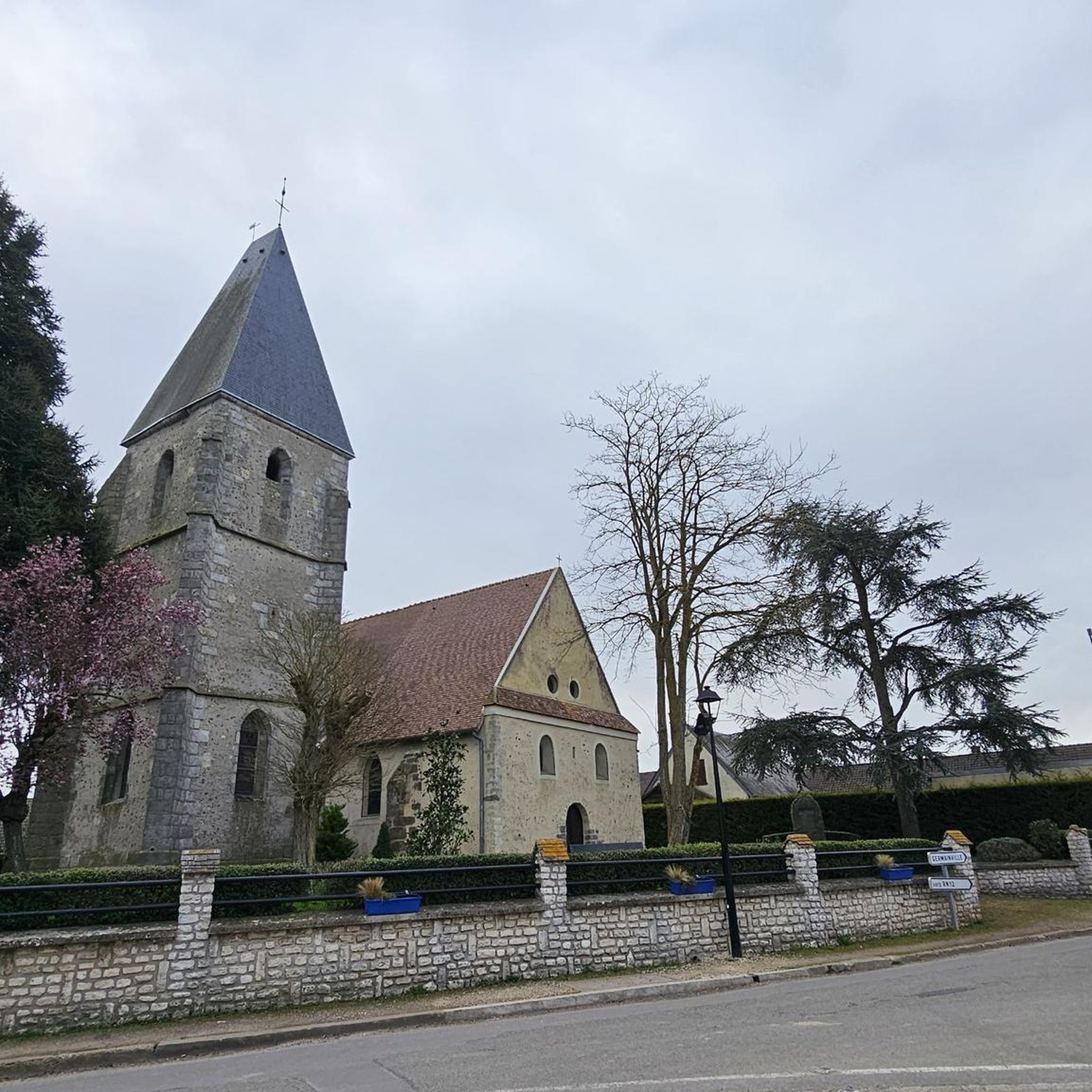
The church of La Chapelle-Forainvilliers, dedicated to Saint Martin, is a charming little building of uniform appearance which occupies the center of the village. Attested from 1080, the church, in its current state, does not seem to date back further than the 14th century and it most certainly underwent significant restorations in the 16th century. Some work was carried out in the 19th century, notably on the gable wall of the facade or inside which was redesigned according to the taste of the time. With a very simple plan, the church consists of a single nave ending in a semi-circular apse. It is lit by numerous bays which reveal successive interventions. The southern facade has semicircular openings in the second and third bays, openings which were reworked in the 19th century, and others, wider and higher in pointed arches, in the first and fourth bays; The carefully executed moldings bear witness to the 16th century work campaigns. One of the openings in the apse has a clasp in its upper keystone, probably installed in the 18th century. In the 19th century, a false stonework was designed across the entire nave; the furniture dates from this period. The church is covered with a pleasing roof of flat tiles that contrasts with the slate roof of the bell tower, whose slender profile allows the church to be distinguished from afar. The work to cover the bell tower was necessary and in 1994 the Sauvegarde de l'Art Français (French Art Protection Agency) awarded a grant of 15,000 francs. Unfortunately, the significant damage to the framework soon became apparent during the work. The Sauvegarde de l'Art Français (French Art Protection Agency) awarded a further grant of 100,000 francs for the repair of the bell tower framework in 1996.
0
0
According to tradition, the church choir covers the remains of an older building, possibly dating back to the 6th century, which was built to house the saint's body. According to current knowledge, the commune of Saint-Piat (Sanctus Piatus in Latin) officially appeared in 1087, mentioned in a charter of the Nottonville Priory (Eure-et-Loir), on which it depended. The current building was rebuilt during the time of Francis I, as suggested by the date 1535 engraved on two buttresses of the apse and the date 1542 engraved on a piece of wood from the vault. This is according to a study by the SAEL (Eure-et-Loir Archaeological Society). The three-sided apses, the dripstone towers (horizontal members projecting from a wall), and the sculpted roof structures are a testament to the importance of the reconstructions carried out in the department during the 16th century. The church of Saint-Piat is one of them. While the church has not been officially recognized, it nevertheless contains objects that have attracted attention both for their antiquity and quality, but not always for good reason. Their artistic value, far from attracting only religious or aesthetic interest, has also aroused a covetousness that, unfortunately, remains for some of them. Fortunately, those still in place are carefully cared for and offer the curious a story to discover, a beauty to slowly ponder as they progress toward the choir.
0
0
Nothing remains of the old church, donated at the end of the 10th century by Hugh Capet to the Abbey of Saint-Magloire. During the 19th and 20th centuries, the building was remodeled numerous times. The bell tower was restored around 1840. The building burned down in 1888. In 1892, the Hériot family commissioned its reconstruction from Charles Trubert, architect of the town of Rambouillet. The sacristy was built in 1894, possibly by Pommay, the Hériot family's architect. A painting depicting Saint Thomas Aquinas receiving the blood of Christ can be attributed to the 18th-century French school. The iconographic theme chosen is unusual. The depiction of a saint receiving the blood of Christ is inspired by the medieval theme of the Church collecting blood and water in its chalice. In the 16th century, the figures depicted in this pose at the foot of the cross were angels. Saint Thomas Aquinas usually symbolizes the fight against evil. In this painting, he represents the love of Christ. The church consists of a single nave with a ribbed vault and semicircular arches. The stained-glass windows are probably the work of Lorin, a master glassmaker from Chartres. The bell tower, partially destroyed during the Second World War, was restored in 1955.
0
0

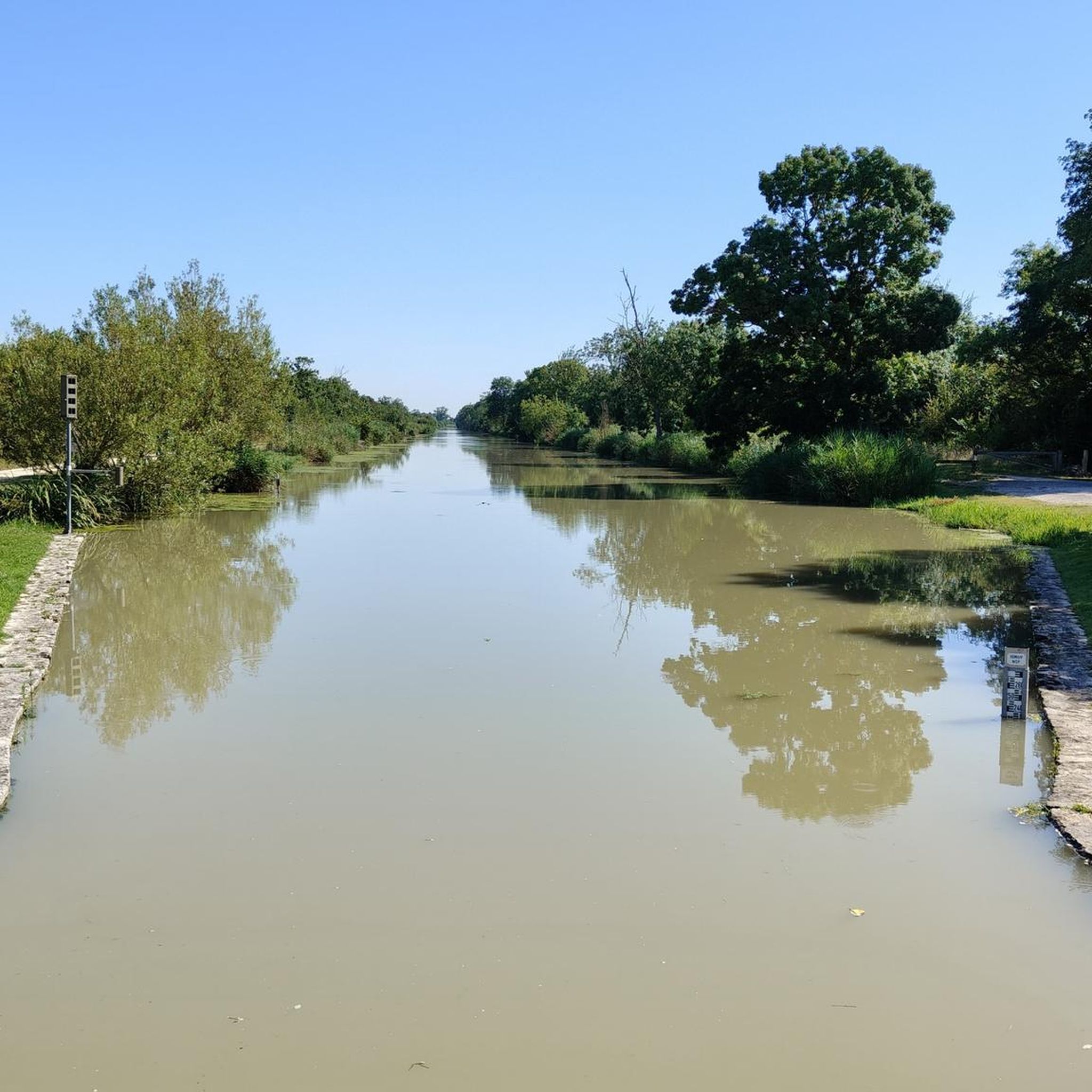
A very beautiful greenway It's an old railway line that has been covered over; it used to go all the way to Dreux. We love going there for cycling, and it's also ideal for walking and rollerblading.
0
0
Frequently Asked Questions
How many road cycling routes are available around Serville?
There are over 190 road cycling routes in the Serville area, offering a diverse range of options for cyclists of all abilities.
Are there easy road cycling routes suitable for beginners in Serville?
Yes, Serville offers 76 easy road cycling routes. A good option for beginners is The beautiful church of Prouais – Château de Mormoulins loop from Marchezais - Broué, which is 44.2 km long and features minimal elevation gain.
Where can I find challenging road cycling routes near Serville?
For experienced cyclists seeking a challenge, there are 14 difficult routes around Serville. One notable option is the Cocherelle Dolmen – Avre Aqueduct loop from Marchezais - Broué, a 117.9 km route with over 1000 meters of elevation gain.
Are there any road cycling routes under 30 miles (approximately 48 km) in Serville?
Yes, many routes in Serville are under 30 miles. For example, the easy The beautiful church of Prouais – Château de Mormoulins loop from Marchezais - Broué is 44.2 km (27.5 miles) and takes about 1 hour 48 minutes to complete.
What kind of scenery can I expect on road cycling routes in Serville?
Road cycling routes around Serville traverse a landscape characterized by rolling terrain and rural settings. You can expect a mix of open fields, historical landmarks, and waterways like the Eure river, often navigating through charming villages.
What do other road cyclists enjoy most about road cycling in Serville?
The area is highly rated by the komoot community, with an average score of 4.36 stars from over 50 reviews. Cyclists often praise the varied terrain, the mix of historical points of interest, and the generally quiet rural roads.
Are there any historical landmarks or attractions to see along the road cycling routes?
Yes, the Serville region is rich in historical landmarks. Many routes pass by notable structures such as Anet Castle, The Donjon of Houdan, and the Avre Aqueduct. The Cocherelle Dolmen – Avre Aqueduct loop specifically highlights historical landmarks and water features.
Are there any circular road cycling routes in Serville?
Many of the road cycling routes in Serville are designed as loops, allowing you to start and end at the same point. Examples include the La Celle-les-Bordes – Pavilion Pond loop and the Ivry-la-Bataille – Bucolic Eure loop.
What is the best season for road biking in Serville?
Given the rolling terrain and rural roads, spring and autumn generally offer pleasant temperatures and beautiful scenery for road cycling in Serville. Summer can also be enjoyable, though it's advisable to start earlier in the day to avoid the midday heat.
Are there routes that offer scenic viewpoints or picturesque landscapes?
Absolutely. The region's rural character means many routes offer scenic views of open fields and the Eure river. The La Celle-les-Bordes – Pavilion Pond loop, for instance, provides views of a pavilion pond and surrounding rural scenery.
Can I find routes that pass through villages or offer opportunities for cafe stops?
Yes, many road cycling routes in Serville navigate through local villages. While specific cafe stops are not detailed in every route description, passing through villages often provides opportunities to find local amenities and places to rest or refuel.
Most popular attractions around Serville

Get inspired with the komoot mobile app


Explore more
Browse the best Road cycling routes in other regions.
