The best cycling routes around Boissy-Lès-Perche
4.5
(134)
733
riders
86
rides
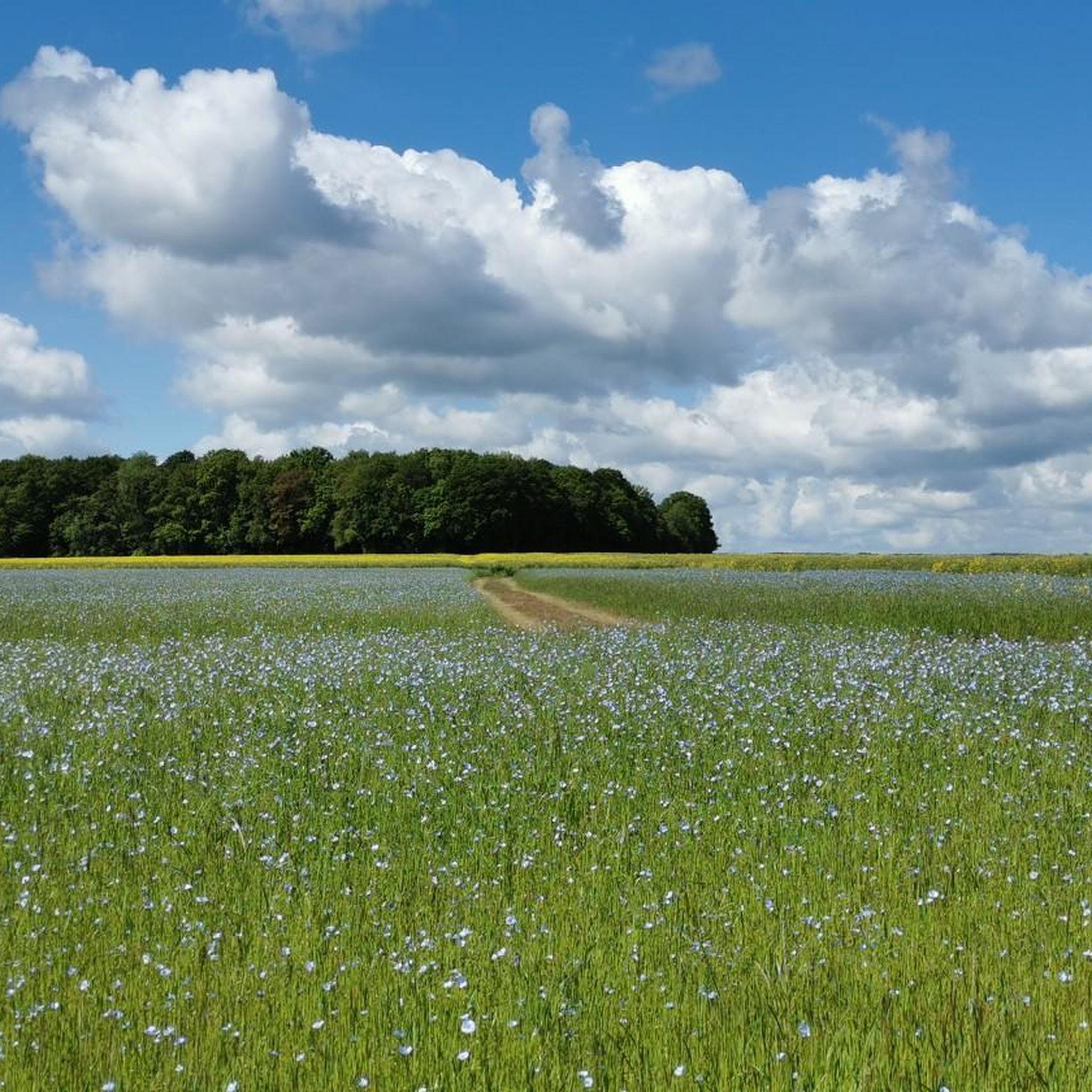
Touring cycling around Boissy-Lès-Perche offers exploration through the Perche Regional Natural Park, characterized by its bocage countryside, rolling hills, and gentle valleys. The landscape features a patchwork of hedged farmland, lush meadows, and dense forests, providing varied terrain for cyclists. Rivers and ponds are present throughout the region, contributing to the serene environment. This area is well-suited for cyclists seeking scenic routes and a tranquil experience of the French countryside.
Best touring cycling routes around Boissy-Lès-Perche
- The most popular touring…
Last updated: November 2, 2026
4.8
(24)
167
riders
19.5km
01:07
80m
80m
Easy bike ride. Mostly paved surfaces.
4.2
(14)
38
riders
22.3km
01:19
100m
100m
Easy bike ride. Mostly paved surfaces.

4.3
(6)
17
riders
36.5km
02:07
120m
120m
Moderate bike ride. Good fitness required. Mostly paved surfaces.
5.0
(2)
6
riders
Easy bike ride. Mostly paved surfaces.
4.3
(3)
13
riders
11.1km
00:44
40m
40m
Easy bike ride. Mostly paved surfaces.
Get access to more routes and recommendations from other explorers.
Already have an account?
Our route recommendations are based on thousands of hikes, rides, and runs completed by other people on komoot.
Start today with a free account
Your next adventure awaits.


Tips from the Community

Nice road for inline skating or rollerblading (with children)
0
0
Very nice
0
0
Very good for taking photos
0
0
Very nice for taking photos, but you can't go inside
0
0

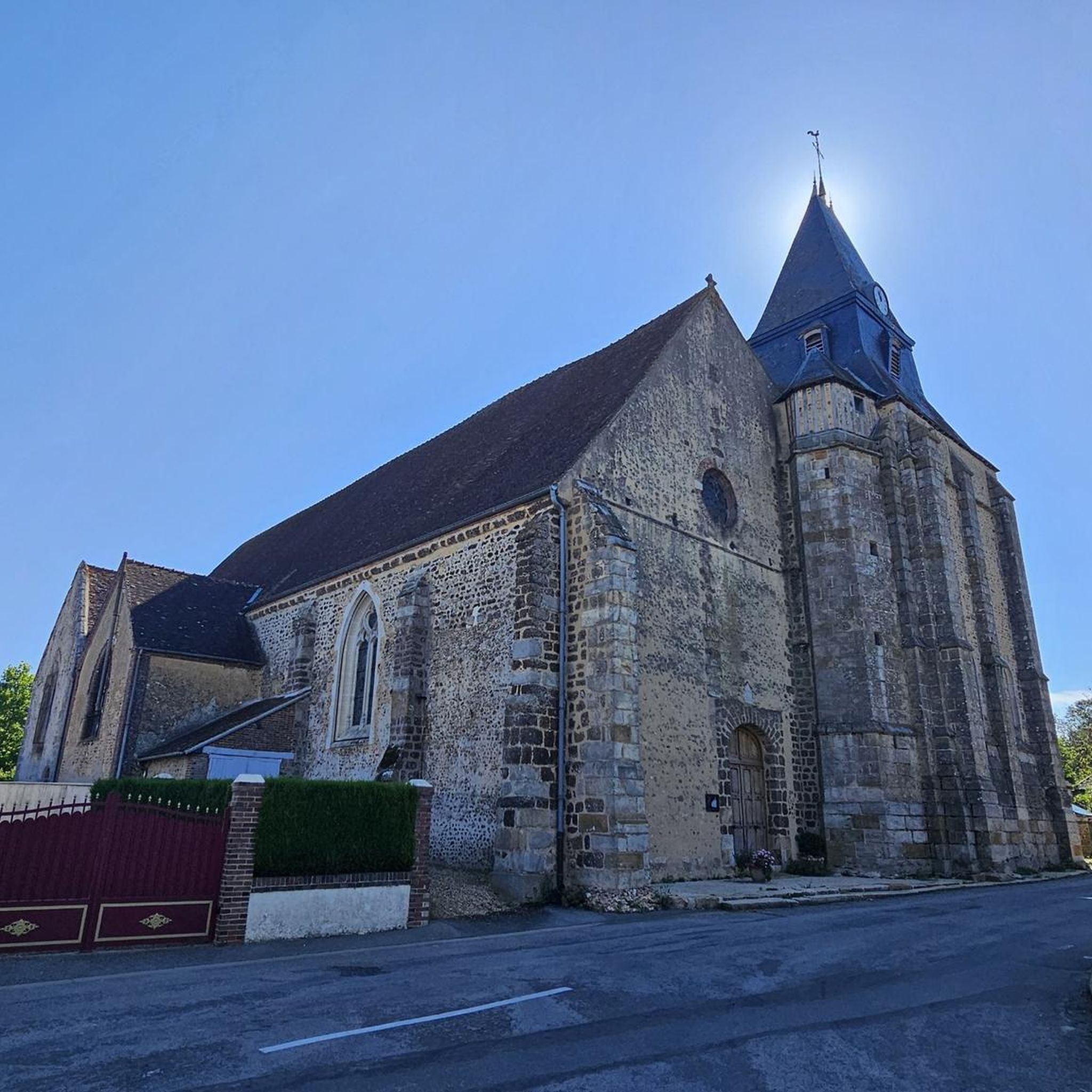
Église Saint Madeleine is a church where beautiful various statues of Saints, famous and less famous. The reason for so many different statues is that the school of sculpture was established here.
0
0

Church with a brick bell tower built between 1890 and 1898
0
0

CHURCH SAINT NICOLAS (17th century) The town of La Ferté-Vidame takes its name from the Latin Firmitas Castrum which means the fortified villa belonging to the vidame'. Its primitive church existed from the 12th century. We find it mentioned in a charter dated 1136 under the name “Ecclesia Sancti Nicolai de Firmitate”. Under the Ancien Régime, the rectory which was at the disposal of the abbot of Saint-Vincent-des-Bois became an annex of the parish of Lamblore. This particular situation of a chief town of a castellany belonging to a rural parish is explained by the detachment of the original parish from the territory around the castle. Successor to the Huguenot heirs, Claude de Rouvroy de Saint-Simon, proclaimed by the grace of Louis XIII duke and peer of France, acquired the La Ferté estate in 1632. In order to erase all traces of Protestantism, of which the church had become over the centuries a very active platform, the Duke of Saint-Simon ordered in 1658 the demolition of the original church to replace it on the same site with the current building. The work was carried out promptly. On November 1, 1659, the Saint-Nicolas church was blessed by Messire Louis Oudard de Germens, canon priest of Chartres. Classic in style with its homogeneous and ordered composition, the church was built according to a plan in the shape of a Latin cross. Its construction was inspired by the drawings of the famous Italian architect, Andrea di Pietro Palladio, whose sketches Duke Saint-Simon had brought back from Spain. The architecture remains faithful to the marriage of stone and brick while giving this alternation a fanciful touch. Very majestic, the facade is built according to the Italian pattern (bossed pilasters, superposition of orders, pediment, volutes), a style also in vogue in France since 1630. The arms of the Saint-Simon family were engraved on a stone at the pediment of the portal and on two others on either side of the portal. They were burned during the Revolution. Today, only the date engraved on the frieze remains: 1659. 16 59 Square in plan, the bell tower, which adjoins the church in the northern part, is topped with a dome surmounted by a lantern. Two bells are housed in the bell tower: one dates from 1762, the second from 1813. The history of the church is closely intertwined with that of the lords of the parish, including the families Saint-Simon, Laborde, Bourbon-Penthievre and Bourbon-Orléans remain the most famous. Grandstands accessible from the outside and opening onto the side chapels recall their presence. In 1743, at the request of Louis de Saint-Simon, a great memoirist, the family vault was built in the Chapel of the Resurrection. A slab on the ground marks the location of the grave. Unfortunately, during the Revolution, the tombs were desecrated, the bones of the benefactors were extracted from the vault and scattered in a common grave dug at the apse of the church. The church was the subject of significant restorations at the end of the 18th century and the beginning of the 19th century, including the interior ornamentation of the building which is a manifestation of the neo-classical style.
2
0

The Madeleine Tower overlooks a beautiful square, surrounded by numerous terraces where it is good to quench your thirst after your exercise!
0
0
Frequently Asked Questions
How challenging are the touring cycling routes around Boissy-Lès-Perche?
The routes in the Perche Regional Natural Park cater to various skill levels. You'll find a good mix of easy, moderate, and some more difficult options. Out of 77 available touring cycling routes, 43 are rated easy, 31 are moderate, and 3 are difficult. The landscape features rolling hills and gentle valleys, providing both enjoyable inclines and rewarding descents.
What are the typical lengths of touring cycling routes in the Boissy-Lès-Perche area?
Route lengths vary, but many popular options are suitable for a half-day or full-day ride. For example, the Bois Francs Castle – Bois Francs Greenway loop from Les Barils is 19.4 km (12.1 miles), and the Bois Francs Castle – Bois-Francs Castle loop from Les Barils is 22.3 km (13.9 miles). These routes typically take between 1 hour and 1 hour 30 minutes to complete, offering a pleasant exploration of the countryside.
Are there family-friendly touring cycling routes available?
Yes, many routes around Boissy-Lès-Perche are suitable for families, especially those rated as 'easy'. The region's characteristic greenways and quiet country roads, often found within the bocage countryside, provide a safe and enjoyable environment for cyclists of all ages. Routes like the Bois Francs Greenway – Bois Francs Castle loop from Pullay, at 12.1 km (7.5 miles) with minimal elevation, are ideal for a leisurely family outing.
What historical sites or natural attractions can I see along the touring cycling routes?
The Perche region is rich in heritage and natural beauty. Along your rides, you might encounter charming villages, old manors, and fortified farms. Notable attractions include the Ferté-Vidame Castle, the Ruins of the Château de La Ferté-Vidame, and the Bois Francs Castle. The region is also known for its extensive woodlands, rivers, and ponds, offering picturesque natural scenery.
When is the best time of year for touring cycling in the Perche Regional Natural Park?
The Perche Regional Natural Park is beautiful throughout the warmer months. Spring and autumn offer pleasant temperatures and vibrant landscapes, with spring bringing lush greenery and autumn showcasing rich fall colors. Summer is also suitable, with the dense forests providing welcome shade on hotter days. Always check local weather forecasts before heading out.
Are there circular touring cycling routes around Boissy-Lès-Perche?
Yes, many of the touring cycling routes in the area are designed as loops, allowing you to start and finish at the same point. Examples include the Bois Francs Greenway – Bois Francs Castle loop from Verneuil d'Avre et d'Iton and the Bois Francs Greenway – Bois Francs Castle loop from Les Barils. These circular routes make planning your ride and return journey straightforward.
What do other touring cyclists enjoy the most about touring cycling in Boissy-Lès-Perche?
The area is highly rated by the komoot community, with an average score of 4.5 stars from over 90 reviews. Reviewers often praise the tranquil exploration of the French countryside, the picturesque bocage landscape, and the well-maintained cycling routes that offer a blend of shaded forests and open fields. The varied terrain and charming villages are frequently highlighted as key attractions.
Can I reach Boissy-Lès-Perche by public transport with my bike?
While Boissy-Lès-Perche is a rural area, the wider Perche region is accessible. For specific public transport options that accommodate bikes, especially for longer distances, it's advisable to check regional train (TER) or bus services that connect to larger towns like Chartres or Alençon, which are part of the broader cycling network like La Véloscénie. From these points, you might cycle to Boissy-Lès-Perche or use local transport if available.
Are touring cycling routes in the Perche Regional Natural Park dog-friendly?
Generally, touring cycling routes on public paths and quiet country roads within the Perche Regional Natural Park are dog-friendly, provided dogs are kept on a leash and owners clean up after them. However, specific rules might apply in certain protected natural areas or private properties. Always ensure your dog is comfortable with cycling distances and be mindful of local wildlife and livestock.
Where can I find more information about the Perche Regional Natural Park?
For comprehensive information about the park's history, natural features, and activities, you can visit the Maison du Parc Naturel Régional du Perche, located at the Manoir de Courboyer. Additionally, resources like France Vélo Tourisme provide details on cycling in the Perche region, including sections of La Véloscénie.
Are there any specific long-distance cycling routes that pass through or near Boissy-Lès-Perche?
Yes, the Perche region is notably traversed by sections of La Véloscénie, a major long-distance route connecting Paris to Mont Saint-Michel. This route utilizes greenways and quiet country roads, offering a substantial section through the Perche. Another significant route is the 'Tour des Collines du Perche,' a 220 km itinerary suitable for cycle tourists, further emphasizing the region's appeal for touring cyclists.
Most popular routes around Boissy-Lès-Perche
Most popular attractions around Boissy-Lès-Perche

Get inspired with the komoot mobile app


Explore more
Browse the best Cycling routes in other regions.
