Attractions and Places To See around Saint-Hilaire-Sur-Yerre - Top 20
Best attractions and places to see around Saint-Hilaire-Sur-Yerre include local historical sites and notable landmarks in the surrounding Eure-et-Loir department of France. The commune is traversed by the Yerre river, known for its fishing opportunities. This region serves as a starting point for exploring a variety of castles, historic towns, and natural features within a short distance. The area combines local heritage with access to significant cultural sites in the Loir valley.
Best attractions and places to see around Saint-Hilaire-Sur-Yerre
- The most popular attractions is View of Montigny-le-Gannelon Castle, a castle that offers splendid Renaissance-style facades. The bridge crossing the Loir river provides a viewpoint for this building, which includes a 12th-century "big tower" that is among France's tallest and best-preserved keeps.
- Another must-see spot is Château de Châteaudun, a historical site. This castle overlooks the Loir river and features a blend of medieval, Gothic, and Renaissance architecture, housing a collection of 16th and 17th-century tapestries.
- Visitors also love Monumental Fountain of Châteaudun, a large neo-Renaissance style fountain. Inaugurated in 1860, it symbolizes the arrival of a modern drinking water supply and is topped by a dome with a phoenix, representing the city's rebirth.
- Saint-Hilaire-Sur-Yerre is known for its historical churches, river landscapes, and proximity to significant castles and towns. The area offers a variety of attractions to see and explore, from local heritage sites like the Église Saint-Hilaire and Lavoir Communal to regional architectural marvels.
- The attractions around Saint-Hilaire-Sur-Yerre are appreciated by the komoot community, with 50 upvotes and 37 photos shared across various highlights.
Last updated: July 6, 2026
Château de Châteaudun
Highlight • Historical Site
chateau-chateaudun.fr
Translated by Google •
Tip by

Château de Montigny-le-Gannelon
Highlight • Castle
Montigny-le-Gannelon Castle dates from the Renaissance period; it was redesigned during the course of a restoration in the 19th century Neo-Gothic.
Translated by Google •
Tip by
Sign up now to discover places like this
Get recommendations on the best single tracks, peaks, & plenty of other exciting outdoor places.
Sign up for free
Monumental Fountain of Châteaudun
Highlight • Other
Translated by Google •
Tip by

Notre-Dame de la Boissière Chapel
Highlight • Religious Site
In 1248, according to Father Gordas, the Templars of the Boissiére and their pilgrimage hospital of Santiago de Compostela speak of the Cartular of the Madeleine of Chateaudun Abbey. After the disappearance of the Temple Order, the whole was transferred to the Order of St. John of Jerusalem.
fr.wikipedia.org/wiki/Commanderie_de_Notre-Dame-de-la-Boissi%C3%A8re
Translated by Google •
Tip by
Saint George's Church
Highlight • Other
However, the legend of St. George as a dragon slayer is well known and widespread; he is usually depicted - in paintings or as a statue - as the conqueror of the monster, often as a knight on horseback.
The memorial day of the very popular George - he is, among other things, patron of the English kingdom - in the calendar of saints is April 23rd.
Translated by Google •
Tip by

Sign up for free to discover even more attractions around Saint-Hilaire-Sur-Yerre.
Sign up for free
Already have an account?
Start today with a free account
Your next adventure awaits.
Login or Signup



Tips from the Community


The imposing structure known as the "Château de Chateaudun" that reveals itself to visitors here is, of course, also available in other sports in the komoot system. For the corresponding hiking highlight, you'll find further relevant information and additional photos under the tips. If you're interested, see =>> https://www.komoot.com/de-de/highlight/936307
0
0


At the gates of the Loir valley coming from Paris, between Chartres and Blois, the Château de Châteaudun raises its proud and massive silhouette to the eyes of the visitor who approaches it from the north. Property of Jean, bastard of Orléans, Count of Dunois and companion of Joan of Arc, it was a solid fortress before becoming a pleasant princely residence. Overlooking the Loir by more than 60 meters, Châteaudun Castle offers a succession of elements of medieval, Gothic and Renaissance architecture of exceptional authenticity. Clinging to its rocky promontory, the 12th century “big tower” is one of the tallest and best preserved dungeons in France. In the 15th century, Jean Dunois undertook work and transformed the castle, demolishing part of the fortifications. He made the old medieval castle a comfortable and bright residence and endowed it with a Sainte-Chapelle. In the following century, his descendants, the lords of Longueville, completed the construction of the chapel and enlarged the castle with the Longueville wing. The Dunois wing and the Longueville wing have two sumptuous staircases with loggias, one with flamboyant decor and the other from the Renaissance period. Château de Châteaudun also houses a remarkable collection of Flemish and French tapestries from the 16th and 17th centuries. The visit is completed by a medieval-inspired garden exploring the relationships between cuisine and medicine in the Middle Ages, while a hanging garden reveals a garden of idleness and relaxation, unique in the Central Region.
1
0
The community that was gifted with goods and established a command here is often referred to in a shortened form as the "Order of the Templars", but its full name is: "Poor Knighthood of Christ and the Solomonic Temple in Jerusalem". He gained notoriety through the fact that in 1312 this order was dissolved by the French king and the pope and many of its members met their violent end at the stake as alleged heretics. The main reason for the dissolution, however, was not the alleged human and religious misconduct of the members, but rather the legendary wealth of this order. King Philip IV of France primarily wanted to secure the treasures in order to supplement his coffers.
1
0

Before the 13th century there were two parishes, Saint-Sauveur and Saint-Gilles, in 1300 the bishop of Chartres united them into one by a charter of Berchères, because of the smallness of the two parishes. The church dates from the beginning of the 17th century. Rebuilt on the foundations of an old Romanesque church, its originality comes from its bell tower with saddle roof, its caquetoire and its paneled vault redone in 2003. At the initiative of the Prince Duke of Montmorency-Laval, it has contained the reliquary of Sainte-Félicité since 1838. Saint Félicité, whose relics are in Montigny-le-Gannelon, is a martyr whose life is unknown, whose body was taken from the sacred cemeteries of Rome. We have his body, the skull, the bones of his arms, fingers and feet. They were removed from the Saint-Cyriaque cemetery in 1828 and placed in their respective places on a body artistically modeled in wax and measuring more than 1.40 meters in length. A magnificent chase, of the shape and size of an altar tomb, all furnished with glazing and embellished with gilding received this precious deposit. Pope Leo XII donated it to the Duke of Laval, then Charles X's ambassador to Rome. On his death, he bequeathed it by will to the church of Montigny-le-Gannelon where the old historic castle of Laval-Montmorency is located. The venerated hunt is now placed under the main altar of which it forms the tomb.
0
0
This large neo-Renaissance style fountain was inaugurated in 1860 to symbolize the arrival a few years earlier of a modern drinking water supply system in the upper town. It is topped by a dome with lantern and a phoenix, this mythical bird which is reborn from its ashes and which perfectly symbolizes the rebirth of the city after fires, the most important of which was the dramatic fire of 1723.
0
0
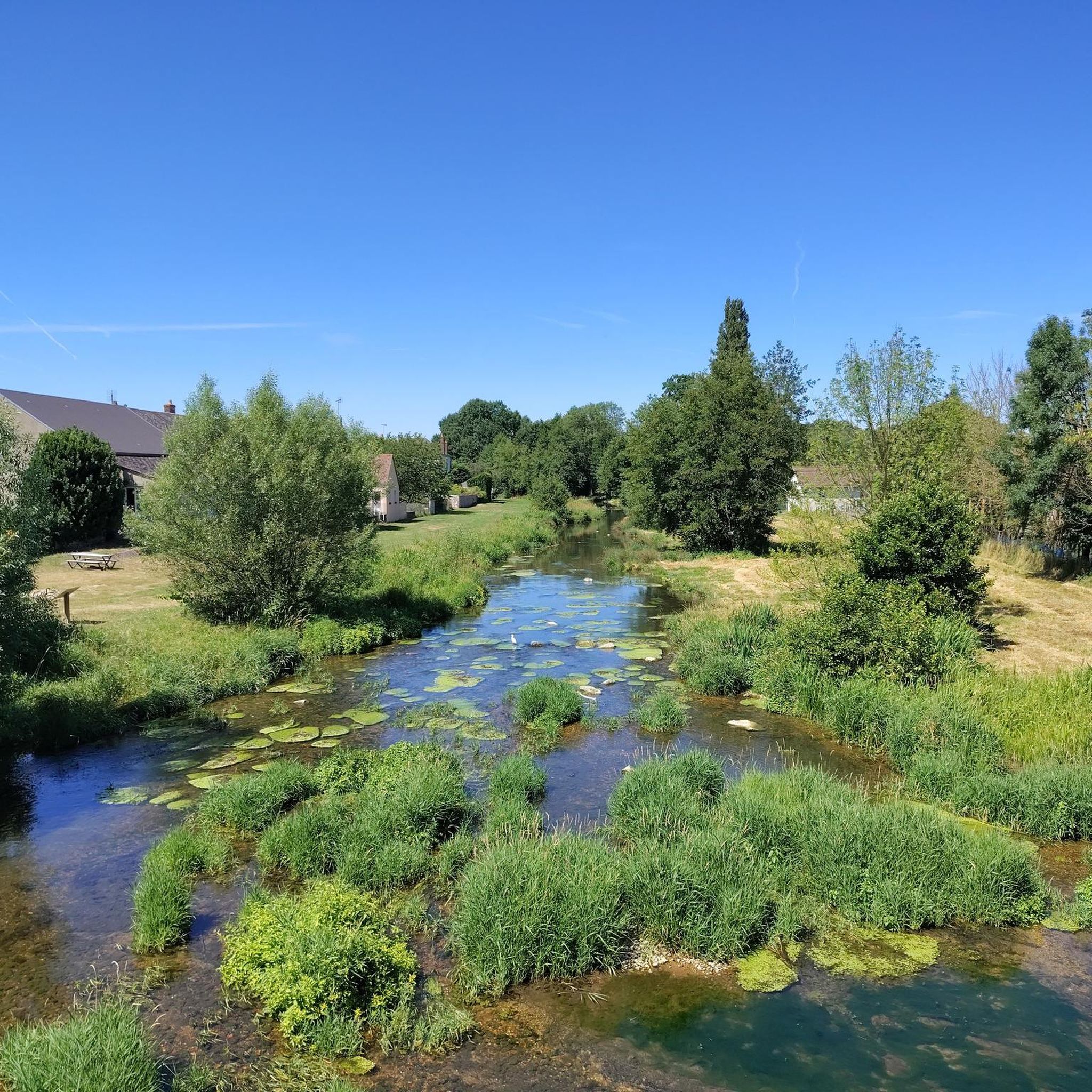
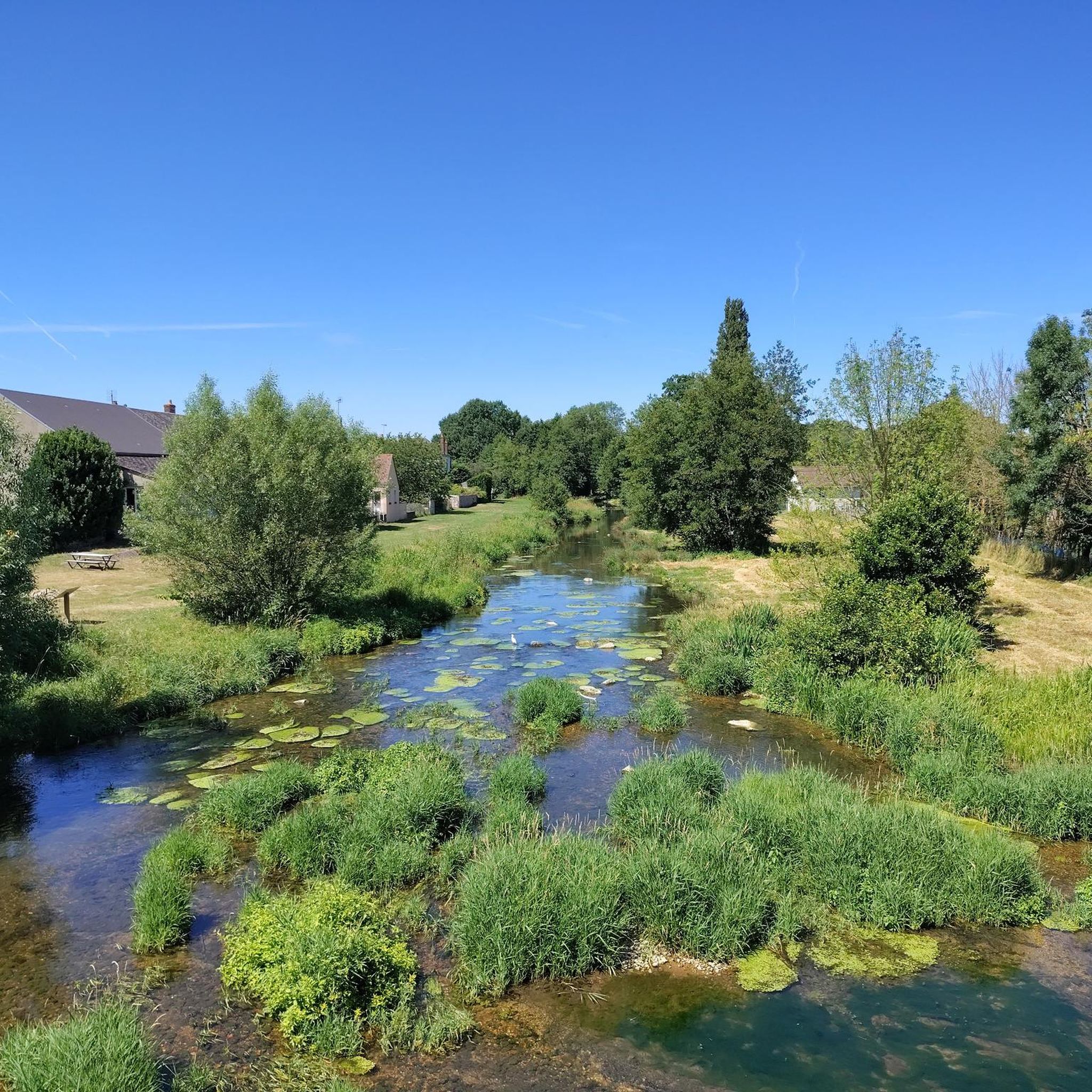
magnificent view of the castle on the banks of the Loir with a small corner perfect for a picnic.
1
0
Frequently Asked Questions
What historical sites can I visit in and around Saint-Hilaire-Sur-Yerre?
Saint-Hilaire-Sur-Yerre itself is home to the historic Église Saint-Hilaire, dating back to the 11th or 12th century with Renaissance additions, and the Lavoir Communal. Nearby, you can explore the impressive Château de Châteaudun, a blend of medieval, Gothic, and Renaissance architecture, or admire the Renaissance facades of Montigny-le-Gannelon Castle, which features one of France's tallest 12th-century keeps.
Are there any notable natural features or outdoor activities near Saint-Hilaire-Sur-Yerre?
The Yerre River flows through the commune and is known for its 'no-kill' fishing policy, making it a spot for trout, chub, and rainbow trout enthusiasts. For hiking, you can find various trails in the area, including the 'Montigny-le-Gannelon Castle Loop' or 'The Douy Ponds loop from Douy'. You can explore more options on the Hiking around Saint-Hilaire-Sur-Yerre guide.
What are some family-friendly attractions or activities in the region?
Families can enjoy exploring the grand Château de Châteaudun, which offers a fascinating glimpse into history with its architecture and tapestry collection. The picturesque towns like Beaugency and Meung-sur-Loire also provide charming environments for leisurely strolls and discovering local heritage.
Where can I find unique architectural landmarks in the vicinity?
Beyond the castles, don't miss the Monumental Fountain of Châteaudun, a large neo-Renaissance style fountain symbolizing the city's rebirth. The Église Saint-Hilaire in the commune itself showcases distinct Romanesque and Renaissance construction periods. Further afield, the town of Vendôme is recognized for its numerous historical monuments.
Are there opportunities for cycling around Saint-Hilaire-Sur-Yerre?
Yes, the area offers various cycling routes. For road cycling, you might consider routes like 'La Forêt de Fréteval, l'étang de Lubin' or 'Château de Châteaudun – Château de Meslay loop'. Mountain biking enthusiasts can find trails such as 'Courgain Mill – Church of Saint John of the Chain loop'. More details are available in the MTB Trails around Saint-Hilaire-Sur-Yerre and Road Cycling Routes around Saint-Hilaire-Sur-Yerre guides.
What are some charming towns or villages to visit for a day trip from Saint-Hilaire-Sur-Yerre?
Several charming destinations are within a short drive. Vendôme is a 'town of art and history' with many historical monuments. Beaugency is a picturesque town along the Loire River, known for its historical sites. Meung-sur-Loire is another medieval village, and Lavardin is recognized as one of France's 'Most Beautiful Villages,' featuring a river, an ancient bridge, and an old castle.
What do visitors particularly enjoy about the castles in the area?
Visitors are often impressed by the scale and historical depth of castles like Château de Châteaudun, noting its commanding position overlooking the Loir river and its rich collection of 16th and 17th-century tapestries. The View of Montigny-le-Gannelon Castle is appreciated for its splendid Renaissance facades, especially when viewed from the bridge over the Loir.
Are there any gardens or parks worth visiting nearby?
Approximately 40 km to the east-south-east, you can discover Les Jardins de Roquelin, which are beautiful rose gardens in the Loire Valley, offering a tranquil and scenic experience.
What is the best time to visit Saint-Hilaire-Sur-Yerre and its surrounding attractions?
The region is generally pleasant to visit during spring and summer (April to September) when the weather is mild, and gardens like Les Jardins de Roquelin are in full bloom. This period is also ideal for outdoor activities such as hiking and cycling, and for exploring the historical sites comfortably.
Are there any other notable churches or religious sites in the wider area?
Yes, beyond the local Église Saint-Hilaire, you can visit Saint Peter's Church in Romilly-sur-Aigre, which features a 15th-century reconstruction and distinctive 18th-century corner towers. Another is Saint George's Church in Cloyes-sur-le-Loir, dedicated to the legendary dragon slayer.
What kind of fishing opportunities does the Yerre River offer?
The Yerre River, which flows through Saint-Hilaire-Sur-Yerre, is known for its 'no-kill' fishing policy. It's a popular spot for anglers interested in catching trout, chub, and rainbow trout, providing a peaceful outdoor activity.
Most popular routes around Saint-Hilaire-Sur-Yerre

Get inspired with the komoot mobile app


Explore more
Still not found the Highlight you’re looking for? See guides of the top attractions in other regions:
