The best road cycling routes around Mottereau
4.5
(20)
272
riders
132
rides
Road cycling routes around Mottereau traverse a landscape characterized by gently rolling terrain and agricultural fields, interspersed with woodlands and small villages. The region offers a network of quiet country roads suitable for road cycling. Elevation changes are generally modest, making it accessible for various fitness levels.
Best road cycling routes around Mottereau
- The most popular road cycling route is From Brou to Miermaigne via the Bois de Grandmont — circuit, a 40.1 miles (64.5 km) trail that takes…
Last updated: July 5, 2026
3.0
(1)
1
riders
64.5km
02:37
330m
330m
Moderate road ride. Good fitness required. Mostly well-paved surfaces and easy to ride.
8
riders
36.9km
01:27
100m
100m
Easy road ride. Great for any fitness level. Mostly well-paved surfaces and easy to ride.

Sign up for free
6
riders
56.1km
02:17
310m
310m
Moderate road ride. Good fitness required. Mostly well-paved surfaces and easy to ride.
10
riders
100km
04:00
420m
420m
Moderate road ride. Good fitness required. Mostly well-paved surfaces and easy to ride.
8
riders
30.6km
01:15
170m
170m
Easy road ride. Great for any fitness level. Mostly well-paved surfaces and easy to ride.
Get access to more routes and recommendations from other explorers.
Sign up for free
Already have an account?
Our route recommendations are based on thousands of hikes, rides, and runs completed by other people on komoot.
Start today with a free account
Your next adventure awaits.
Login or Signup



Tips from the Community

Magnificent ceiling with the possibility of lighting it up
0
0


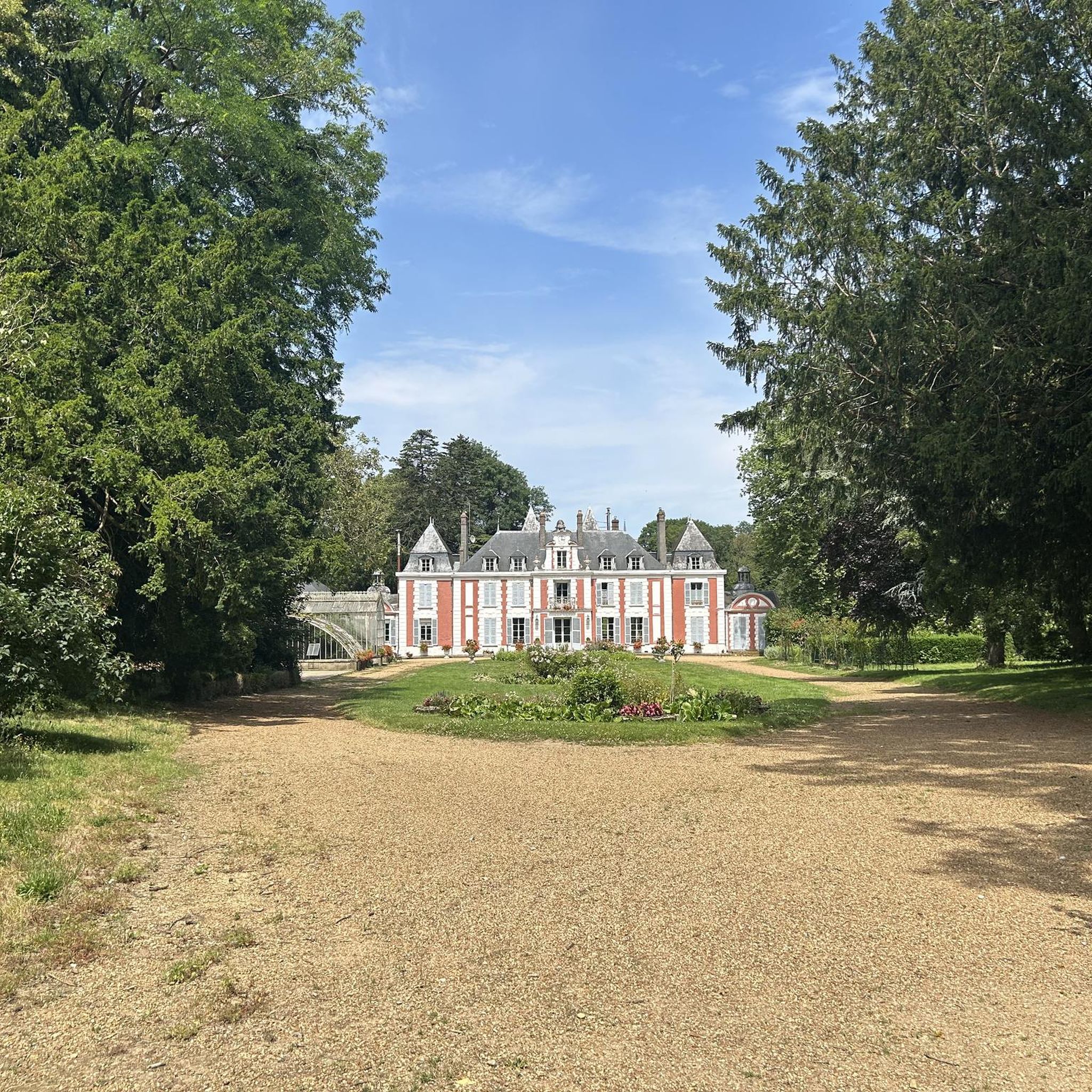
Built on an old feudal motte, which is still visible and was completely destroyed during the Hundred Years' War, it was replaced in the second half of the 15th century by the castle, the remains of which can still be seen today. The Saint-François Tower remains as it was, with its Grisons base and rows of white stone. Halfway up the circle is the Cord of Saint Francis of Assisi, with its coils and knots. A Renaissance building was added in the 16th century, and new buildings were constructed in the 17th and 18th centuries.
0
0

The Saint-Lubin church, built on a sloping site, is a vast building with juxtaposed constructions, bearing witness to renovations and additions up to the 19th century, the oldest distinguished by the presence of grison, the most recent by limestone and flint. The sanctuary was ceded in 1077 by the monks of Saint-Denis de Nogent-le-Rotrou to the monks of the Saint-Père de Chartres abbey. Built in the 11th-12th century, the nave extended by a semi-circular apse is the oldest part of the church, in Romanesque style. In the thickness of the north walls of the nave are still visible the grison bonds which bear witness to the original openings. The building was considerably enlarged in the 15th and 16th centuries by the construction of a large transept, formed of two chapels, and a south aisle forming an alignment of gables attached to the slopes decorated with leafy motifs and finished with chimeras. The construction of the north aisle, just begun, was not finished. On the outside, on the west wall of the chapel, we can see the beginning of a first bay (stone arch and walls removed that remained unfinished). On the gable of the north transept, the walled door can be seen from the pointed arch and the ornate pinnacles, characteristic of the end of the 15th century. In the center, two animals present a coat of arms. On each side of the door, niches with canopies once housed statues. Above, we can still see a coat of arms presented by two bearded figures and probably surmounted by God the Father. According to local tradition, all or part of the extensions were due to the generosity of Florimont Robertet, who owned the barony of Brou from 1509 until his death in 1527, and it was because of this that the work was interrupted. Occupied by the revolutionaries, the building became a ten-day temple in 1794; it was finally returned to worship in 1802. Burnt down by lightning in 1813, the upper part of the bell tower, which was a slender spire, was replaced by the construction of a square limestone tower pierced with louvers. On the southern part of the bell tower, a turret provides access to the bells. In the southern part of the nave, a door, now blocked and highlighted by a basket-handle arch topped with a pinnacle, provided access to the cemetery that once surrounded the church. The building can boast of having preserved very uniform oak furniture, most of which was made in the second half of the 18th century.
0
0

Unfortunately, the church was not accessible when I visited (mid-September 2024). You could only look in through a gate and the dance of death depictions on the left side were not really visible. In front of them were transparencies with skeleton drawings. Maybe those were the depictions...
0
0

Porte de Boisville Its ogival portal opens into a thick quadrangular massif where there was a room for operating the portcullis. We can still see the groove in the thickness of the walls. On the left and right two small funnel-shaped spaces allowed the defenders to observe and repel the enemies who appeared on the bridge. The gate was topped by a building serving as a guardhouse which was demolished in 1761. The guarding of these doors and their keys was in the troubled times of the Hundred Years' War the subject of concern for the inhabitants and also a source of quarrels and trials between the city and the abbey. This gate is preceded by a bridge of 5 stone arches, the one adjoining the gate was built in 1774 and replaced a drawbridge which defended the entrance.
0
0

Of course there is the castle but the rest of the village is really worth a stop (church, wash house, half-timbered house, etc.)
0
0
the Saint-André church dates from the 11th century; it was a priory then dependent on the abbey of St.-Calais, but the current building was completely rebuilt around the walls and framework of the old building. The project was carried out in 1877. The construction of a transept, enlarged windows and a stone bell tower completely modified the old monument. The environment has also changed a lot. All traces of the old cemetery, transferred outside the village at the beginning of the 18th century, have disappeared. The furniture includes a stone baptistery, a statue of the Virgin and Child, a confessional and a Louis XV period bench. The beautiful wooden tabernacle decorated with a statue of Saint Lubin comes from the church which was located a few kilometers away, in Saint-Lubin-des-Cinq-Fonts, and of which only the choir, which has become a chapel, remains today. .
0
0
Frequently Asked Questions
How many road cycling routes are available around Mottereau?
Mottereau offers a wide selection of road cycling routes, with over 130 tours available. These routes cater to various skill levels, from easy to difficult.
Are there easy road cycling routes suitable for beginners in Mottereau?
Yes, Mottereau has approximately 50 easy road cycling routes perfect for beginners or those seeking a relaxed ride. An excellent option is the Saint John the Baptist Church – Saint Lubin Church loop from Brou, an easy 22.9-mile path with minimal elevation gain, passing by local churches and through rural landscapes.
Where can I find long-distance road cycling routes in the Mottereau area?
For longer rides, consider routes like the Ponds of Fontenay-sur-Eure – Porte de Boisville loop from Brou. This moderate route covers over 62 miles (100 km) and offers a substantial challenge for endurance cyclists.
Are there challenging road cycling routes for experienced riders?
While the region is generally characterized by gently rolling terrain, there are a few routes that offer more challenge. Approximately 5 routes are rated as difficult, providing more significant elevation changes for experienced cyclists looking to push their limits.
What is the best time of year for road biking in Mottereau?
The spring and autumn months generally offer the most pleasant conditions for road cycling in Mottereau, with mild temperatures and less traffic. Summer can also be enjoyable, though it's advisable to ride in the mornings or late afternoons to avoid the midday heat.
Are there circular road cycling routes available?
Many of the road cycling routes around Mottereau are designed as circular loops, allowing you to start and end at the same point. An example is the popular From Brou to Miermaigne via the Bois de Grandmont — circuit, a 40.1-mile loop through varied terrain.
What kind of scenery can I expect on road cycling routes in Mottereau?
Road cycling around Mottereau is defined by quiet country roads, open agricultural fields, and scattered woodlands. The routes often pass through small villages and offer views of the rural French countryside, providing a peaceful and scenic riding experience.
What do other road cyclists enjoy the most about road cycling in Mottereau?
The area is highly rated by the komoot community, with an average score of 4.7 stars from over 10 reviews. Reviewers often praise the quiet country roads, the gentle rolling terrain suitable for various fitness levels, and the charming rural landscapes.
Are there any interesting landmarks or places to explore along the routes?
Yes, several routes pass by notable landmarks. For instance, the Frazé – Château de Frazé loop from Brou leads through the countryside around the historic Château de Frazé. You might also encounter charming churches like the Church of Saint James in Illiers-Combray.
Can I find routes that go through wooded areas?
Absolutely. Many routes incorporate sections through woodlands. The From Brou to Miermaigne via the Bois de Grandmont — circuit, for example, leads directly through the Bois de Grandmont, offering a pleasant mix of open and shaded sections.
Are there routes suitable for families with children?
Given the prevalence of easy routes with minimal elevation gain and quiet country roads, many of Mottereau's paths are suitable for families. Look for routes rated as 'easy' and shorter distances, such as the Château de Frazé – Château de Frazé loop from Brou, which is 20.4 miles (32.8 km) and relatively flat.
Most popular attractions around Mottereau

Get inspired with the komoot mobile app


Explore more
Browse the best Road cycling routes in other regions.
