The best road cycling routes around Boussès
4.7
(3)
119
riders
3
rides
Road cycling routes around Boussès, located in the Lot-et-Garonne department, offer a diverse landscape for cyclists. The region is characterized by its river confluence, with the Garonne and Salat rivers providing scenic backdrops. Cyclists can explore routes that incorporate old railroad embankments, offering minimal inclines and often passing through historical infrastructure like bridges and tunnels. The terrain generally features mostly paved surfaces, suitable for road bikes, with varying elevation gains.
Best road cycling routes around Boussès
- The most popular road…
Last updated: June 26, 2026
2
riders
84.6km
03:28
510m
510m
Moderate road ride. Good fitness required. Mostly well-paved surfaces and easy to ride.
54
riders
108km
05:22
1,380m
1,380m
Hard road ride. Very good fitness required. Mostly well-paved surfaces and easy to ride.

Sign up for free
36
riders
Moderate road ride. Good fitness required. Mostly well-paved surfaces and easy to ride.
5.0
(1)
5
riders
94.5km
04:25
1,180m
1,180m
Hard road ride. Very good fitness required. Mostly well-paved surfaces and easy to ride.
4
riders
48.7km
02:10
420m
420m
Moderate road ride. Good fitness required. Mostly well-paved surfaces and easy to ride.
Our route recommendations are based on thousands of hikes, rides, and runs completed by other people on komoot.
Start today with a free account
Your next adventure awaits.
Login or Signup


Tips from the Community

« Lou Mouli del Castel » « Lou Mouli del Castel », as the elders of Montpezat familiarly called it, raises its tall stature on the rocky spur located west of the village, from where one overlooks the beautiful Lot valley. Writings in P. CHAPLAIS' book « The war of Saint SARDOS » tell us that the Capet windmill was built before 1324, but we find it dated 1870 on a stone at the entrance to the mill. Was it demolished and rebuilt? Possible! Be that as it may, this old building was once, as its name indicates, the mill of the lords of Montpezat, whose successive castles were razed, except for the vital organ it represented and which constituted the survival of the inhabitants! The site of the Castle where the mill is located was purchased by the commune in February 1988 and the Capet lands in 1989. In 1998, the municipality decided to restore this mill which, after having remained for many years in a state of abandonment and ruin (only the shaft remained), finally had a new life project. Thus, on a beautiful spring morning in 2005, our mill regained its wings. There are 3 mills in the commune, only this one is communal, the other two are private. This restoration would not have been possible without the determination of the elected officials of the time and without the various grants that were awarded. Thanks to them, we today have the most beautiful mill in the... village.
0
0

In Nérac, the Château Henri IV peacefully overlooks the Baïse and tells the story of a king who became a legend. Former residence of the lords of Albret, it was the beating heart of the court of Navarre during the Renaissance. It was here that Henri de Navarre, the future Henri IV, grew up and affirmed his destiny. Today, the château-museum invites you on a journey between great History and the Gascon art of living. A stroll along the river, elegant galleries, and royal memories echo each other. A must-see to understand the soul of Nérac and Albret.
0
0
The Château Henri IV of Nérac, former residence of the lords of Albret, bears witness to the city's rich Renaissance past. Overlooking the Baïse, it was one of the living places of the future King Henri IV and remains today a must-see to discover the history of Albret.
0
0
The drone flies over the field with precision, intervening only where necessary, for targeted and controlled work. Between landscape tradition and agricultural innovation, this technology makes it possible to reduce inputs and limit environmental impact, while respecting crops. A finer, more responsible agriculture, serving the fields… and life itself. 🌱🚁
0
0

Nérac Castle was founded in the 14th century, within a medieval town surrounded by walls and backing onto the Baïse River. Beginning in 1491, Alain d'Albret modernized this first tower and had three wings built. The west wing included the drawbridge and service rooms, the north wing housed Jeanne d'Albret's apartments, and the east wing constituted the main building of the castle. It was in this castle that Marguerite de Navarre, sister of Francis I and author of the Heptaméron, lived. A committed humanist, she brought Jacques Lefèvre d'Étaples, nicknamed the French Erasmus, to Nérac. Jeanne d'Albret, her daughter, was also sensitive to the ideas of her time and brought Théodore de Bèze to her court, before converting to Protestantism. It was in this context that Henry III of Navarre, the future King Henry IV, lived. He lived in this château for about ten years with Queen Marguerite de Valois, known as Queen Margot. The latter was responsible for the creation of the 3000-Step Avenue in the Parc de la Garenne, along the Baïse. This avenue, punctuated over the years with new fountains, was then surrounded by walls and accessible from the château by a bridge. The years following the assassination of Henri IV by Ravaillac in 1610 marked the decline of the château, first due to royal reprisals against Protestants and then due to the destruction caused by the French Revolution in 1793, when the château was declared national property. After the revolutionary destruction, only the north wing of the château remained, with its twisted columns so characteristic of the Renaissance style. The château was divided into lots and inhabited by several owners. Gradually, the municipality became interested in restoring the château, and a restoration project was drawn up by Eugène Viollet-le-Duc, whose sketches are on display in the museum. However, it wasn't until 1925 that the city became the owner of the entire building and began a restoration project to house the municipal museum. Since then, the royal residence and writer's home, the Château-Musée Henri IV, has offered visitors a permanent exhibition dedicated to Henri IV and the d'Albret family on the first floor, and the art of living during the Renaissance on the ground floor through various themes.
0
0

From the Route des Crêtes, you can enjoy beautiful views of the fortified village of Clermont-Dessous. Situated on a hillside, it preserves the remains of ramparts, a beautiful Romanesque church, and a typically Gascon charm.
0
0
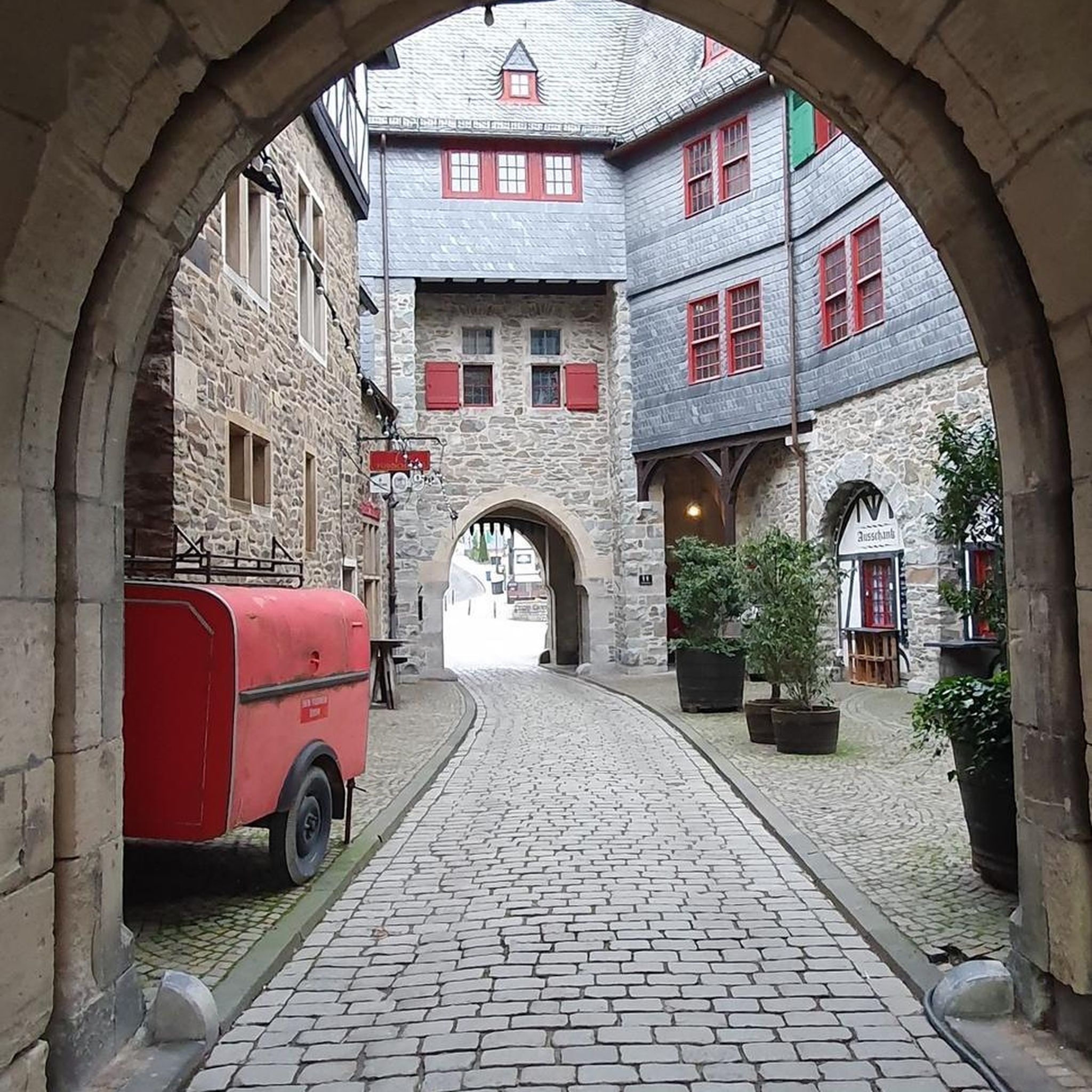
Nestled on the banks of the Baïse River, Nérac offers a peaceful atmosphere. Formerly the residence of Henry of Navarre, the future Henry IV, the town preserves a rich heritage with its castle, cobbled streets, and half-timbered houses.
0
0

[In Advent] "we hear in the Gospel the beginning of the ministry of John the Baptist. He appears in the desert and calls people to conversion so that they may prepare for the coming of the Lord. His call reminds us that Advent is not only a time of waiting, but also of interior preparation. "Prepare the way of the Lord, make straight his paths" (Luke 3:4). John's message challenges us to examine our lives. What "rough paths" and "crooked roads" are there in our hearts? Where have we perhaps distanced ourselves from God or lost sight of our fellow human beings? John invites us to remove these obstacles and reorient our lives. But his call has not only a personal dimension, but also a social one: the way of the Lord is a way of justice, peace and reconciliation. When we pave the way of the Lord, we bring light into the darkness of the world and hope into the hearts of people." (Text: Michael Inden, Diocesan President of the KAB in the Archdiocese of Cologne)
1
0
Frequently Asked Questions
What kind of terrain can I expect on road cycling routes around Boussès?
The road cycling routes around Boussès primarily feature mostly paved surfaces, making them ideal for road bikes. You'll encounter a diverse landscape characterized by river valleys, historical bridges, and unique sections along converted old railroad embankments. These embankments offer minimal inclines, often passing over bridges and through tunnels, providing a smooth and scenic ride.
Are there routes suitable for beginners or those looking for an easier ride?
Yes, Boussès offers routes for various skill levels. While many routes are moderate, you can find options with less elevation gain. For example, the region's converted old railroad embankments are known for their minimal inclines, providing a more relaxed cycling experience.
What are some scenic highlights or landmarks I can see while cycling in Boussès?
The region around Boussès is rich in scenic and historical points of interest. You can cycle alongside the Garonne and Salat rivers, enjoy views of the Pyrenees, and explore historical sites. Notable landmarks include the picturesque Château de Palaminy and the impressive Stone Bridge and City Gates of Saint-Martory, with its three arches and stone door.
Are there any long-distance road cycling routes available?
Yes, Boussès offers several longer routes for endurance cyclists. For instance, the Moulin des Tours de Barbaste – Saint John the Baptist Church loop from Lausseignan is a challenging 108 km route with significant elevation gain. Another option is the From Houeillès to Estampon - loop, which covers 84.6 km.
What is the difficulty level of road cycling routes in Boussès?
The road cycling routes in Boussès cater to a range of abilities. Most routes are classified as moderate, offering a good balance of distance and elevation. There are also more challenging options, such as the Moulin des Tours de Barbaste – Saint John the Baptist Church loop from Lausseignan, which is rated difficult due to its 1375 meters of ascent over 108 km.
Are there any loop routes for road cycling in Boussès?
Yes, many of the road cycling routes in Boussès are designed as loops, allowing you to start and end at the same point. Examples include the moderate From Houeillès to Estampon - loop and the Barbaste – Barbaste Roman Bridge loop from Lausseignan.
What do other road cyclists say about the routes in Boussès?
The road cycling routes around Boussès are highly regarded by the komoot community, holding an average rating of 4.25 stars from over 4 reviews. Cyclists often appreciate the varied terrain, the scenic river views, and the unique experience of riding along the old railroad embankments.
Can I find routes that follow riverbanks?
Absolutely. Boussès is situated at the confluence of the Garonne and Salat rivers, providing ample opportunities to cycle alongside these waterways. Many routes offer picturesque views as they wind through the river valleys.
Are there any routes that incorporate historical infrastructure like old railway lines?
Yes, a distinctive feature of road cycling in the Boussès region is the presence of routes that utilize converted old railroad embankments. These paths offer a unique experience, often passing over historical bridges and through tunnels, providing a smooth ride with minimal elevation changes.
How many road cycling routes are available in the Boussès area?
Komoot lists several road cycling routes around Boussès, offering a variety of distances and difficulty levels. There are at least five distinct routes detailed, ranging from moderate to difficult, ensuring options for different preferences.
What is the typical duration for a road cycling tour in Boussès?
The duration of a road cycling tour in Boussès varies significantly based on the route's length and your pace. For example, the moderate Barbaste – Barbaste Roman Bridge loop from Lausseignan, at 48 km, typically takes around 2 hours and 8 minutes, while longer routes can extend to over 5 hours.
Are there any particularly challenging routes for experienced road cyclists?
For experienced road cyclists seeking a challenge, routes like the Moulin des Tours de Barbaste – Saint John the Baptist Church loop from Lausseignan stand out. This difficult 108 km route features a substantial 1375 meters of elevation gain, providing a demanding ride through the local countryside.

Get inspired with the komoot mobile app


Explore more
Browse the best Road cycling routes in other regions.
