Attractions and Places To See around Dombasle-En-Argonne - Top 12
Best attractions and places to see around Dombasle-En-Argonne include historical sites and natural landscapes. This village in the Meuse department of France is known for its role as a former Roman road and post relay station, and its significant WWI history. The wider Argonne region offers vast forests, ponds, and memorials, providing a blend of cultural and outdoor experiences. Visitors can explore architectural heritage within the village and significant historical sites nearby.
Best attractions and places to see around Dombasle-En-Argonne
…Last updated: July 1, 2026
Cumières-le-Mort-Homme
Highlight • Other
It was in February 1916 that the heaviest fighting took place. …
Translated by Google •
Tip by

Mort-Homme Memorial
Highlight • Monument
Translated by Google •
Tip by

Sign up now to discover places like this
Get recommendations on the best single tracks, peaks, & plenty of other exciting outdoor places.
Sign up for free
Cycle path along the Meuse Canal
Highlight (Segment) • Cycleway
Translated by Google •
Tip by

Sister Jeanne Gérard Memorial +1794
Highlight • Monument
Translated by Google •
Tip by
Vauquois Hill
Highlight • Other
Translated by Google •
Tip by

Sign up for free to discover even more attractions around Dombasle-En-Argonne.
Sign up for free
Already have an account?
Start today with a free account
Your next adventure awaits.
Login or Signup




Tips from the Community

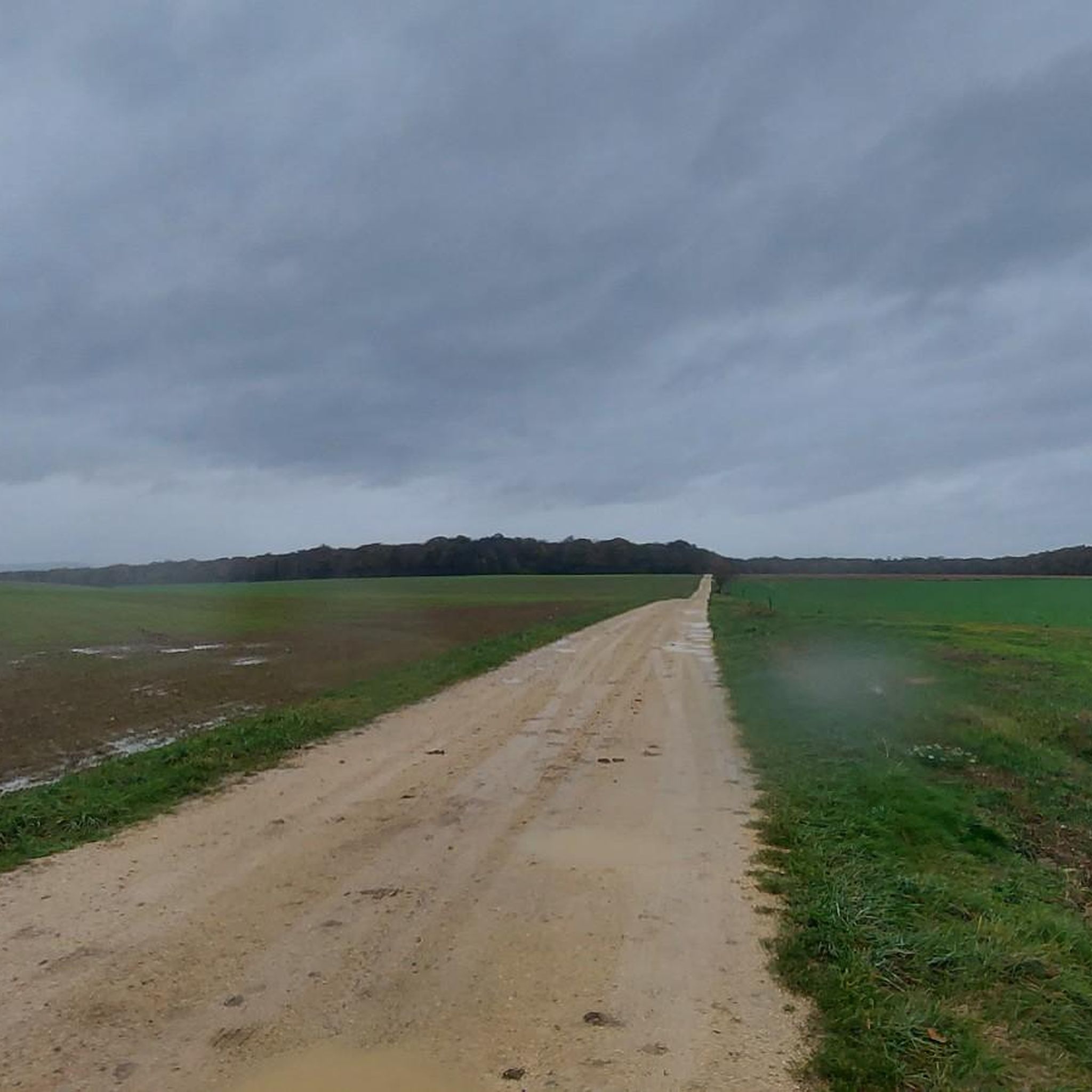
Nice gravel along the Maas side. You will find here now and then a bank and now and then a lock. Also striking how much higher the water of the canal is compared to the water of the stream.
5
1
This hill in the Argonne was the scene of fierce mine warfare between French and German forces during WWI. From 1915 to 1918, both sides dug extensive tunnel networks under the hill, causing hundreds of explosions and thousands of deaths. Today, impressive craters, trenches and underground passages can be seen – a poignant reminder of life and fighting underground.
7
0

The Maas Canal, with its pleasant relaxing gravel strips, is the guideline for enjoying a peaceful landscape.
5
1
Villages détruits, Cumières-le-Mort-Homme is one of the nine villages that were destroyed during the Battle of Verdun. Historical context: Nine villages: Beaumont-en-Verdunois, Bezonvaux, Cumières-le-Mort-Homme, Douaumont, Fleury-devant-Douaumont, Haumont-près-Samogneux, Louvemont-Côte-du-poivre, Ornes and Vaux-devant-Damloup. They were all in the “Red Zone” of the front line in the Battle of Verdun. The villages were wiped off the map and never rebuilt. Erected chapels remind passers-by of this war horror. Triggered to the disappeared villages? Click through to https://www.landofmemory.eu/nl/sites-historiques/vernielde-dorpen/#:~:text=Vernielde%20dorpen,-In%20de%20Maasstreek&text=Deze%20dorpen%20zijn%20Beaumont%2Den,geveegd%20en%20never%20weer%20opopbouw.
4
1
At this location, you are standing in front of the memorial of Blessed Jeanne Gérard, a nun with the Daughters of Charity of Saint Vincent de Paul, who devoted her life to the sick and the poor and met a tragic end. In fact, she was beheaded during the Terror. Jeanne Gérard was the first of the four nuns to be guillotined on 25 June 1794. In 1920, they were all beatified by Pope Pius X. Historical context: Because Jeanne Gérard refused to take the constitutional oath, she was arrested and transferred to Cambrai in 1794, where she was guillotined. She was beatified in 1920 and given the title of ‘Blessed’. A monument was erected in Cumières in her memory in 1960. A bas-relief of her image is still visible.
3
0
The German offensive to conquer Verdun began in February 1916. In early March, the fighting took place on the heights of Mort-Homme. The French put up a heroic resistance under a torrent of fire. In this sector, 10,000 poilus died. Monument du Mort-Homme, by sculptor Jacques Froment-Meurice. The soldier's skeleton detaches itself from its shroud and lets out its cry of victory. On one arm, he carries a flag, the symbol of the nation for which he sacrificed himself, and on the other arm, he waves the torch of victory. At the foot of the monument, the phrase "They have not passed" recalls the sacrifice of French fighters for the possession and preservation of this observation hill on the left bank of the Meuse. The village of Cumières, declared a "dead village for France", became Cumières le Mort-Homme in 1922. In memory of the village, the Saint-Rémi chapel was built with the stones of the old church, in the middle of an enclosure, preceded by a monument to remind us that there was a peaceful village here. More information on https://www.tourisme-verdun.com/decouverte/post/site-du-mort-homme
1
0

https://verdun1916.eu/?p=7570 The hill of Vauquois (Butte de Vauquois), about 25 kilometers northwest of Verdun, is 295 meters high and was, due to its location, an excellent vantage point for those who wanted to defend the northern Argonne, together with the hill of Les Eparges, which is about the same distance southeast of Verdun. The Germans had already captured the village of Vauquois and the hill without a fight in September 1914. The village and the hill were immediately fortified. Caves and underground passages were cut and dug in the limestone soil. The total length of the passages was no less than 15 km. With loopholes one could cover a large area, and one could count on artillery support from Cheppy and Montfaucon. It was an excellently built defense line. The French were keen to recapture this hill, partly because Verdun was threatened by it. First Battles for Vauquois The French attacked on 28 October 1914 without artillery support, and ran straight into a barrage of bullets and shells. Within an hour the attackers were out of action. The next day there was another attack, but this time with artillery support. It was another failure on this well-defended position. Until the end of February, attacks were made repeatedly on the village and the hill, with or without artillery support. The losses were enormous, especially on the French side.
1
0

Cumières-le-Mort-Homme (with the predestined name) is one of the eight completely destroyed villages in the red zone of Verdun. It was in February 1916 that the heaviest fighting took place. 10,000 hairy people died in this sector. In 1922, the town was declared a "dead village for France". Two kilometers in the woods of the hill, you find the statue of the sculptor Jacques Froment-Meurice which is related to the event.
3
0
Frequently Asked Questions
What historical sites related to World War I can I visit near Dombasle-En-Argonne?
The region around Dombasle-En-Argonne is rich in WWI history. You can visit poignant sites such as Cumières-le-Mort-Homme, one of the villages completely destroyed during the Battle of Verdun. Another significant location is the Mort-Homme Memorial, commemorating the French soldiers who fell in 1916. Additionally, Vauquois Hill offers a unique insight into mine warfare with its extensive tunnel networks and craters.
Are there opportunities for cycling around Dombasle-En-Argonne?
Yes, the area offers several cycling opportunities. A popular choice is the Cycle path along the Meuse Canal, which provides a relaxing gravel strip with views of locks and natural landscapes. For more routes, you can explore various road cycling and touring bicycle guides, such as the Road Cycling Routes around Dombasle-En-Argonne or Cycling around Dombasle-En-Argonne, which include routes like the 'Meuse River 🌊 – New Greenway loop'.
What kind of natural features can I explore in the Dombasle-En-Argonne area?
The wider Argonne region is characterized by vast forests and ponds, providing a sanctuary for diverse wildlife including deer, wild boar, and various bird species. Within Dombasle-En-Argonne itself, you can find the ancient Saint Hubert Oak and the continuously flowing Source of Saint-Basle. The nearby Park of the Château des Monthairons also features remarkable trees and is bordered by a meander of the Meuse River.
Are there any family-friendly attractions or activities?
While specific family-friendly categories are not widely listed for all attractions, historical sites like the Mort-Homme Memorial and Sister Jeanne Gérard Memorial +1794 are accessible and can be educational for older children interested in history. Gentle cycling paths, such as the one along the Meuse Canal, also offer a pleasant outdoor activity for families.
What is the historical significance of Dombasle-En-Argonne village itself?
Dombasle-En-Argonne has a rich history, serving as a strategically important post relay station on the Roman road connecting Metz and Reims. It was later known as the Royal Road, hosting figures like Louis XV and Napoleon. The village was also almost entirely destroyed during frequent bombardments in WWI, earning it the Croix de Guerre for its sacrifice. You can still find its church, traditional washhouses, and remarkable houses reflecting local building traditions.
Can I find hiking trails near Dombasle-En-Argonne?
Yes, the Argonne Forest and surrounding areas offer various hiking opportunities. You can find routes ranging from easy to difficult, such as the 'Hiking loop from Vauquois' or the more challenging 'In Argonne Meusienne — loop from Neuvilly-en-Argonne'. For a comprehensive list of trails, refer to the Hiking around Dombasle-En-Argonne guide.
What cultural or architectural sites are there besides WWI memorials?
Beyond the WWI memorials, Dombasle-En-Argonne features its historic church, traditional washhouses (lavoirs), and charming old houses. A vaulted cellar from the former post relay station, dating back to its time as an important stop on the Royal Road, also remains. Approximately 8km away, the Museum of Faience in Rarécourt, housed in a 17th-century fortified house, displays over 800 pieces of Argonne earthenware and pottery.
What do visitors enjoy most about the attractions around Dombasle-En-Argonne?
Visitors particularly appreciate the blend of historical significance and natural beauty. The peaceful landscapes along the Cycle path along the Meuse Canal are often highlighted. The poignant reminders of WWI, such as Cumières-le-Mort-Homme and the Mort-Homme Memorial, are also deeply impactful for those interested in history.
Are there any specific monuments dedicated to individuals or specific events?
Yes, the Sister Jeanne Gérard Memorial +1794 commemorates Blessed Jeanne Gérard, a nun who was guillotined during the Terror in 1794. This memorial stands as a tribute to her life and sacrifice.
How long should I plan to spend at the attractions in the area?
The time needed varies by attraction. For sites like Cumières-le-Mort-Homme or Mort-Homme Memorial, you might spend 1-2 hours exploring. If you plan to hike or cycle, a full day or half-day could be dedicated to a specific route. To fully appreciate the historical depth and natural beauty of the wider Argonne region, consider spending several days.
Is the Argonne Forest suitable for wildlife spotting?
Yes, the Argonne Forest is known for its diverse wildlife. It serves as a sanctuary for various species, including deer, wild boar, and numerous bird species. Exploring the forest trails offers a good chance to observe local fauna in their natural habitat.
Are there any attractions that are particularly unique to the region?
The extensive WWI battlefields and memorials, such as the unique mine warfare craters and tunnels at Vauquois Hill, are particularly unique to this region due to its significant role in the war. Additionally, the traditional washhouses and the ancient Saint Hubert Oak within Dombasle-En-Argonne offer a glimpse into local heritage.
Most popular routes around Dombasle-En-Argonne

Get inspired with the komoot mobile app


Explore more
Still not found the Highlight you’re looking for? See guides of the top attractions in other regions:
