The best road cycling routes around Lansac
3.9
(44)
1,151
riders
159
rides
Road cycling routes around Lansac offer varied terrain suitable for different fitness levels, characterized by paved roads and scenic natural features. The region provides a mix of long straightaways, winding backroads through forests, and open views across valleys. Cyclists can find routes with minimal elevation gain for easier rides, as well as more challenging expeditions with significant climbs.
Best road cycling routes around Lansac
- The most popular road cycling route is Beautiful views over the Garonne, a 58.7 miles…
Last updated: July 2, 2026
3
riders
94.5km
04:02
500m
500m
Moderate road ride. Good fitness required. Mostly well-paved surfaces and easy to ride.
4.0
(6)
35
riders
31.6km
01:21
250m
250m
Easy road ride. Great for any fitness level. Mostly well-paved surfaces and easy to ride.

Sign up for free
7
riders
63.5km
02:47
420m
420m
Moderate road ride. Good fitness required. Mostly well-paved surfaces and easy to ride.
4.0
(1)
6
riders
47.7km
01:56
220m
220m
Easy road ride. Great for any fitness level. Mostly well-paved surfaces and easy to ride.
12
riders
45.1km
02:06
410m
410m
Moderate road ride. Good fitness required. Mostly well-paved surfaces and easy to ride.
Get access to more routes and recommendations from other explorers.
Sign up for free
Already have an account?
Our route recommendations are based on thousands of hikes, rides, and runs completed by other people on komoot.
Start today with a free account
Your next adventure awaits.
Login or Signup


Tips from the Community

Very beautiful Romanesque church from the 12th century.
0
0

Former covered outdoor halls, now used for events
1
0
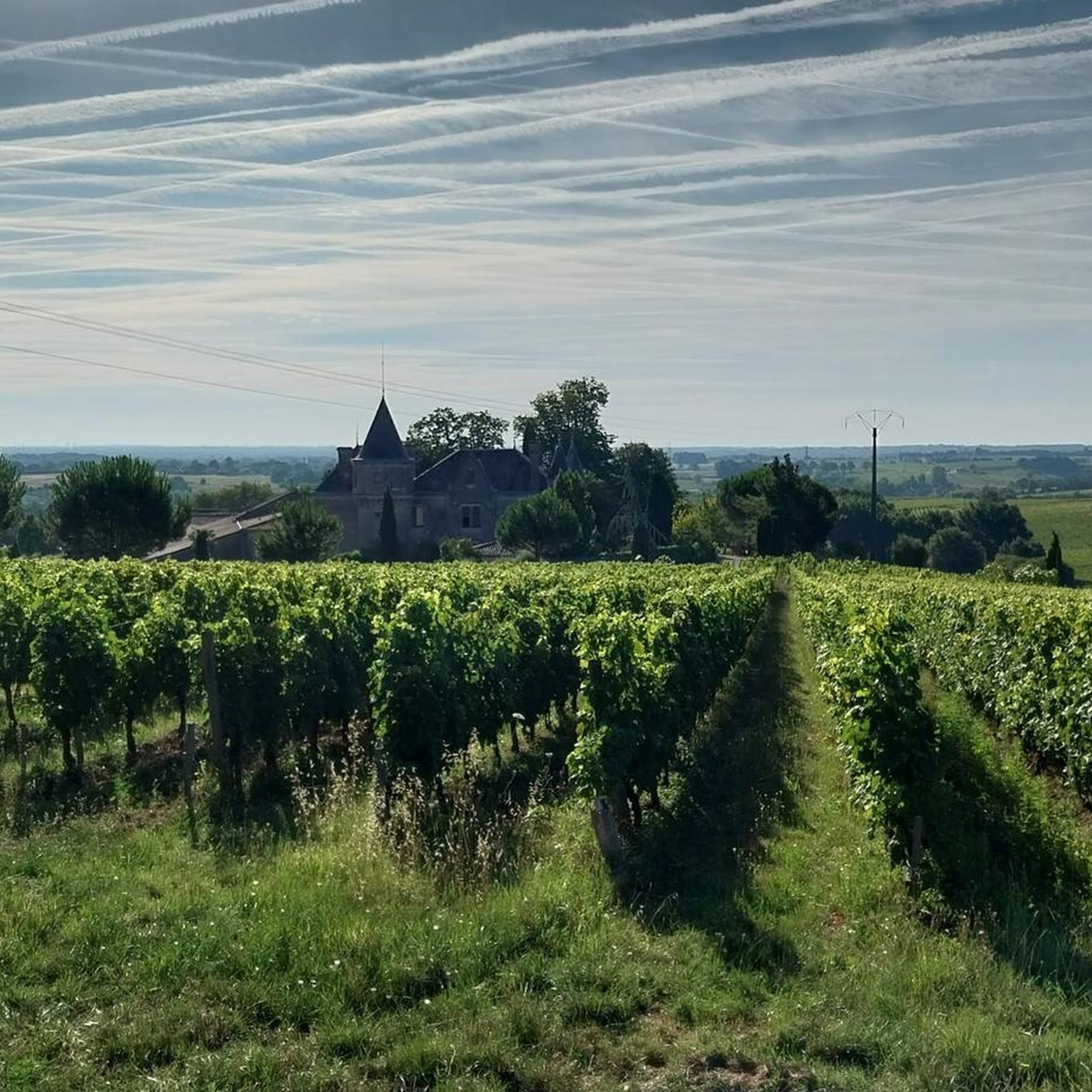
Charming manor house among the vines. Private access, but nice owners. Worth seeing with winery.
0
0

This neo-Gothic church was built to replace the dilapidated church of the Recollect Fathers, a men's convent founded in 1627. In the 19th century, the church wanted to encourage a revival of Catholic worship; it encouraged the construction of new religious buildings in Gironde. Thus, in 1856, the Saint-Géronce church was consecrated. Due to lack of space, its apse was oriented towards the south, contrary to what the liturgy provided. The organ, which has its original construction from 1861, is remarkable. Mass is celebrated there every Sunday morning at 10:00 a.m.
0
0
The Pair-non-Pair Cave is a decorated cave, discovered in 1881, containing artistic representations dating back more than 32,000 years before the present, attributed to the Aurignacian culture. Listed as a historical monument since 1900, the cave is the third decorated cave discovered, after Altamira and Chabot Cave. Its study established the antiquity of the parietal engravings and officially recognized the prehistoric art. The cave, located in the commune of Prignac-et-Marcamps, is open only for guided tours. Booking a tour time online is required. The reception area, museum space, and shop are open from June 1st to September 30th, 9:30 a.m. to 12:30 p.m. and 2:00 p.m. to 6:30 p.m. From October 1st to May 31st, 9:30 a.m. to 12:30 p.m. and 2:00 p.m. to 5:30 p.m. Closed on Mondays, January 1st, May 1st, and December 25th. Individual admission: €13 Free: Under 18s and 18-25s (European Union nationals and non-European legal residents in France)
1
0
The commune is the result of the merger of three parishes: Prignac (on the road to Blaye), Marcamps (further north, on the hillsides above the Moron Valley), and Cazelle (further south, descending towards the Dordogne). The three churches still exist. In addition, there is the former chapel of the priory of Lurzine, not far from the village of Prignac. During the French Revolution, the parish of Saint-Pierre de Prignac formed the commune of Prignac, and its annex, Saint-Michel de Marcamps, formed the commune of Marcamps. The parish of Saint-Félix de Cazelles and its annex, Sainte-Quitterie de Magrigne, formed the commune of Cazelles. In the year 12, the commune of Cazelles was annexed to that of Prignac, which became Prignac-et-Cazelles. In 1965, the commune of Marcamps was annexed to that of Prignac-et-Cazelles, which became Prignac-et-Marcamps.
1
0
The commune takes its name from its Latin name, Blacciacum. A Gallo-Roman settlement is attested by the discovery of the remains of three Gallo-Roman villas, dating from the 1st to the 5th century AD. These remains were found near the current site of the church, not far from the Gironde. During the medieval period, the village's center of activity seems to have shifted to the heights overlooking the river. This is evidenced in particular by a hoard of Merovingian coins discovered around 1850 at a place called Montuzet (Mont des Yeuses). The lower Plassac region, around the port, was heavily involved in river and maritime activity in the 17th, 18th, and 19th centuries. Merchants and ocean-going captains settled in beautiful stone residences. This river activity gradually declined in the 20th century.
2
0
Frequently Asked Questions
How many road cycling routes are available around Lansac?
There are over 150 road cycling routes around Lansac, offering a wide variety of options for different skill levels and preferences. You'll find everything from easy rides to more challenging expeditions.
What kind of terrain can I expect on road cycling routes in Lansac?
The Lansac region offers varied terrain for road cycling. You can expect a mix of long straightaways through farm country, twisting backroads winding through forests, and open views across lakes and valleys. Most routes are paved, but some may include unpaved segments.
Are there routes suitable for beginners or less experienced cyclists?
Yes, Lansac has numerous options for less experienced cyclists. There are 34 easy road cycling routes available, many of which are loop routes with minimal elevation gain, perfect for a relaxed ride. An example is the Château de Blaye and Washhouse – Saint-Géronce Church loop from Bourg, an easy 19.6-mile path.
What natural features can I see while road cycling in Lansac?
Road cycling in Lansac offers stunning natural scenery. Many routes provide breathtaking views of the Dordogne River, and the region borders the Parc naturel régional des Causses du Quercy, offering a scenic backdrop for your rides. You'll also encounter varied landscapes from forests to open valleys.
Are there historical sites or landmarks along the road cycling routes?
Absolutely. The Lansac area is rich in history. Routes often pass through charming local villages and near significant landmarks. For instance, the Château de Blaye and Washhouse – Saint-Géronce Church loop from Bourg leads through historic sites like the Saint-Géronce Church. Other notable attractions include the Bourg-sur-Gironde Citadel and various castles like Château Reynaud.
Which road cycling routes offer the best views in Lansac?
For expansive vistas, consider routes that follow the Garonne or Dordogne rivers. The Beautiful views over the Garonne route is a popular choice, offering extensive views over the Garonne river. The region is known for picturesque views of the Dordogne, with routes specifically designed to showcase these stunning river landscapes.
What is the best time of year for road cycling in Lansac?
The best time for road cycling in Lansac is generally during spring and autumn when the weather is mild and pleasant. Summers can be warm, but early mornings or late afternoons are still enjoyable. Always check local weather conditions before heading out.
Are there any challenging road cycling routes for experienced cyclists?
Yes, for experienced cyclists seeking a challenge, Lansac offers routes with significant elevation gains. While there are 3 difficult routes, many of the 118 moderate routes also feature substantial climbs, such as the Bourg Washhouse – Château de Blaye and Washhouse loop from Bourg, which includes over 400 meters of elevation gain.
Can I find places to eat or drink along the road cycling routes?
Many road cycling routes in Lansac pass through or near charming villages where you can find cafes, bakeries, and restaurants. Planning your route with komoot allows you to identify potential stops for refreshments along the way, especially in towns like Bourg.
Are there circular road cycling routes available in Lansac?
Yes, the Lansac area features many excellent circular road cycling routes. These loop trails are popular as they allow you to start and finish in the same location without retracing your steps. Examples include the Fountain loop from Pugnac and the Blaye Citadel – Château de Blaye and Washhouse loop from Bourg.
What do other road cyclists enjoy most about road cycling in Lansac?
The road cycling experience in Lansac is highly rated by the komoot community, with an average score of 3.9 stars from over 50 reviews. Cyclists frequently praise the varied terrain, the stunning views of the Dordogne River, and the opportunity to cycle through charming historic villages. The network of routes caters to all ability levels, making it a favorite for many.
Most popular attractions around Lansac

Get inspired with the komoot mobile app


Explore more
Browse the best Road cycling routes in other regions.
