The best road cycling routes around Louignac
4.3
(49)
1,394
riders
183
rides
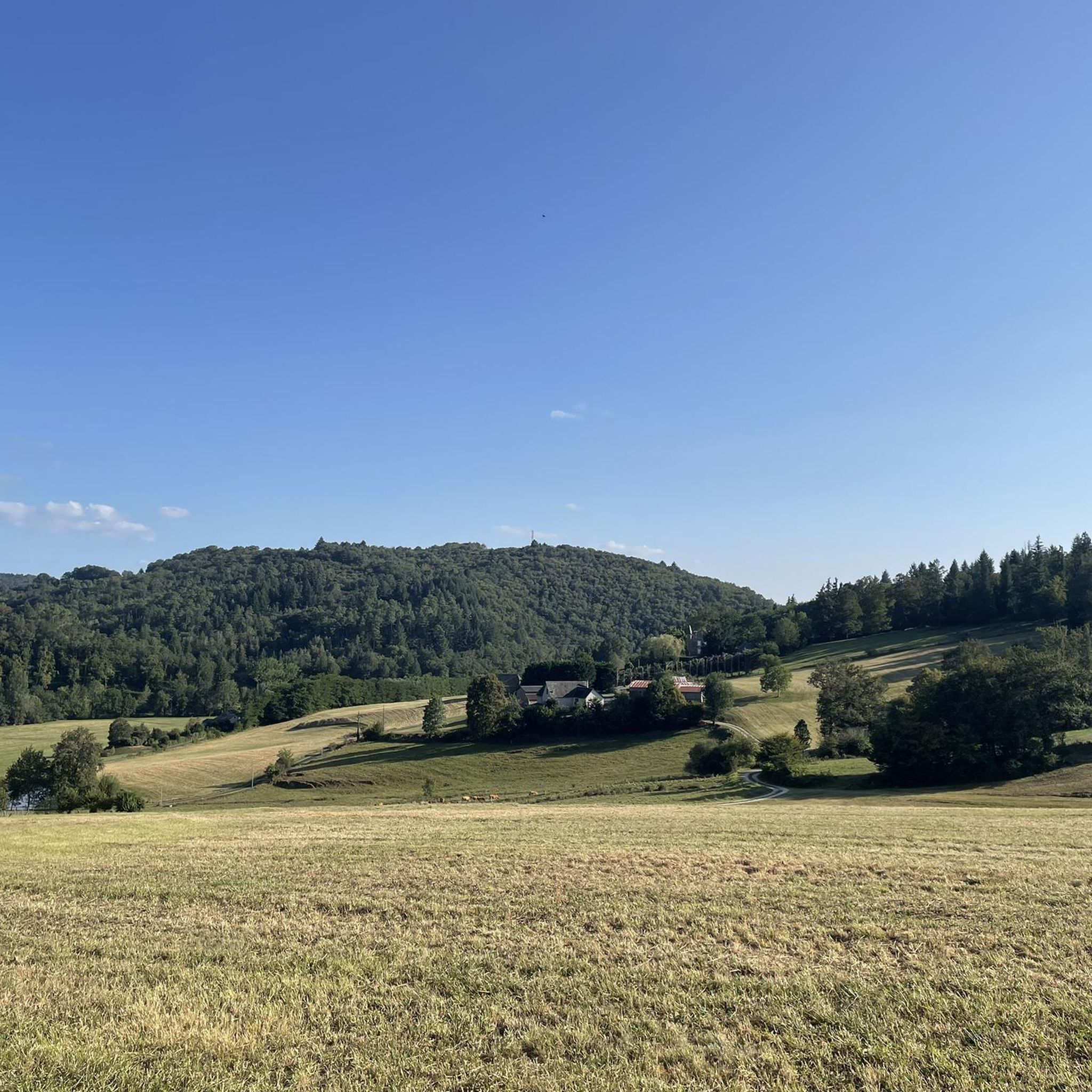
Road cycling routes around Louignac traverse the varied terrain of the Corrèze department, bordering the Dordogne region of France. The area features rolling hills and valleys, providing a mix of inclines and descents. Cyclists can expect quiet, well-paved rural roads through wooded areas and along river valleys. The region's landscape is influenced by the nearby Périgord Limousin Regional Natural Park.
Best road cycling routes around Louignac
- The most popular road cycling route is Old mine – Chapelle Bellevue loop from…
Last updated: May 18, 2026
14
riders
50.2km
02:32
600m
600m
Moderate road ride. Good fitness required. Some segments of this route may be unpaved and difficult to ride.
4.0
(1)
21
riders
62.5km
03:02
870m
870m
Moderate road ride. Good fitness required. Mostly well-paved surfaces and easy to ride.

Sign up for free
5.0
(2)
12
riders
53.2km
02:33
740m
740m
Moderate road ride. Good fitness required. Mostly well-paved surfaces and easy to ride.
5.0
(2)
12
riders
67.3km
03:21
1,000m
1,000m
Hard road ride. Very good fitness required. Mostly well-paved surfaces and easy to ride.
5.0
(1)
9
riders
30.8km
01:30
370m
370m
Moderate road ride. Good fitness required. Mostly well-paved surfaces and easy to ride.
Get access to more routes and recommendations from other explorers.
Sign up for free
Already have an account?
Our route recommendations are based on thousands of hikes, rides, and runs completed by other people on komoot.
Start today with a free account
Your next adventure awaits.
Login or Signup


Tips from the Community

Hautefort Castle is one of the few surviving examples of classical architecture in southwest France. Situated on a rocky spur overlooking the village of Hautefort, it offers a majestic silhouette that is more reminiscent of the Loire Valley châteaux than the region's typical medieval fortresses.
1
0

Hautefort Castle, located on a rocky outcrop overlooking the town and village of Hautefort, is a rare example of classical architecture in the Dordogne. Built from the 16th to the 17th century on the foundations of an old castle, its architecture is reminiscent of the castles of the Loire. The construction, led by architects Nicolas Rambourg and Jacques Maigret, was intended for the family of the Marquis de Hautefort, close to the king and influential at Court, renowned for their generosity towards the poor. During the Revolution, the castle was protected by the inhabitants of Hautefort, who repelled a revolutionary troop from Excideuil wanting to destroy it. At the beginning of the 20th century, the castle was in ruins, having lost its furniture, its woodwork and parquet floors. In 1929, it was bought by the Baron and Baroness de Bastard, who undertook a complete restoration. After the Baron's death in 1957, the Baroness continued the work alone. A fire in 1968 destroyed the central building, leaving only the charred exterior walls. Thanks to national and local generosity, as well as the support of personalities, Baroness de Bastard undertook a second restoration, even selling her works of art to finance the work. The facades, frames, ceilings, decorations and rooms were reconstructed identically from photos. The woodwork of the Château de Kerlaudy was recovered and the castle was completely refurnished. In 1977, Baroness de Bastard moved back into the castle and opened it to visitors. In 1984, she created the Château de Hautefort Foundation, to which she donated the building, its estate and its furniture. Today, the interiors not open to the public are still being restored. The French gardens, recreated by the baron and baroness, extend into terraces around the castle, with flowered boxwood embroidery beds and are classified as historic monuments. An English-style park of 30 hectares extends on the hill to the west of the castle.
0
0
The Hôtel-Dieu d'Hautefort dates from the 17th century and today houses the Hautefort Museum of the History of Medicine and also the tourist office. In Old French, Hôtel-Dieu meant “the hotel of God”, that is to say the hospitable house where one is received in the name and under the auspices of God. Hotels Dieu are hospitals of ancient foundation, which received orphans, destitute and pilgrims and which were administered by the Church. During your visit, you will be able to discover 7 rooms dedicated to different themes: The room of the eternal father: Originally the hotel god was designed to accommodate 11 women, 11 men and 11 children, the number 33 symbolizing the age of Christ. The room of the eternal father is a reconstruction of a room as it must have been at that time to accommodate eleven men. Also in this room, a reproduction of an abandonment tower: also called a “baby box”, this is a place where mothers could anonymously leave their babies, generally newborns, so that they are found and cared for there. The room of the divine word: Here is an exhibition of liturgical vestments. The Hippocrates room: This room is dedicated to pharmacy and biology equipment for the manufacture of medicines The Plato room: You will find four dental offices from different eras on display there from 1910 to 1970. from the first use of electricity to the office with x-ray and laser. The Aristotle room: This room is dedicated to the history of radiography and to gynecology and obstetrics. The Galien room: Pneumology, surgery and cardiology are exhibited in this Galien room. The chapel A Simples garden allows you to discover all these plants that are so useful to your health. A visit is possible with Madame LOUIS Geneviève, herbalist, whose store is close
1
0

Very pleasant visit to this very well maintained castle. The gardens are absolutely stunning. It's like being in a cartoon at times, the paths and the flowerbeds are cut with a line. Very beautiful surroundings, very green landscapes. We feel good in this place.
1
0
Castle with character, the frame of the tower is not to be missed. The French gardens and the park are magnificent
2
0
Beautiful view of Perpezac! We get there by a small path lost in nature
1
0
On a single, path between stones in an old mine. Sheltered by the trees it is pleasant to be in the shade in summer.
1
0

Jean Boisserie 85 years old. Extraordinary faith and energy. A modest artist for a high quality work.
1
0
Frequently Asked Questions
What is the general terrain like for road cycling around Louignac?
The region around Louignac, situated in the Corrèze department and bordering the Dordogne, features a diverse landscape of rolling hills and valleys. You can expect a mix of inclines and descents, providing engaging rides without the extreme challenges of high mountain passes. Many routes traverse quiet, well-paved rural roads through wooded areas and along river valleys.
How many road cycling routes are available in the Louignac area?
There are over 160 road cycling routes around Louignac, offering a wide range of options for different skill levels. This includes 8 easy routes, 102 moderate routes, and 57 difficult routes, ensuring there's something for every cyclist.
Are there any challenging road cycling routes for experienced cyclists?
Yes, for experienced cyclists seeking a challenge, there are 57 difficult routes around Louignac. One such route is the Hautefort Castle – Hautefort Castle loop from Louignac, which covers 64 km with over 1,100 meters of elevation gain.
What kind of scenic attractions can I expect to see along road cycling routes near Louignac?
Road cycling routes around Louignac offer access to various scenic attractions. You can ride past historical sites like the magnificent Château de Hautefort and Gardens, or explore charming villages. The routes also often pass through lush forests and along river valleys, providing picturesque views.
Are there any circular road cycling routes starting from Louignac?
Yes, many routes in the area are designed as loops. For example, the Route des Crètes – Old mine loop from Louignac is a popular 54.6 km circular trail that takes you through rolling hills and wooded areas.
What do other road cyclists enjoy most about cycling in Louignac?
The area is highly rated by the komoot community, with an average score of 4.4 stars from over 90 reviews. Cyclists often praise the quiet rural roads, the varied terrain with engaging inclines and descents, and the beautiful natural scenery, including wooded areas and river valleys.
What is the best time of year for road cycling in Louignac?
The region generally offers pleasant conditions for road cycling from spring through autumn. The wooded areas provide shade during warmer months, and the rolling hills are enjoyable in milder temperatures. Always check local weather forecasts before heading out.
Are there family-friendly road cycling options around Louignac?
While many routes involve rolling hills, there are 8 easy routes available that might be suitable for families or those looking for a less strenuous ride. These routes typically feature gentler inclines and shorter distances, allowing for a more relaxed experience.
Where can I find parking for cyclists in Louignac?
Specific parking information for cyclists isn't detailed in the route descriptions, but generally, you can find parking in the village centers or near popular trailheads. It's advisable to look for public parking areas in Louignac or nearby starting points like Saint-Robert or Coubjours.
Are there cafes or places to stop for refreshments along the road cycling routes?
The Corrèze and Dordogne regions are dotted with charming villages. Many routes will pass through or near these villages, offering opportunities to stop at local cafes, bakeries, or small restaurants for refreshments and to experience local culture.
Can I access Louignac by public transport with my bike?
While specific public transport options for bikes to Louignac are not detailed, regional train and bus services in France often have provisions for bicycles, though it's always best to check with the specific transport provider in advance for their bike policies and availability.
Are there any long-distance road cycling routes accessible from Louignac?
Yes, sections of the long-distance cycle route "La Vagabonde" (V87) traverse Corrèze, offering a journey through varied landscapes from the Plateau de Millevaches to the Dordogne Valley. While not starting directly in Louignac, parts of this route could be accessed for longer rides.
Most popular attractions around Louignac

Get inspired with the komoot mobile app


Explore more
Browse the best Road cycling routes in other regions.
