Attractions and Places To See around Seraucourt-Le-Grand - Top 20
Best attractions and places to see around Seraucourt-Le-Grand, a commune in the Aisne department of France, are primarily found in its vicinity. The area is characterized by its proximity to the town of Saint-Quentin, located approximately 10 km away, and its position within the Artois-Picardie basin, drained by the Somme River and the Canal de Saint-Quentin. This region offers a mix of historical sites, cultural landmarks, and natural landscapes, providing diverse exploration opportunities.
Best attractions and places to see around Seraucourt-Le-Grand
- The most popular attractions is Isle Park, a man-made park and trail. This public park offers various trails for walking, running, and cycling, alongside flora, fauna, a free zoo, a farm, and a conservation center.
- Another must-see spot is Basilique Saint-Quentin, a religious building and historical site. This Gothic church, constructed between the 12th and 15th centuries, features unique architectural elements like a tower-portico and an octagonal labyrinth inlaid in its nave floor.
- Visitors also love Canal de Saint-Quentin Path, a family-friendly trail and cycle way. This approximately 13 km path follows the Saint-Quentin Canal, offering views of the water, bridges, and locks.
- Seraucourt-Le-Grand is known for its historical sites, natural reserves, and extensive cycling paths. The region provides a variety of attractions to see and explore, from significant war memorials to tranquil canal-side routes.
- The attractions around Seraucourt-Le-Grand are appreciated by the komoot community, with 29 upvotes and 41 photos shared by visitors.
Last updated: August 26, 2026
Basilique Saint-Quentin
Highlight • Religious Site
When we enter the church we stand hesitantly for a moment before the octagonal labyrinth inlaid in black and white marble in the floor of the nave, a phenomenon common to medieval churches. Pilgrims follow the path to the center of the labyrinth barefoot or on their knees, on their way to enlightenment and a deeper relationship with God.
Translated by Google •
Tip by

Saint-Quentin war memorial
Highlight • Monument
Translated by Google •
Tip by

Sign up now to discover places like this
Get recommendations on the best single tracks, peaks, & plenty of other exciting outdoor places.
Sign up for free
Isle Park
Highlight • Trail
Tip by

Parc des Champs Elysées
Highlight • Natural
Translated by Google •
Tip by
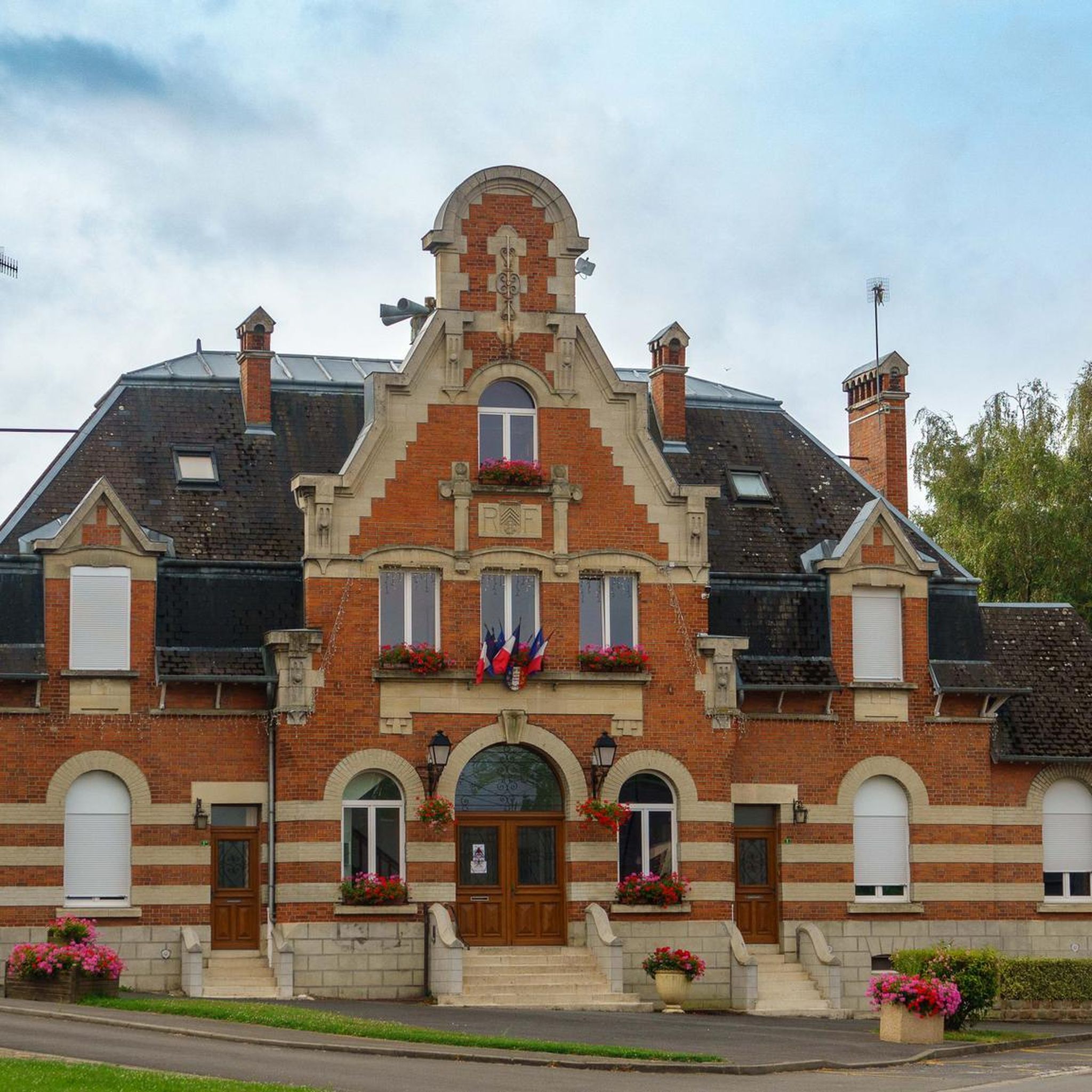
Seraucourt-le-Grand
Highlight • Other
Translated by Google •
Tip by

Sign up for free to discover even more attractions around Seraucourt-Le-Grand.
Sign up for free
Already have an account?
Start today with a free account
Your next adventure awaits.
Login or Signup



Tips from the Community

A beautifully crafted monument.
0
0

Hello. This is a beautiful hike through nature and a nice park for recreation. the hike runs along a canal and a marshland with well-passable hiking trails. This hike is highly recommended !!!!!!!!!!!!!
0
0

The listed building is striking for its original architecture with a porch tower over 34 meters high, a double transept or a radio-concentric choir. Inside, the visitor is seduced by the ancient 260 m long labyrinth engraved in the paving of the nave. Stained glass windows installed at different times complete the artistic offer of the Saint-Quentin Basilica, with in particular medieval stained glass windows in the apse chapels dating from the 12th century. These depict episodes from the life of the Virgin Mary and Saint Stephen.
2
0

The Basilique Saint-Quentin is a beautiful Gothic church in the heart of Saint-Quentin, France. Built between the 12th and 15th centuries, this basilica is dedicated to the martyr Saint Quentin. With an impressive 133 meters long and 40 meters high, it is a real eye-catcher. What makes this basilica really special are the unique architectural elements such as the tower-portico at the front, the double transept, and the choir with radiating chapels. Inside, you will also find an ancient labyrinth of 260 meters in the floor of the nave, which is a fascinating detail. The basilica has a rich history and contains the relics of Saint Quentin, who were an important object of veneration in the Middle Ages. Although the building was badly damaged during the First World War, it was reopened in 1956 after extensive restoration.
1
0
Important for pilgrims: here you will also find a food shop on Sundays.
8
0
Stage 73 of Sigeric on his Via Francigena pilgrimage. Here is the end of the stage VFF14 Via Vrancigena France). In Seraucourt-le-Grand we cross the Somme. It owes its ancient name, "Serodi Curtis", to the Gallo-Romans who founded two of these famous villae, farms, around the 2nd century, who gave it the suffix "-COURT", as with many other villages. Traces of a Merovingian cemetery are also said to have been found.
8
0

As a memorial to the many dead, such a "MONUMENT AUX MORTS" (usually called a "Central Memorial" or "War Memorial" in German-speaking countries) is still very important today. "Now, Lord, you let your servant depart in peace, as you have said..." it says in the so-called "Hymn of Simeon" (Luke's Gospel, Chapter 2, Verse 29). However, the people who are remembered here did not depart in peace, but became victims of war and tyranny. Therefore, the term "fallen memorial" is now sometimes used instead of the "war memorial" that was previously common in German. In the French-speaking world, however, this aspect of commemoration of the dead has long been included in the most commonly used term "MONUMENT AUX MORTS". Regardless of language and nation, such a memorial has two important and at the same time everlasting tasks: -1- to keep the memory of the suffering and horror of war alive, -2- and to remind people of the need to maintain peace in the long term.
2
0
In my opinion, this bike highlight is identical to the following: https://www.komoot.com/de-de/highlight/4657565
1
0
Frequently Asked Questions
What historical landmarks can I visit near Seraucourt-Le-Grand?
The region offers several significant historical landmarks. In Saint-Quentin, you can visit the impressive Basilique Saint-Quentin, a Gothic church with unique architectural elements and an ancient octagonal labyrinth. Additionally, the Saint-Quentin War Memorial honors soldiers from various conflicts. Closer to Seraucourt-Le-Grand, the Grand-Seraucourt British Cemetery holds historical significance related to World War I.
Where can I find natural beauty and outdoor spaces?
For natural beauty, explore the Isle Park in Saint-Quentin, which offers various trails, flora, fauna, and even a free zoo. The Canal de Saint-Quentin Path provides scenic views of the water, bridges, and surrounding countryside. The Réserve naturelle des Marais d'Isle is also a significant natural site nearby.
Are there easy walking or cycling paths suitable for families?
Yes, the Canal de Saint-Quentin Path is largely flat and easy, making it ideal for family walks or cycling. It stretches approximately 13 kilometers from Saint-Quentin to Fontaine-lès-Clercs. Isle Park also features various trails suitable for all ages and offers activities for children.
What hiking opportunities are available around Seraucourt-Le-Grand?
The area provides several hiking opportunities, particularly along the Canal de Saint-Quentin. A popular moderate loop is the 'Canal de St Quentin et cimetière britannique de Grand-Seraucourt — boucle depuis Seraucourt-le-Grand,' which is about 9.7 km. You can find more hiking routes, including easy options like the 'Canal de Saint-Quentin Path – Fontaine les clercs lock loop,' on the Hiking around Seraucourt-Le-Grand guide.
Can I go cycling near Seraucourt-Le-Grand?
Absolutely! The region is known for its cycling opportunities. The Cycle path along the Canal de Saint-Quentin offers a car-free way to explore the landscape, complete with locks. For more routes, including easy and moderate options, check out the Road Cycling Routes around Seraucourt-Le-Grand and Cycling around Seraucourt-Le-Grand guides.
What family-friendly attractions are available?
Families will enjoy Isle Park, which offers trails, a free zoo, a farm, and a conservation center. The Canal de Saint-Quentin Path is also a great option for a leisurely walk or bike ride with children, offering scenic views in a safe environment.
Are there any wheelchair-accessible attractions?
Yes, the Saint-Quentin War Memorial is noted as being wheelchair accessible, allowing visitors to experience this significant historical site.
What do visitors particularly enjoy about the attractions near Seraucourt-Le-Grand?
Visitors appreciate the blend of historical sites, natural reserves, and extensive cycling paths. The Isle Park is popular for its diverse activities and family-friendly atmosphere, while the Basilique Saint-Quentin is admired for its unique Gothic architecture and historical depth. The tranquil canal-side routes, like the Canal de Saint-Quentin Path, are also highly valued for outdoor enjoyment.
What other historical towns are worth visiting near Seraucourt-Le-Grand?
Several historical towns are within a reasonable distance. Péronne, about 26 km away, is known for its Museum of the Great War. Noyon, 27 km distant, features a medieval center and cathedral. Laon, 38 km away, boasts an astonishing early Gothic cathedral and a museum. Cambrai, 44 km away, has a UNESCO World Heritage belfry, and Soissons, 45 km away, offers an abbey and cathedral.
Is there a place for wildlife spotting or nature observation?
Yes, the Isle Park in Saint-Quentin is an excellent spot for nature observation, as it houses a conservation center and allows visitors to admire its flora and fauna. The Réserve naturelle des Marais d'Isle, located about 11 km from Seraucourt-Le-Grand, is also a significant site for natural beauty and wildlife.
What is the best time of year to visit the attractions?
The Isle Park is open year-round, with longer hours in summer (8 a.m. to 8 p.m.) and shorter hours in winter (8 a.m. to 6 p.m.). Generally, spring and summer offer pleasant weather for exploring outdoor attractions like the Canal de Saint-Quentin Path and enjoying the natural reserves. Historical sites and cultural landmarks can be visited throughout the year.
Most popular routes around Seraucourt-Le-Grand

Get inspired with the komoot mobile app


Explore more
Still not found the Highlight you’re looking for? See guides of the top attractions in other regions:
