The best road cycling routes around Saint-Trojan
4.0
(54)
1,362
riders
182
rides
Road cycling around Saint-Trojan offers a diverse landscape characterized by extensive cycle paths winding through pine forests, across salt marshes, and along coastal beaches. The region, situated on the Île d'Oléron, provides varied terrain suitable for different skill levels, from flat coastal routes to paths traversing the Forêt de Saint-Trojan. Its well-marked infrastructure makes it a practical destination for exploring the island by bike. The area features a network of routes that combine natural beauty with accessible cycling.
Best road…
Last updated: July 1, 2026
33
riders
40.1km
01:41
260m
260m
Easy road ride. Great for any fitness level. Mostly well-paved surfaces and easy to ride.
10
riders
78.8km
03:16
460m
460m
Moderate road ride. Good fitness required. Mostly well-paved surfaces and easy to ride.

Sign up for free
5
riders
Moderate road ride. Good fitness required. Mostly well-paved surfaces and easy to ride.
5.0
(1)
7
riders
37.0km
01:45
340m
340m
Moderate road ride. Good fitness required. Mostly well-paved surfaces and easy to ride.
9
riders
101km
04:18
560m
560m
Moderate road ride. Good fitness required. Mostly well-paved surfaces and easy to ride.
Get access to more routes and recommendations from other explorers.
Sign up for free
Already have an account?
Our route recommendations are based on thousands of hikes, rides, and runs completed by other people on komoot.
Start today with a free account
Your next adventure awaits.
Login or Signup



Tips from the Community


Very beautiful Romanesque church from the 12th century.
0
0
This road bridge was built by Gustave Eiffel, between 1879 and 1883, on the foundations of a first suspension bridge (1839-1869) carried away by a storm. Destroyed during the Second World War, it was rebuilt by his grandson. The access ramp is supported by stone arcades which, seen from below, have the appearance of a Gothic cathedral.
0
0

A little piece of history with this bridge built by Gustave Eiffel!
0
0

Former covered outdoor halls, now used for events
1
0
The Pair-non-Pair Cave is a decorated cave, discovered in 1881, containing artistic representations dating back more than 32,000 years before the present, attributed to the Aurignacian culture. Listed as a historical monument since 1900, the cave is the third decorated cave discovered, after Altamira and Chabot Cave. Its study established the antiquity of the parietal engravings and officially recognized the prehistoric art. The cave, located in the commune of Prignac-et-Marcamps, is open only for guided tours. Booking a tour time online is required. The reception area, museum space, and shop are open from June 1st to September 30th, 9:30 a.m. to 12:30 p.m. and 2:00 p.m. to 6:30 p.m. From October 1st to May 31st, 9:30 a.m. to 12:30 p.m. and 2:00 p.m. to 5:30 p.m. Closed on Mondays, January 1st, May 1st, and December 25th. Individual admission: €13 Free: Under 18s and 18-25s (European Union nationals and non-European legal residents in France)
1
0
The commune is the result of the merger of three parishes: Prignac (on the road to Blaye), Marcamps (further north, on the hillsides above the Moron Valley), and Cazelle (further south, descending towards the Dordogne). The three churches still exist. In addition, there is the former chapel of the priory of Lurzine, not far from the village of Prignac. During the French Revolution, the parish of Saint-Pierre de Prignac formed the commune of Prignac, and its annex, Saint-Michel de Marcamps, formed the commune of Marcamps. The parish of Saint-Félix de Cazelles and its annex, Sainte-Quitterie de Magrigne, formed the commune of Cazelles. In the year 12, the commune of Cazelles was annexed to that of Prignac, which became Prignac-et-Cazelles. In 1965, the commune of Marcamps was annexed to that of Prignac-et-Cazelles, which became Prignac-et-Marcamps.
1
0
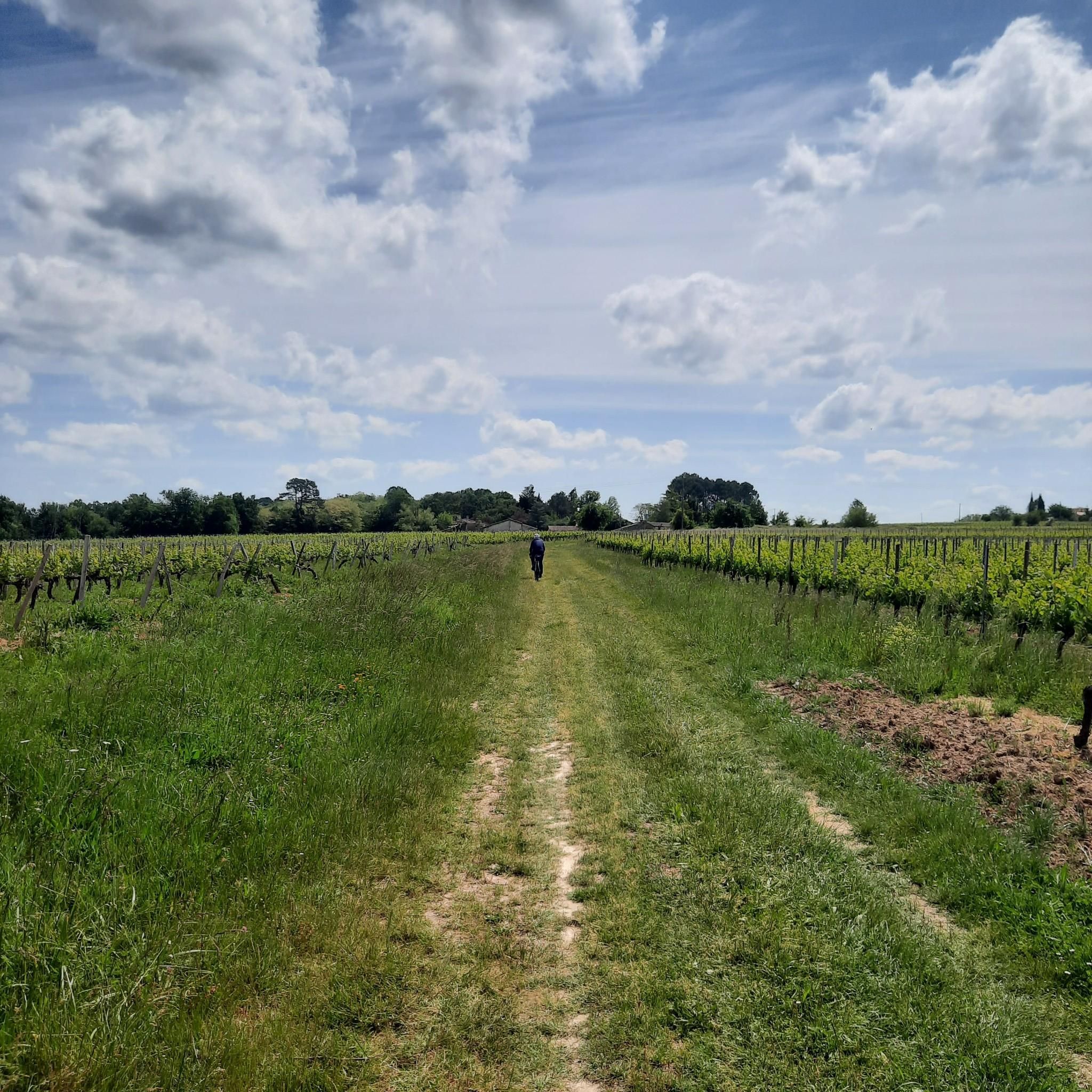
Former railway from 1888, now an excellent smooth bike trail to the Gironde estuary.
0
0
Frequently Asked Questions
How many road cycling routes are available around Saint-Trojan?
There are over 180 road cycling routes around Saint-Trojan, offering a diverse range of options for cyclists. These routes wind through pine forests, across salt marshes, and along coastal beaches, providing varied scenery and experiences.
What kind of terrain can I expect on road cycling routes in Saint-Trojan?
The terrain around Saint-Trojan is quite varied. You'll find extensive cycle paths, many of which are paved, traversing the magnificent Forêt de Saint-Trojan, salt marshes, and coastal areas. While many routes are relatively flat, especially those along the coast and through the marshes, some may include gentle inclines, particularly when navigating through the dune forests.
Are there road cycling routes suitable for beginners or families in Saint-Trojan?
Yes, Saint-Trojan offers numerous routes suitable for beginners and families. Out of the over 180 routes, 51 are rated as easy. These often include well-marked, mostly paved paths through shaded forests or along the coast, such as the easy 25 km loop around the Saltworks Port and Phibie Beach, which is suitable for all fitness levels.
What are some scenic viewpoints or natural features I can explore while road cycling?
Road cycling in Saint-Trojan allows you to explore stunning natural features. You can ride through the extensive Forêt de Saint-Trojan, offering shaded trails and diverse biodiversity. Routes also lead along beautiful sandy beaches like Gatseau and Grande Plage, and through fascinating salt marshes. The Citadel of Blaye is another notable landmark you might encounter on routes like the Château Pontet d'Eyrans – Blaye Citadel loop from Berson.
Can I find circular road cycling routes in Saint-Trojan?
Yes, many of the road cycling routes in Saint-Trojan are designed as loops, allowing you to start and end at the same point. For instance, the Saint-Seurin de Cursac – Château Pontet d'Eyrans loop from Berson is a moderate 52.7 km path that navigates through varied landscapes in a circular fashion.
What are some notable attractions or historical sites accessible by road bike?
Beyond the natural beauty, you can cycle to several attractions. The historic Citadel of Blaye is a significant historical site. You can also explore the charming village of Saint-Trojan-les-Bains itself, with its Belle Époque villas and oyster-farming port. The Port des Salines eco-museum offers insight into traditional salt production, and the historic Château d'Oléron is also within cycling reach.
What is the best time of year for road cycling in Saint-Trojan?
The Île d'Oléron generally offers pleasant conditions for road cycling for much of the year. Spring and autumn provide mild temperatures and fewer crowds, making them ideal. Summer is also popular, though paths can be busier, especially near beaches. The extensive pine forests, like the Forêt de Saint-Trojan, offer welcome shade during warmer months.
Are there options for parking near the road cycling routes?
Yes, Saint-Trojan-les-Bains and the surrounding areas on Île d'Oléron are well-equipped for visitors. You can typically find parking in the towns and near popular starting points for cycle paths, especially close to beaches or forest entrances. Many routes are accessible directly from the village, reducing the need for extensive travel to a trailhead.
How do other cyclists rate the road cycling experience in Saint-Trojan?
The road cycling experience in Saint-Trojan is highly regarded by the komoot community, with an average rating of 4.0 stars from over 60 reviews. Cyclists often praise the well-marked paths, the diverse scenery ranging from forests to coastlines, and the accessibility for various skill levels.
Are there any challenging road cycling routes for experienced riders?
While many routes are easy to moderate, Saint-Trojan also offers options for more experienced riders. There are 3 difficult routes and 132 moderate routes available. For example, the Prignac-et-Marcamps – Moulin du Grand Puy, Lansac loop from Berson is a 78.8 km trail with significant elevation gain, suitable for those seeking a longer and more demanding ride.
Can I combine road cycling with public transport in Saint-Trojan?
Yes, the region offers some unique public transport options that can complement your cycling. The 'P'tit Train de Saint-Trojan' is a charming tourist train that can take you through the forest and to distant beaches, potentially allowing you to explore areas further afield without cycling the entire distance. For longer distances, local bus services on the island may also accommodate bikes, though it's best to check specific schedules and policies.
Are there any routes that pass through the famous Forêt de Saint-Trojan?
Absolutely. The Forêt de Saint-Trojan (also known as Forêt des Saumonards) is a central feature of the island's cycling network. Many routes are specifically designed to traverse this magnificent dune forest, providing shaded paths and a pleasant cycling environment away from direct coastal winds. These forest paths are a highlight for many cyclists in the region.
Where can I find cafes or places to rest along the road cycling routes?
Saint-Trojan-les-Bains and the various villages on Île d'Oléron are dotted with cafes, restaurants, and small shops where you can stop for refreshments. Coastal routes often pass by beachside establishments, while routes through villages will lead you to local eateries. The oyster-farming port in Saint-Trojan-les-Bains, with its colorful huts, also offers unique spots to relax and enjoy local specialties.
Most popular routes around Saint-Trojan
Most popular attractions around Saint-Trojan

Get inspired with the komoot mobile app


Explore more
Browse the best Road cycling routes in other regions.
