The best road cycling routes around Flin
4.9
(45)
569
riders
118
rides
Road cycling routes around Flin traverse a landscape characterized by rolling terrain and moderate elevation changes. The region features a network of paths that often lead through forested areas and past bodies of water, such as lakes and dams. Road cyclists can expect varied gradients, with some routes including notable passes. The area provides a diverse environment for road cycling, offering both longer endurance rides and shorter, more accessible loops.
Best road cycling routes around Flin
- The most popular road…
Last updated: May 14, 2026
5.0
(2)
24
riders
71.0km
03:02
410m
410m
Moderate road ride. Good fitness required. Some segments of this route may be unpaved and difficult to ride.
5.0
(1)
11
riders
61.4km
02:37
420m
420m
Moderate road ride. Good fitness required. Mostly well-paved surfaces and easy to ride.

Sign up for free
4.0
(1)
8
riders
54.3km
02:21
460m
460m
Moderate road ride. Good fitness required. Mostly well-paved surfaces and easy to ride.
5
riders
Moderate road ride. Good fitness required. Mostly well-paved surfaces and easy to ride.
4
riders
58.5km
02:35
590m
590m
Moderate road ride. Good fitness required. Mostly well-paved surfaces and easy to ride.
Get access to more routes and recommendations from other explorers.
Sign up for free
Already have an account?
Our route recommendations are based on thousands of hikes, rides, and runs completed by other people on komoot.
Start today with a free account
Your next adventure awaits.
Login or Signup



Tips from the Community

Its choir, dating from the 13th century, is the oldest part and reflects Cistercian influence with its two bays vaulted with ogival ribs and its flat chevet. The ogives, typical of the Gothic art of the time, are reinforced by wall ribs, while a blind arcade adorns the walls. This choir, devoid of a transept, follows the Cistercian tradition where the monks' choir is integrated directly into the nave. The nave and the portal, rebuilt in the 18th century, contrast with the old structure with their more sober and less remarkable style. The high altar, adorned with four Corinthian columns in black marble, bears witness to a later Baroque addition. This mixture of styles illustrates the architectural and liturgical evolutions the building has undergone over the centuries. The history of the church is linked to that of the village, whose lord in the 13th century was the abbey of Saint-Denis de Reims. A notable figure, Jean Mabillon, was born there in the 17th century and was baptized in this church. Classified as a historic monument in 1926, it now embodies a major religious and architectural heritage of the Ardennes, preserved for its medieval choir and its liturgical furnishings. Historical sources also mention bibliographical references, such as the works of Jean Leflon on Jean Mabillon or the studies of Hubert Collin on Ardennes churches. These works highlight the local importance of the building, both spiritually and architecturally, in a region marked by the influence of abbeys and monastic orders in the Middle Ages.
0
0
It is located on the left bank of the Meurthe, at number 14 rue Denfert-Rochereau. The Saint-Georges church is the church of La Neuveville-lès-Raon, which merged with Raon-l'Etape in 1947. It was built between 1835 and 1838 according to the plans of the district architect Boucher de Saint-Dié. The church was fitted out in 1894. In 1905 the dome was rebuilt. From 1973 to 1978, major restoration work was carried out, both interior and exterior. Inside, among other things, there is an old statue of Our Lady of Sorrows, a painting of Saint Nicholas, who is also the patron saint of wood-floaters, a painted wooden Christ, and a memorial chapel (1922).
0
0

Lac de la Plaine is a picturesque lake in the Vosges, located near Celles-sur-Plaine, near the larger Lac de Pierre-Percée. The lake is an artificial water reservoir of about 0.5 million m³ and serves as a supply basin for the reservoir above.
1
0


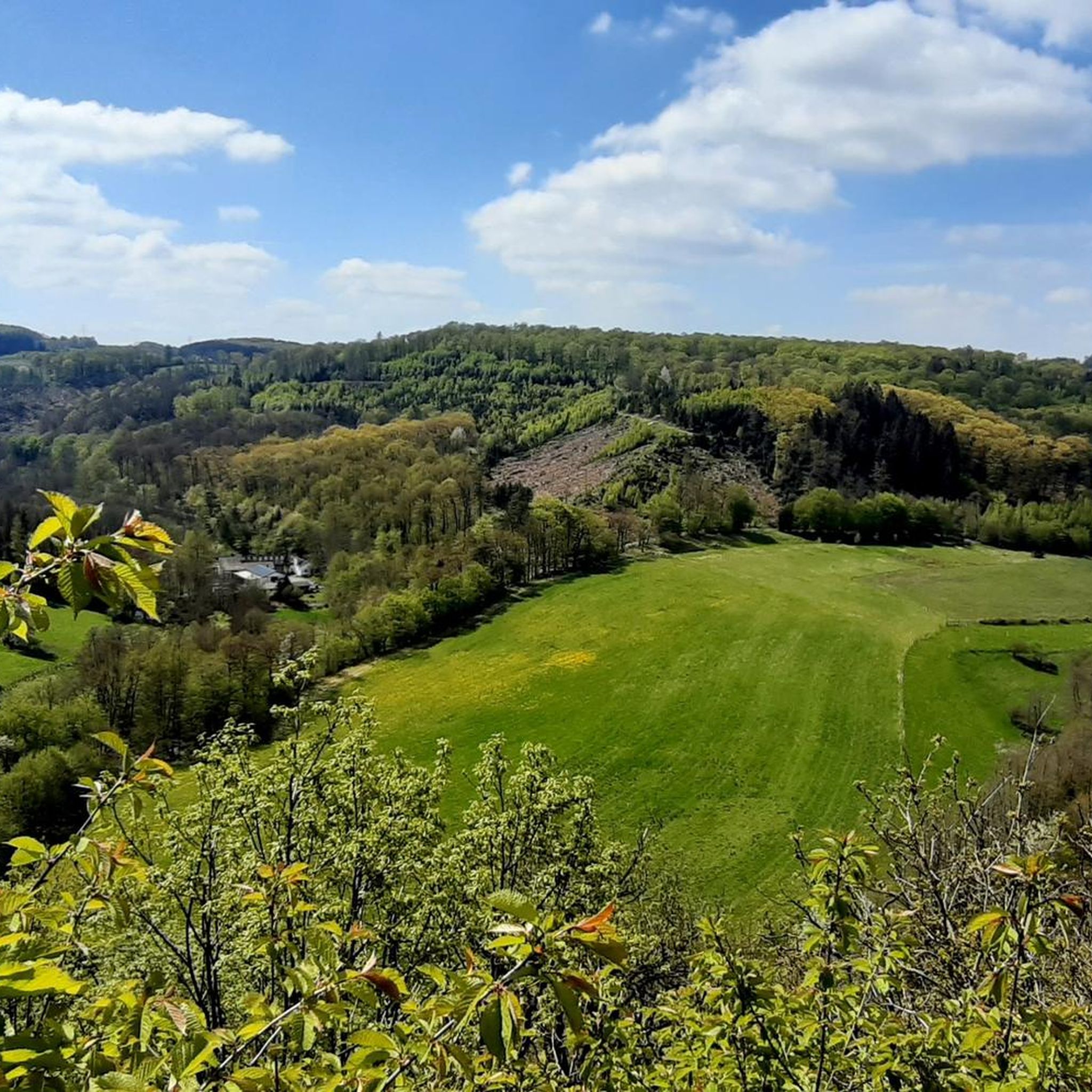
Great landscape picture. Most of it is a nature reserve, making it ideal for hiking, cycling and fishing.
1
0
Frequently Asked Questions
How many road cycling routes are available around Flin?
There are over 125 road cycling routes around Flin, offering a diverse range of options for all skill levels. The majority, about 91 routes, are considered moderate, with 25 easy and 9 difficult routes also available.
Are there road cycling routes suitable for beginners or less experienced riders in Flin?
Yes, Flin offers approximately 25 easy road cycling routes. These routes typically feature gentler gradients and shorter distances, perfect for a relaxed ride through the region's rolling terrain.
What kind of challenges can I expect on road cycling routes around Flin?
Road cycling around Flin is characterized by rolling hills and varied gradients. Some routes include notable passes, such as the Chipotte Pass on the Rambervillers Town Hall – Chipotte Pass loop from Azerailles, offering moderate to challenging climbs and descents for experienced riders.
Are there any circular road cycling routes around Flin?
Yes, many of the road cycling routes around Flin are designed as loops. For example, the popular Les Noires Colas – Lake La Plaine loop from Azerailles and the Abri du Pèlerin – Saint-Pierre loop from Azerailles are both circular, allowing you to start and finish at the same point.
What can I see along the road cycling routes around Flin?
The routes often lead through forested areas and past bodies of water, such as lakes and dams. You can also explore nearby attractions like the historic town of Baccarat, the intriguing Bear cave, or the scenic Chapelle Saint-Pierre with its views of the Vosges.
Are there any specific viewpoints or scenic spots on the road cycling routes?
While specific viewpoints are not always marked, the routes frequently offer picturesque vistas, especially when traversing higher elevations or passing by lakes. The Chapelle Saint-Pierre, for instance, provides excellent views of the Vosges mountains, which can be incorporated into your ride.
What do other road cyclists enjoy the most about road cycling in Flin?
The road cycling routes around Flin are highly rated by the komoot community, with an average score of 4.8 stars from over 40 reviews. Cyclists often praise the diverse terrain, including rolling hills and forested sections, as well as the well-maintained paths that pass by lakes and dams.
What is the typical length and duration of road cycling routes in Flin?
Route lengths vary significantly. For example, the Les Noires Colas – Lake La Plaine loop from Azerailles is about 43.5 miles (69.9 km) and takes nearly 3 hours, while the Abri du Pèlerin – Saint-Pierre loop from Azerailles is 33.8 miles (54.3 km) and typically takes around 2 hours 20 minutes. You'll find options ranging from shorter loops to longer endurance rides.
Are there any hidden gem road cycling routes in Flin that are less frequented?
While many routes are popular, exploring some of the less-trafficked paths can lead to unique discoveries. Routes like the Vieux-Pré Dam – Bridge in the center of Baccarat loop from Azerailles offer a blend of natural beauty and local charm, potentially providing a quieter experience away from the most popular trails.
What is the best time of year for road cycling in Flin?
The region's rolling terrain and forested sections are generally most enjoyable during spring, summer, and early autumn when the weather is mild and the natural scenery is at its peak. These seasons offer comfortable temperatures and vibrant landscapes for cycling.
Are there any road cycling routes that pass by dams or lakes in Flin?
Yes, several routes incorporate bodies of water into their scenic paths. The Les Noires Colas – Lake La Plaine loop from Azerailles, for instance, passes by Lake La Plaine, and the Vieux-Pré Dam – Bridge in the center of Baccarat loop from Azerailles features the Vieux-Pré Dam, offering picturesque views along the way.
Can I find routes with significant elevation gain for a more challenging workout?
Absolutely. Routes like the War Memorial of Pierre-Percée – Chapelotte Pass loop from Azerailles feature notable elevation gains, including passes that will provide a strenuous and rewarding workout for cyclists seeking a challenge.
Most popular attractions around Flin

Get inspired with the komoot mobile app


Explore more
Browse the best Road cycling routes in other regions.
