The best road cycling routes around Mignéville
4.9
(44)
541
riders
130
rides
Road cycling routes around Mignéville offer access to the diverse landscapes of the Lorraine region in France. The area is characterized by bucolic countryside, rolling hills, and extensive river and canal networks. Cyclists can explore well-maintained paths that traverse forests and natural sites, with varied terrain suitable for different skill levels. The Meurthe-et-Moselle department, where Mignéville is located, features numerous green itineraries along waterways and through rural settings.
Best road cycling routes around Mignéville
- The most popular road cycling route…
Last updated: July 5, 2026
3.0
(1)
19
riders
50.5km
02:18
540m
540m
Moderate road ride. Good fitness required. Mostly well-paved surfaces and easy to ride.
5.0
(2)
24
riders
71.0km
03:02
410m
410m
Moderate road ride. Good fitness required. Some segments of this route may be unpaved and difficult to ride.

Sign up for free
14
riders
32.3km
01:50
430m
430m
Moderate road ride. Good fitness required. Mostly well-paved surfaces and easy to ride.
5.0
(1)
11
riders
61.4km
02:37
420m
420m
Moderate road ride. Good fitness required. Mostly well-paved surfaces and easy to ride.
4.0
(1)
8
riders
54.3km
02:21
460m
460m
Moderate road ride. Good fitness required. Mostly well-paved surfaces and easy to ride.
Get access to more routes and recommendations from other explorers.
Sign up for free
Already have an account?
Our route recommendations are based on thousands of hikes, rides, and runs completed by other people on komoot.
Start today with a free account
Your next adventure awaits.
Login or Signup

Tips from the Community

Its choir, dating from the 13th century, is the oldest part and reflects Cistercian influence with its two bays vaulted with ogival ribs and its flat chevet. The ogives, typical of the Gothic art of the time, are reinforced by wall ribs, while a blind arcade adorns the walls. This choir, devoid of a transept, follows the Cistercian tradition where the monks' choir is integrated directly into the nave. The nave and the portal, rebuilt in the 18th century, contrast with the old structure with their more sober and less remarkable style. The high altar, adorned with four Corinthian columns in black marble, bears witness to a later Baroque addition. This mixture of styles illustrates the architectural and liturgical evolutions the building has undergone over the centuries. The history of the church is linked to that of the village, whose lord in the 13th century was the abbey of Saint-Denis de Reims. A notable figure, Jean Mabillon, was born there in the 17th century and was baptized in this church. Classified as a historic monument in 1926, it now embodies a major religious and architectural heritage of the Ardennes, preserved for its medieval choir and its liturgical furnishings. Historical sources also mention bibliographical references, such as the works of Jean Leflon on Jean Mabillon or the studies of Hubert Collin on Ardennes churches. These works highlight the local importance of the building, both spiritually and architecturally, in a region marked by the influence of abbeys and monastic orders in the Middle Ages.
0
0
It is located on the left bank of the Meurthe, at number 14 rue Denfert-Rochereau. The Saint-Georges church is the church of La Neuveville-lès-Raon, which merged with Raon-l'Etape in 1947. It was built between 1835 and 1838 according to the plans of the district architect Boucher de Saint-Dié. The church was fitted out in 1894. In 1905 the dome was rebuilt. From 1973 to 1978, major restoration work was carried out, both interior and exterior. Inside, among other things, there is an old statue of Our Lady of Sorrows, a painting of Saint Nicholas, who is also the patron saint of wood-floaters, a painted wooden Christ, and a memorial chapel (1922).
0
0

The imposing neoclassical-style town hall was built to the plans of the architect Antoine-Alexandre Jandel at the end of the Restoration (1830).
8
0
On a limestone spur above the Vezouze lies the Château de Blâmont, built around 1200. Once the seat of the Counts of Blâmont, later a romantic castle and even a weaving mill. In 1944 it was badly damaged by American bombing. Today the ruins – with five towers – are a silent witness to centuries of history.
6
0
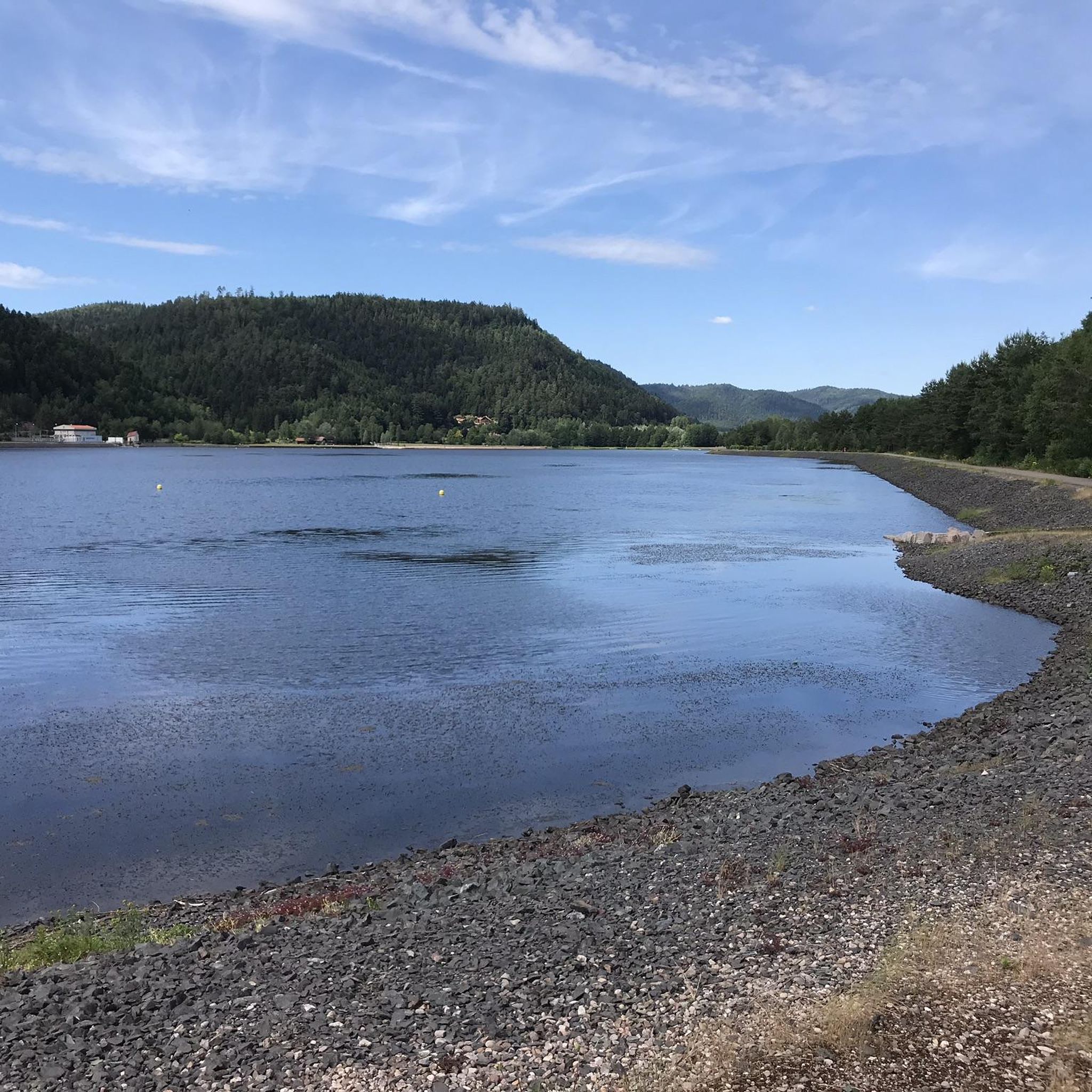
Lac de la Plaine is a picturesque lake in the Vosges, located near Celles-sur-Plaine, near the larger Lac de Pierre-Percée. The lake is an artificial water reservoir of about 0.5 million m³ and serves as a supply basin for the reservoir above.
1
0
This impressive dam, located in the Vosges, forms an artificial water reservoir together with the Lac de Pierre-Percée. The dam is 69 metres high and 330 metres long, built with a clay core and lined with volcanic rock. It plays an important role in water management and energy production via an underground water connection with the Lac de la Plaine. The surrounding area offers beautiful views and is ideal for hiking along rocky paths, forests and viewpoints over the lake.
7
0
Pierre-Percée is a small mountain village in the east of the Meurthe-et-Moselle department, on the edge of the Vosges Mountains. With fewer than 100 inhabitants, it is one of the smallest communes in the region. Situated on the edge of the Plaine Valley, the village is built at the foot of the ruins of the medieval Château de Pierre-Percée, which once belonged to the Counts of Salm. The village's name refers to a 33-meter-deep well carved into the rock beneath the castle. During the Thirty Years' War, the village, like the castle, was largely destroyed. In the 20th century, Pierre-Percée regained significance with the construction of the EDF reservoir and the creation of a recreation area, which today attracts tourists for hiking, water sports, and nature experiences.
9
0

Frequently Asked Questions
How many road cycling routes are available around Mignéville?
There are over 145 road cycling routes around Mignéville, catering to various skill levels. You'll find a diverse selection, from easy rides to more challenging routes with significant elevation gains.
What kind of terrain can I expect when road cycling near Mignéville?
The region around Mignéville offers a varied landscape for road cycling. You can expect picturesque rural areas with rolling hills, as well as extensive networks of cycle paths along rivers and canals. These waterways, like the Moselle Loop and the Voie Bleue, provide mostly flat and well-paved surfaces, while other routes will take you through charming Lorraine villages and forests.
Are there easy road cycling routes suitable for beginners or families?
Yes, Mignéville offers several easy road cycling routes. For instance, the Bridge in the center of Baccarat loop from Vaxainville is an easy 20.1-mile (32.4 km) path that explores local areas. The flat, well-paved paths along the Moselle Cycle Path are also ideal for leisurely rides and families.
Are there more challenging road cycling routes with significant climbs?
Yes, for experienced riders seeking a challenge, there are routes with notable elevation gains. The Chapelotte Pass – Lake La Plaine loop from Ancerviller is a moderate 29.6-mile (47.7 km) route featuring a pass and a lake, with over 560 meters of ascent.
What natural features can I discover along the road cycling routes?
Cycling around Mignéville allows you to explore diverse natural beauty. Routes often follow rivers and canals, passing through peaceful forests and near natural sites such as the ponds of Pagny-sur-Moselle, known for their rich biodiversity. You can also cycle around lakes like Lac de Madine and Étang de Gondrexange.
Are there historical sites or landmarks to see while cycling?
Absolutely. Many routes wind through traditional Lorraine villages, offering glimpses into local life. You can also visit historical sites like the Badonviller national necropolis or the American Cemetery and Memorial Sandwiller. Towns like Nancy, with its UNESCO World Heritage site Stanislas Square, and Metz, with its impressive Saint-Étienne Cathedral, are also accessible along the wider regional cycling network.
What do other road cyclists enjoy most about the routes in Mignéville?
The road cycling routes around Mignéville are highly rated by the komoot community, with an average score of 4.8 stars from over 50 reviews. Cyclists often praise the varied terrain, from bucolic countryside and rolling hills to scenic river and canal paths, as well as the opportunity to explore charming villages and historical sites.
Are there circular road cycling routes available?
Yes, many of the road cycling routes around Mignéville are designed as loops, allowing you to start and end at the same point. Examples include the Village Church and Scenic Road – Resistance Memorial loop from Domèvre-sur-Vezouze and the Bridge in the center of Baccarat loop from Herbéviller.
What is the best time of year for road cycling in Mignéville?
The region is generally pleasant for road cycling from spring through autumn. During these seasons, you can enjoy comfortable temperatures and lush landscapes. While winter cycling is possible, conditions may vary, and some routes might be less accessible due to weather.
Is public transport available for cyclists in the Mignéville area?
The broader Meurthe-et-Moselle department, where Mignéville is located, emphasizes green itineraries and cycling infrastructure. While specific public transport options for bikes in Mignéville itself may be limited, the region's focus on cycling tourism suggests that options for reaching trailheads or connecting between routes via public transport might be available in larger towns. It's advisable to check local transport schedules for specific routes and bike carriage policies.
Where can I find information about parking for cyclists near Mignéville?
While specific parking areas for cyclists in Mignéville are not detailed, many routes start from villages or towns where public parking is typically available. For routes like the Chapelotte Pass – Lake La Plaine loop from Ancerviller, starting points in villages like Ancerviller would usually offer parking facilities.
Are there cafes or places to stop for refreshments along the road cycling routes?
Cycling through the charming Lorraine villages and historical towns like Baccarat, Nancy, or Liverdun will provide opportunities to stop for refreshments. Many routes pass directly through or near these settlements, where you can find local cafes, bakeries, and restaurants to refuel during your ride.
Most popular attractions around Mignéville

Get inspired with the komoot mobile app


Explore more
Browse the best Road cycling routes in other regions.
