Attractions and Places To See around Montmorency-Beaufort - Top 17
Best attractions and places to see around Montmorency-Beaufort include a variety of cultural sites, historical landmarks, and natural features within the Aube department of France. The region offers insights into local history and architecture, with several notable religious buildings. Montmorency-Beaufort is situated in an area known for its half-timbered churches and proximity to natural landscapes.
Best attractions and places to see around Montmorency-Beaufort
- The most popular attractions is Lentilles Church, a religious building known for its timber-framed architecture and…
Last updated: July 1, 2026
Napoleon and Brienne-le-Château
Highlight • Settlement
Translated by Google •
Tip by

Saint-Nicolas d'Outines church
Highlight • Historical Site
Translated by Google •
Tip by
Sign up now to discover places like this
Get recommendations on the best single tracks, peaks, & plenty of other exciting outdoor places.
Sign up for free
Lentilles Church
Highlight • Religious Site
Translated by Google •
Tip by

Church of Saint Peter and Saint Paul
Highlight • Religious Site
Translated by Google •
Tip by

Saint-Georges Church of Chavanges
Highlight • Religious Site
Translated by Google •
Tip by
Sign up for free to discover even more attractions around Montmorency-Beaufort.
Sign up for free
Already have an account?
Start today with a free account
Your next adventure awaits.
Login or Signup



Tips from the Community

Another beautiful half-timbered church on the Route des Églises à pans de bois de Champagne.
0
0

The Saint-Jacques-et-Saint-Philippe church in Lentille is eye-catching with its timber-framed architecture and cob façades. It was built during the 16th century and was restored to its original appearance in the 1970s.
0
0

This building was badly damaged in 1940 by a fire that destroyed much of the city, but has been restored to its original state. The church, where Napoleon made his first communion, is built of stone from the Champagne region. It has a 14th-century nave and a 16th-century choir with choir girth. Look at the original images in the Renaissance stained glass windows: on the left the story of Noah, on the right the legend of Saint Crispin and Saint Crispinian. Also note the bell-shaped holy water font (16th century), the baptismal font and the choir screen (18th century).
1
0

Saint Nicholas (Saint-NICOLAS), Bishop of Myra, to whom the half-timbered church in Outines is dedicated, is - along with Saint Martin - one of the most popular saints of all. Almost every child in Germany - and far beyond - is probably familiar with his day of remembrance, December 6th. On the eve of this day, the children used to put their shoes or boots - which were of course cleaned with great care - in front of the door so that Saint Nicholas could fill them with gifts that night. In more agricultural areas, it was also customary for children to provide a small donation of food for the donkey, St. Nicholas' riding animal (according to another tradition, it was a gray horse).
1
0

Brienne lies on the banks of the Aube river in a plain called la Plaine de Brienne. The Counts of Brienne dominated the history of the area for a long time. They were one of the most important noble families of medieval France and produced statesmen, diplomats and crusaders. Johann von Brienne (1169/74–1237). He was chosen by the French King Philip II as husband and regent for the heir to the Kingdom of Jerusalem. From 1210 to 1212 he was king of Jerusalem. He then became the father-in-law of the Roman-German Emperor Frederick II, with whom he became enemies and also fought against him as the Pope's general. From 1229 he ruled Constantinople for nine years. Brienne-le-Château became known as the training site of Napoleon Bonaparte, who studied here for five years (May 1779 to October 1784) as a boarding school student at what was then the Royal Military School. To complete his studies, he left Brienne-le-Château and finished it at the École Militaire in Paris. On April 3, 1805, he visited Brienne-le-Château again on his trip to Italy for the coronation, now already as Emperor of the French. On January 29, 1814, the Battle of Brienne was fought near Brienne, which ended with a victory for France under Napoleon Bonaparte against the Russians and Prussians under Field Marshal Blücher. Sources: Wikipedia
1
0
The Roman Catholic parish church of Saint-Georges in Chavanges, a commune in the Aube department in the Grand Est region of France, dates back to the 12th century. In the 15th and 16th centuries the church was rebuilt in the Gothic style. The Romanesque west portal of the 12th century church has been preserved. The arched portal is framed by simple archivolts that rest on slender columns decorated with capitals. Stylized leaves, birds and a kneeling person are depicted on the capitals. The nave has three aisles and is divided into three bays. Adjacent to the nave is a two-aisled transept, which opens onto a wide choir. This has three apses with a polygonal end. The grisaille window with scenes of the Apocalypse was installed in 1540. The motifs are largely borrowed from Albrecht Dürer's woodcuts of the Apocalypse, which he published in 1498 in his “Big Book” with the title The Secret Revelation of Iohannis. Source: Wikipedia
1
0
In southern Champagne, between the Lac du Der-Chantecoq and the lakes of the Forêt d'Orient, there are a number of half-timbered churches (Eglises en pans de bois) from the 16th to 18th centuries. Without exception, the churches are located in smaller towns that lacked the financial resources for a stone building at the time of construction. Today the churches are considered special historical witnesses that have been renovated in recent years. They are accessible to tourists through a “Street of Half-timbered Churches” that connects some of the churches. The Church of Saint Nicholas was built around 1600. Source: Wikipedia
2
0
Frequently Asked Questions
What historical and religious sites are notable in the Montmorency-Beaufort area?
The region is rich in history, particularly with its distinctive half-timbered churches. You can visit the 16th-century Lentilles Church, known for its timber-framed architecture, or the Saint-Nicolas d'Outines church, built around 1600. The Saint-Georges Church of Chavanges, with origins in the 12th century and rebuilt in Gothic style, also features a preserved Romanesque west portal. Additionally, explore Napoleon and Brienne-le-Château, a settlement with significant ties to Napoleon Bonaparte's early life and a notable battle.
Are there opportunities for outdoor activities like hiking near Montmorency-Beaufort?
Yes, the area offers various hiking opportunities. You can find routes like the moderate Brienne-le-Château Castle loop or the Birdwatching hut – Lac du Der-Chantecoq loop from Outines. For more challenging hikes, consider the Saint-Nicolas d'Outines church – Lentilles Church loop from Joncreuil. Explore more options on the Hiking around Montmorency-Beaufort guide.
What kind of cycling routes are available around Montmorency-Beaufort?
Cyclists can enjoy a range of routes, from easy to difficult. Options include the easy Bike loop from Chavanges or the Lentilles Church loop from Le Ham. For a moderate challenge, try the Port of Giffaumont-Champaubert – Lake Der-Chantecoq loop from Chavanges. More extensive rides like the Port of Giffaumont-Champaubert – Small island loop from Brienne-le-Château are also available. Find detailed cycling tours on the Cycling around Montmorency-Beaufort guide.
Are there any family-friendly attractions or activities in the region?
Many of the historical churches, such as Lentilles Church and Saint-Georges Church of Chavanges, are considered family-friendly. Beyond historical sites, the nearby Lake Der-Chantecoq offers a variety of water-based activities and beaches like Dienville Plage, which are great for families. There's also ACCRODER, a treetop adventure course by the lake.
What natural features or outdoor experiences can I find near Montmorency-Beaufort?
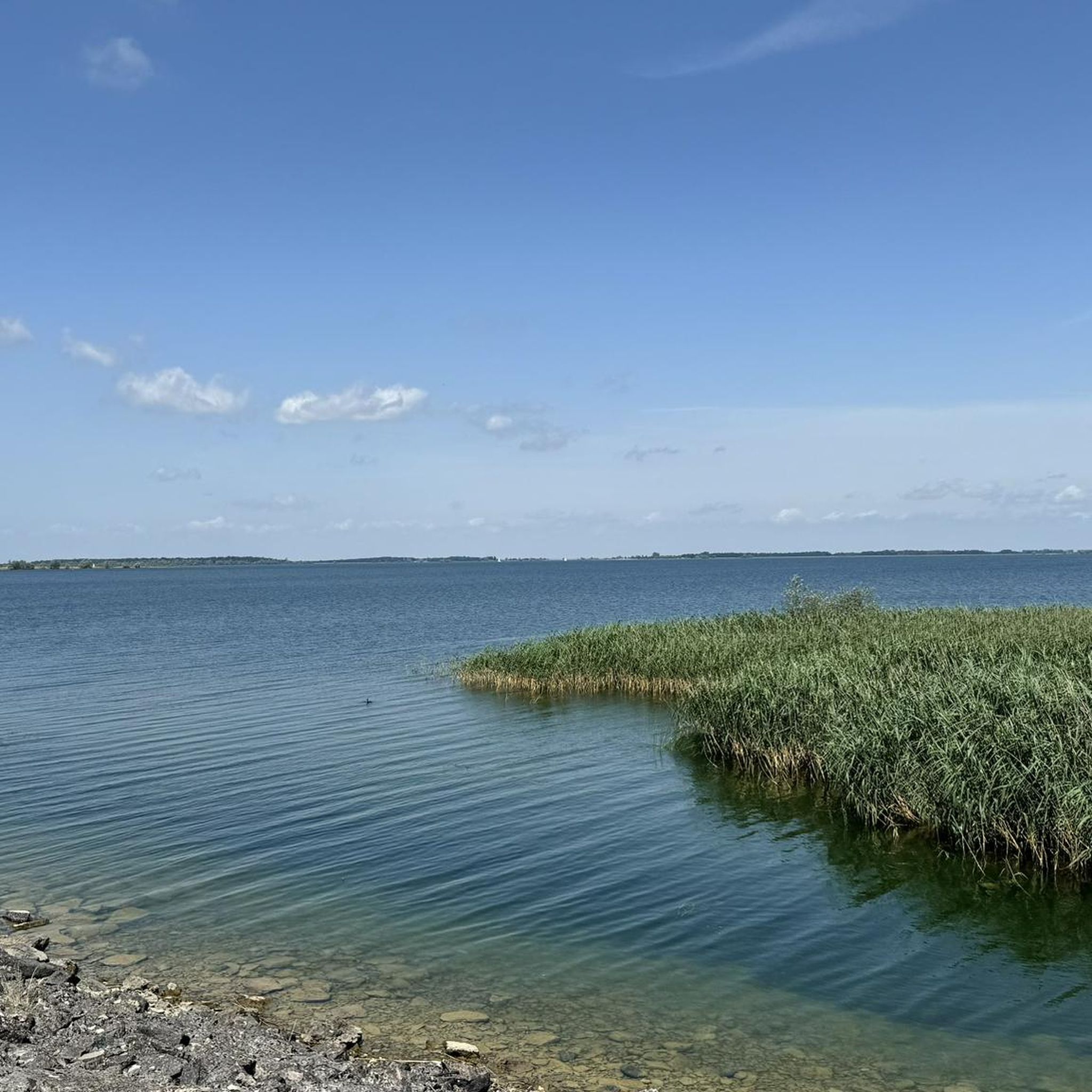
The most prominent natural feature is Lake Der-Chantecoq, a large lake offering water sports and relaxation. Birdwatching enthusiasts will appreciate the Observatoire ornithologique de Chantecoq. For adventure seekers, Aube Parachutisme - Centre de Chute Libre provides skydiving experiences, and ACCRODER offers a treetop adventure course by the lake.
Can I find mountain biking trails in the Montmorency-Beaufort area?
Yes, there are mountain biking trails suitable for various skill levels. You can explore the easy Lake Der-Chantecoq – View of Lac du Der-Chantecoq loop from Drosnay or the Lentilles Church – Chavanges loop from Chavanges. For a moderate ride, consider the Beti loop from Brienne-le-Château. More MTB options are detailed in the MTB Trails around Montmorency-Beaufort guide.
What is the significance of Brienne-le-Château in the region?
Brienne-le-Château is historically significant as the training site for Napoleon Bonaparte, who studied at the Royal Military School there for five years. It was also the location of the Battle of Brienne in 1814, where Napoleon secured a victory against Russian and Prussian forces.
Are there any unique architectural styles to observe in the churches around Montmorency-Beaufort?
Yes, the region is particularly known for its collection of half-timbered churches (Eglises en pans de bois) dating from the 16th to 18th centuries. These structures, like the Lentilles Church and Saint-Nicolas d'Outines church, were built with timber frames and cob façades due to the financial constraints of smaller towns at the time, making them unique historical witnesses.
What can I expect to see at the Church of Saint Peter and Saint Paul?
The Church of Saint Peter and Saint Paul, where Napoleon made his first communion, features a 14th-century nave and a 16th-century choir. Visitors can admire original images in Renaissance stained glass windows depicting the story of Noah and the legend of Saint Crispin and Saint Crispinian, along with a 16th-century bell-shaped holy water font.
What do visitors particularly appreciate about the attractions in Montmorency-Beaufort?
Visitors often appreciate the historical depth and unique architecture of the religious buildings, especially the well-preserved half-timbered churches. The blend of cultural sites with the natural beauty and recreational opportunities of Lake Der-Chantecoq also receives positive feedback, offering a diverse range of experiences.
Is there a specific time of year recommended for visiting Montmorency-Beaufort?
While the region can be enjoyed year-round, spring and summer are ideal for outdoor activities around Lake Der-Chantecoq and exploring the natural features. Autumn offers pleasant weather for hiking and cycling, with beautiful seasonal colors. The historical sites and churches are accessible throughout the year.
Most popular routes around Montmorency-Beaufort

Get inspired with the komoot mobile app


Explore more
Still not found the Highlight you’re looking for? See guides of the top attractions in other regions:
