Attractions and Places To See around Bossancourt - Top 20
Best attractions and places to see around Bossancourt include a blend of historical sites, natural beauty, and cultural experiences in the Aube department of France. The commune is situated within the Forêt d'Orient Regional Natural Park, offering various natural attractions. The surrounding area is also known for its Champagne vineyard hillsides, providing a regional cultural highlight. This region offers diverse opportunities for exploration.
Best attractions and places to see around Bossancourt
- The most popular attractions is Saint-Quentin Church in Dienville…
Last updated: May 20, 2026
Saint-Quentin Church in Dienville
Highlight • Religious Site
Translated by Google •
Tip by

Lake Amance
Highlight • Lake
Translated by Google •
Tip by

Sign up now to discover places like this
Get recommendations on the best single tracks, peaks, & plenty of other exciting outdoor places.
Sign up for free
Dienville Market Hall
Highlight • Monument
Translated by Google •
Tip by
Saint Pierre Church of Bar-sur-Aube
Highlight • Religious Site
Translated by Google •
Tip by
Bar-sur-Aube
Highlight • Settlement
Translated by Google •
Tip by

Sign up for free to discover even more attractions around Bossancourt.
Sign up for free
Already have an account?
Start today with a free account
Your next adventure awaits.
Login or Signup




Tips from the Community

The Dienville market hall was built in stone in 1866. The building hosts the town's market every Sunday.
1
0

The St. Peter's Church in Bar-sur-Aube is a church dedicated to the apostle Peter. The church is located in the town of Bar-sur-Aube, in the Aube department, in the Grand Est region. The church dates from the 12th century and is Romanesque in style. The church has a remarkable organ from the 17th century, which originally came from another monastery. The church also has an 18th century tower, which offers a beautiful view of the town and the Aube River.
8
0
Via Francigena: During this stage, a stop in Bar-sur-Aube is a must. Situated on a north-south axis, the town acquired strategic importance and the status of a commercial centre during the period of the Counts of Champagne. The latter had indeed guaranteed the security of the merchants and set up an adapted logistical organisation that contributed to the development of Bar-sur-Aube as a commercial centre. Thus, from mid-February to mid-April, traders from Flanders and Italy exchanged oriental spices, silk, textiles and raw materials from Northern Europe. The architecture of the town bears witness to this past activity.
7
0
* Saint-Quentin Church (15th-18th centuries): beautiful statues, wooden high altar and pulpit, listed wrought iron choir grille (1765), organ case, Merovingian tomb. * Dienville Cemetery, listed as a Historic Monument. * Stone hall (1866) built in place of the old wooden hall dating from 1536, destroyed in 1863. * Notre-Dame-du-Tertre Chapel in Dienville (12th-17th centuries): stone and half-timbered. * Immaculate Conception Chapel in Dienville. * Castle (1819-1820) * Mont Fountain (18th century): known as "Montre-cul" * Town Hall (1895) * Dienville Bridge over the Aube (1945): bridge built in 1945 replacing the old bridge dating from 1639, destroyed during the Second World War.
2
0
An impressive natural stone market hall
2
0
The 16-18th century church is notable for its pentagonal apse and a heavy square tower with dome. The beautiful wrought iron choir screen from 1768 belongs to Matthieu Lesueur, the locksmith of Clairvaux Abbey.
7
0

Very beautiful church but watch out for the pigeon
2
0

The Saint-Pierre Church of Bar-sur-Aube is a historic monument which deserves special attention. Dating from the 12th century, it has remarkable architecture with its harmonious apse and its halloy, a 14th century wooden portico which gives it a unique exterior originality. Inside, the nave offers a beautiful perspective, allowing you to admire the capitals of very Cistercian simplicity and the vault. The church also houses a Romanesque Sedes Sapientiae from the 12th century and sculptures from the 16th century, including a particularly beautiful Virgin and Child with a Bouquet. The Bouchardon altarpiece dating from 1736 and the magnificent Baroque organ case from the 18th century are also notable elements of this heritage. Visitors appreciate the calm and light of the nave, which reveals traces of past polychromy. The exhibition of 16th century statuary and the organ case in three bodies from three distinct periods add to the historical and artistic richness of Saint-Pierre Church. In short, the Saint-Pierre Church is a jewel of Bar-sur-Aube which offers visitors a journey through time and sacred art. It is a living testimony to the history and culture of the region, and its visit is highly recommended for those interested in religious architecture and art history.
4
0
Frequently Asked Questions
What historical sites can I visit near Bossancourt?
The region around Bossancourt offers several historical sites. You can explore the 16th to 18th-century Saint-Quentin Church in Dienville, known for its pentagonal apse and wrought-iron choir screen. Another notable site is the Dienville Market Hall, an impressive natural stone structure built in 1866. Further afield, the Saint Pierre Church of Bar-sur-Aube, dating back to the 12th century, features Romanesque architecture and a remarkable 17th-century organ. The historic Château de Bossancourt is also a significant local landmark, though it is partially private.
Are there any natural attractions or lakes to explore?
Yes, Bossancourt is situated within the Forêt d'Orient Regional Natural Park, offering beautiful natural features. A prominent attraction is Lake Amance, where you can enjoy a 9.2-mile loop trail that circles the lake, providing scenic views of the water, forest, and wildlife. The larger Lacs Amance et du Temple, and Lac d'Orient, are also part of this natural park, providing ample opportunities for outdoor enjoyment.
What outdoor activities, like hiking or cycling, are available?
The Forêt d'Orient Regional Natural Park, where Bossancourt is located, is ideal for outdoor activities. You can hike or run the Amance Lake Loop, a 9.2-mile trail around Lake Amance. For cycling enthusiasts, there are numerous routes, including those found in the nearby guides for Cycling around Bossancourt, Gravel biking around Bossancourt, and Road Cycling Routes around Bossancourt.
Are there family-friendly attractions in the area?
Many attractions around Bossancourt are suitable for families. The Saint-Quentin Church in Dienville and Dienville Market Hall are accessible and offer cultural insights. The trails around Lake Amance provide a great opportunity for family walks and enjoying nature. The
What is the best time of year to visit Bossancourt?
The best time to visit Bossancourt largely depends on your preferred activities. Spring and autumn offer pleasant weather for hiking and cycling, with beautiful foliage in the Forêt d'Orient. Summer is ideal for water-based activities at the lakes and enjoying local markets. The region's Champagne vineyards are also particularly scenic during the growing season and harvest.
Can I find local markets near Bossancourt?
Yes, nearby towns host weekly markets where you can experience local life and find regional produce. Bar-sur-Aube has a market on Saturdays, Vendeuvre-sur-Barse on Wednesdays, and Brienne-le-Château on Thursdays. The Dienville Market Hall also hosts the town's market every Sunday.
What is the significance of the Château de Bossancourt?
The Château de Bossancourt is a significant local landmark, constructed primarily in the 18th and 19th centuries. It reflects the architecture and societal norms of its era and includes historical elements like a 19th-century flour mill, an 18th-century wash house, and a press. The site was inscribed as a historical monument in 1982, with protected elements including its entrance gate, facades, roofs, and dovecote. While partially private, it offers a glimpse into the region's rural history.
Are there options for birdwatching in the area?
Yes, the National Nature Reserve at Lac du Temple, which is part of the Forêt d'Orient Regional Natural Park, has an observatory specifically for birdwatching. It is accessible by foot or bike via a well-maintained forest track, offering a peaceful experience for nature enthusiasts.
What do visitors particularly enjoy about the attractions here?
Visitors appreciate the blend of historical charm and natural beauty. The Saint-Quentin Church in Dienville is admired for its historical details and architecture. The scenic trails around Lake Amance are popular for their views of water, forest, and wildlife. The overall tranquility and opportunities for outdoor activities within the Forêt d'Orient Regional Natural Park are also highly valued.
Are there any unique art trails in the forest?
Yes, within the Orient Forest, you can find the "Colossus with Feet of Clay" Trail. This short hiking trail, approximately 7 km long, features impressive works of art at seven stations. It invites visitors to explore the forest while contemplating themes like climate change and human impact on nature, offering a unique blend of art and nature.
Is Troyes easily accessible from Bossancourt?
Yes, Troyes, known for one of France's most impressive medieval quarters, is approximately 39 km from Bossancourt. It makes for a popular and accessible nearby destination for those looking to explore a larger historic city.
Can I explore Champagne vineyards nearby?
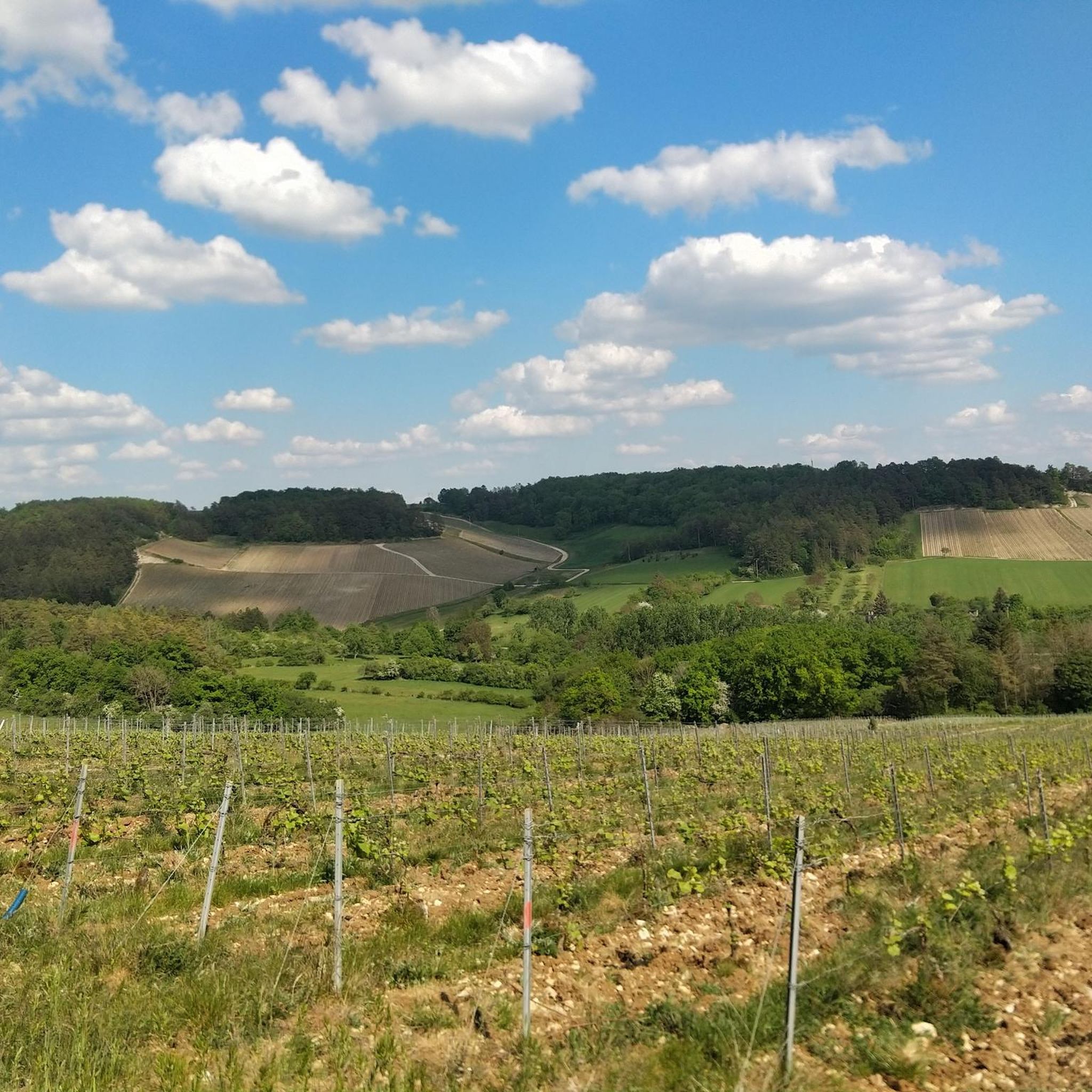
Absolutely. The surrounding area, particularly the "Côte des Bar," is home to numerous Champagne vineyard hillsides. This makes it a renowned area for Champagne production and offers excellent opportunities for wine tourism, including tastings and tours.
Most popular routes around Bossancourt

Get inspired with the komoot mobile app


Explore more
Still not found the Highlight you’re looking for? See guides of the top attractions in other regions:
