The best road cycling routes around Tocqueville-En-Caux
3.9
(24)
851
riders
120
rides
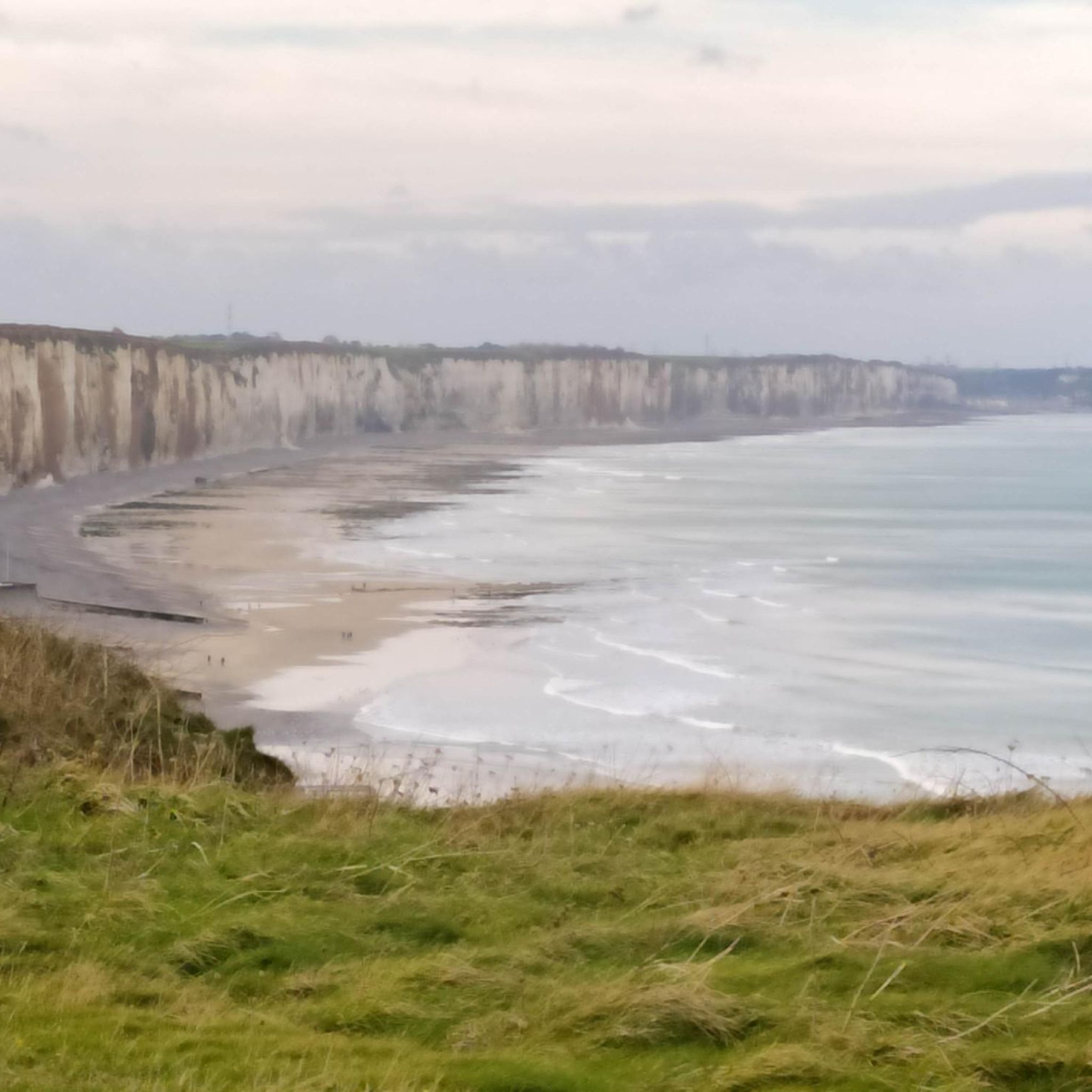
Road cycling around Tocqueville-En-Caux offers diverse landscapes within the Seine-Maritime department of Normandy. The region features the dramatic chalk cliffs of the Côte d'Albâtre, providing coastal routes with ascents and descents. Inland, the Pays de Caux presents rolling hills and expansive flax fields, while the Seine Valley offers routes along meandering rivers. This varied terrain supports road cycling routes for different preferences and fitness levels.
Best road cycling routes around Tocqueville-En-Caux
- The most popular road cycling route is House worth…
Last updated: May 13, 2026
176
riders
105km
05:10
1,320m
1,320m
Hard road ride. Very good fitness required. Mostly well-paved surfaces and easy to ride.
6
riders
55.0km
02:19
390m
390m
Moderate road ride. Good fitness required. Mostly well-paved surfaces and easy to ride.

Sign up for free
6
riders
Moderate road ride. Good fitness required. Mostly well-paved surfaces and easy to ride.
4
riders
Moderate road ride. Good fitness required. Mostly well-paved surfaces and easy to ride.
4.0
(2)
4
riders
50.8km
02:15
460m
460m
Moderate road ride. Good fitness required. Mostly well-paved surfaces and easy to ride.
Get access to more routes and recommendations from other explorers.
Sign up for free
Already have an account?
Our route recommendations are based on thousands of hikes, rides, and runs completed by other people on komoot.
Start today with a free account
Your next adventure awaits.
Login or Signup

Tips from the Community

A small bridge provides access to the Source campsite, and the "La Scie" River also passes through it. It is located very close to the Véloroute du Lin (about 50 meters away) in "Le Plessis" (municipality of Hautot-sur-Mer). You can also use it to reach the Canadian Cemetery, which is 1.5 kilometers from the bridge. Several picnic tables are located around the bridge.
1
0

Building with a Latin cross plan. A nave intersected by a transept and finished with a polygonal chevet. Bell tower with a polygonal spire in slate integrated into the front façade. Construction in sandstone and bricks. Angular openings for the nave; broken bays for the transept and the choir. Long-span slate roof.
0
0
This Saint-Crespin church is tiny for a tiny village. The town hall is tiny too. They are located right next door, like a vestige of blessed times gone by.
1
0
The church of Saint-Pierre, in Bacqueville-en-Caux, in Seine-Maritime, in Normandy, is attached to the parish of Saint-Pierre de Bacqueville – Vienne et Scie, in the deanery of Pays de Caux in the diocese of Rouen.
1
0
The church of Saint-Pierre, in Longueville-sur-Scie, in Seine-Maritime, in Normandy, is attached to the parish of Saint-Pierre de Bacqueville – Vienne et Scie, in the deanery of Pays de Caux in the diocese of Rouen.
1
0
Church with an elongated plan. A single nave. Bell tower crowned with a polygonal spire. On an older structure, the church was rebuilt in the 18th century.
0
0
The patronage of the church of Saint-Aubin was given in 1030 to the abbey of Fécamp, at the same time as the lordship of the Garden. From the older period, 12th-13th century, the foundations of the choir and a double lancet pool would remain, but the diversity of the devices and the multiplication of successive interventions, up to a general revival in the 19th century, make the chronological analysis of the building difficult, except for the west facade largely from the 16th century.
0
0
Saint-Valery was built by the chamberlain of the kings of France Charles VIII and Louis XII, Jacques de Moy. The work was continued at the end of the 15th century by the lord of Estouville. Before its reconstruction following the disaster of the Hundred Years' War (1328-1456) it was dedicated to Saint Ripert. From 1694, the parish belonged to the Count of Ausmonville and was located two leagues from Dieppe, or in the weight and measure used in Normandy about five kilometers from the city of Dieppe. The ordinance of May 31, 1733 of King Louis XV ordered that the parishes of the admiralty of Barfleur on which Saint-Valery then depended as an exception be exempt from timber cutting tax. It should be noted, however, that at the time, Anneville-en-Scere was spelled and not Annville-sur-Scie. The 19th century was the century of vacations and literary tourism. Maupassant was born in the nearby village of La Tourvile sur Arc. Many sources relating to parish life in the 19th century in Anneville-sur-Scie are provided by the journal Les Études normandes which devoted an issue to the ecclesiastical history of the diocese of Rouen in 1955.
1
0
Frequently Asked Questions
What kind of terrain can I expect when road cycling around Tocqueville-En-Caux?
The region offers a diverse landscape for road cyclists. You'll find dramatic high chalk cliffs along the Côte d'Albâtre, providing challenging ascents and descents with breathtaking coastal views. Inland, the Pays de Caux features gentle slopes and picturesque flax fields, while the Seine Valley offers routes along meandering rivers. This variety ensures options for different preferences and fitness levels.
How many road cycling routes are available in the Tocqueville-En-Caux area?
There are over 130 road cycling routes around Tocqueville-En-Caux documented on komoot. These routes cater to various skill levels, including 53 easy, 76 moderate, and 2 difficult options.
Are there any easy road cycling routes suitable for beginners or a relaxed ride?
Yes, there are many easy routes. For a gentle ride through the countryside, consider the Saint-Martin Church of Brachy loop from Brachy, an easy 42.8 km path. Another accessible option is the Small bridge over the Scie – Viaduc de la Scie loop from Royville, which is 39.7 km long.
What are some of the longer or more challenging road cycling routes in the region?
For a more demanding ride, the House worth seeing – Brasserie Pointe de Bray loop from Royville is a difficult 105.2 km route that explores the local area with significant elevation changes. Moderate options like the Saint-Martin Church of Brachy – Imbleville Castle loop from Rainfreville (65.9 km) also offer a good challenge.
What do other road cyclists think about the routes in Tocqueville-En-Caux?
The road cycling routes in Tocqueville-En-Caux are highly rated by the komoot community, with an average score of 4.0 stars from over 29 reviews. Cyclists often praise the varied terrain, from coastal cliffs to rolling inland hills, and the well-maintained network of paths.
Are there any notable landmarks or attractions to see along the road cycling routes?
Yes, several interesting sights can be found. You might pass by historic sites like Imbleville Castle or Château de Mesnil Geoffroy. The Véloroute du Lin is also a prominent cycling path in the area, offering scenic sections.
Are there circular road cycling routes available around Tocqueville-En-Caux?
Many of the routes in the area are designed as loops, allowing you to start and finish in the same location. Examples include the Saint-Martin Church – Imbleville Castle loop from Royville and the Saint-Martin Church of Brachy loop from Brachy, providing convenient options for circular rides.
What is the best time of year to go road cycling in Tocqueville-En-Caux?
The region's diverse landscapes are enjoyable throughout the warmer months. Spring and autumn offer pleasant temperatures and beautiful scenery, especially with the flax fields in bloom during late spring/early summer. Summer is also popular, though coastal areas can be windier. Always check local weather forecasts before heading out.
Is there good cycling infrastructure in the Seine-Maritime department?
The Seine-Maritime department, where Tocqueville-En-Caux is located, boasts extensive cycling infrastructure, with over 600 km of cycle routes and approximately 1,000 km of cycling loops. Major routes like La Vélomaritime (EuroVelo 4) and the London-Paris Avenue Verte pass through the region, indicating a well-developed network for cyclists. More information can be found on the Seine-Maritime Tourisme website.
Can I find cafes or restaurants near the cycling routes in Tocqueville-En-Caux?
The charming villages and seaside resorts in the area, such as Veules-les-Roses and Saint-Valery-en-Caux, offer various amenities including cafes and restaurants. Many routes pass through or near these towns, providing convenient stops for refreshments and meals during your ride.
What are the natural highlights of the region that I might encounter while cycling?
Beyond the dramatic coastal cliffs, you might experience the serene countryside of the Pays de Caux with its expansive flax fields. While slightly further afield, the Marais-Vernier, a natural region with wet meadows and marshes, showcases rich flora and fauna, offering a different natural experience if you venture towards the Seine Valley.
Most popular attractions around Tocqueville-En-Caux

Get inspired with the komoot mobile app


Explore more
Browse the best Road cycling routes in other regions.
