Attractions and Places To See around Ypreville-Biville - Top 13
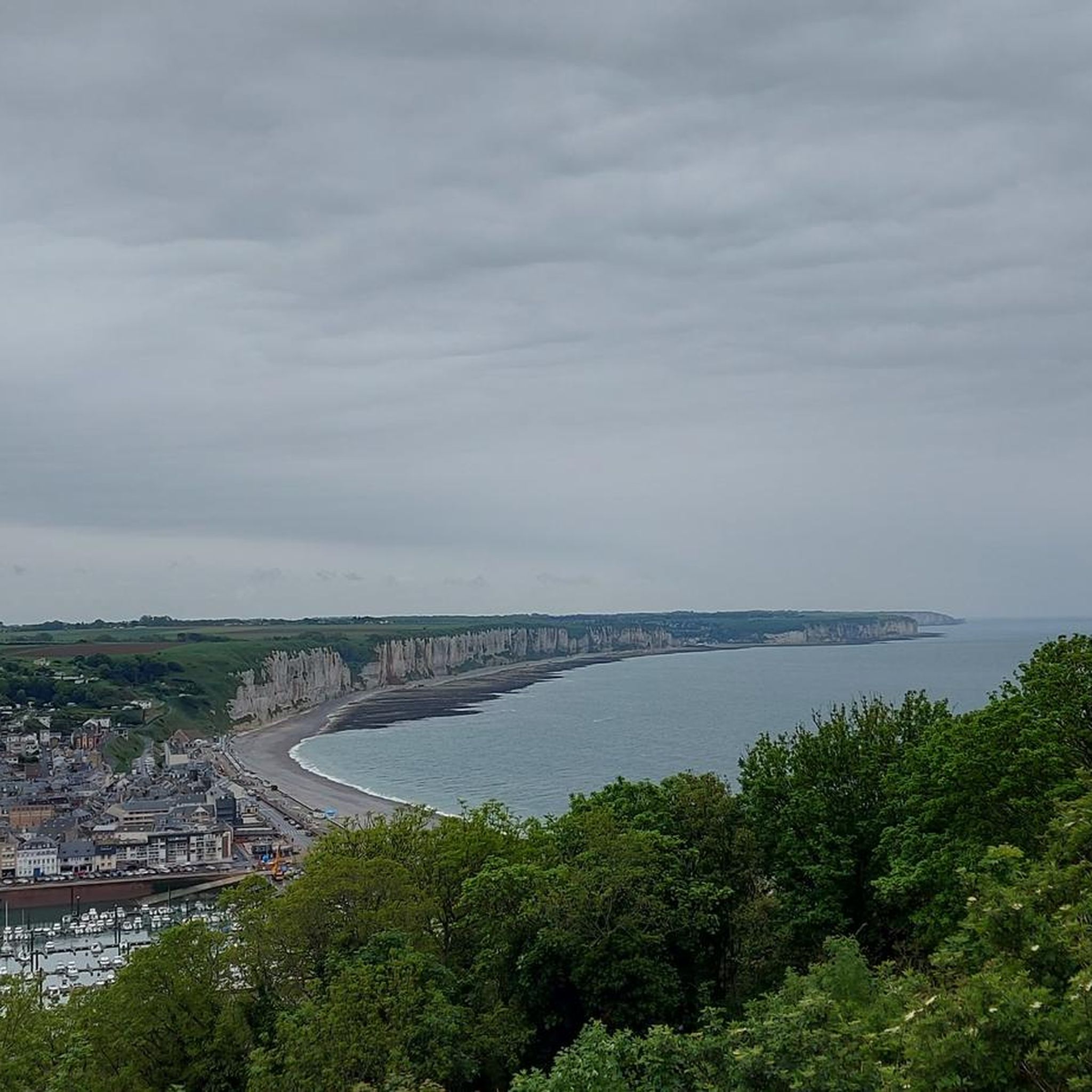
Best attractions and places to see around Ypreville-Biville include a blend of historical landmarks, cultural sites, and natural features within this farming village and its surrounding Pays de Caux region of Normandy, France. The area offers insights into local history, from ancient ruins to 19th-century architecture. Visitors can explore various points of interest that highlight the region's heritage and natural landscape.
Best attractions and places to see around Ypreville-Biville
- The most popular attractions is Linen Cycle Route, a cycle…
Last updated: June 23, 2026
Sissi Monument and Château of Sassetot-le-Mauconduit
Highlight • Castle
Translated by Google •
Tip by

Mirville Viaduct
Highlight • Bridge
Translated by Google •
Tip by

Sign up now to discover places like this
Get recommendations on the best single tracks, peaks, & plenty of other exciting outdoor places.
Sign up for free
Linen Cycle Route
Highlight • Cycleway
Tip by

Notre-Dame du Pré Abbey
Highlight • Other
Translated by Google •
Tip by

Vélolin, the flax cycle route
Highlight • Cycleway
Translated by Google •
Tip by

Sign up for free to discover even more attractions around Ypreville-Biville.
Sign up for free
Already have an account?
Start today with a free account
Your next adventure awaits.
Login or Signup



Tips from the Community

I only rode the part between Saint Vaast Dieppevalle to Fecamps, as before this there is a 20km ride on shared roads, and I don't like these so much on my longboard. The part I rode is superb, be it for the landscape, the vilages, the tarmac and the rest areas with tables, benches, apple trees. I loved it and will be back.
1
0
Rode it on a longboard from Saint Vaast Dieppevalle to Fecamp. Nice tarmac, quiet, not a lot of people, a lot of rest areas with table, benches, and apple trees. Superb landscapes. I loved it and will come back. What is also interesting for training is that it is never flat, with uphills that can go for 4 or 5 km, but those are around 2%, so doable. Good for inline rollers, quads, longboards.
0
0

Window in the abbey church, which Eugene Delacroix assembled from fragments he found in the ruins.
0
0
In the front of the abbey church is a stained-glass window that Eugene Delacroix reassembled from fragments he found in the ruins.
0
0

Close to the castle of Baron Pierre de Coubertin
0
0

As Austrian cyclists, we were particularly surprised to discover that Empress Elisabeth also enjoyed the fresh air of Normandy here in 1875! We can well understand this when we look at the castle and the beautiful landscape!
1
0

Yes, really nice to drive and cool in the summer!
1
0

The Mirville Viaduct is an impressive brick viaduct built in 1846 by the English engineer Joseph Locke to pass the Paris-Le Havre railway line over the Ru de Bolbec valley. It is made up of 48 arches and has a length of 530 meters and a height of 32 meters. You can admire its elegant curves and its red color which contrasts with the green landscape. The viaduct was partially destroyed during the Franco-Prussian War of 1870 and World War II, but it was quickly restored and is still in use today. You can access the viaduct from the village of Mirville, where you can also visit the 12th century Saint-Martin church and the 16th century Mirville castle.
3
0
Frequently Asked Questions
What historical sites can I explore in and around Ypreville-Biville?
The region is rich in history. Within Ypreville-Biville, you can visit the 17th-century Church of St. Michel and the Château de Biville. Nearby, explore the ruins of an 11th-century chapel and 14th-century tombs in the local cemetery. Don't miss the impressive Mirville Viaduct, a brick bridge built in 1846, or the 12th-century Saint-Martin Church and 16th-century Mirville Castle in the village of Mirville.
Are there any castles or châteaux to visit in the area?
Yes, you can visit the Sissi Monument and Château of Sassetot-le-Mauconduit, an 18th-century residence that once hosted Empress Elisabeth of Austria-Hungary. It now operates as a hotel-restaurant within an 11-hectare park. Additionally, the Château de Biville is located within Ypreville-Biville, and Mirville Castle, a 16th-century structure, can be found in the nearby village of Mirville.
What kind of outdoor activities are available near Ypreville-Biville?
The area is excellent for cycling and hiking. You can enjoy the Linen Cycle Route, known for its well-maintained tarmac and scenic landscapes, perfect for road biking. For more varied outdoor adventures, explore the MTB Trails around Ypreville-Biville, Road Cycling Routes, or Running Trails, which offer routes for various skill levels.
Are there family-friendly attractions around Ypreville-Biville?
Many attractions in the area are suitable for families. The Linen Cycle Route is a great option for a family bike ride with gentle uphills and rest areas. Historical sites like the Sissi Monument and Château of Sassetot-le-Mauconduit and the Mirville Viaduct offer engaging educational experiences for all ages.
What natural features can I see in the Ypreville-Biville area?
While Ypreville-Biville is a farming village, it is nestled within the Pays de Caux region, known for its plateau landscapes. The Mirville Viaduct impressively spans the Ru de Bolbec valley, offering views of this local geographical feature. The broader region provides various natural sites ideal for hiking and cycling, allowing you to discover the scenic agricultural surroundings.
What is the significance of Valmont in the region?
Valmont is historically significant due to the Notre-Dame du Pré Abbey. Although largely in ruins, this Benedictine abbey is famously linked to the Impressionist painter Eugène Delacroix, who spent summers there and painted watercolors of the abbey, one of which is now in the Louvre.
Can I find any religious buildings of interest?
Yes, the 17th-century Church of St. Michel is located within Ypreville-Biville. In nearby Sassetot-le-Mauconduit, you can visit the 19th-century Église Notre-Dame, which features a 12th-century baptismal font and an organ commissioned in 1897. The village of Mirville also hosts the 12th-century Saint-Martin Church.
What is the best way to explore the scenic surroundings of Ypreville-Biville?
The Linen Cycle Route (Véloroute du Lin) is an excellent way to explore the scenic surroundings. It offers a pleasant experience for road biking with well-maintained tarmac, many rest areas, and superb landscapes. The general region is also highly recommended for hiking and cycling, with many hidden gems to discover.
What is Sassetot-le-Mauconduit known for?
Sassetot-le-Mauconduit is a charming Norman village known for its historical context and the Château of Sassetot-le-Mauconduit, which once hosted Empress Elisabeth of Austria-Hungary. The village also features the 19th-century Église Notre-Dame with its 12th-century baptismal font.
Are there any long-distance cycling routes in the area?
Yes, the Linen Cycle Route is a notable long-distance option. It's a well-maintained cycle way that provides a pleasant experience for road biking, extending through scenic landscapes with numerous rest areas. You can find more cycling options in the Road Cycling Routes around Ypreville-Biville guide.
What kind of architecture can I expect to see?
You'll encounter a mix of architectural styles, from the 17th-century Church of St. Michel and the 18th-century classical design of the Château of Sassetot-le-Mauconduit, to the impressive 1846 brick engineering of the Mirville Viaduct. The region also features remnants of older structures, such as the ruins of an 11th-century chapel and 12th-century church elements.
Most popular routes around Ypreville-Biville

Get inspired with the komoot mobile app


Explore more
Still not found the Highlight you’re looking for? See guides of the top attractions in other regions:
