Attractions and Places To See around Villy-Sur-Yères - Top 20
Attractions and places to see around Villy-Sur-Yères offer a blend of historical sites and natural landscapes within the Seine-Maritime department of Normandy. The area is characterized by the Yères river and its valley, providing an environment for outdoor activities. Visitors can explore sites dating back centuries and discover diverse natural zones. The region provides opportunities for cultural immersion and scenic walks.
Best attractions and places to see around Villy-Sur-Yères
- The most popular attractions is Touffreville-sur-Eu Viaduct on the Dieppe-Le Tréport…
Last updated: July 6, 2026
Touffreville-sur-Eu Viaduct on the Dieppe-Le Tréport Greenway
Highlight • Bridge
I'm still a little nostalgic to ride on these old railroad tracks, humans have sweated to build it, and here it took sacred workers to …
Translated by Google •
Tip by

V1 Launch Site of Guerville
Highlight • Historical Site
Translated by Google •
Tip by

Sign up now to discover places like this
Get recommendations on the best single tracks, peaks, & plenty of other exciting outdoor places.
Sign up for free
Site of Queen Mother Elizabeth
Highlight • Historical Site
Translated by Google •
Tip by
Briga (ancient city)
Highlight • Historical Site
fr.wikipedia.org/wiki/Briga
Translated by Google •
Tip by

Marais de Gousseauville
Highlight • Natural
Translated by Google •
Tip by

Sign up for free to discover even more attractions around Villy-Sur-Yères.
Sign up for free
Already have an account?
Start today with a free account
Your next adventure awaits.
Login or Signup

Tips from the Community

Seine-Maritime has a rich 19th century industrial heritage in various forms. This is the case of the Touffreville-sur-Eu railway viaduct, which has just been awarded the "Rural Heritage of Seine-Maritime" label. The viaduct is part of the "Chemin Vert du Petit Caux" hiking trail. It all began in 1872 with the opening of the 40 km Dieppe-Eu railway line, on which the Touffreville-sur-Eu viaduct was built to cross the Yères valley. Inaugurated in 1885, the brick viaduct has nine arches and is operated by the Compagnie de l'Ouest, in particular for the transport of pebbles exported for industrial purposes. A coastal railway line then operates from Tréport to Le Havre to serve the beaches where seaside life is booming with casinos, villas and sumptuous hotels with architecture typical of the Normandy coast. From 1938, the line is closed to passenger traffic and reserved exclusively for freight transport. The Second World War led to the disappearance of most of the buildings on the coast and seaside activities were interrupted. Freight traffic then resumed until 1972, when it was stopped with the oil crisis. The SNCF then bought the 17 km line between Saint-Quentin-au-Bosc and Eu in 1986 to transform it into a hiking trail and that was the birth of the Chemin Vert du Petit Caux! Source: www.normandie-tourisme.fr
0
0

Once again a place where History is present surrounded by a magnificent forest where it is pleasant to walk by bike or on foot
0
0

The Gousseauville marshes present a diverse flora and fauna in this nature reserve. You can admire the water lilies, reeds and willows that grow along the ponds and streams, and spot some of the birds and fish that call this area home. The trail is easy to follow and suitable for all running levels.
2
0
The Gousseauville Marshes present a diverse flora and fauna in this nature reserve. You can admire the water lilies, reeds and willows that grow along the ponds and streams, and spot some of the birds and fish that inhabit this area. The trail is easy to follow and suitable for all walking levels.
2
0

Even if only foundation walls can be seen, they are at least impressive in their size. In any case, the city seems to have been not insignificant in Roman Gaul. You can find more information on the page. https://fr.wikipedia.org/wiki/Briga
1
0

Briga was a Gallo-Roman town which prefigured the city of Eu. The site corresponds to a secondary city of the Early Roman Empire whose surface area is currently estimated at more than 65 ha. The remains of the ancient city, hidden under the forest for more than a millennium, were only rediscovered at the end of the 18th century, when it was decided to extend the road from Eu into the forest. Even today, excavations are organized every year in summer. But the origins of the site seem to date back before the Roman occupation. In the current state of knowledge, it is the sanctuary which seems to be the oldest point of occupation, and to derive its existence from a place of Celtic worship which dates back to the 3rd century BC. AD Impossible to miss it, the small road passes right in the middle of the site...
0
0

In the forest of Eu, at the post of Montauban located in Guerville, the V1 launch base is a place of memory of the bombing operations carried out by the German army during the Second World War. It is good to ask a few minutes to learn a little. Especially since explanatory panels offer essential landmarks to visitors who have free access to the places all year round. The catapults had to be impressive (400 km/h at the exit of the ramp!). And it is also difficult to imagine that these “flying” machines could have reached London and killed civilians.
1
0

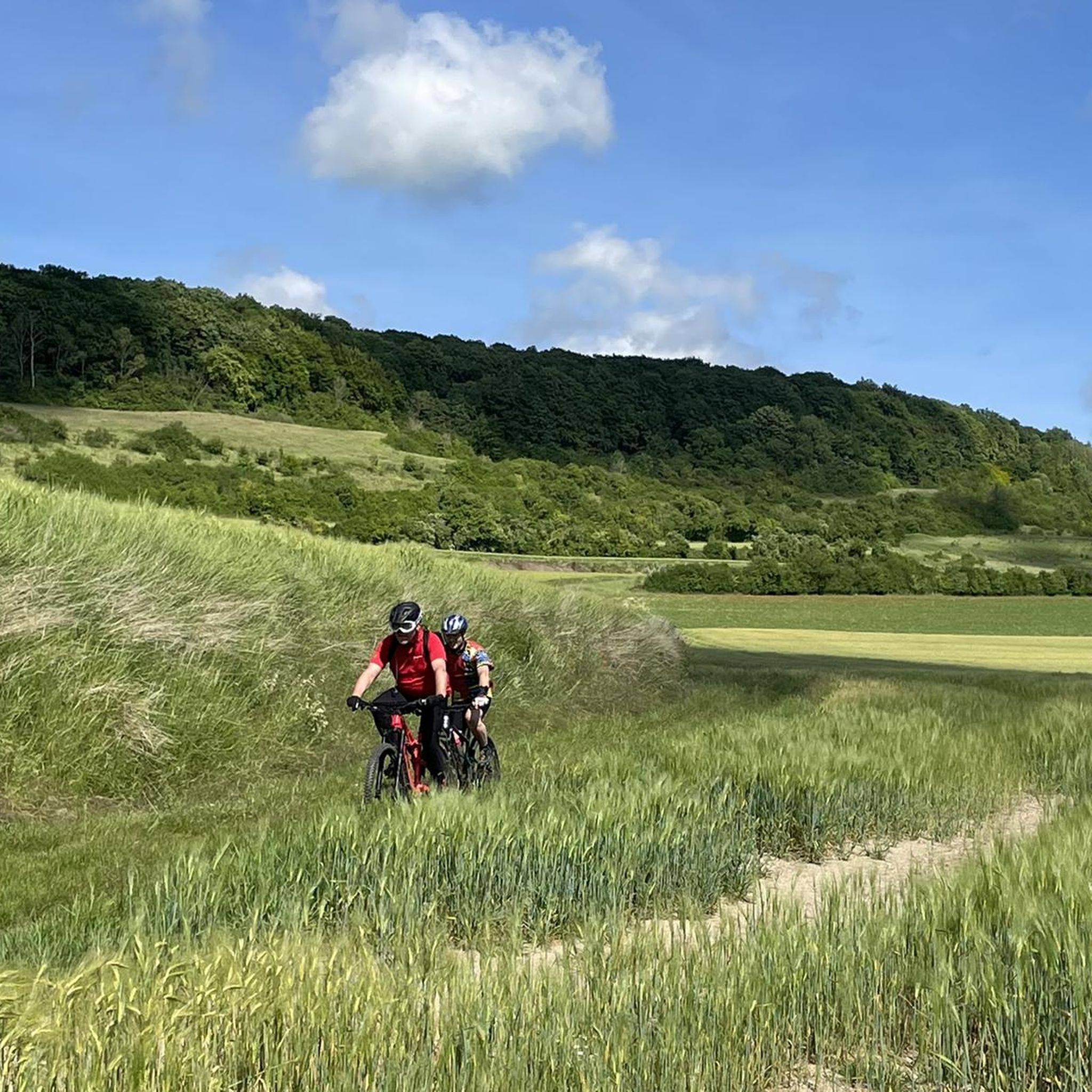
Super Vince, happy to have found this track, and to share it, so that we can ride on some great spots !!. Thank you for your tracks that I will detail well so I can ride in your turn!
0
1
Frequently Asked Questions
What kind of historical sites can I explore in Villy-sur-Yères?
Villy-sur-Yères offers a rich historical tapestry. You can visit the V1 Launch Site of Guerville, a significant World War II memory site. The village also features the twelfth-century Church of St. Martin and the sixteenth-century Church of St. Aquilin, both with deep historical roots. Additionally, you can find the ruins of an old priory and the ancient Gallo-Roman city of Briga, where excavations are still ongoing.
Are there opportunities for nature and wildlife observation in the area?
Yes, the region is rich in natural beauty. The Marais de Gousseauville is a natural reserve with diverse flora and fauna, including water lilies, reeds, willows, and various bird species. The Yères River and Valley are known for unspoiled wilderness and biodiversity, particularly the Lower Yères Valley and Mount Jolibois, which are recognized for their ecological interest and bird habitats.
What are some family-friendly attractions in Villy-sur-Yères?
Families can enjoy several attractions. The Touffreville-sur-Eu Viaduct on the Dieppe-Le Tréport Greenway is a great spot for walks with panoramic views. The Site of Queen Mother Elizabeth offers a historical context within a forest setting, with facilities like tables and benches. The Marais de Gousseauville also provides an easy trail suitable for all walking levels, perfect for observing nature.
Where can I find scenic viewpoints around Villy-sur-Yères?
For breathtaking views, head to the Touffreville-sur-Eu Viaduct, which offers a 360-degree aerial panorama over the Yères Valley. The Val du Roy hiking circuit, starting from the Church of St. Martin, also provides beautiful panoramic views from its eastern slopes. The Site of Queen Mother Elizabeth is another starting point for a walking tour with views of the Yères Valley.
Are there any easy walking or hiking trails suitable for beginners?
Yes, the region offers several accessible options. The Val du Roy hiking circuit is a marked itinerary that allows visitors to discover the scenic Yères Valley. The Marais de Gousseauville features an easy-to-follow trail suitable for all walking levels. Additionally, the Chemin Vert du Petit Caux, a converted railway line, provides a gentle path for walking.
What outdoor activities are available besides hiking?
Beyond hiking, the Yères River is a Category 1 fishing ground, making it ideal for anglers. The area is also excellent for cycling. You can explore various routes, including road cycling, touring bicycle routes, and gravel biking trails. For example, there are road cycling routes like the "Water mill loop from Sept-Meules" and touring routes such as the "Normandy – Architecture balnéaire loop from Guerville." You can find more details on these activities in the Road Cycling Routes around Villy-Sur-Yères, Cycling around Villy-Sur-Yères, and Gravel biking around Villy-Sur-Yères guides.
What do visitors particularly enjoy about the attractions here?
Visitors frequently praise the blend of history and nature. Many appreciate the panoramic views from the Touffreville-sur-Eu Viaduct and the historical significance of sites like the V1 Launch Site of Guerville. The tranquility and rich biodiversity of places like the Marais de Gousseauville are also highly valued, offering a peaceful escape and opportunities for wildlife spotting.
Is the area suitable for cycling?
Absolutely! The region is very suitable for cycling, especially with the Chemin Vert du Petit Caux, a converted railway line that includes the impressive Touffreville-sur-Eu Viaduct. There are numerous routes for various cycling styles, including road cycling, touring, and gravel biking. You can explore guides like Cycling around Villy-Sur-Yères for detailed routes.
What is the best time of year to visit Villy-sur-Yères for outdoor activities?
The region's natural landscapes and trails are enjoyable throughout the warmer months, typically from spring to autumn. These seasons offer pleasant weather for hiking, cycling, and exploring historical sites. While specific winter activities are not highlighted, the forest areas remain beautiful for walks, though some facilities might have reduced hours.
Are there any accessible attractions for visitors with mobility concerns?
While specific wheelchair accessibility details for all sites are not extensively provided, the Chemin Vert du Petit Caux, being a converted railway line, generally offers a flatter and wider path, which can be more accessible than traditional hiking trails. The Site of Queen Mother Elizabeth also features comfort and information facilities, suggesting a more developed and potentially accessible environment.
Are dogs allowed at the attractions?
Many outdoor areas and trails in Villy-sur-Yères, such as the Chemin Vert du Petit Caux and the Val du Roy hiking circuit, are generally dog-friendly, especially if kept on a leash. However, it's always recommended to check specific rules for individual historical sites or nature reserves like the Marais de Gousseauville before visiting to ensure compliance with local regulations.
Can I find any unique or lesser-known spots to visit?
Beyond the main highlights, the ruins of an old priory nestled amidst a field offer a quiet glimpse into the village's ancient past. The ongoing restoration efforts and aspirations to transform the Church of St. Aquilin into a local museum also present a unique, evolving cultural experience. Exploring the smaller paths within the Yères Valley can also lead to hidden natural gems.
Most popular routes around Villy-Sur-Yères
Most popular attractions around Villy-Sur-Yères

Get inspired with the komoot mobile app


Explore more
Still not found the Highlight you’re looking for? See guides of the top attractions in other regions:
