The best road cycling routes around Viel-Saint-Remy
4.4
(17)
403
riders
131
rides
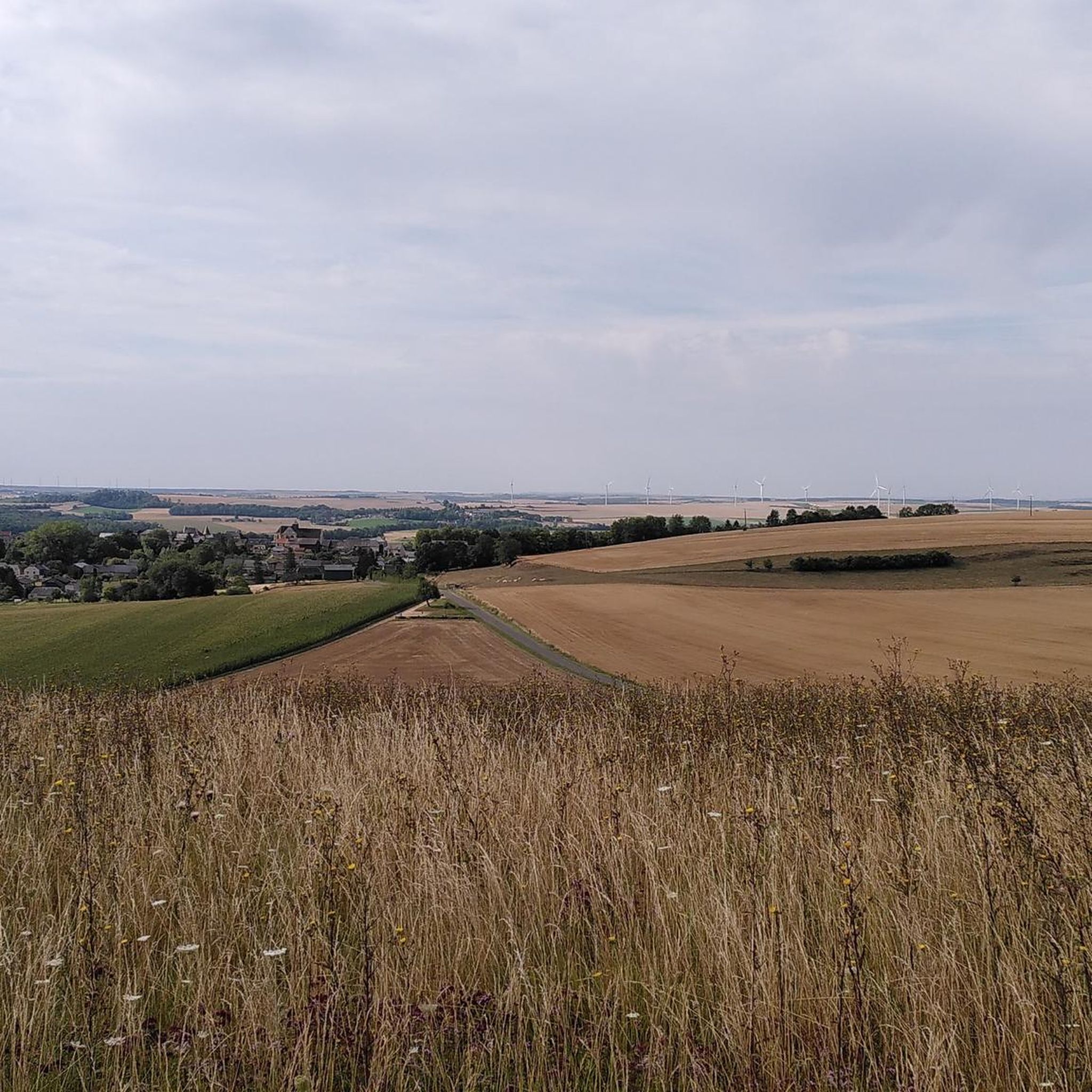
Road cycling routes around Viel-Saint-Remy traverse a landscape characterized by rolling hills and rural roads, offering varied terrain for cyclists. The region features a network of paved routes that connect small villages and agricultural areas. Road cycling around Viel-Saint-Remy is defined by these agricultural landscapes and quiet country roads, providing options for different skill levels.
Best road cycling routes around Viel-Saint-Remy
- The most popular road cycling route is Charleville-Mézières Town Hall – Passerelle Bayard loop from Faissault, a 39.9…
Last updated: November 1, 2026
10
riders
26.8km
01:09
210m
210m
Easy road ride. Mostly well-paved surfaces and easy to ride.
5.0
(3)
10
riders
Moderate road ride. Good fitness required. Mostly well-paved surfaces and easy to ride.

5
riders
40.6km
01:50
390m
390m
Moderate road ride. Good fitness required. Some segments of this route may be unpaved and difficult to ride.
5
riders
42.4km
01:51
310m
310m
Moderate road ride. Good fitness required. Some segments of this route may be unpaved and difficult to ride.
4
riders
60.4km
03:05
900m
900m
Hard road ride. Very good fitness required. Mostly well-paved surfaces and easy to ride.
Get access to more routes and recommendations from other explorers.
Already have an account?
Our route recommendations are based on thousands of hikes, rides, and runs completed by other people on komoot.
Start today with a free account
Your next adventure awaits.


Tips from the Community

The beautiful and strikingly modern town hall of the Mezières district. The adjacent forecourt was traffic-calmed a few years ago. There's also a drinking water fountain in the southwest corner of the square.
0
0

The original stained glass windows disappeared during bombings in 1815, 1870 and 1918. Today the basilica has an exceptional collection of contemporary stained glass windows, created between 1954 and 1979 by René Dürrbach, a friend of Picasso. Over 25 years, this artist has created a colossal set of 68 stained glass windows, unique in Europe, which honor the former 'Black Virgin' and the 'Virgin of Light' by referring to the universal symbols of colors, shapes and numbers, inspired through his collaboration with Henri Giriat. Since 2018, the former sacristy of the church has housed the Trésor d'art sacré des Ardennes, which contains around fifty masterpieces (ancient statues, precious relics, etc.) that were previously inaccessible to the public.
7
0
The construction of the Basilica of Notre-Dame-d'Espérance took more than a century between 1499 and 1615. The work was interrupted several times, for example during the siege of Mézières in 1521. The building is listed as a monument and is a masterpiece of the flamboyant gothic. However, the main portal and the tower break with the Gothic style and are built in Renaissance style, recognizable by the round arch and the coffers in the vault. The bell tower was built in the 19th century. The south portal is particularly opulent. King Charles IX and Elisabeth of Austria, grandniece of Charles V, entered through this door in 1570 for their wedding ceremony, even though the construction of the church had not yet been completed. The choice of Méeières had a strong symbolic value: reconciliation could be achieved through this strategic alliance.
7
0
Attention here is drawn to the mechanical giant - Grand Marionnettiste - located between the Musée de l'Ardenne and the Institut International de Marionnette. This mechanical clock plays an excerpt from the Ardennes legend of the Four Heemskinderen every hour between 10:00 and 21:00.
8
0
The street-art collective Créative color, under the guidance of artists Mehdi Amghar and Antoine Maquet, has undertaken a new fresco on the west facade of the Parc clinic, in Charleville-Mézières. The fresco, which represents the profile of a caregiver wearing a mask, can be seen from Cours Briand.
9
0
The statue of Carlo Gonzaga is the work of Alphonse Colle, from Charleville, who also created the monuments to the fallen of Charleville and Mézières. The fountain was first built on Place Ducale in 1899 at the initiative of a wealthy patron of the Industrial Revolution and then moved to its current location in 1999.
10
0
The “Monument aux Morts” in Mézières, now part of Charleville-Mézières, is a memorial that pays tribute to the 397 inhabitants of the city who died for France. The monument is located on the Place de l'Hôtel de Ville, near the Hôtel de Ville de Mézières.
10
0
The Hôtel de Ville de Mézières, was rebuilt after the bombings of November 1918 and construction was completed in 1930. The facade of the building contains elements of medieval, Renaissance and Baroque architecture. The interior of the Town Hall reveals a neo-Baroque decoration. In 1966, the municipality of Charleville-Mézières was created by the merger of several municipalities, making the Hôtel de Ville de Mézières the town hall of Charleville-Mézières. The town hall is located on Place de l'Hôtel de Ville, which was completely renovated and modernized between 2018 and 2020. It is an impressive building that reflects Charleville-Mézières' status as a department capital.
10
0
Frequently Asked Questions
How many road cycling routes are available around Viel-Saint-Remy?
There are over 120 road cycling routes in the Viel-Saint-Remy area, offering a wide range of options for different skill levels and preferences.
What is the general difficulty level of road cycling routes in Viel-Saint-Remy?
The routes around Viel-Saint-Remy cater to various abilities. You'll find 14 easy routes, 98 moderate routes, and 9 more challenging options, ensuring there's something for every cyclist.
Are there any easy road cycling routes suitable for beginners or families?
Yes, there are 14 easy road cycling routes around Viel-Saint-Remy. A good option for a more relaxed ride is the Roadbike loop from Launois-sur-Vence, which is 16.6 miles (26.7 km) long and leads through agricultural fields and small villages.
What are some typical distances and durations for road cycling routes in this region?
Route distances vary, but many popular rides are in the 20-25 mile (30-40 km) range. For example, the Roadbike loop from Barbaise is 22.5 miles (36.2 km) and typically takes around 1 hour 42 minutes, while the La Bascule – Woinic, The Giant Boar loop from Saulces-Monclin is 25.2 miles (40.6 km) and takes about 1 hour 50 minutes.
Are there circular road cycling routes available?
Yes, many of the road cycling routes around Viel-Saint-Remy are designed as loops, allowing you to start and finish at the same point. Examples include the Roadbike loop from Barbaise and the Halle de Wasigny – Mesmont Castle loop from Novion-Porcien.
What kind of terrain can I expect on road cycling routes around Viel-Saint-Remy?
The region is characterized by rolling hills and quiet rural roads. You'll encounter varied terrain, including moderate climbs and descents, as routes traverse agricultural fields and connect small villages.
What can I see along the road cycling routes in Viel-Saint-Remy?
The routes offer views of the surrounding rural landscape and pass by local landmarks. Notable attractions include the Halle de Wasigny, the Basilica of Neuvizy, and the Oratory of the Virgin of Froidmont. You might also pass through charming villages like Signy-l'Abbeye.
When is the best season for road biking in Viel-Saint-Remy?
The spring, summer, and early autumn months generally offer the most pleasant conditions for road cycling in Viel-Saint-Remy, with milder temperatures and vibrant landscapes. Always check local weather forecasts before heading out.
What do other road cyclists enjoy most about road cycling in Viel-Saint-Remy?
The area is highly rated by the komoot community, with an average score of 4.3 stars from more than 10 reviews. Cyclists often praise the quiet country roads, the varied terrain of rolling hills, and the scenic agricultural landscapes.
Are there any longer or more challenging road cycling routes for experienced riders?
Yes, for experienced riders seeking more challenge, there are 9 difficult routes available. Routes like the Halle de Wasigny – Mesmont Castle loop from Novion-Porcien, at 26.9 miles (43.4 km) with significant elevation gain, offer a good workout.
Can I find routes that pass by specific landmarks or points of interest?
Many routes are designed to showcase local points of interest. For instance, the Wagnon Water Fountain – Woinic, The Giant Boar loop from Viel-Saint-Remy passes by the notable Woinic, The Giant Boar landmark.
Most popular attractions around Viel-Saint-Remy

Get inspired with the komoot mobile app


Explore more
Browse the best Road cycling routes in other regions.
