Attractions and Places To See around Saint-Juvin - Top 19
Attractions and places to see around Saint-Juvin offer a blend of historical landmarks and natural beauty within the Ardennes department of France. The commune is characterized by its distinctive fortified church and a picturesque landscape of lush vegetation, winding rivers, verdant forests, and rolling hills. This region provides opportunities to explore historical sites and engage with the natural environment.
Best attractions and places to see around Saint-Juvin
- The most popular attractions is Château de Grandpré, a castle that was…
Last updated: June 24, 2026
Meuse-Argonne American Cemetery
Highlight • Other
Translated by Google •
Tip by

Grandpré
Highlight • Other
Translated by Google •
Tip by
Sign up now to discover places like this
Get recommendations on the best single tracks, peaks, & plenty of other exciting outdoor places.
Sign up for free
Sergeant York trail
Highlight • Other
Tip by

Château de Grandpré
Highlight • Castle
Translated by Google •
Tip by
Deutscher Soldatenfriedhof
Highlight • Other
Translated by Google •
Tip by
Sign up for free to discover even more attractions around Saint-Juvin.
Sign up for free
Already have an account?
Start today with a free account
Your next adventure awaits.
Login or Signup



Tips from the Community

In his address on Remembrance Day in 2015, then-President Joachim Gauck expressed some thoughts that I would like to offer visitors to this war cemetery/military cemetery for reflection: "This... is our shared hope: that the memory of the suffering of war will not breed revenge, but will lead more and more people and nations to seek a way out in peaceful coexistence. Just as European integration succeeded in becoming the great peace project of our continent. (...) That military cemeteries, as Albert Schweitzer once said, may finally become the great preachers of peace. Then, as we have experienced, reconciliation over the graves will be possible. Then peace can be lasting. We all share this responsibility."
2
0

This serene cemetery contains 1,111 individual graves of German soldiers who died in the Argonne Forest during the First World War. Created in November 1915, it is the only German cemetery in the region that has been largely preserved in its original state. Of particular note is the gravestone of Commander Baron von Müllenheim-Rechberg, who died in 1916, and the monument to the 27th Landwehr Regiment. Since 2023, the site has been part of the UNESCO World Heritage as part of the World War I Memorial Sites.
9
0
The American military cemetery in Romagne-sous-Montfaucon contains the graves of 14,246 soldiers who died during the First World War in northwest France. It is the largest American military cemetery in Europe. The cemetery site is located in the old front line of the Meuse-Argonne offensive that took place between September 26 and November 11, 1918. The plot of land was used as a cemetery on October 14, 1918 after it had been occupied by the American forces just before. 32nd Infantry Division. The site was given on permanent loan to the US by the French government. The 14,246 graves are spread over eight fields. There are lime trees surrounding the fields, the fields themselves are covered with grass. Each grave has its own stone. For Jewish graves, the top of the stone is shaped like a Star of David. The text on each stone states the soldier's name, rank, division, state and date of death. Of the 14,246 graves, 486 soldiers have not been identified. The stones of the unidentified soldiers bear the text: Here rests in honored glory an American soldier known but to god. On the south side of the cemetery is a memorial building, designed by the architectural firm York and Sawyer from New York. The center of the memorial gives access to a chapel containing the flags of the US and the other allied countries. The stained glass windows show the insignia of the various divisions that operated in the region. The two loggias outside the chapel display the names of 954 missing soldiers. The visitors building is located on the north side of the cemetery. There is a book here in which a visit can be registered. The entrance to the cemetery, both on the west and east sides, is 'guarded' by two white towers with the American eagle on top. There is a large pond in the middle of the site. The maintenance and management of the cemetery is the responsibility of the American Battle Monuments Commission.
5
0
The Castle of Grandpré is located in Grandpré, in the Ardennes, France. It was built by the Joyeuse, Counts of Grandpré, at the end of the 16th century and the beginning of the 17th century. For a long time, the place has been strategically located on the northern slope of the Aire valley, controlling one of the rare passages that cross the Argonne forest. This is the Grandpré passage.
7
0
Grandpré is a commune in the French department of Ardennes, in the Grand Est region. It has about 500 inhabitants and an area of 32.67 km². It is located on the River Aire and is part of the canton of Attigny. Grandpré has a rich history, dating back to the Middle Ages. It was an important city in Champagne, which became a county and later a duchy. It had a castle, an abbey and a fortified wall, testifying to its power and influence. One of the sights is the Église Saint-Médard, a Gothic church from the 13th century, decorated with stained glass windows and sculptures. Grandpré was also the scene of fierce fighting during the First World War. It was occupied by the Germans in 1914 and later liberated by the Americans in 1918. The village was largely destroyed by bombing and artillery. One of the monuments that commemorate this period is the Monument aux Morts, a memorial to the fallen soldiers, designed by the sculptor Paul Moreau-Vauthier. Grandpré is a quiet and charming place where you can enjoy nature and the rural atmosphere. You can walk, cycle, fish or taste the local gastronomy. One of the specialties is the boudin blanc, a white sausage made from pork, cream and spices.
5
0

Alvin Cullum York (December 13, 1887 – September 2, 1964), also known as Sergeant York, was one of the most decorated United States Army soldiers of World War I.[1] He received the Medal of Honor for leading an attack on a German machine gun nest, gathering 35 machine guns, killing at least 25[2] enemy soldiers and capturing 132 prisoners. York's Medal of Honor action occurred during the United States-led portion of the Meuse-Argonne Offensive in France, which was intended to breach the Hindenburg line and force the Germans to surrender. He earned decorations from several allied countries during WWI, including France, Italy and Montenegro.
0
0

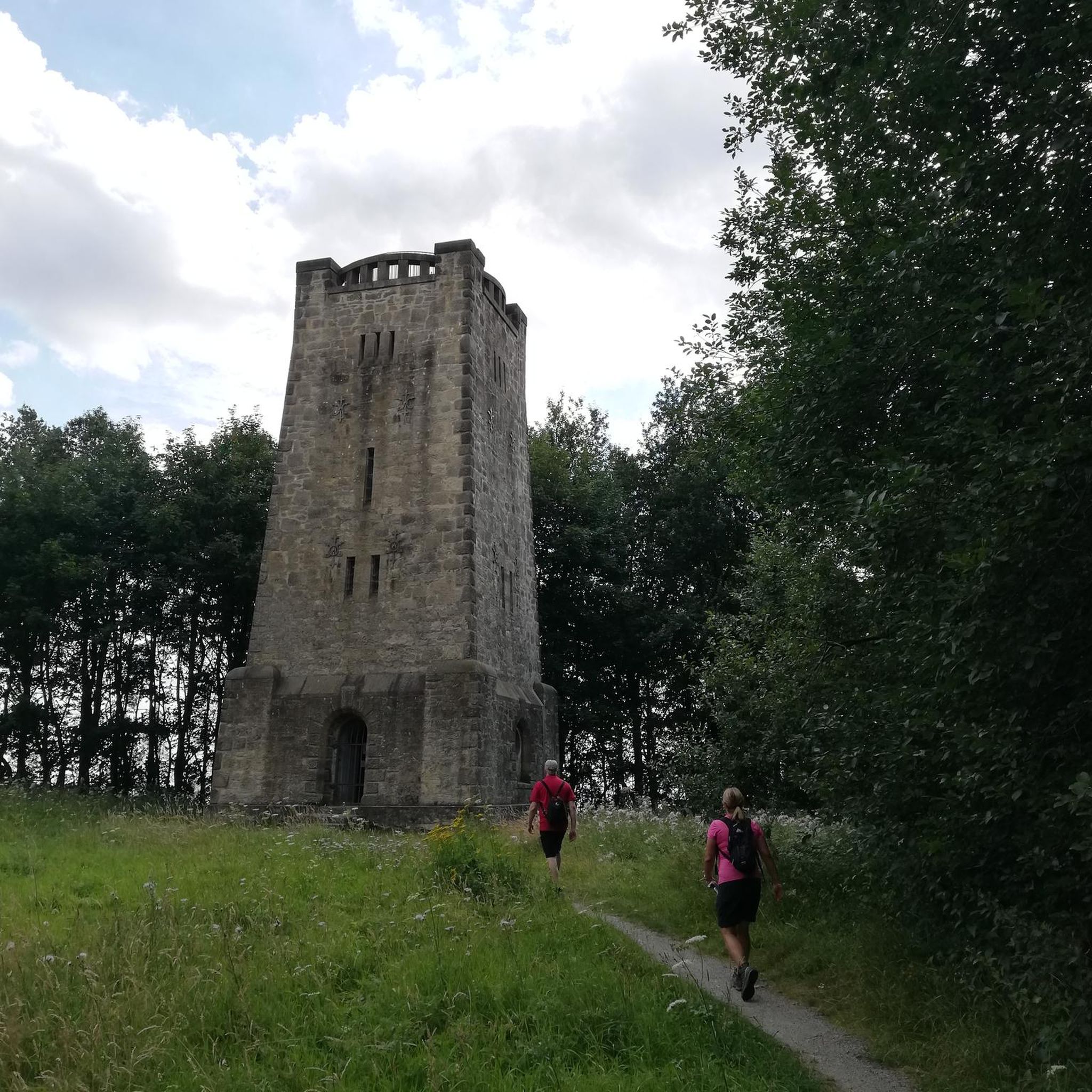
The old castle of the place, unfortunately closed.
2
0
Frequently Asked Questions
What historical sites can I visit in and around Saint-Juvin?
Saint-Juvin is rich in history. The most significant landmark is the Fortified Church of Saint-Juvin, built between 1615 and 1624, which resembles a small fortress. You can also visit the Meuse-Argonne American Cemetery, the largest American military cemetery in Europe, and the Deutscher Soldatenfriedhof, a German military cemetery, both commemorating World War I. The Château de Grandpré, a strategically located castle, also offers a glimpse into the region's past.
Are there any natural attractions or scenic viewpoints near Saint-Juvin?
Yes, the area around Saint-Juvin boasts natural beauty. You can find the peaceful Lac aux Canards, accessible via a guided hike, which is ideal for observing waterfowl. For panoramic views, head to the Rocher du Corbeau, a rocky summit reachable by mountain bike. The Bois du Val offers forest trails perfect for exploring the local flora and fauna.
What kind of outdoor activities can I do around Saint-Juvin?
The scenic region around Saint-Juvin is perfect for various outdoor activities. You can explore numerous trails for hiking, cycling, and gravel biking. For specific routes and their difficulties, check out the Road Cycling Routes around Saint-Juvin, Gravel biking around Saint-Juvin, and Cycling around Saint-Juvin guides. The Saint-Juvin Nature Trail is also an excellent way to discover the natural treasures of the area.
Are there family-friendly activities available in Saint-Juvin?
While specific family-focused attractions are not detailed, the natural environment of Saint-Juvin offers opportunities for family outings. Gentle walks along the Saint-Juvin Nature Trail or a visit to Lac aux Canards to observe wildlife can be enjoyable for families. The picturesque village itself is also pleasant to explore.
Can I visit the Fortified Church of Saint-Juvin?
Yes, the Fortified Church of Saint-Juvin is open to the public. It is typically accessible daily from April to October, and on weekends from November to March. Guided tours can be arranged by appointment. This historical monument is a prime example of the fortified churches in the Argonne region.
What is the 'Sergeant York trail' and where is it located?
The Sergeant York trail commemorates Alvin Cullum York, one of the most decorated United States Army soldiers of World War I. His Medal of Honor action occurred during the Meuse-Argonne Offensive in France. The trail is located in the region where these historical events took place, offering a poignant journey through a significant battlefield.
What is the best time of year to visit Saint-Juvin for outdoor activities?
The region's lush vegetation, winding rivers, and forests make it ideal for outdoor activities, especially during spring and autumn. The weather during these seasons is typically mild, which is perfect for hiking the Saint-Juvin Nature Trail or exploring other natural features like Lac aux Canards and Rocher du Corbeau.
Are there any other notable towns or attractions within easy reach of Saint-Juvin?
Yes, several notable sites are within easy reach. The historically significant city of Verdun, known for its war memorials, is approximately 38 km away. Sedan, another popular place to visit, is about 41 km from Saint-Juvin. Closer by, you can find the Château de Montcornet and the Chapelle Notre-Dame-de-Pitié, both offering scenic views and hiking opportunities.
Where can I find information about hiking trails near Saint-Juvin?
Saint-Juvin is surrounded by a scenic landscape ideal for hiking. You can discover the natural treasures of the area via the Saint-Juvin Nature Trail. For more detailed information on various routes, including distances and difficulty, you can explore the Cycling around Saint-Juvin guide, which also covers paths suitable for walking.
What is the significance of Grandpré in the region?
Grandpré is a commune with a rich history, dating back to the Middle Ages. It was once an important city in Champagne and featured a castle, an abbey, and a fortified wall. The Château de Grandpré is a key historical site there. Grandpré was also significantly impacted during the First World War, with monuments like the Monument aux Morts commemorating the fallen soldiers.
Are there places to eat or stay in Saint-Juvin?
While specific cafes, pubs, or restaurants within Saint-Juvin are not detailed, the nearby commune of Grandpré offers shops, a bank, and a bar, providing options for visitors. For accommodation, it's advisable to check local listings in Saint-Juvin or surrounding villages.
What is the Meuse-Argonne American Cemetery?
The Meuse-Argonne American Cemetery is the largest American military cemetery in Europe, containing the graves of 14,246 soldiers who died during the First World War in northwest France. It is located on the old front line of the Meuse-Argonne offensive. The site features a memorial building with a chapel and lists the names of missing soldiers.
Most popular routes around Saint-Juvin

Get inspired with the komoot mobile app


Explore more
Still not found the Highlight you’re looking for? See guides of the top attractions in other regions:
