The best road cycling routes around Saint-Cyr-La-Rosière
4.2
(12)
307
riders
120
rides
Road cycling routes around Saint-Cyr-La-Rosière are situated within the Perche Natural Regional Park, characterized by its undulating terrain and quiet country roads. The area features rolling hills, extensive woodlands, and a rural landscape dotted with traditional farmhouses. These routes are predominantly on asphalt, offering varied challenges for road cyclists.
Best road cycling routes around Saint-Cyr-La-Rosière
- The most popular road cycling route is Notre-Dame Church – Porte Saint Julien loop from Saint-Germain-de-la-Coudre, a 30.2 miles (48.6 km) trail that takes…
Last updated: July 2, 2026
7
riders
Moderate road ride. Good fitness required. Mostly well-paved surfaces and easy to ride.
6
riders
78.1km
03:25
710m
710m
Moderate road ride. Good fitness required. Mostly well-paved surfaces and easy to ride.

Sign up for free
7
riders
47.7km
02:04
380m
380m
Moderate road ride. Good fitness required. Some segments of this route may be unpaved and difficult to ride.
3
riders
30.7km
01:21
240m
240m
Easy road ride. Great for any fitness level. Mostly well-paved surfaces and easy to ride.
4
riders
107km
04:52
1,230m
1,230m
Hard road ride. Very good fitness required. Mostly well-paved surfaces and easy to ride.
Get access to more routes and recommendations from other explorers.
Sign up for free
Already have an account?
Our route recommendations are based on thousands of hikes, rides, and runs completed by other people on komoot.
Start today with a free account
Your next adventure awaits.
Login or Signup


Tips from the Community

Detailed information is available on Wikipedia: https://fr.wikipedia.org/wiki/Porte_Saint-Julien_(La_Fert%C3%A9-Bernard)
0
0

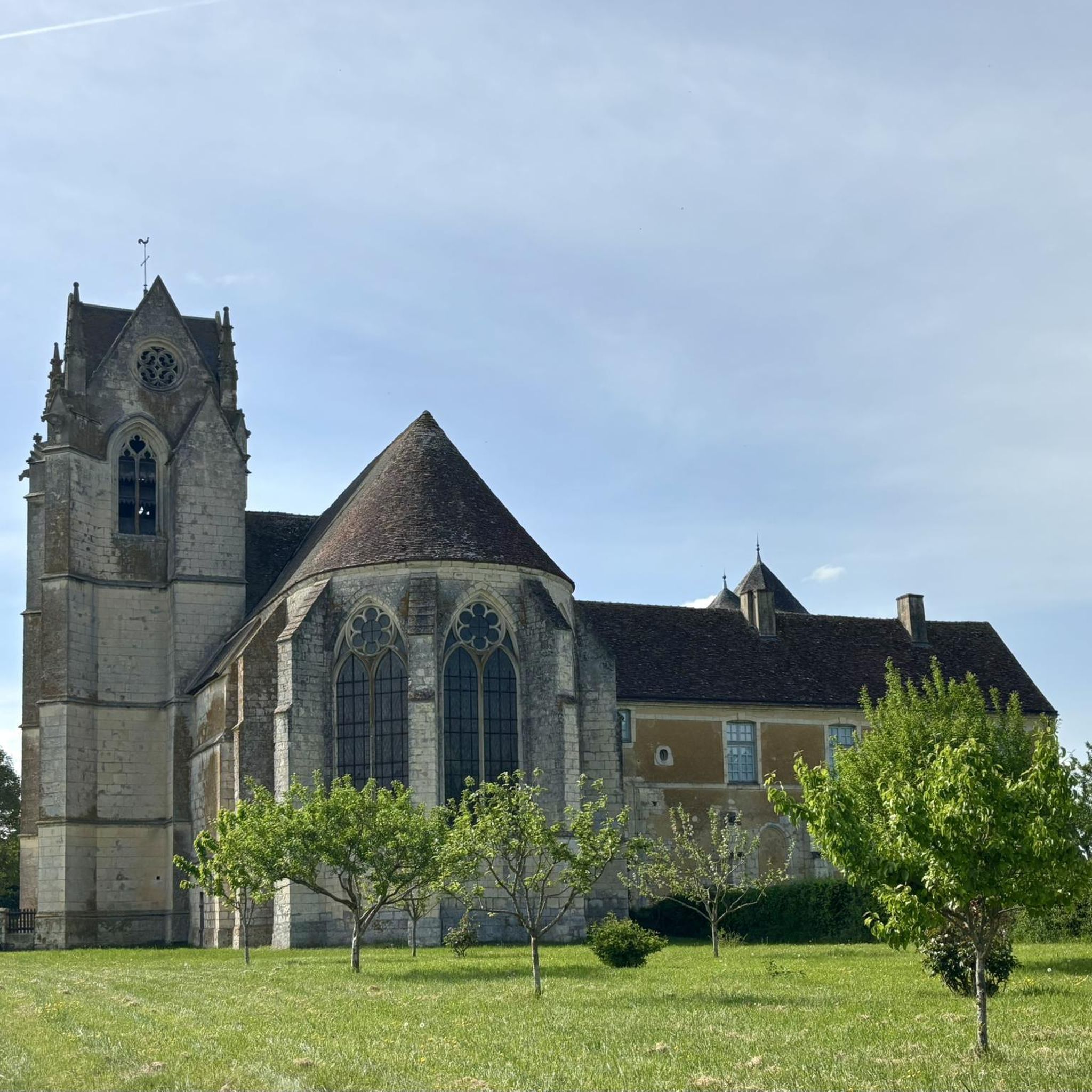
From the 11th century, only the lower part of the bell tower remains. The church was rebuilt in the 14th century in the Gothic style. Since then, the church has undergone only partial alterations and restorations. Church with an elongated plan. Nave flanked by two side aisles. Polygonal chevet flanked by a small building. Bell tower flanking the left side aisle with a double gable roof topped by an octagonal spire. Pointed arch portal with voussoirs, surmounted by a polylobed rose window. Pointed arch bays. Buttresses flanking the building.
0
0

The church has a Latin cross plan. It has a single nave and a flat chevet. A small building is attached to the chevet. A bell tower flanks the building. Buttresses support the drip walls and the gable wall. Pointed arch bays with tracery illuminate the building. The portal, in a low arch, has its external arched voussure.
0
0
Church built in the 12th and 16th centuries. Listed apse from the 12th century. 4-storey bell tower. Corner buttress bell with staircase turret. Renaissance portal. Large Gothic window above the portal. 16th century roof and nave. Stone statue of a bishop, 16th century paintings.
0
0
The Saint-Martin church, listed as a Historic Monument, is located in Nocé, Normandy. It was probably built in the 12th century near the ruined and abandoned Nocé castle after the Hundred Years' War. Originally, the church was surrounded by a cemetery that was moved in the 18th century. In the 15th century, the walls were razed and the Romanesque framework of the nave replaced by a new paneled framework. In the 16th century, after the troubles of the Hundred Years' War, the building was modified: a single large roof was built in place of the various previous volumes and the framework was transformed, a new chapel was added against the south facade and a stone bell tower was built to the right of the nave. This tower, square from base to top, stands twenty meters high. The church is composed of a rectangular nave, three bays and a choir with a Romanesque semicircular chevet. A succession of three chapels opens a side aisle separated from the nave by pillars. The chapels are covered with ribbed vaults. A sacristy is fitted out behind the church. Note the altarpiece and the tabernacle in painted and gilded wood with steps, installed in the choir and lit by two bays with tracery, a painting presenting the disciples of Emmaus and one of the Annunciation, as well as a polychrome terracotta statue and a stone statue of Saint Madeleine without forgetting a stone statue of Our Lady of Pity.
0
0

Very beautiful start to the route with an arrival at this magnificent mill
2
0
Latin cross plan with one nave. Bell tower rising at the corner of one of the side walls of the nave and one of the arms of the transept. Very simple front facade: semi-circular portal and oculus. Gable of the north arm of the transept pierced with a broken bay with tracery. Church built in the 16th century. A bay dates back to the 11th century; the north chapel dates from the 16th century; church remodeled in the 17th century
0
0
Frequently Asked Questions
How many road cycling routes are available around Saint-Cyr-La-Rosière?
There are over 120 road cycling routes available around Saint-Cyr-La-Rosière. These routes are predominantly on asphalt and wind through the picturesque Perche Natural Regional Park.
What is the typical terrain like for road cycling in this region?
The terrain around Saint-Cyr-La-Rosière is characterized by undulating landscapes and rolling hills, providing a dynamic cycling experience. You'll find countless small country roads with very little traffic, entirely on asphalt, making them ideal for road bikes. The routes often pass through woodlands and lush countryside.
What are the difficulty levels of road cycling routes in Saint-Cyr-La-Rosière?
The routes cater to various fitness levels. You can find 26 easy routes for a relaxed ride, 89 moderate routes offering varied challenges, and 7 difficult routes for those seeking significant elevation gains and more strenuous cycling.
What historical sites or landmarks can I see while road cycling near Saint-Cyr-La-Rosière?
Many routes pass by historical and cultural points of interest. You might encounter the Ecomuseum of the Perche, housed in the former Sainte-Gauburge priory, the 14th-century Chapel of Clémence, or the Neolithic La Pierre Procureuse Dolmen. Other notable sites include the 12th-century Church of Saint-Cyr and Sainte-Julitte, and the 16th-century Langenardiere Manor. You can also explore nearby towns like Bellême, or visit the Relais du Roi Saint Louis.
Are there any scenic viewpoints or natural features to look out for?
Yes, the entire region is within the Perche Natural Regional Park, offering serene and verdant landscapes. Cyclists can enjoy views of traditional country estates, farmhouses, and apple orchards. The rolling hills provide rewarding vistas, and many routes offer shaded sections through woods and oak trees, particularly appealing during warmer months.
What do other road cyclists enjoy the most about road cycling in Saint-Cyr-La-Rosière?
The area is highly rated by the komoot community, with an average score of 4.1 stars from over 10 reviews. Cyclists often praise the quiet country roads, the beautiful undulating terrain, and the immersive experience within the Perche Natural Regional Park.
Are there family-friendly road cycling routes in the area?
Yes, among the 120+ routes, there are 26 easy routes that are generally suitable for families. These routes typically have less elevation gain and are on well-paved, low-traffic roads, allowing for a more relaxed cycling experience for all ages.
What is the best time of year for road cycling in the Perche Natural Regional Park?
Spring and autumn generally offer the most pleasant conditions for road cycling in the Perche Natural Regional Park, with mild temperatures and beautiful scenery. Summer can also be enjoyable, especially on routes that pass through shaded woodlands. Always check the local weather forecast before heading out.
Are there any circular road cycling routes available?
Many of the road cycling routes around Saint-Cyr-La-Rosière are designed as loops, allowing you to start and finish at the same point. For example, the Notre-Dame Church – Porte Saint Julien loop from Saint-Germain-de-la-Coudre is a popular circular option.
Can I find routes that offer significant elevation challenges?
Absolutely. While the region is known for its rolling hills, there are routes designed for cyclists seeking more significant climbs. For instance, the Porte Saint Denis – Saint Germain de Loisé loop from Perche en Nocé is classified as difficult and features substantial elevation gain.
Are there options for longer road cycling tours?
Yes, the region offers longer routes for extended rides. The Château de Montmirail – Porte Saint Julien loop from La Chapelle-Souëf is a moderate 48.5-mile (78.1 km) path, and other routes can extend up to 120 kilometers, providing ample opportunity for longer excursions.
Most popular routes around Saint-Cyr-La-Rosière
Most popular attractions around Saint-Cyr-La-Rosière

Get inspired with the komoot mobile app


Explore more
Browse the best Road cycling routes in other regions.
