The best walks and hikes around Miquelon-Langlade
4.9
(7)
42
hikers
3
hikes
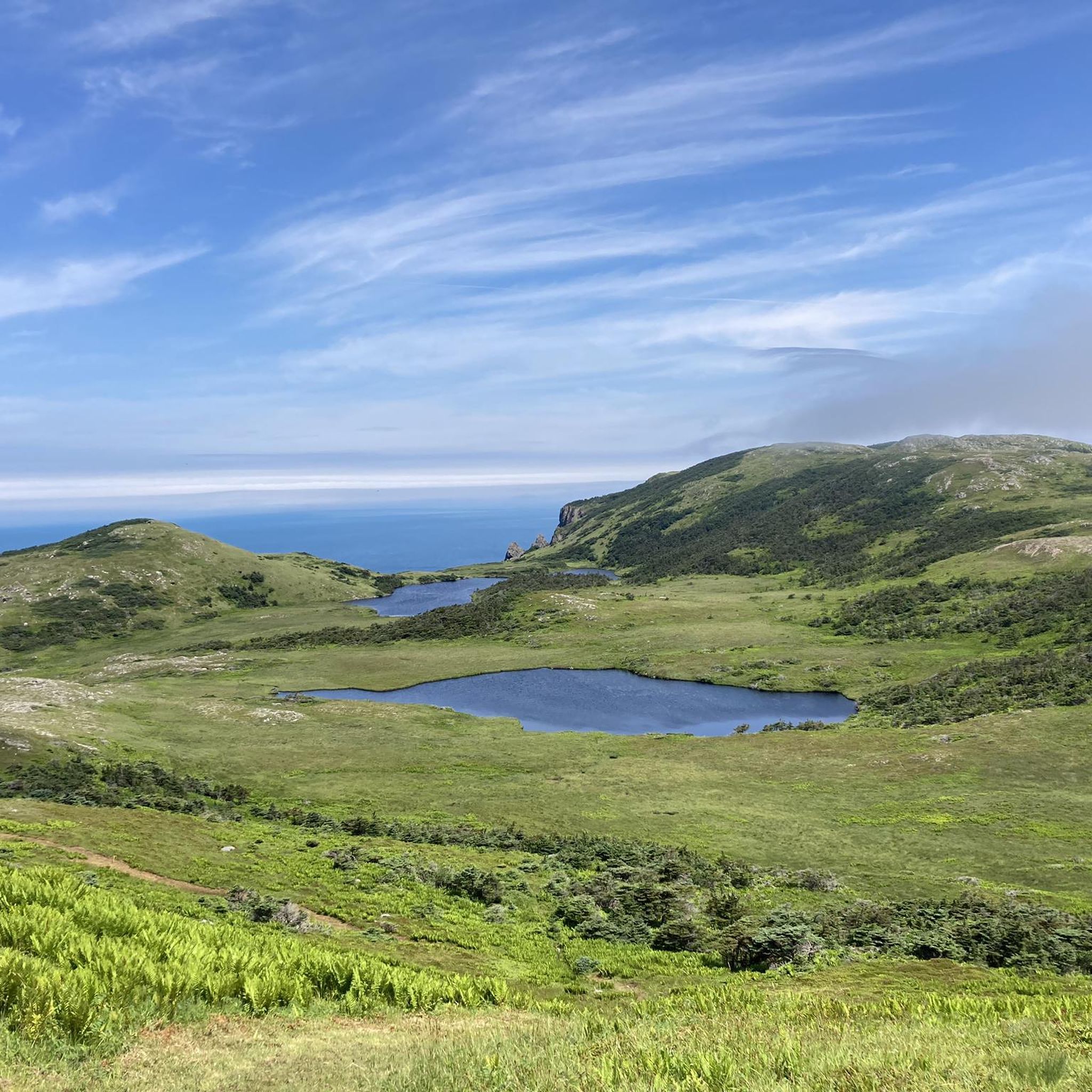
Hiking around Miquelon-Langlade offers diverse landscapes, including the 7.5 mile (12 km) sandy isthmus of La Dune, expansive beaches, and dramatic rocky outcrops. The region features varied terrain from peat bogs and lagoons to high rocky cliffs reaching up to 80 feet (25 meters). Hikers can explore the unique French boreal forest and coastal hills, providing opportunities for wildlife observation.
Best hiking trails around Miquelon-Langlade
- The most popular hiking route is Saint-Pierre Lighthouse – Anse à Henry loop from Saint Pierre Island, an 8.0 miles (12.8 km) trail that takes 3 hours 34 minutes to complete. This moderate route offers coastal views and passes by significant island landmarks.
- Another top favourite among local hikers is Étang de la Cormorandière loop from Le Cap, a moderate 4.8 miles (7.7 km) path. This trail leads through boreal forests and coastal hills, providing varied scenery.
- Local hikers also love the Anse à Henry loop from Ile aux Marins, a 3.4 miles (5.5 km) trail leading through coastal areas, often completed in about 1 hour 34 minutes.
- Hiking around Miquelon-Langlade is defined by coastal paths, unique dune ecosystems, and boreal forests. The network offers options for different ability levels, from easy loops to more challenging moderate routes.
- The routes in Miquelon-Langlade are highly rated by the komoot community with an average score of 4.9 stars from 7 reviews. More than 30 hikers have used komoot to explore Miquelon-Langlade's varied terrain.
Last updated: July 3, 2026
4.7
(3)
9
hikers
12.3km
03:27
240m
240m
Moderate hike. Good fitness required. Easily-accessible paths. Suitable for all skill levels.
5.0
(1)
8
hikers
7.73km
02:16
210m
210m
Moderate hike. Good fitness required. Easily-accessible paths. Suitable for all skill levels.

Sign up for free
5.0
(2)
6
hikers
13.2km
03:44
270m
280m
Moderate hike. Good fitness required. Easily-accessible paths. Suitable for all skill levels.
12
hikers
5.53km
01:35
130m
130m
Easy hike. Great for any fitness level. Easily-accessible paths. Suitable for all skill levels.
3
hikers
7.16km
01:55
80m
80m
Easy hike. Great for any fitness level. Easily-accessible paths. Suitable for all skill levels.
Our route recommendations are based on thousands of hikes, rides, and runs completed by other people on komoot.
Start today with a free account
Your next adventure awaits.
Login or Signup
Popular around Miquelon-Langlade
Tips from the Community

Saint-Pierre and Miquelon is a French overseas territory (Collectivité d'outre-mer, COM). The small archipelago east of the Canadian coast, about 25 kilometers south of Newfoundland, represents the last remnant of the French colony of New France. Saint-Pierre and Miquelon has 6021 inhabitants (as of 1 January 2015). Main occupations of the French-speaking population are fisheries and tourism. The capital is called Saint-Pierre. Source: Wikipedia
0
0
Frequently Asked Questions
What kind of landscapes can I expect to see while hiking in Miquelon-Langlade?
Miquelon-Langlade offers a remarkably diverse range of landscapes. You'll encounter the unique 12-kilometer sandy isthmus of La Dune, expansive beaches, vast dunes, diverse peat bogs, lagoons, and dramatic rocky outcrops. The island is also home to what's described as the only French boreal forest in the world, and its coastline features high rocky cliffs reaching up to 25 meters.
Are there any easy hiking trails suitable for beginners or a relaxed walk?
Yes, Miquelon-Langlade has options for easier walks. For example, the Anse à Henry loop from Ile aux Marins is an easy 5.5 km trail. Another accessible option is the Étang du Fauteuil – Étang du Milieu loop from Saint Pierre Island, which covers about 7.1 km and is also rated as easy.
What are some notable natural features or attractions to look out for on the trails?
Hikers can explore several stunning natural features. La Dune, the sandy isthmus connecting Miquelon and Langlade, is a highlight. The Grand Barachois Lagoon on Miquelon Island is a crucial habitat for seals and other wildlife. Other areas like Le Chapeau, Bute à Saint-Jean, and Cap Percé offer diverse landscapes, panoramic vistas, and dramatic cliffs.
Can I observe wildlife while hiking in Miquelon-Langlade?
Yes, wildlife observation is a significant draw. The Grand Barachois Lagoon is known for its large population of seals. During the summer, you might spot wild horses roaming freely in Langlade, and seabirds are abundant along the coastlines and cliffs. The diverse ecosystems, including peat bogs and boreal forests, support a variety of species.
Are there any circular hiking routes available?
Several routes in Miquelon-Langlade are designed as loops, offering a return to your starting point. Examples include the Saint-Pierre Lighthouse – Anse à Henry loop from Saint Pierre Island, the Étang de la Cormorandière loop from Le Cap, and the Étang du Fauteuil – Étang du Milieu loop from Saint Pierre Island.
What do other hikers say about the trails in Miquelon-Langlade?
The hiking routes in Miquelon-Langlade are highly regarded by the komoot community, with an average rating of 4.9 out of 5 stars. Hikers often praise the unique coastal paths, the diverse dune ecosystems, and the serene boreal forests, noting the variety of scenery and the immersive outdoor experience.
What is the best time of year to go hiking in Miquelon-Langlade?
While specific seasonal recommendations aren't detailed, the region's description of summer wildlife (wild horses, seals) suggests warmer months are ideal for enjoying the full natural spectacle. The diverse terrain, from coastal areas to boreal forests, can be enjoyed across different seasons, but summer typically offers the most pleasant conditions for outdoor activities.
Are there any trails that offer significant elevation or challenging terrain?
While Miquelon-Langlade offers routes for various abilities, some trails feature moderate difficulty with notable elevation changes. For instance, the Anse à Henry – Saint-Pierre Lighthouse loop from Saint Pierre Island involves over 270 meters of ascent, providing a more physically engaging experience. The island's high rocky cliffs and varied geological formations contribute to these more demanding sections.
Where can I find more information about the natural environment and ecosystems of Miquelon-Langlade?
The Nature Interpretation Center is an excellent resource. Beyond being a starting point for tours, it provides valuable insights into the archipelago's natural beauty and ecological heritage, with interactive exhibits on various ecosystems found in the region.
Are there any specific areas known for breathtaking coastal views?
Absolutely. Areas like Bute à Saint-Jean and Cap Percé are celebrated for their spectacular coastal views and dramatic cliffs. The Saint-Pierre Lighthouse – Anse à Henry loop from Saint Pierre Island also offers extensive coastal vistas and passes by significant island landmarks.
What kind of geological features are present in Miquelon-Langlade?
The island has a diverse geology, primarily comprising post-Ordovician volcanic rocks. You can observe rhyolites, breccias, andesites, and basalts, which contribute to the dramatic rocky outcrops and varied terrain found across the hiking areas.
Are there any trails that lead through unique forest environments?
Yes, Miquelon-Langlade is home to what is described as the only French boreal forest in the world. The Étang de la Cormorandière loop from Le Cap, for example, leads through these boreal forests and coastal hills, offering a distinct natural experience.
Most popular routes around Miquelon-Langlade

Get inspired with the komoot mobile app


Explore more
Browse the best Hikes in other regions.
