The best road cycling routes around Theuville
4.2
(16)
419
riders
158
rides
Road cycling routes around Theuville, specifically in the Eure-et-Loir department, traverse the picturesque landscapes of the Centre-Loire Valley. The region is characterized by a blend of forests, open fields, and river valleys, offering varied terrain for road cyclists. Routes often pass through rural areas and charming villages, with proximity to historical sites like Chartres.
Best road cycling routes around Theuville
- The most popular road cycling route is Saint Stephen's Church – Sours church loop from Prunay-le-Gillon, a 20.1 miles…
Last updated: July 2, 2026
12
riders
68.7km
02:45
270m
270m
Moderate road ride. Good fitness required. Mostly well-paved surfaces and easy to ride.
21
riders
62.8km
02:35
220m
230m
Moderate road ride. Good fitness required. Mostly well-paved surfaces and easy to ride.

Sign up for free
8
riders
32.3km
01:14
70m
70m
Easy road ride. Great for any fitness level. Mostly well-paved surfaces and easy to ride.
6
riders
Easy road ride. Great for any fitness level. Mostly well-paved surfaces and easy to ride.
3.0
(1)
8
riders
64.0km
02:35
230m
230m
Moderate road ride. Good fitness required. Mostly well-paved surfaces and easy to ride.
Get access to more routes and recommendations from other explorers.
Sign up for free
Already have an account?
Our route recommendations are based on thousands of hikes, rides, and runs completed by other people on komoot.
Start today with a free account
Your next adventure awaits.
Login or Signup



Tips from the Community

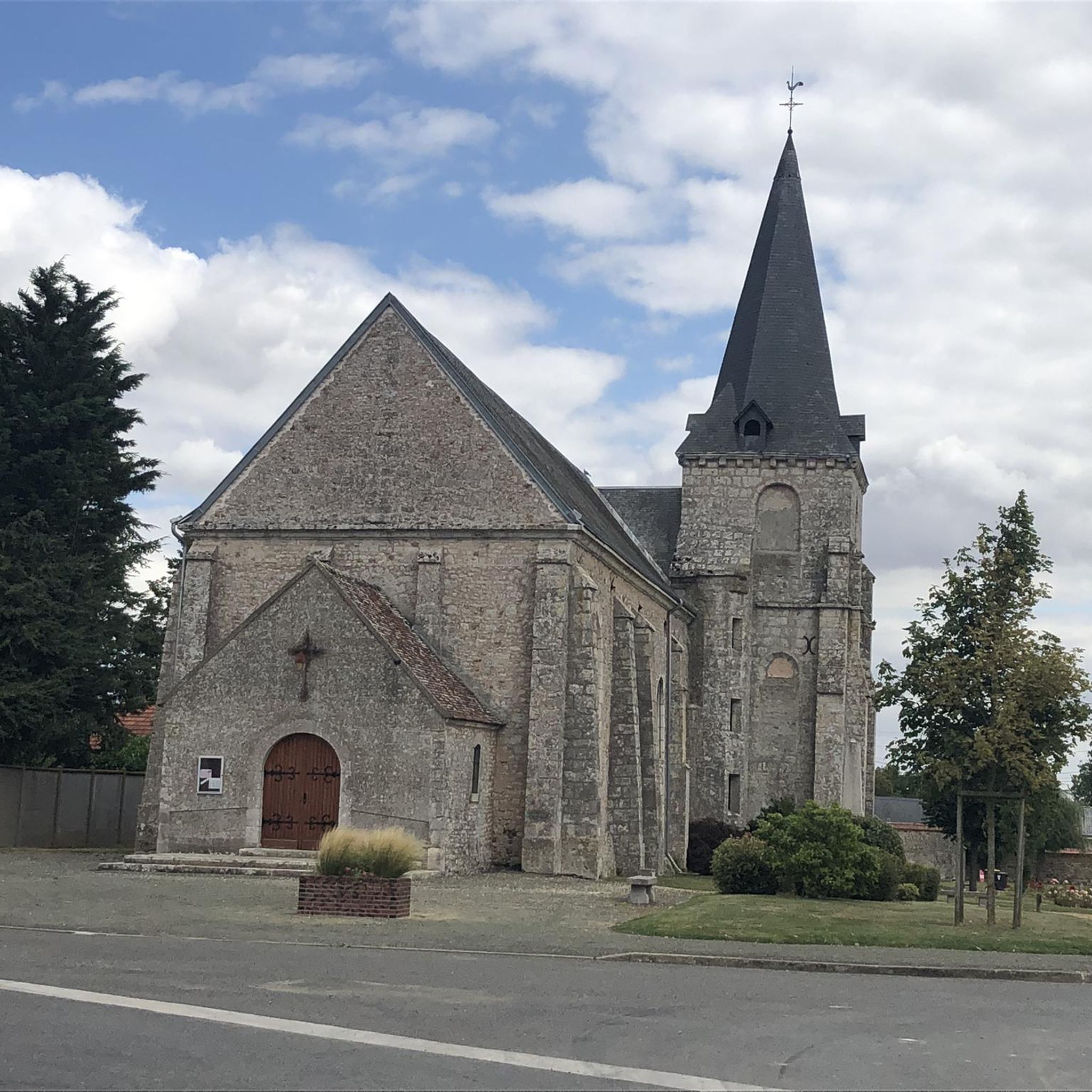
According to tradition, the church choir covers the remains of an older building, possibly dating back to the 6th century, which was built to house the saint's body. According to current knowledge, the commune of Saint-Piat (Sanctus Piatus in Latin) officially appeared in 1087, mentioned in a charter of the Nottonville Priory (Eure-et-Loir), on which it depended. The current building was rebuilt during the time of Francis I, as suggested by the date 1535 engraved on two buttresses of the apse and the date 1542 engraved on a piece of wood from the vault. This is according to a study by the SAEL (Eure-et-Loir Archaeological Society). The three-sided apses, the dripstone towers (horizontal members projecting from a wall), and the sculpted roof structures are a testament to the importance of the reconstructions carried out in the department during the 16th century. The church of Saint-Piat is one of them. While the church has not been officially recognized, it nevertheless contains objects that have attracted attention both for their antiquity and quality, but not always for good reason. Their artistic value, far from attracting only religious or aesthetic interest, has also aroused a covetousness that, unfortunately, remains for some of them. Fortunately, those still in place are carefully cared for and offer the curious a story to discover, a beauty to slowly ponder as they progress toward the choir.
0
0

Many centuries ago, our ancestors discovered the possibility of harnessing the power of the elements—which, while helpful and useful on the one hand, could also be a threat as untamed forces of nature—for various purposes, thus eliminating the need for human or animal muscle power. Mills like these are a good example of the human engineering skills of earlier generations: The heavy millstones used to grind grain or press oil, for example, could be powered by wind or—as in this case—water.
0
0
In the village of Houville (parish of the Epiphany), the crypt, closed for decades, was reopened on February 1, 2020. It contains a well and wall paintings dating back to the 12th century. This crypt is therefore an important place in the village's history, a place of pilgrimage to Saint Léger, with a miraculous spring! Houville also saw the conversion of Célestine Paragot at the end of the 17th century, who, with her strong personality, led the villagers to Christ. This village figure encountered Christ while convalescing after a fall, and her conversion attracted many people. The church and presbytery were expanded and decorated, and thus Houville became known as Houville the Saint, or the Island of Sanctity. The village's vocation continued into the 20th century, as the hamlet (now home to 450 people) offered the Lord 8 priests and 8 nuns, one of whom was at the Visitation. During the war, the crypt served as a refuge for the arrival of German troops, as evidenced by the initials HF that François Heurtault inscribed in June 1940.
0
0
beautiful church with an imposing facade
0
0
The Saint-Germain de Morancez church could date from the 10th century. Its cut stone facade is punctuated by four buttresses framing a portal. This is composed of three concentric arches resting on engaged columns, decorated with capitals. The zigzag decoration of the arches confirms a dating before the 12th century. The occulus surmounting the porch illuminates a semi-circular vaulted nave. This was enlarged with an aisle built much later and where there is an altar dedicated to the Virgin. The furniture remains simple but not without interest with its benches enclosed in painted wood. However, it is worth mentioning a sculpted pulpit from the 18th century. In 1707, the prior-parish priest of Morancez was Nicolas Courvoisier, religious of the Saint-Jean-en-Vallée abbey. A poet, he is notably the author of a Latin ode addressed to the people of Chartres on the death of Paul de Godet des Marais1. He died on May 14, 1742 in Morancez and was buried in the church. (his tombstone remains to be identified.) Although Morancez was a modest parish, in 1851 it benefited from a prestigious gift from Jérôme Bonaparte, brother of Napoleon I, governor of Les Invalides, then in residence at the Château de Gourdez. He offered the church a painting, Moses makes water flow from the rock, painted by Giovanni Francesco Romanelli between 1657 and 1660. This Italian artist had been called to decorate the cabinet called "At the water's edge" of the apartment of Queen Anne of Austria at the Louvre. He created a decor, now dismembered, composed of a set of six paintings devoted to the story of Moses, including the work, classified as a Historic Monument, preserved in our church. Another interesting work which could be attributed to the school of Philippe de Champaigne represents Jesus among the doctors. These two paintings benefited from a restoration in 1998
0
0

it's a route with very few vehicles so you can relax more to have fun
0
0

Bench, greenery, river and shade for a bite to eat or a break.
0
0

The Fontaine du Breuil wash house, an essential break ✨
1
0
Frequently Asked Questions
How many road cycling routes are available around Theuville?
There are over 160 road cycling routes around Theuville, offering a wide variety of options for different skill levels and preferences. You'll find everything from easy loops to more challenging moderate routes through the picturesque landscapes of the Centre-Loire Valley.
What kind of terrain can I expect on road cycling routes near Theuville?
Road cycling routes near Theuville, specifically in the Eure-et-Loir department, feature a blend of rolling hills, open fields, and river valleys. You'll often pass through rural areas and charming villages, with gentle ascents and descents characteristic of the Centre-Loire Valley.
Are there road cycling routes suitable for beginners or families in Theuville?
Yes, Theuville offers numerous easy road cycling routes perfect for beginners or families. For example, the Saint Stephen's Church – Sours church loop from Prunay-le-Gillon is an easy 20.1-mile (32.3 km) trail with gentle hills, ideal for a relaxed ride through rural landscapes.
Are there more challenging road cycling routes around Theuville?
Yes, for those seeking a greater challenge, Theuville also has moderate routes. The The Eure at Ver les Chartre – Fontenay-sur-Eure Church loop from Prunay-le-Gillon is a moderate 32.8-mile (52.7 km) path that offers more extensive views and varied terrain through the Eure valley.
Can I find loop trails for road cycling in Theuville?
Many of the road cycling routes around Theuville are designed as loops, allowing you to start and finish at the same point. A popular option is the Église de Corancez – Chamblay Village loop from Prunay-le-Gillon, which is 23.8 miles (38.3 km) and takes you through agricultural fields and small hamlets.
What do other cyclists say about road cycling in Theuville?
The road cycling routes around Theuville are highly rated by the komoot community, with an average score of 4.3 stars from over 18 reviews. Cyclists often praise the quiet countryside, charming villages, and the well-maintained roads that make for enjoyable rides.
What historical or natural attractions can I see along road cycling routes near Theuville?
As you cycle around Theuville, you can encounter several interesting attractions. Keep an eye out for historical sites like the Château des Boulard, or natural spots such as the tranquil Barjouville Pond. You might also pass by charming religious buildings like the Saint-Étienne Church of Meslay-le-Vidame.
When is the best time of year for road cycling in Theuville?
The spring and autumn months generally offer the most pleasant conditions for road cycling in Theuville, with mild temperatures and beautiful scenery. Summer can also be enjoyable, though it's advisable to start earlier in the day to avoid the midday heat. Winter cycling is possible, but be prepared for colder temperatures and potentially wet conditions.
Are there options for longer distance road cycling routes from Theuville?
Yes, if you're looking for longer rides, routes like the Fontenay-sur-Eure Church – Levesville loop from Prunay-le-Gillon extend to over 44 miles (71 km), providing a more extensive exploration of the Eure-et-Loir countryside.
Can I find places to stop for refreshments along the routes?
Many road cycling routes around Theuville pass through small villages and towns where you can find local cafes or small shops for refreshments. Planning your route in advance and checking for amenities along the way is recommended, especially for longer rides.
Are there scenic viewpoints on the road cycling routes around Theuville?
While the Eure-et-Loir region around Theuville is characterized by gentle rolling landscapes rather than dramatic vistas, the routes offer picturesque views of agricultural fields, river valleys, and charming rural architecture. The beauty lies in the serene countryside and historical village settings.
Is parking available near the starting points of road cycling routes?
Many of the routes start from villages like Prunay-le-Gillon, where you can typically find public parking. It's usually available in village centers or near local amenities, making it convenient to begin your ride.
How can I access road cycling routes in Theuville using public transport?
Accessing Theuville and its surrounding road cycling routes via public transport might require some planning. While direct train or bus services to very small villages can be limited, you can often reach larger towns nearby, such as Chartres, by train. From there, you might need to cycle to the starting points of the routes or use local bus services that accommodate bicycles if available.
Most popular attractions around Theuville

Get inspired with the komoot mobile app


Explore more
Browse the best Road cycling routes in other regions.
