The best running trails around Montalegre
4.2
(5)
506
runners
26
runs
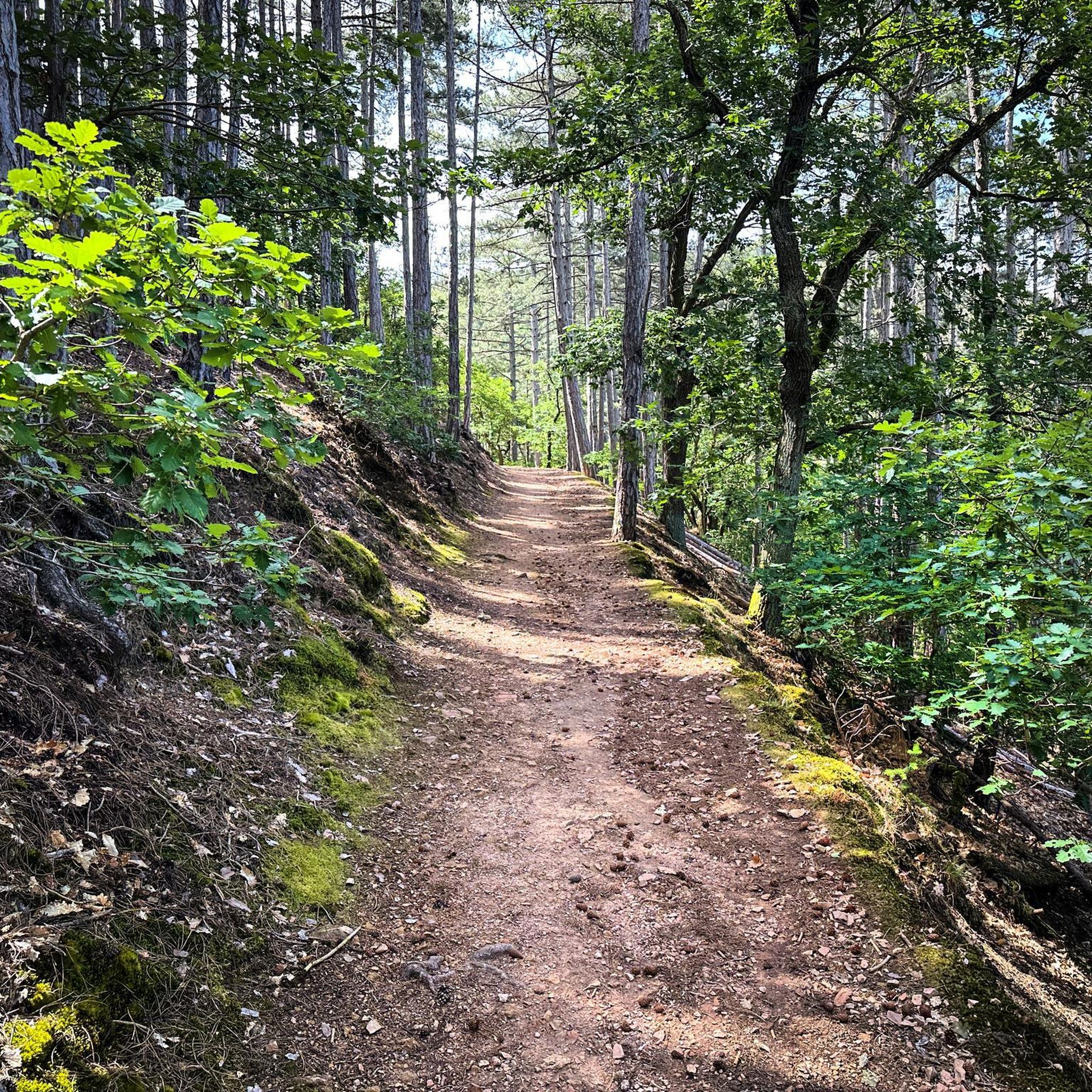
Jogging around Montalegre offers access to diverse terrain in northern Portugal, bordering Spain and extending into the Peneda-Gerês National Park. The region is characterized by its mountainous landscapes, including the Serra do Gerês and the foothills of Larouco mountain, alongside deep valleys and dense forests. Running routes often follow rivers, pass by waterfalls, and traverse historical paths, providing varied elevation changes suitable for different fitness levels.
Best jogging routes around Montalegre
- The most popular jogging route is Peneda-Gerês Great Route: Pitões das Júnias, a 19.9 miles (32.0 km) trail that takes 4 hours 22 minutes to complete. This difficult route offers extensive views across the national park's rugged landscapes.
- Another top favourite among local runners is Sete Lagoas (Seven Lagoons) – Rio Cabril Crossing loop from Trilho dos Poços Verdes, a difficult 6.4 miles (10.4 km) path. This route explores the area's natural pools and river crossings.
- Local runners also love the Sete Lagoas (Seven Lagoons) loop from Trilho dos Poços Verdes, a 5.8 miles (9.3 km) trail leading through the scenic Seven Lagoons area, often completed in about 1 hour 8 minutes.
- Jogging around Montalegre is defined by its mountainous terrain, river valleys, and the extensive network of trails within the Peneda-Gerês National Park. The network offers options for both moderate and more challenging running experiences.
- The routes in Montalegre are highly rated by the komoot community with an average score of 4.0 stars from over 4 reviews. More than 500 runners have used komoot to explore Montalegre's varied terrain.
Last updated: June 24, 2026
5.0
(1)
80
runners
32.0km
04:22
1,150m
990m
Jogging the difficult 19.9-mile TransPeneda-Gerês route in Peneda-Gerês National Park offers rugged terrain and stunning vistas.
3
runners
21.2km
03:52
950m
950m
Hard run. Very good fitness required. Sure-footedness, sturdy shoes and alpine experience required.

Sign up for free
1
runners
19.2km
02:47
820m
820m
Hard run. Very good fitness required. Sure-footedness, sturdy shoes and alpine experience required.
110
runners
36.3km
04:31
1,180m
1,180m
Hard run. Very good fitness required. Sure-footedness, sturdy shoes and alpine experience required.
4.0
(1)
22
runners
10.2km
01:26
600m
600m
Hard run. Very good fitness required. Mostly paved surfaces. Suitable for all skill levels.
Get access to more routes and recommendations from other explorers.
Sign up for free
Already have an account?
Our route recommendations are based on thousands of hikes, rides, and runs completed by other people on komoot.
Start today with a free account
Your next adventure awaits.
Login or Signup
Tips from the Community

The Monastery of Santa Maria das Júnias is a ruined monastery, of which the church remains, located on the outskirts of Pitões das Júnias. The last Cistercian monk became the parish priest of the village of Pitões das Júnias in 1834, the date of the abolition of religious orders in Portugal. As a historical curiosity, it is worth noting that Dom Pedro de Pitões, one of the main drivers of the conquest of Lisbon from the Moors in 1147, was ordained bishop of Porto at this monastery.
0
0

Hidden in the heights of Pitões das Júnias, the ancient monastery of Santa Maria carries centuries of history in the stones that support it. It is believed that its origins date back to the 9th century, in the middle of the Reconquista era, before Portugal was born as a kingdom. Officially, however, it was founded in the 12th century under the auspices of the Benedictines, and later embraced the austerity of the Cistercian reform. Today, among the silent ruins, the modest side portico of the church and the delicate arcades of the cloister remain.
1
1
At the end of the wooden staircase, you are greeted by a spectacle of nature, the Pitões das Júnias Waterfall, which descends in force, imposing and vibrant before you. Down below, the valley stretches out in silence, vast and majestic, a sight that takes your breath away and leaves your heart lighter.
1
0
The Leonte Waterfall appears when the waters of the Taleira stream fall from a granite cliff, plunging 19 metres into the bed of the Gerês River. However, in drier summers, nature imposes its own rhythm and the flow can disappear, transforming the waterfall into a temporary silence.
4
1
At the end of the wooden staircase, you will be greeted by a stunning view of the Pitões waterfall in all its grandeur. In the background, the valley stretches out majestically, creating a simply breathtaking scene.
1
0
The monastery of Santa Maria de Pitões das Júnias has roots that are believed to date back to a period before the founding of the Kingdom of Portugal, in the 9th century, during the Christian Reconquest. However, it is certain that it was founded in the mid-12th century, initially under the Benedictine Order, later adhering to the Cistercian reform. Notable remains of its original design still remain, such as the simple side portico of the church and the discreet arcades of the cloister, now in ruins.
2
0

Fascinating landscape, by bike or on foot
0
1
Frequently Asked Questions
How many running routes are available in Montalegre?
Montalegre offers a wide selection of nearly 30 running routes, catering to various fitness levels. You'll find a good mix of moderate and challenging trails, with 9 moderate routes and 18 difficult ones.
What kind of terrain can I expect on jogging routes around Montalegre?
The jogging routes in Montalegre are characterized by diverse terrain, ranging from mountainous landscapes in the Serra do Gerês and Larouco foothills to deep valleys and dense forests. Many paths follow rivers, pass by waterfalls, and traverse historical trails, offering varied elevation changes and natural beauty.
Are there any circular running routes in Montalegre?
Yes, Montalegre features several excellent circular running routes. A popular option is the Sete Lagoas (Seven Lagoons) – Rio Cabril Crossing loop from Trilho dos Poços Verdes, which is a challenging 10.4 km path exploring natural pools and river crossings. Another is the Sete Lagoas (Seven Lagoons) loop from Trilho dos Poços Verdes, a moderate 9.3 km trail through the scenic Seven Lagoons area.
Can I find routes with waterfalls or natural pools for a refreshing stop?
Absolutely! The region, especially within the Peneda-Gerês National Park, is rich in waterfalls and natural pools. Routes like the Sete Lagoas (Seven Lagoons) – Rio Cabril Crossing loop will lead you to these refreshing spots. You can also explore highlights like the Blue Pool, Cela Cavalos Waterfall, or the dramatic Ponte da Misarela and Waterfall.
What historical landmarks can I see while running in Montalegre?
Montalegre's routes often blend natural beauty with history. You might encounter the impressive Montalegre Castle, a National Monument overlooking the village. The area also features the medieval Ponte da Misarela (Devil's Bridge) and sections of the ancient Roman Road of Misarela, offering intriguing pathways for your run. The Aquis Querquennis Roman Camp is another significant historical site nearby.
Are there any running routes suitable for families?
While many routes in Montalegre are moderate to difficult, there are options that can be enjoyed by families looking for a less strenuous experience. Look for routes with shorter distances and less elevation gain. The region's natural beauty, with lakes and gentle paths, can be very rewarding for family outings.
What do other runners say about the trails in Montalegre?
The running routes in Montalegre are highly rated by the komoot community, with an average score of 4.0 stars. Over 500 runners have used komoot to explore the varied terrain, often praising the stunning natural landscapes, challenging ascents, and the opportunity to discover hidden waterfalls and historical sites.
Are there any routes that offer extensive views?
Yes, many routes provide breathtaking panoramic views, especially those that venture into the higher elevations of the Peneda-Gerês National Park and the Larouco mountain foothills. The Peneda-Gerês Great Route: Pitões das Júnias, for example, is a difficult 32 km trail known for its extensive views across the park's rugged landscapes.
Can I find running routes near lakes or reservoirs?
Yes, the Montalegre area is close to several beautiful lakes and reservoirs. The Albufeira da Caniçada loop from Vilar da Veiga is a moderate 8.6 km route that explores the area around a reservoir. The Sete Lagoas (Seven Lagoons) is another highlight offering scenic lakeside running opportunities.
What is the best time of year to go jogging in Montalegre?
Montalegre offers beautiful scenery year-round. Spring and autumn provide pleasant temperatures and vibrant colors, ideal for running. Summer can be warm, but routes near waterfalls and natural pools offer refreshing breaks. Winter brings a different kind of beauty, though some higher-altitude trails might be more challenging due to weather conditions.
Are there any challenging running routes for experienced runners?
Montalegre is an excellent destination for experienced runners seeking a challenge. The region boasts 18 difficult routes, including the Peneda-Gerês Great Route: Pitões das Júnias, a demanding 32 km trail with significant elevation changes. Another challenging option is the Fonte da Malhadoura – View from Curral dos Portos loop from Ermida, a 13.5 km route with substantial climbs.
Are there any natural hot springs near the running trails?
Yes, for a unique post-run relaxation, you can find natural hot springs in the vicinity. The Río Caldo Hot Springs are a notable natural monument in the area, offering a soothing experience after exploring the trails.
Most popular attractions around Montalegre

Get inspired with the komoot mobile app


Explore more
Browse the best Running Trails & Routes in other regions.
