The best road cycling routes around Montemor-O-Novo
4.3
(6)
276
riders
6
rides
Road cycling around Montemor-O-Novo, located in Portugal's Alentejo region, features a landscape of gentle slopes and an extensive network of routes. The terrain is characterized by cork oak forests, expansive cultivated fields, and small hills. This area offers diverse topography, including lakes and dams in the north, and areas with unique vegetation sustained by water courses in the south.
Best road cycling routes around Montemor-O-Novo
- The most popular road cycling route is Giraldo Square – Évora Public Library loop from…
Last updated: July 11, 2026
3.5
(2)
45
riders
57.3km
02:41
390m
390m
Moderate road ride. Good fitness required. Some segments of this route may be unpaved and difficult to ride.
5.0
(1)
7
riders
46.7km
02:18
660m
660m
Moderate road ride. Good fitness required. Mostly well-paved surfaces and easy to ride.

Sign up for free
8
riders
76.6km
03:23
640m
640m
Hard road ride. Good fitness required. You may need to push your bike for some segments of this route.
6
riders
44.7km
01:58
350m
360m
Moderate road ride. Good fitness required. Mostly well-paved surfaces and easy to ride.
6
riders
28.8km
01:22
340m
340m
Moderate road ride. Good fitness required. Mostly well-paved surfaces and easy to ride.
Our route recommendations are based on thousands of hikes, rides, and runs completed by other people on komoot.
Start today with a free account
Your next adventure awaits.
Login or Signup
Tips from the Community

Vimieiro was a municipal seat between 1257 and 1855. Two charters are known, the first granted by D. Francisco Bruno Neves, Bishop of Évora, in 1257, and the second by D. Manuel I, King of Portugal, in 1512. In 1801, it consisted of the parishes of the town and Santa Justa. It then had 1,819 inhabitants and an area of 266 km². In 1849, it consisted only of the parish of the town. It was suppressed by the administrative reform of 1855, consequently losing its status as a town, a fact that the coat of arms with a mural crown of four visible towers still marks today.
2
0

The cathedral is a must-visit when in Évora. The entrance fee is very reasonable! First, climb the tower and enjoy a fantastic view from the roof of the cathedral. As you descend into the cloister, the beautiful yellow light from the window immediately catches your eye. Simply fascinating!
1
0
Giraldo Square is the main square in the city of Évora. It has undergone several changes over the years. Not so long ago, a traffic policeman stood there, directing the direction of Rua Cinco de Outubro, when cars circulated here and around the square. It was a parking lot and passenger pick-up point for a large fleet of taxis. It was the venue for meetings and business dealings among local farmers every Tuesday. Nowadays, it is largely occupied by the terraces of the surrounding restaurants and pastry shops. 👍🥾
4
0

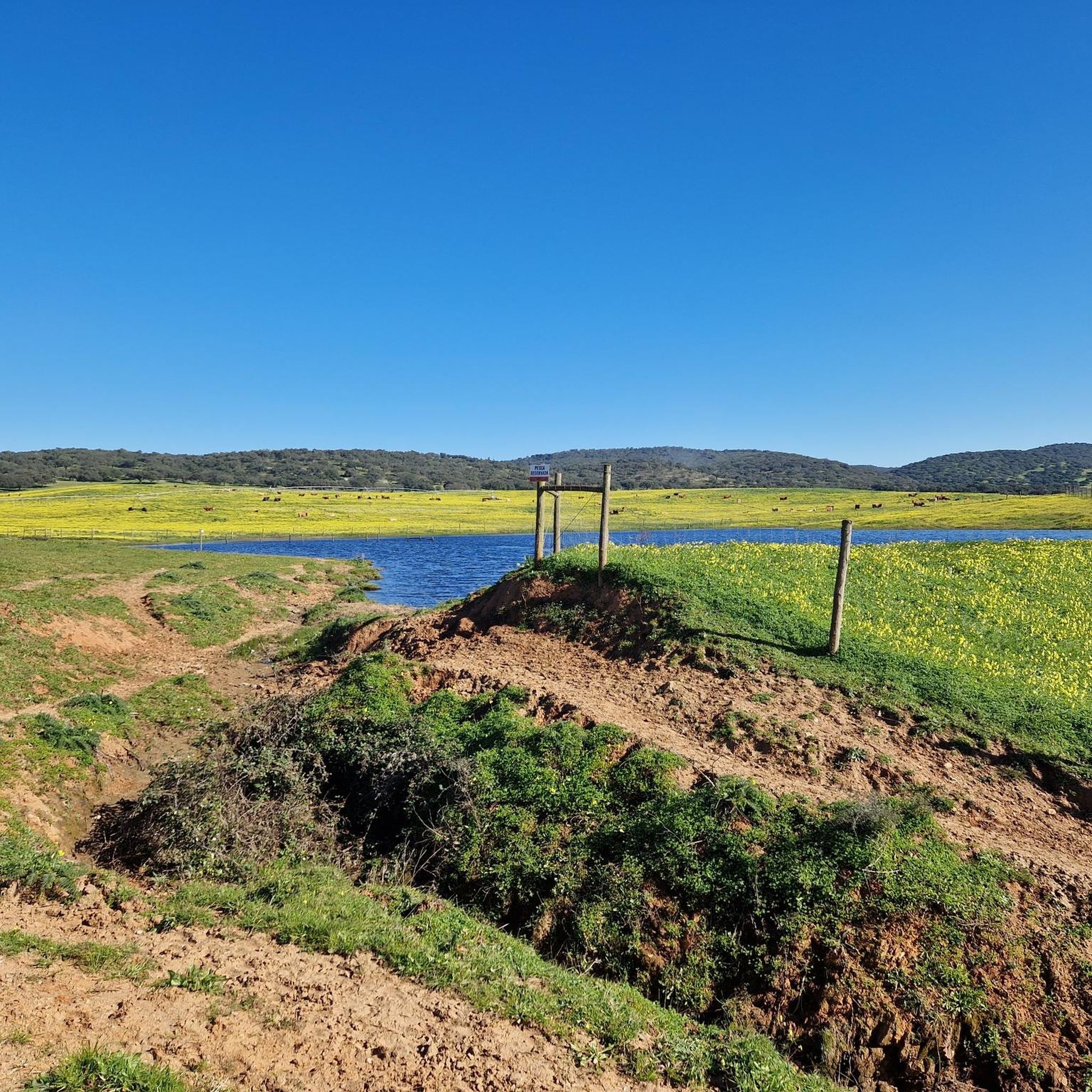
Road with good surface and little traffic.
12
0

The church operates under two names: Igreja de São João Evangelista / Igreja dos Lóios. It belonged to the Monastery of Lios, also known as the Convent of St. John the Evangelist, which was built in the 15th century on top of a medieval castle. The monastery itself was converted into the Pousada Convento Évora hotel in modern times and is now privately owned. The church, accessed through a Gothic portal, is notable for the magnificent tiled panels that cover the walls. They were created in 1711 by the master Antonio de Oliveira Bernardes and depict scenes from the life of St. Lawrence Justinian. Through an opening in the floor, one can see the crypt, which lies next to a Moorish cistern. Along the sides are chapels with fine examples of gilded wood carvings. It is considered one of the most beautiful churches in Portugal and a must-see.
3
0
The original palace was built in the 14th century next to the Tower of Évora, where Martim Afonso de Mello, a servant of the Royal Military Order of Saint Benedict of Aviz and a descendant of the Portuguese crown, ordered its construction. The palace was partially built on the Roman-Visigothic walls of the old castle of Évora, and traces of both remain in its buildings. At the rear of the palace, you can admire the extraordinary Torre das Cinco Quinas, the famous pentagonal tower that gave it its name. In addition to the large outdoor gardens and the numerous rooms and halls that make up the complex, it also houses the Casa Cadaval exhibition rooms, which house a collection of illuminated codices, sculptures, paintings, and armories with pieces from the 15th and 18th centuries. See https://en.wikipedia.org/wiki/Palace_of_the_Dukes_of_Cadaval
2
0
The library was opened in 1666 with the intention of serving as the Colégio dos Moss do Coro da Sé (Cathedral Choir School). At that time, the building was directly connected by an arcaded bridge to the Archiepiscopal Palace, now the Museum of Évora and the Cathedral. Today, the Public Library of Évora is one of the oldest and richest in Portugal. Its unique holdings include, in particular, its collection of books printed with movable type in the early days of the printing press, lithographs, and itineraries of ancient sailors and explorers. A must-see for anyone interested. The building is divided into three sections open to the public.
5
0
The town of Vimieiro, as a “land of music and musicians”, intends to promote a project of national scope, with the creation of a museum space on philharmonic music with a musical training component that allows the preservation of knowledge and traditions in this area and, simultaneously, the holding of “artistic residencies”, as well as the construction of an auditorium where the arts of music and speech can take place, valuing music teaching, the holding of workshops and other activities that the final plan should include. (Source: www.tribunaalentejo.pt )
14
0
Frequently Asked Questions
What kind of terrain can I expect when road cycling around Montemor-O-Novo?
The region offers a diverse landscape characterized by gentle slopes, extensive networks of trails, and rolling hills. You'll cycle through picturesque cork oak forests, expansive cultivated fields, and areas with small peaks, lakes, and dams. The routes vary in difficulty, with options ranging from moderate to difficult, ensuring a varied experience.
Are there any family-friendly road cycling routes in Montemor-O-Novo?
While the listed routes are primarily moderate to difficult, the region's extensive network includes paths along old train lines, such as the Ecopista of the Ramal de Mora, which offers a peaceful route through nature. These greenways are often suitable for families looking for flatter, traffic-free options. For specific family-friendly routes, it's best to check individual tour details on komoot.
What historical or natural landmarks can I see while cycling in the Montemor-O-Novo area?
Montemor-O-Novo is rich in historical and natural attractions. You can explore the imposing Montemor-o-Novo Castle, a medieval fortress dominating the landscape. The ancient Almendres Cromlech, a megalithic monument older than Stonehenge, is also a significant sight. Nature lovers will appreciate the cork oak forests and the unique Montado ecosystem. The Ecopista of the Ramal de Mora also offers scenic views.
What is the best time of year for road cycling in Montemor-O-Novo?
The Alentejo region generally offers a warm climate, making spring and autumn ideal for road cycling. During these seasons, temperatures are pleasant, and the natural landscapes are vibrant. Summer can be quite hot, so early morning or late afternoon rides are recommended if cycling during this period.
Are there any circular road cycling routes available?
Yes, many of the road cycling routes around Montemor-O-Novo are designed as loops. For example, the Giraldo Square – Évora Public Library loop from Arraiolos and the Dolmen of Monfurado – View of Montemor-o-Novo loop from Montemor-o-Novo are popular circular options, allowing you to start and finish at the same point.
What are the typical distances and elevations for road cycling routes in this region?
Road cycling routes in Montemor-O-Novo vary in length and elevation. You can find routes like the Arraiolos – Arraiolos loop from Arraiolos, which is around 28.8 km with about 340 meters of elevation gain, suitable for a moderate ride. More challenging options, such as the Arraiolos – Arraiolos Railway Station loop from Arraiolos, extend to about 76.6 km with over 630 meters of elevation gain.
What do other road cyclists enjoy most about cycling in Montemor-O-Novo?
The road cycling routes around Montemor-O-Novo are highly rated by the komoot community, with an average score of 4.3 stars. Cyclists often praise the scenic Alentejo countryside, the varied terrain that includes cork oak ecosystems, and the well-maintained paths that offer both moderate and challenging experiences.
Is public transport available for cyclists in Montemor-O-Novo?
While the region has public transport, specific provisions for carrying bicycles on buses or trains may vary. It's advisable to check with local transport providers directly for their policies regarding bicycles, especially if you plan to combine cycling with public transport for longer distances or to reach starting points.
Are there any specific facilities or amenities for cyclists in Montemor-O-Novo, such as bike shops or rentals?
Montemor-O-Novo and the broader Alentejo region are becoming increasingly popular for cycling. While specific bike shops or rental services are not detailed in the provided information, larger towns in the Alentejo typically offer such facilities. It's recommended to search locally upon arrival or check online for current services.
Where can I find parking for road cycling routes in Montemor-O-Novo?
For many routes, especially those starting from towns like Montemor-O-Novo or Arraiolos, you can typically find public parking in or near the town centers. When planning your route, consider starting points that offer convenient parking options, often near local amenities or public spaces.
Are there any challenging road cycling routes for experienced riders?
Yes, Montemor-O-Novo offers routes that cater to experienced cyclists looking for a challenge. The Arraiolos – Arraiolos Railway Station loop from Arraiolos, for instance, is classified as difficult, covering 76.6 km with significant elevation changes, providing a robust workout through the Alentejo landscape.
Can I find accommodations in Montemor-O-Novo that are cyclist-friendly?
As a region increasingly popular for outdoor activities, many accommodations in Montemor-O-Novo and surrounding areas are becoming more cyclist-friendly, offering amenities like secure bike storage. It's recommended to inquire directly with hotels, guesthouses, or rural tourism establishments about their facilities for cyclists when booking your stay.
Most popular attractions around Montemor-O-Novo

Get inspired with the komoot mobile app


Explore more
Browse the best Road cycling routes in other regions.
