Attractions and Places To See around Dalham - Top 20
Best attractions and places to see around Dalham include historical landmarks and natural features. This picturesque village in Suffolk, England, is situated on the east bank of the River Kennet, offering a rural setting for exploration. The area provides access to historic sites, traditional architecture, and scenic walks. Visitors can explore a blend of cultural points of interest and natural charm.
Best attractions and places to see around Dalham
- The most popular attractions is The Fox Inn, Ousden, a pub known for its welcoming atmosphere. It is also noted as the highest point in Suffolk where a pint can be purchased.
- Another must-see spot is Jubilee Clock Tower, Newmarket, a man-made monument. This grand clock tower marks the official start point for the Stour Valley Path.
- Visitors also love Ickworth House Rotunda, a man-made monument. This neoclassical building houses an art and silver gallery within an Italianate Georgian palace.
- Dalham is known for historical sites, traditional village architecture, and rural landscapes. The area offers a variety of attractions to see and explore, from ancient churches to scenic walking trails.
- The attractions around Dalham are appreciated by the komoot community, with 12 upvotes and 6 photos shared by visitors.
Last updated: April 25, 2026
The Fox Inn, Ousden
Highlight • Pub
Tip by

Jubilee Clock Tower, Newmarket
Highlight • Monument
The Clock Tower is the official start point for the Stour Valley Path, a 63-mile (101 km) long-distance trail that ends at Cattawade on the Stour Estuary.
Tip by

Sign up now to discover places like this
Get recommendations on the best single tracks, peaks, & plenty of other exciting outdoor places.
Sign up for free
Ickworth House Rotunda
Highlight • Monument
Tip by

Round House
Highlight • Structure
The National Trust now rent this building out. Inside, it’s deceptively spacious and can accommodate up to six people and two dogs. Circular shaped rooms give it a real cosy feel, especially when the log-burner crackles in the living room.
Although you’ll be tucked away in a sheltered setting, the main house, Italianate gardens and sweeping parklands are all within a stone’s throw. Explore the extensive hiking, running and cycling trails that wrap around the estate and head to Porters Lodge dog friendly outdoor café for lunch.
Surrounded by countryside with 1,000 years of history to explore, Bury St Edmunds offers visitors award-winning restaurants, fantastic shopping, annual festivals, and a great day out for families. From the magnificent St Edmundsbury Cathedral, and historic ruins of the 11th century Abbey of St Edmund, to the artisan, independent shops surrounding the medieval grid of the town centre.
Tip by

Monument to the 4th Earl of Bristol
Highlight • Monument
From the terrace in the Italianate Gardens, look out for a glimpse of a tall monument peeking above the trees. Situated in a pasture field on the far side of the Estate, you can reach it by taking a long walk across open land and through Lownde Wood.
The monument was erected in 1817 by the grateful people of Derry to the memory of the 4th Earl of Bristol, Frederick Hervey who was also the Bishop of Derry. It was built by the masons John and Robert de Carle and has inscriptions in both English and Latin on its east and west faces.
On the west face, it describes the Earl Bishop’s work in encouraging a better understanding between the warring factions in Ireland.
It's an unusual monument, as it was paid for by both the Protestant and Catholic communities in Derry.
Tip by
Sign up for free to discover even more attractions around Dalham.
Sign up for free
Already have an account?
Start today with a free account
Your next adventure awaits.
Login or Signup


Tips from the Community


Impressive, vast estate. From the entrance, you'll notice that this is something special—an amazing building and surrounding gardens, with gift shop and cafes which close at 4 pm. Around the estate, you'll have kilometre after kilometre of woods with every turn displaying a different scenery. You'll have ups and downs of roads very good for hiking and a sweaty cardio. Before you enter, though, please be aware that non-members will pay a reduced entrance fee of 10 quid per person after 3.30 pm. I have no idea what the full rate is.
0
0

The Round House features a unique facade and a captivating history. It began as a shooting lodge before undergoing a transformation into a gamekeeper's cottage. Surrounded by the melody of bird calls and the beauty of nature, this cottage creates a truly picturesque scene. Today, it serves as a holiday cottage available for online booking.
0
0
Here, you'll have the opportunity to admire this incredible Italianate Georgian palace, an astonishing building that is further enhanced by its idyllic location and gardens. The magnificent Rotunda was commissioned by the fourth Earl of Bristol to house all the treasures he collected during his travels across Europe in the 18th century.
2
0

Note: the highest *pint* not the highest *point*. To find the missing “o” go to www.komoot.com/highlight/1530035
0
0

Ickworth House is a country house at Ickworth, near Bury St Edmunds, Suffolk, England. It is a neoclassical building set in parkland. The house was the residence of the Marquess of Bristol before being sold to the National Trust in 1998. The house, built between 1795 and 1829, was formerly the chief dwelling of an estate owned by the Hervey family, later Marquesses of Bristol, since 1467. The building was the creation of Frederick Hervey, 4th Earl of Bristol and Bishop of Derry (known as the Earl-Bishop), who commissioned the Italian architect Antonio Asprucci to design him a classical villa in the Suffolk countryside. Originally it had been planned as an art gallery but the Earl's collection was seized by Napoleon. The Earl died in 1803, leaving the completion of house to his successor. In 1956, the house, park, and a large endowment were given to the National Trust in lieu of death duties. As part of the handover agreement, a 99-year lease on the 60-room East Wing was given to the Marquess of Bristol. However, in 1998 the 7th Marquess of Bristol sold the remaining lease on the East Wing to the National Trust. He was succeeded by his half-brother Frederick William Augustus Hervey, 8th Marquess of Bristol (born 19 October 1979). The National Trust refused to sell the remaining lease term back to the 8th Marquess, thereby contravening the Letter of Wishes which states that the head of the family should always be offered whatever accommodation he chooses at Ickworth. The family's once private East Wing is now run as The Ickworth Hotel on a lease from the National Trust. Apartments, also leased from the Trust, are located in the Dower House in the grounds. The West Wing at Ickworth House went uncompleted until 2006, when a joint partnership between the National Trust and Sodexo Prestige led to its renovation and opening as a centre for conferences and events. The first wedding in the property's history took place in 2006. As one of England's more unusual houses, Ickworth has been unflatteringly described as resembling "a huge bulk, newly arrived from another planet" and as "an overgrown folly". It is now being architecturally reassessed and recognised as the only building in England comparable with the monumental works of Boullée and Ledoux. The design concept was based on the designs of Italian architect Antonio Asprucci, most noted for his work at the Villa Borghese, which the Bishop-Earl had seen. Asprucci's plans were adapted and the building work overseen by English architects Francis Sandys and his brother Joseph Sandys. The façades are of brick covered in stucco; beneath a roof of slate and lead. The central rotunda is 105 ft. high with a domed and balustraded roof. the building is entered through the central entrance ionic pedimented portico. The rotunda is decorated with pilasters, which on the lower floor are Ionic and Corinthian above. The ground and first floor and the third floor and the balustraded parapet are divided friezes bas-relief. The rotunda is flanked by segmental single story narrow wings (appearing as a blind arcade) linking, in the palladian fashion, to two terminating pavilions; these segmental wings are broken at their centre by projecting bays which house the Smoking Room and the Pompeian Room, both later 19th century additions. Unlike the design of a true Palladian building, the terminating pavilions, rather than minor balancing appendages, are in fact large wings, complementary in weight to the rotunda which becomes their corps de logis. The East Wing, a small mansion in itself, was designed to be the everyday living quarters of the family (which it remained until 1998), thus permitting the more formal rooms of the rotunda to be reserved for entertaining and display. The west wing, intended as an orangery, sculpture gallery and service rooms remained an unfinished shell until the beginning of the 21st century. For much of the time it was used as agricultural storage and latterly for playing squash on a court installed by the 4th Marquess.
1
0
The monument to the 4th Earl of Bristol. From the terrace in the Italianate Gardens, look out for a glimpse of a tall monument peeking above the trees. Situated in a pasture field on the far side of the Estate, you can reach it by taking a long walk across open land and through Lownde Wood. The monument was erected in 1817 by the grateful people of Derry to the memory of the 4th Earl of Bristol, Frederick Hervey who was also the Bishop of Derry. It was built by the masons John and Robert de Carle and has inscriptions in both English and Latin on its east and west faces. On the west face, it describes the Earl Bishop’s work in encouraging a better understanding between the warring factions in Ireland. It's an unusual monument, as it was paid for by both the Protestant and Catholic communities in Derry.
2
0
Frequently Asked Questions
What historical sites can I explore around Dalham?
Dalham and its surroundings are rich in history. You can visit St Mary's Church, dating back to the 14th century with medieval wall paintings, or the unique Opposition Mill, an octagonal smock mill from the 1790s. The village also features an early Victorian Malting Kiln. Nearby, explore the magnificent Ickworth House Rotunda, a neoclassical building housing an art and silver gallery, or the historic market town of Bury St Edmunds with its St Edmundsbury Cathedral and Abbey ruins.
Are there any family-friendly attractions near Dalham?
Yes, several attractions cater to families. The Ickworth House Rotunda and its extensive parklands offer space for exploration. The Round House, a fable-like rotunda cottage, is nestled in a woodland glade near Fairy Lake. For more active fun, Go Ape Thetford provides adventure activities, and South Angle Farm Park is another family-friendly option in the vicinity.
Where can I enjoy nature and walks around Dalham?
Dalham is set in a picturesque rural area. You can enjoy attractive walks along the banks of the River Kennet. The Ickworth House estate offers extensive hiking, running, and cycling trails. There are also several walks around Dalham, including the 'Three Churches Walk' which links Dalham with Gazeley and Moulton, following parts of the long-distance Icknield Way.
What are some unique local landmarks in Dalham village?
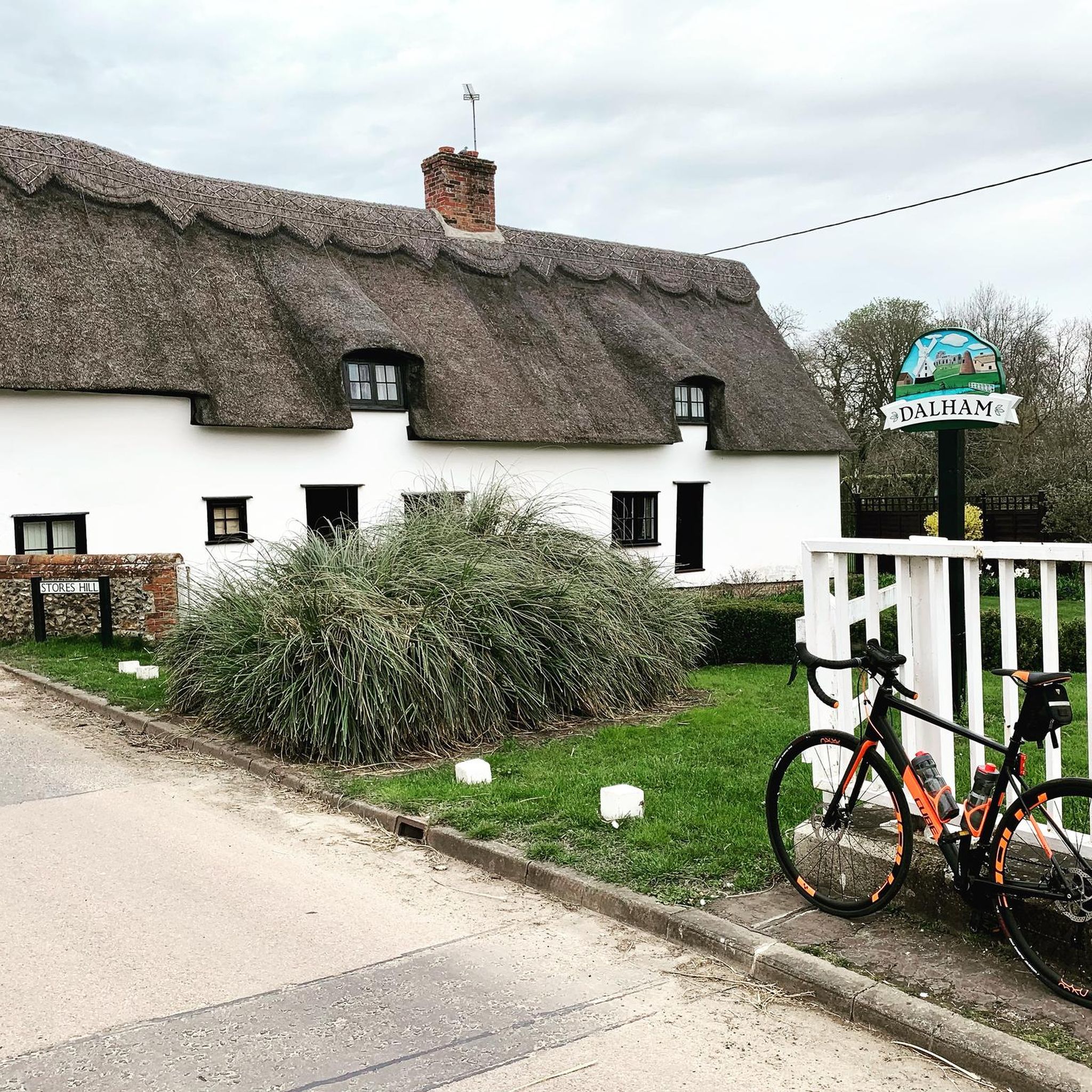
Within Dalham village, you'll find the historic St Mary's Church and the charming thatched pub, The Affleck Arms. The village is also noted for its attractive traditional Thatched Cottages, many with Norfolk reed or straw roofs, contributing to its historic character.
Are there any accessible attractions in the area?
The Jubilee Clock Tower, Newmarket is noted as being wheelchair accessible. While specific accessibility details for all sites are not provided, many outdoor areas like the parklands at Ickworth House may offer accessible paths, though it's always best to check directly with the venue.
What outdoor activities can I do near Dalham?
The area around Dalham offers various outdoor activities. You can explore easy hikes, such as the 'Affleck Arms Pub – Affleck Arms loop from Dalham' (3.3 km). For cycling enthusiasts, there are road cycling routes like the 'Warren Hill Gallops – Moulton Packhorse Bridge loop from Moulton' (27.7 km) and MTB trails, including the 'Phoenix Cycleworks – Icknield Way Cycle Trail loop from Kennett' (32.2 km). Find more details on these routes in the Easy hikes around Dalham, Road Cycling Routes around Dalham, and MTB Trails around Dalham guides.
What is there to see in Newmarket, near Dalham?
Newmarket, a short distance from Dalham, is home to the impressive Jubilee Clock Tower, built in 1887 to commemorate Queen Victoria's Golden Jubilee and marking the start of the Stour Valley Path. Newmarket is also renowned for its horse racing heritage, housing the National Horse Racing Museum and the National Stud.
Are there any dog-friendly places or trails around Dalham?
The extensive parklands around Ickworth House are suitable for walks with dogs. The Round House, a holiday cottage on the Ickworth estate, even accommodates up to two dogs. You can also find a dog-friendly outdoor café, Porters Lodge, within the Ickworth estate for refreshments during your walks.
What is the significance of the Monument to the 4th Earl of Bristol?
The Monument to the 4th Earl of Bristol, located in a pasture field on the Ickworth Estate, was erected in 1817. It commemorates Frederick Hervey, the 4th Earl of Bristol and Bishop of Derry, for his work in fostering understanding between communities in Ireland. It's unique as it was funded by both Protestant and Catholic communities in Derry.
What kind of dining options are available in Dalham?
In Dalham, you can visit The Fox Inn, Ousden, a friendly pub known for its welcoming atmosphere and for being the highest point in Suffolk where a pint can be purchased. The village also has The Affleck Arms, a thatched pub offering a traditional village experience.
What are some lesser-known historical gems around Dalham?
Beyond the main attractions, Dalham offers hidden historical gems like the Opposition Mill, a unique octagonal smock mill, and an early Victorian Malting Kiln, a beehive-style red brick building from the 1820s. These structures provide a glimpse into the region's industrial and agricultural past.
What do visitors enjoy most about the attractions around Dalham?
Visitors appreciate the blend of historical landmarks and natural beauty. Highlights like The Fox Inn, Ousden are praised for their welcoming atmosphere and local charm. The historical significance of sites like the Jubilee Clock Tower, Newmarket and the architectural grandeur of Ickworth House Rotunda are also highly valued by the komoot community.

Get inspired with the komoot mobile app


Explore more
Still not found the Highlight you’re looking for? See guides of the top attractions in other regions:
