Attractions and Places To See around Dundrod - Top 11
Best attractions and places to see around Dundrod include a mix of historical sites, cultural landmarks, and natural outdoor spaces. While Dundrod itself is a smaller locality, it is historically significant for the Ulster Grand Prix road racing circuit. The wider area offers diverse points of interest, from scenic walking paths to significant historical memorials in nearby cities.
Best attractions and places to see around Dundrod
- The most popular attractions is Lagan Towpath, a popular outdoor spot that offers…
Last updated: June 23, 2026
Lagan Towpath
Highlight • Forest
Tip by

Belfast Peace Wall Murals
Highlight • Historical Site
Translated by Google •
Tip by

Sign up now to discover places like this
Get recommendations on the best single tracks, peaks, & plenty of other exciting outdoor places.
Sign up for free
Bobby Sands mural
Highlight • Monument
Robert George “Bobby” Sands was an IRA member, hunger striker and MP for Fermanagh & …
Translated by Google •
Tip by
Clonard Martyrs' Memorial Garden
Highlight • Monument
In memory of:
IRA members, ex-prisoners, political activists and civilians from the Clonard area.
Information on those commemorated
Date of incident: January
Description:
Medium sized memorial …
Translated by Google •
Tip by

Bayardo Bar Memorial
Highlight • Monument
Translated by Google •
Tip by

Sign up for free to discover even more attractions around Dundrod.
Sign up for free
Already have an account?
Start today with a free account
Your next adventure awaits.
Login or Signup

Tips from the Community

Frightening to see in the mural here how current global conflicts are still being aligned between the two population groups here to further manifest the divide.
2
0


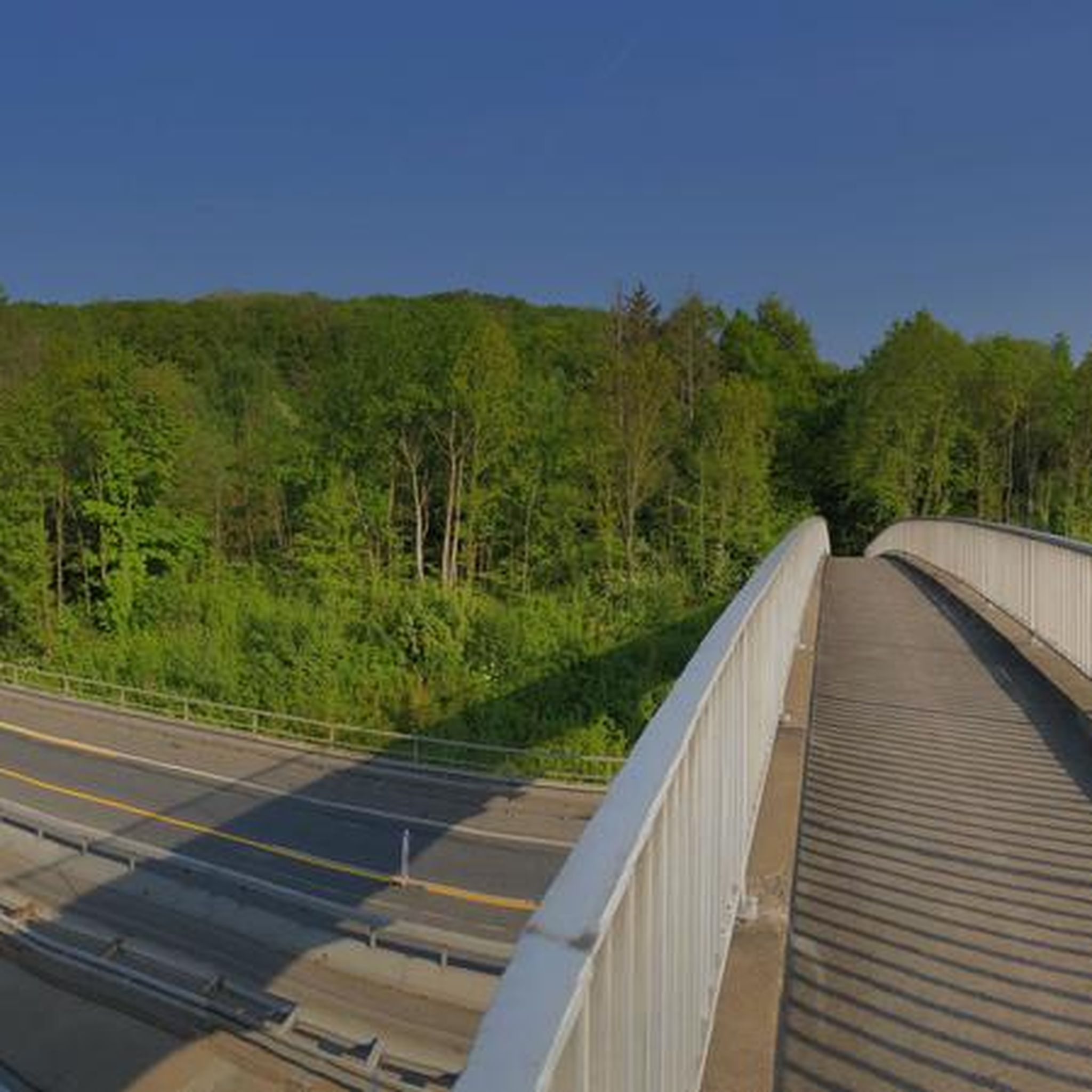
The path, which is part of National Cycle Route 9, offers a peaceful atmosphere that is ideal for relaxed bike rides - but walkers, joggers and dog owners also appreciate the route. The contrast between the quiet river and the partially flooded sections that can appear after heavy rain is particularly exciting. Sometimes the path leads directly to the water, and it almost seems as if the Lagan wants to reclaim a bit more space. The trees are reflected in the calm waters, which creates an almost mystical atmosphere in cloudy weather. Another highlight are the small, branching mountain bike trails that bring a bit of adventure to the tour. If you want a change and don't just want to follow the river, these trails offer a welcome change.
1
0

Clonard Martyrs Memorial Garden In memory of: IRA members, ex-prisoners, political activists and civilians from the Clonard area. Information on those commemorated Date of incident: January Description: Medium sized memorial garden divided into three interconnected sections; surrounded by walls, railings and three metal gates. The central section contains a large Celtic cross on a plinth, a large plaque attached to a wall and four flags. The side sections contain plaques and memorial benches.(Source: https://cain.ulster.ac.uk/victims/memorials/static/monuments/546.html)
4
1
Perhaps the most significant development of the strike occurred when Sands entered the election campaign for a seat in the Parliament for Northern Ireland's County of Fermanagh and South Tyrone. On 10 April, after 41 days of hunger strike and to the great shock of the IRA leadership, Sands won the seat by more than 30,000 votes. His election sent shockwaves throughout Ireland and within the British government. After all, Britain's criminalisation policy was based on its claims that the IRA had little public support and was a gang of renegade criminals. Despite Sands' new political status as an MP and mounting public pressure, the British government under Prime Minister Margaret Thatcher refused to take even a step towards reconciliation. Sands' condition continued to deteriorate and he remained confined to the prison infirmary. Eventually, on 3 May, Sands fell into a coma. His family was called to visit and on Tuesday, May 5, 1981, Sands died after 66 days on hunger strike. Sands' death sparked enormous reactions around the world. Hundreds of thousands demonstrated in support of the prisoners' demands, the US government issued a statement of "deep regret", Irish unions went on strike, newspapers around the world condemned Thatcher's "glory" in allowing a parliamentary colleague to die, and riots broke out in the streets of Northern Ireland. His funeral procession was attended by more than 100,000 people. After Sands, nine more prisoners died before the hunger strike was finally ended on October 3, 1981. Shortly afterwards, all prisoners were granted reforms that largely met their demands.(Source: https://www.britannica.com/biography/Bobby-Sands)
2
0
Robert Gerard Sands (Irish: Roibeárd Gearóid Ó Seachnasaigh; [2] 9 March 1954 – 5 May 1981) was a member of the Provisional Irish Republican Army (IRA) who died on hunger strike while imprisoned in HM Prison Maze in Northern Ireland. Sands was involved in planning the 1976 bombing of the Balmoral Furniture Company in Dunmurry, which was followed by a gun battle with the Royal Ulster Constabulary. Sands was arrested during an escape attempt and sentenced to 14 years' imprisonment for possession of weapons. He was the leader of the 1981 hunger strike in which Irish republican prisoners protested against the abolition of Special Category Status. During Sands' strike he was elected to the British Parliament as a candidate of the Anti-H-Block movement. [3] [4] His death and that of nine other hunger strikers was followed by a wave of IRA recruitment and activity. International media coverage drew attention to the hunger strikers and the republican movement in general, drawing both praise and criticism. (Source: Wikipedia)
2
0
By 1975, the conflict in Northern Ireland known as the Troubles had already lasted for more than six years. On 10 February 1975, the Provisional IRA and the British government agreed to a ceasefire and resumed negotiations. The IRA agreed to stop carrying out attacks on the British security forces, and the security forces largely ceased their raids and searches. [1] However, there were opponents of the ceasefire on both sides. In the early hours of 31 July 1975, the popular Miami Showband were driving back to Dublin after a performance in Banbridge. In Buskhill (outside Newry), they were stopped at a checkpoint by Ulster Volunteer Force (UVF) gunmen wearing British Army uniforms. Some of the gunmen were soldiers from the Ulster Defence Regiment. The gunmen ordered the group to line up facing a trench. While one gunman took the names and addresses of the band members, two others hid a bomb under the driver's seat of their minivan. However, the bomb detonated prematurely and the two men were blown to pieces. The surviving gunmen then opened fire on the five band members, killing three and wounding two. [4] According to journalists Peter Taylor and Alan Murray, the attack on the Bayardo was retaliation for the massacre. (Source: Wikipedia)
1
0
The Bayardo Bar bombing occurred on 13 August 1975 in Belfast, Northern Ireland. A unit of the Provisional Irish Republican Army (IRA) led by Brendan McFarlane carried out a bomb and gun attack on a pub on Aberdeen Street in the loyalist Shankill area. IRA members claimed that the pub was targeted because it was frequented by members of the Ulster Volunteer Force (UVF). Four Protestant civilians and one UVF member were killed, and over 50 people were injured. According to journalists Alan Murray and Peter Taylor, it was a reprisal for the Miami Showband massacre almost two weeks earlier, when members of the popular Dublin band were shot dead by the UVF at a fake military checkpoint. McFarlane and two other IRA volunteers, Peter "Skeet" Hamilton and Seamus Clarke, were sentenced to life imprisonment for carrying out the Bayardo attack. (Source: Wikipedia)
1
0
Frequently Asked Questions
What natural outdoor spaces can I explore around Dundrod?
The most popular natural outdoor spot is the Lagan Towpath. This traffic-free route is perfect for walking, running, or cycling, offering scenic views along the river and forming part of the Ulster Way. While Dundrod itself is rural, many other natural beauty spots are accessible in the wider County Antrim and County Down areas.
Are there historical or cultural sites to visit near Dundrod?
Yes, the area is rich in historical and cultural sites, particularly in nearby Belfast. You can visit the Belfast Peace Wall Murals, which offer deep insights into the region's history and political landscape. Another significant site is the Bobby Sands mural, commemorating a key figure in Northern Irish history. Additionally, the Clonard Martyrs' Memorial Garden and the Bayardo Bar Memorial provide further historical context.
What kind of outdoor activities can I do near Dundrod?
You can enjoy a variety of outdoor activities. For running, explore trails like the 'Milas Lake loop' or longer routes around Belfast City Hall. Cyclists can find routes such as the 'Shaw's Bridge – Lagan Towpath loop' or the 'Lagan Meadows Nature Reserve loop'. If you prefer hiking, there are easy trails like the 'Mila's Lake loop' or routes offering views from Divis and Black Mountain. You can find more details on these activities in the dedicated guides for Running Trails around Dundrod, Cycling around Dundrod, and Easy hikes around Dundrod.
Are there family-friendly attractions around Dundrod?
Yes, several attractions are suitable for families. The Lagan Towpath is an excellent choice for family walks or bike rides, being traffic-free and scenic. Many of the historical sites, such as the Belfast Peace Wall Murals, are also considered family-friendly for educational visits, offering a unique way to learn about the region's past.
What is the historical significance of Dundrod itself?
Dundrod is historically significant as the venue for the Ulster Grand Prix, one of the world's fastest road races. The Dundrod Circuit has a rich legacy in motorsport, though it is primarily a historical event location rather than a permanent visitor attraction in the traditional sense.
What do visitors enjoy most about the Lagan Towpath?
Visitors frequently praise the Lagan Towpath for its peaceful atmosphere and scenic views. It's highlighted as an excellent traffic-free path for cycling and walking, with some sections even featuring amenities like bike tool stations and plenty of spots for a picnic.
Can I find accessible attractions near Dundrod?
Yes, the Clonard Martyrs' Memorial Garden is noted as wheelchair accessible, providing an inclusive option for those seeking to explore historical sites in the area.
What is the best time to visit Dundrod for outdoor activities?
The best time to visit for outdoor activities generally aligns with milder weather. Spring and summer (April to September) offer more pleasant temperatures and longer daylight hours, ideal for walking, cycling, and exploring the natural trails and historical sites. Always check local weather forecasts before heading out.
Are there any viewpoints or scenic spots in the Dundrod area?
The Lagan Towpath offers scenic views along the river. For broader panoramic views, nearby areas like Divis and Black Mountain, accessible via hiking routes, provide elevated perspectives of the surrounding landscape.
Where can I find information about parking for attractions near Dundrod?
Parking availability varies by attraction. For sites like the Lagan Towpath, access points often have designated parking areas. For attractions within Belfast, such as the murals and memorials, public car parks are available throughout the city. It's advisable to check specific location details for the most accurate parking information.
Are there options for dog-friendly walks around Dundrod?
Many of the outdoor trails and paths in the Dundrod area, including sections of the Lagan Towpath, are suitable for dog walking. It's always recommended to keep dogs on a leash and adhere to local signage regarding pet regulations in specific areas or nature reserves.
What kind of insights do the Belfast Peace Wall Murals offer?
The Belfast Peace Wall Murals provide a powerful visual narrative of Belfast's complex history and political landscape. They illustrate the distinction between Loyalist/Unionist and Republican/Nationalist perspectives, and some even reflect broader social and cultural conflicts, offering a unique educational experience about the Troubles and the ongoing peace process.
Most popular routes around Dundrod

Get inspired with the komoot mobile app


Explore more
Still not found the Highlight you’re looking for? See guides of the top attractions in other regions:
