Attractions and Places To See around Burford - Top 20
Best attractions and places to see around Burford include a variety of historical sites, natural reserves, and cultural landmarks. Located in the Oxfordshire Cotswolds, the area offers diverse things to do in Burford and its surroundings. Visitors can explore ancient ruins, tranquil nature reserves, and historic churches, providing a range of experiences for those looking for places to visit near Burford.
Best attractions and places to see around Burford
- The most popular attractions is Greystones Farm Nature Reserve, a nature reserve that features rare tree species, ancient hedgerows, and the River Eye. This site has been continuously inhabited and farmed for thousands of years, making it one of Europe’s earliest known towns.
- Another must-see spot is Minster Lovell Hall Ruins, a historical site situated by the River Windrush. Built around 1440, these ruins offer a glimpse into the region's medieval past and are a significant example of 15th-century architecture.
- Visitors also love Church of St Lawrence, Wick Rissington, a religious building with architectural evidence dating back to the 12th century. The church is notable for its 13th-century work, which remains largely unchanged in its chancel and tower.
- Burford is known for its historical sites, nature reserves, and religious buildings. The area offers a variety of attractions to see and explore, catering to different interests.
- The attractions around Burford are appreciated by the komoot community, with more than 90 upvotes and 16 photos shared by visitors.
Last updated: October 5, 2026
Greystones Farm Nature Reserve
Highlight • River
Tip by

Minster Lovell Hall Ruins
Highlight • Historical Site
Minster Lovell Hall was built by William Lovell around 1440. As Minster Lovell was one of the earliest estates held by the Lovell family and one of their main residences it was at least the second building occupying this site.
In 1747 large parts of the buildings were dismantled. By the early nineteenth century, the ruins of Minster Lovell Hall were thought to have been the buildings of an alien priory.
Legend
According to one report, a skeleton was discovered in the basement of Minster Lovell Hall in 1718 and was thought to be that of Francis Lovell who had hidden there after the Battle of Stoke and had died of starvation. Unfortunately, it seems unlikely this is the case. Francis Lovell spent little time in Minster Lovell and therefore would have no faithful servant there who could hide and feed him for years.
en.wikipedia.org/wiki/Minster_Lovell_Hall
Tip by

Sign up now to discover places like this
Get recommendations on the best single tracks, peaks, & plenty of other exciting outdoor places.
Church of St Lawrence, Wick Rissington
Highlight • Religious Site
The right of presentation to the rectory was exercised by the lords of Little Rissington manor up to 1529. After that manor had passed in 1540 to the Crown, however, the advowson was not alienated with it, and successive rectors were presented by the Crown and the Lord Chancellor until c. 1870. Then the new owner of Wick Rissington manor acquired the advowson, which descended with the manor until c. 1935 when it passed to the Diocesan Board of Patronage.
The living was valued at £4 6s. 8d. a year in 1291, and at £16 2s. 6d. clear in 1535. In 1650 it was valued at £80, and the increase was perhaps due in part to the enlargement of the glebe from 13 a. in 1535 to three yardlands at the end of the 16th century. The total value had risen to c. £150 a dozen years after inclosure under the Act of 1729, as a result of which the endowment of the living included 76 a. of land and rent-charges of £84. The value of the living rose to over £200 in the mid-19th century.
In 1301, during the minority of an heir to the advowson, the Crown presented Adam de Brome, a royal clerk and one of the founders of Oriel College, Oxford. The next two rectors were both licensed to be absent. Adam of Witchford, rector 1323–34, served as chaplain to his patron, Aline Burnell. It may have been the non-residence of successive rectors that stimulated Thomas le Spencer to grant land, in 1331, for the support of a chaplain. This chantry, called Our Lady's service, survived in 1547 when its income was 36s. 6d.; there was then, however, no chaplain. In the early 15th century there were frequent changes of rector, but from 1436 to 1474 the rector was John Wakefield, who may have made some of the alterations in the church though clearly he was not, as has been stated, responsible for its building.
The rector instituted in 1529 put the living to farm, and left the parish in the care of a curate. His successor, Henry Bassingbourne, had been Prior of Woodbridge (Suff.) and in 1548 was said to have allowed the parsonage to decay, to have celebrated neither mass nor matins for a fortnight, and to pass his time in an ale-house in Bourton-on-the-Water; in 1551 he was enjoined to correct himself and to preach more often. The next rector was deprived in 1553 for marrying; four of the next five after him were pluralists, and two at least were non-resident. The succession of not wholly satisfactory rectors culminated with Robert Knollys, rector 1614–41, who also held the livings of Hampnett and Bibury, and against whom his parishioners of Wick Rissington alleged that he had neither read prayers nor prayed in their church for five years, employed the cheapest curates he could get, and was thus responsible for the lack of services, sermons, and spiritual consolation for the dying. In the late 17th century and for most of the 18th and early 19th pluralist or absentee rectors appointed curates for the parish. The last but one of such curates was William John Deane (1823–95), the theological writer, and the last nonresident rector was George Leigh Cooke (d. 1853), Sedleian professor of natural philosophy at Oxford. From 1853 the rectors were normally resident, but unlike most other parishes Wick Rissington had no rector that remained more than 20 years. From the Second World War the livings of Wick Rissington and Little Rissington were held jointly, as they were in 1962, though there was no formal union of the parishes or the benefices.
The church of ST. LAWRENCE is built of ashlar and rubble with a Cotswold stone roof, and comprises chancel, nave, north aisle, north porch, and west tower. The church is remarkable for its 13th century work, which survives with little change in the chancel and tower. Traces of a corbel-table in the north and south walls of the nave and the massiveness of the walls of the tower (nine feet thick at the bottom) indicate the 12th-century origin of the fabric. The chancel and tower were rebuilt in the mid-13th century. Later changes in the building, apart from minor changes in the chancel, cannot be traced until the 19th century. The church was described c. 1700 as 'one entire aisle', which suggests that the nave and chancel roofs were continuous. The church, said to be in excellent repair in 1828, was enlarged in 1822, when proprietary north and south transepts were added, and in 1836. The work in 1836 may have included the blocking of the 12th century north doorway, the removal of mullions and tracery from the south windows of the nave, and the further lowering of the nave roof, for up to 1879 it was lower than that of the chancel, which had a western corbie-gable. The church was extensively altered in 1879, under the direction of J. E. K. Cutts. The transepts were removed; the nave was thoroughly restored, its roof-line being raised to the steep pitch of an earlier roof marked on the east wall of the tower; the north aisle was built, with a lean-to roof; a new north doorway was opened; and a porch was added, with a door to the aisle through a re-used 12th-century arch that was the original north doorway.
The chancel is lit by two pairs of tall lancets in the east wall and by two windows in each of the north and south walls. The north windows are lancets in deeply splayed openings; the south windows were originally similar, but have been replaced by a 14th- and a 15th-century window, each of two lights with tracery. Both internally and externally the windows, together with a small south doorway, are drawn into a coherent design by continuous string-courses, which are somewhat interrupted by the new work to the windows on the south. The treatment of the east end is particularly elaborate. Pairs of small buttresses ornament rather than support the angles, each pair of lancets is surmounted by a concave lozenge-shaped light, and near the apex of the gable is a plain lozenge-shaped light, once filled with masonry; the upper and lower string-courses are carried round these various features. Internally the upper string-course forms a sort of arcading, and the lower is connected with two piscina niches (one trefoil-headed with rich moulding and a scalloped bowl), two aumbries, and four other recesses, of which one contains a rectangular stone tank with drain. Below, stone benching survives along the south and much of the north wall. The chancel has a medieval trussed rafter roof; in the windows are a few fragments of 14th-century coloured glass.
The tower is of four stages separated by stringcourses; the western angles have buttresses to the two lower stages similar in style to those of the chancel. To the first stage there is an external west door, to the second a tall single-light west window with a stringcourse around the arch and extending across the west face of the tower. The third and fourth stages are each stepped back; on each face of both, except the east face of the third stage, is a single louvred light. The parapet is pierced by trefoil openings, and the angle pinnacles repeat the style of the buttresses.
The tub-shaped font of c. 1200 was for many years buried in the churchyard. In the chancel are 12 carved wooden plaques, found c. 1890 at Wick Hill, depicting scenes from the life of Christ; they are thought to be Flemish, and of the 16th century. The altar-table stands on a stone slab that was once the top of a medieval altar and was subsequently used as a memorial floor-slab; part of a carved and coped stone coffin lid is reset in the porch. In the tower are four bells: there were four c. 1700 and in 1828, but in 1844 only three were recast; a fourth was added in 1888. The plate includes a chalice, paten, and flagon of the 18th century. The organ bears an inscription recording that Gustav Holst (d. 1934) played on it as parish organist in 1892 and 1893. The registers begin in 1739.
In or before the 17th century land that produced £2 a year c. 1700 was given for the repair of the church. The land, known as Clerk's mead, was just under 3 a. and produced £7 a year in 1828, and £8 10s. a year in 1962.
Tip by

Shilton War Memorial
Highlight • Historical Site
Tip by

Burford Town Centre
Highlight • Historical Site
Tip by

Sign up for free to discover even more attractions around Burford.
Already have an account?
Start today with a free account
Your next adventure awaits.
Tips from the Community

The patron saint of this church, dedicated to Saint Lawrence: He is one of the early Roman martyrs from a time when Christianity was still strictly forbidden. He was archdeacon to Pope Sixtus II and, after the latter's execution, was ordered by the pagan Emperor Valerian to hand over the Church's treasure. Lawrence asked for three days to do so, distributed the Church's wealth among the poor inhabitants of Rome, and after the agreed time, returned with the poor to the emperor to present them as the Church's treasure. He was then martyred; legend says he was roasted alive on a gridiron—an attribute seen in many depictions of Saint Lawrence—over coals. He is said to have been cheerful during this ordeal and asked his executioner if he would turn him over. Saint Lawrence's feast day in the liturgical calendar is August 10, the traditional date of his execution in the year 258 AD.
1
0

Can get busy with traffic but lots of side roads and walking pathetic to explore
0
0

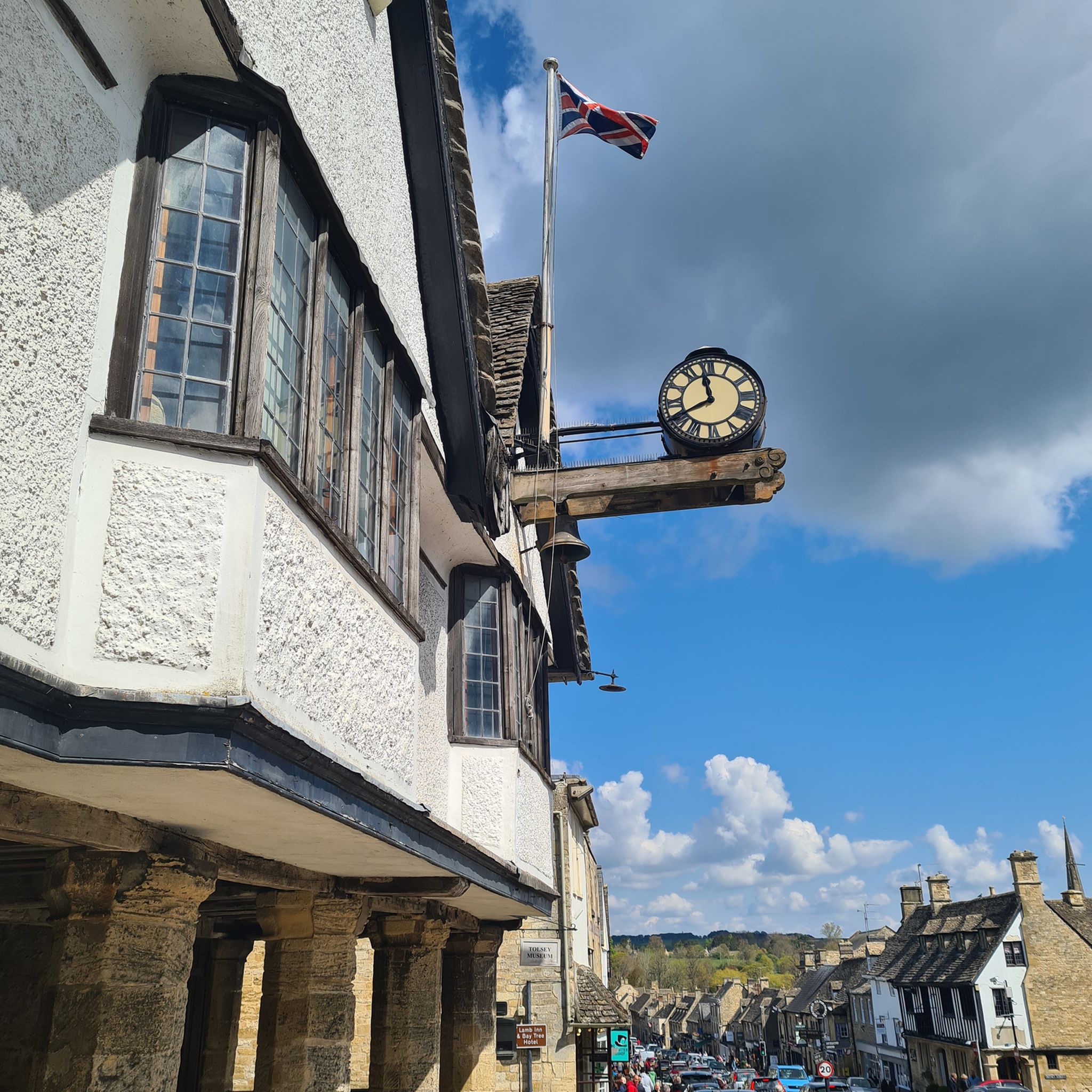
It's beautiful in a overrun-with-tourists kinda way, but the Deli here is excellent for coffee, food and expensive Italian ingredients that you don't need on a bike ride, but want.
0
0

This is amazing love place. I love to go this kind of place. https://www.health-insurancemarket.com
0
0
As a memorial to the many dead, such memorials - usually called "war memorials" in English - are still very important today. "Now, Lord, you let your servant depart in peace, as you have said..." says the so-called "Hymn of Simeon" (Luke's Gospel, Chapter 2, Verse 29). However, the people commemorated here did not depart in peace, but became victims of war and tyranny. This is why the term "dead soldiers' memorial" is now sometimes used in German instead of the previously most common "war memorial". However, such a war memorial, which one encounters so often on the road, regardless of nationality, language and name, is always a testimony - still significant and current today - to the horror of war and tyranny. They all have two essential functions, and this for each generation anew: -1- Commemorate and remember the victims -2- Remind people to keep the peace
0
0

Discover tearooms, independent shops, and many fantastic pubs and restaurants in the medieval town of Burford. The town is situated at the gateway to the Cotswolds and is well-known for its picturesque value.
2
1

Burford (/ˈbɜːrfərd/) is a town on the River Windrush, in the Cotswold hills, often referred to as the 'gateway' to the Cotswolds. The toponym derives from the Old English words burh meaning fortified town or hilltown and ford, the crossing of a river. Source: https://en.wikipedia.org/wiki/Burford
1
0

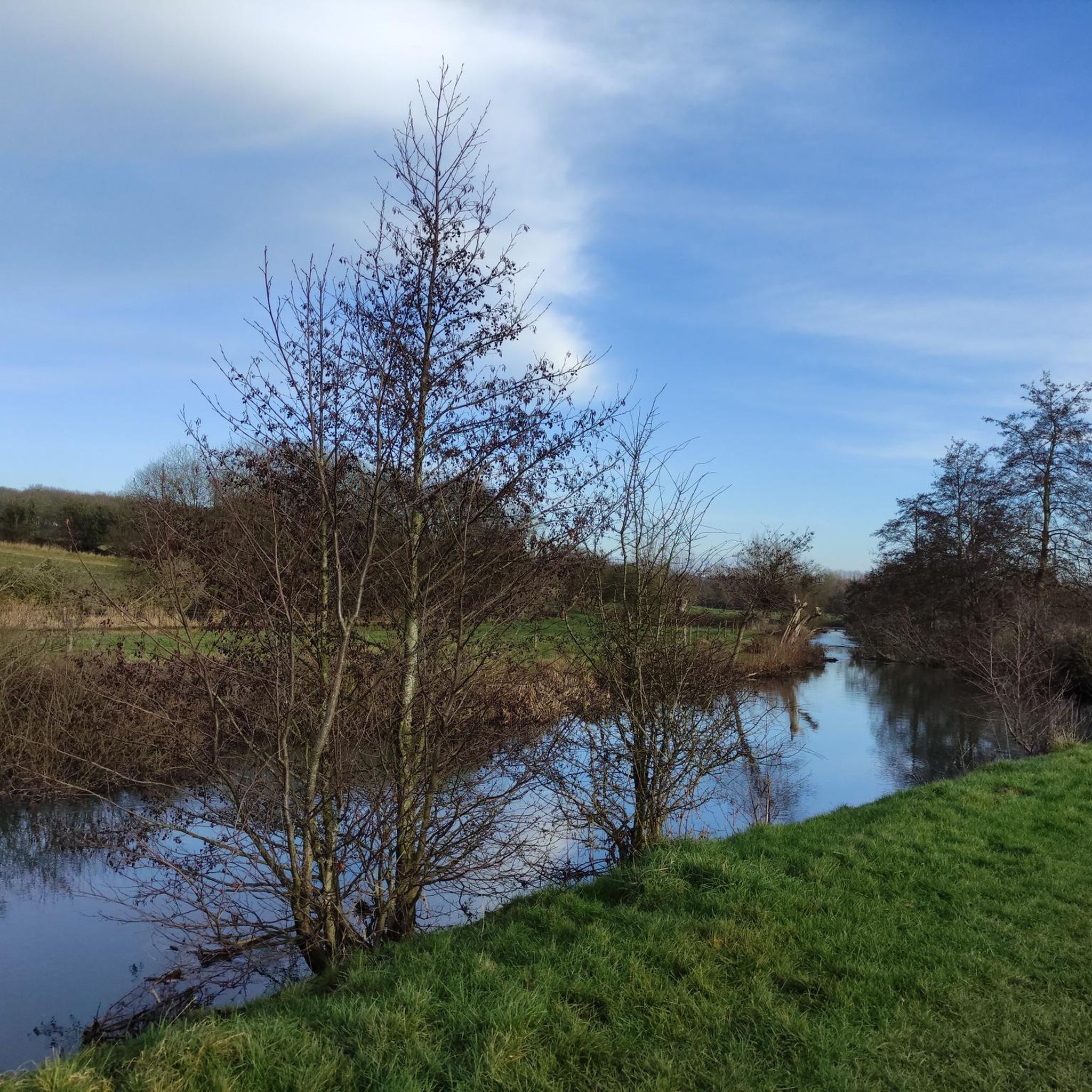
Wildlife Greystones Farm is home to Salmonsbury Meadows Site of Special Scientific Interest (SSSI). These ancient meadows are home to an incredible diversity of wildflowers and provide a habitat for many insects, butterflies, birds and mammals. In the spring and summer you will see great burnet, southern marsh orchids, early marsh orchids, ragged robin, devil’s-bit scabious, meadowsweet, knapweed and yellow rattle. These flowers support butterflies including orange-tip, meadowbrown, brimstone, small copper and ringlet. Greystones Farm are also working to restore the hay meadows which were damaged from the 1940s onwards, with the aim to bring local wildflowers back to these areas of Greystones. The rivers that run through Greystones are full of wildlife. Alongside the River Eye you can listen for water voles rustling among dense vegetation, as well as the distinctively ‘plop’ when they enter the water. This species is severely endangered, through loss of habitat and predation by mink, but thanks to Gloucestershire Wildlife Trust, Greystones now has one of the largest populations in the Cotswolds. Stretches of riverbank have been fenced off to encourage vegetation, for them and the otters that regularly travel the river. In this wonderful habitat tiny fish can be seen all year, but invertebrates like freshwater shrimps and mayfly nymphs hide away under pebbles and banks. Watch in early summer for flamboyant banded and beautiful demoiselles and for other species later. A glimpse of a kingfisher is possible! They have also created habitats and homes for bats, owls and other birds around the farm and visitor centre. Common and soprano pipistrelles, Natterer’s bats, long-eared bats and lesser horseshoe bats roost above the Discovery Barn and barn owls roost in the office building. Around the farm, swallows and house martens nest in the barn eaves and pied wagtails stalk the rooves looking for insects.
0
0
Frequently Asked Questions
What family-friendly attractions are available around Burford?
For families, Greystones Farm Nature Reserve offers waymarked trails, a cafe, and opportunities to explore ancient history and wildlife. The Minster Lovell Hall Ruins also provide an engaging historical site for all ages to discover. Additionally, The Swan Inn is a family-friendly pub with a large beer garden.
Are there historical sites to visit near Burford?
Yes, the area is rich in history. You can explore the medieval Minster Lovell Hall Ruins, which date back to around 1440. The Church of St Lawrence, Wick Rissington, showcases architectural evidence from the 12th century. There is also the Shilton War Memorial, a significant monument commemorating victims of war.
What natural attractions can I explore around Burford?
The primary natural attraction is Greystones Farm Nature Reserve, featuring rare tree species, ancient hedgerows, wildflower meadows, and the River Eye. It's a great place for nature walks and wildlife spotting.
Are there easy walking trails near Burford's attractions?
Yes, there are several easy walking trails. For example, you can find routes like the 'Burford and River Windrush Roman Way' or various 'Burford loop' options. You can discover more easy hikes in the area by visiting the Easy hikes around Burford guide.
Where can I find parking when visiting attractions in Burford?
Some attractions, like The Swan Inn, offer dedicated parking for visitors. For walking trails and other sites, parking availability can vary, so it's advisable to check specific location details or look for public car parks in Burford town centre.
What outdoor activities are available near Burford?
Beyond exploring attractions, you can enjoy various outdoor activities. There are numerous cycling routes, including moderate and difficult options, detailed in the Cycling around Burford guide. Mountain biking trails are also available, which you can find in the MTB Trails around Burford guide.
What do visitors enjoy most about the attractions around Burford?
Visitors frequently appreciate the blend of historical significance and natural beauty. Highlights like Greystones Farm Nature Reserve are praised for their well-maintained trails and cafes, while Minster Lovell Hall Ruins are loved for their atmospheric glimpse into the past. The community has shared over 90 upvotes and 16 photos, indicating a high level of satisfaction with the diverse offerings.
Are there any pubs or places to eat near the attractions?
Yes, The Swan Inn is a notable pub near some attractions, offering food, drinks, and a large beer garden. Greystones Farm Nature Reserve also has a cafe on-site, perfect for refreshments after exploring the reserve.
Can I find circular walks that include some of Burford's attractions?
Yes, several circular walks are available. For instance, the 'Burford loop' and 'Shilton War Memorial loop' are easy circular routes that allow you to take in local sights. More options can be found in the Easy hikes around Burford guide.
What is the best time of year to visit Burford's attractions?
The Cotswolds, including Burford, are beautiful year-round. Spring and summer offer pleasant weather for exploring nature reserves and ruins, with wildflowers in bloom. Autumn brings stunning foliage, while winter can provide a quieter, picturesque experience, especially for historical sites. Always check local weather forecasts before your visit.
Are there any hidden gems or lesser-known spots worth visiting near Burford?
While not explicitly 'hidden,' the Church of St Lawrence, Wick Rissington, offers a fascinating look into medieval architecture and history, often providing a quieter experience than more prominent sites. Its detailed 13th-century work is particularly remarkable.
Most popular routes around Burford

Get inspired with the komoot mobile app


Explore more
Still not found the Highlight you’re looking for? See guides of the top attractions in other regions:
