Attractions and Places To See around Kirtlington - Top 20
Best attractions and places to see around Kirtlington include a blend of historical landmarks and natural features in Oxfordshire. The area is characterized by its picturesque village architecture and significant geological sites. Visitors can explore ancient roads, scenic canal routes, and notable cultural sites.
Best attractions and places to see around Kirtlington
- The most popular attractions is Grand Bridge at Blenheim Palace, a bridge that was designed with 30 rooms and later partially submerged by the creation of Blenheim's…
Last updated: July 2, 2026
Grand Bridge at Blenheim Palace
Highlight • Bridge
Tip by

Blenheim Palace — UNESCO World Heritage Site
Highlight • Historical Site
Tip by

Sign up now to discover places like this
Get recommendations on the best single tracks, peaks, & plenty of other exciting outdoor places.
Sign up for free
Godstow Abbey Ruins
Highlight • Monument
Translated by Google •
Tip by

St Mary’s Church, Hampton Poyle
Highlight • Religious Site
Tip by

Church of St Giles, Hampton Gay
Highlight • Religious Site
Tip by
Sign up for free to discover even more attractions around Kirtlington.
Sign up for free
Already have an account?
Start today with a free account
Your next adventure awaits.
Login or Signup

Tips from the Community

Godstow Abbey is the remains of a 12th-century nunnery. It is located in a peaceful meadow beside the River Thames, just north of Oxford. This historic site is renowned as the final resting place of "Fair Rosamund" de Clifford, the famed mistress of King Henry II.
1
0

In addition to a tour of the baroque-style castle, there is also an interesting and recommendable exhibition about the British politician Winston Churchill.
3
0

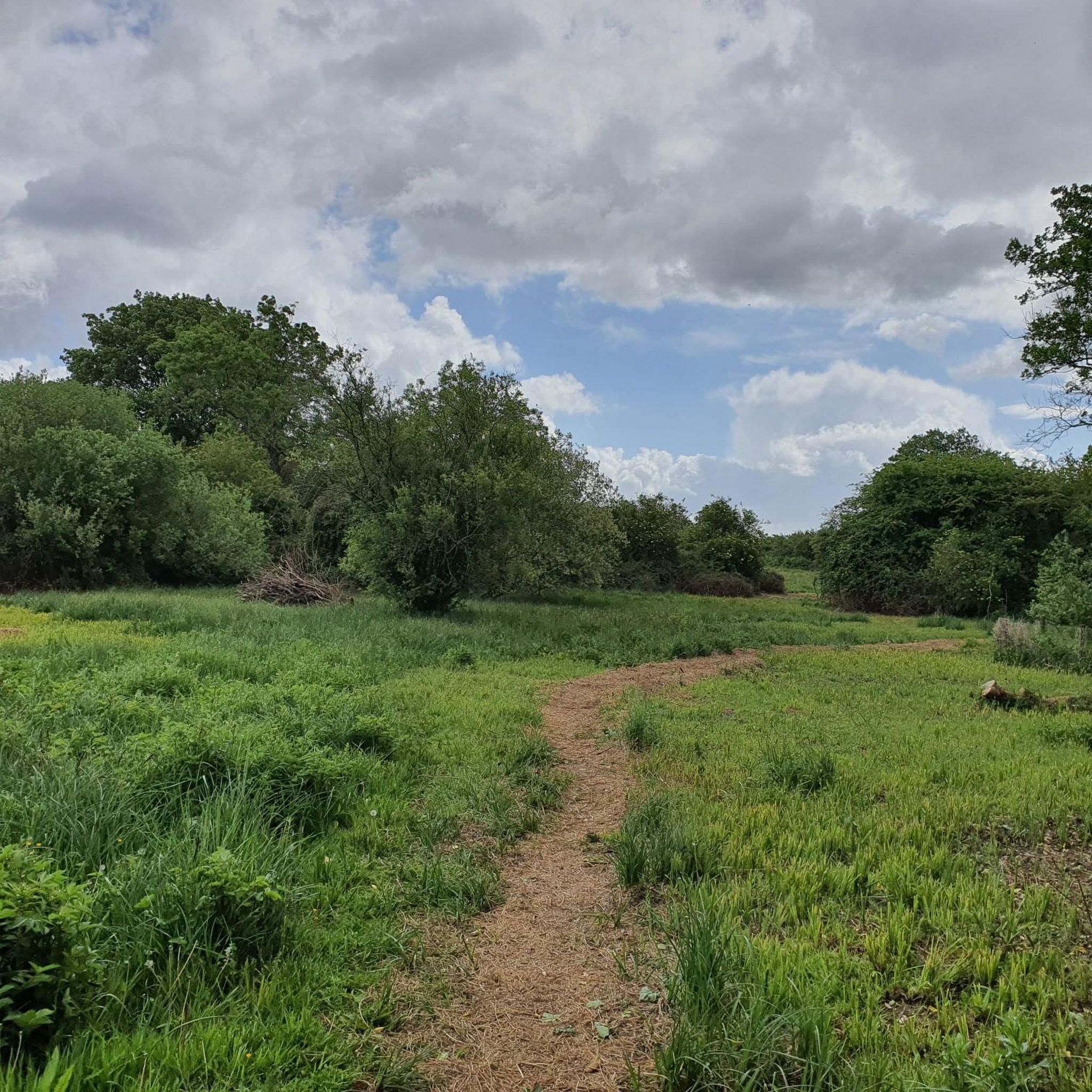
Some windows are still intact, but the glass elements are missing. Beautiful motif in the morning with fog.
7
0

Church. Medieval; rebuilt 1767-72 for Reverend Thomas Hinds; restored 1860 by Reverend F.C. Hingeston. Squared and coursed limestone with ashlar quoins; coursed limestone rubble with north wall and west tower. Gabled stone slate roof. Nave, chancel and west tower. East window of graduated C13-style lancets. Two-bay side walls have classical moulded cornice and pointed lancets; hood mould over mid C19 pointed arched chamfered doorway with plank door. Medieval 2-storey west tower; mid C19 Norman-style west doorway with nailhead decoration; C18 semi-circular arched belfry windows with key and impost blocks; crenellated parapet; pyramidal-roof has large ball finial and wrought-iron weathervane. Interior: mid C18 panelled pulpit; mid C19 pews; mid C18 gallery with panelled font set on slender octagonal shaft. Mid C18 plaster ceiling, with moulded cornice and square panels and central roundel. Monuments: south wall has white marble architectural monument with shield set in broken pediment and fluted Ionic pilasters to Thomas Hindes, d.1718, and wife Elizabeth, d.1761; two C20 wall tablets set in architectural frame. North side: architectural wall monument to Reverend Thomas Hindes, d.1768, with shield set in broken pediment and fluted pilasters; large fine architectural coloured monument to Vincent Barry, d.1615, his wife and daughter Lady Katherine, d.1663. 3 shields surmount inscription flanked by putti; Corinthian columns flank figures kneeling at prayer desks, with children below, set in segmental-arched recess with rosettes. Church stands in isolated position in fields, with deserted medieval village to south. (Buildings of England: Oxfordshire: p630; VCH: Oxfordshire: Vol VI, pp158-9; National Monuments Record)
1
0
On the edge of the village, surrounded by fields grazed by sheep and horses, St Mary’s Hampton Poyle enjoys one of the loveliest settings of any church in Oxfordshire. Built of local stone around the same time as St Mary’s Kidlington, it has many interesting features inside and out. Small and simple Two stone corbels greet you at the large oak entrance door, which opens into the south aisle. The core of the church is a simple 13th-century chapel, consisting of a nave and chancel. The north and south aisles were added in the 14th century and the double bellcote at the west end is thought to date from the early 18th century. The chancel The chancel contains some fine features from the 13th-century ‘Early English’ period, including a lancet window and a priest’s door on the south side. The three-light east window, with its geometric tracery, dates from the late 13th century. The glass was renewed in the Victorian period. Medieval stained glass from about 1400 survives in the lights at the top of the window in the north side. They represent the symbols of the four Evangelists. The ornate marble reredos behind the altar, and the tiles at the side, were added in the Victorian period. The north aisle The two recumbent effigies in the north aisle are said to represent Walter de la Poyle, who became Lord of the Manor in 1267, and Catherine, Lady of the Manor, who died in 1489. The window on the left of the north wall shows the arms of Walter de la Poyle, and the brass fixed to the wall represents John Poyle (d. 1424) and his wife Elizabeth. Low down towards the east end of the wall there is a niche containing what is thought to be a ‘heart-stone’ for the separate burial of a heart. Interlocking arms Between the nave and north aisle is an octagonal pillar with a capital showing the upper halves of four figures with their arms linked. This style of 14th-century sculpture is more common in churches further north in Oxfordshire, including Adderbury and Bloxham. The Parish Previously a parish in its own right, Hampton Poyle has been served by the Kidlington Team Ministry for a number of years and was united with the Parish in 1997. Condemned clergy Hampton Poyle’s 16th-century priest Richard Thomason was allegedly condemned to hang in chains from Duns Tew steeple for his opposition to the first prayer book of Edward VI. The 17th-century rector Edward Fulham was forced to resign and flee abroad on account of his strong Royalist views and his opposition to Puritanism.
1
0

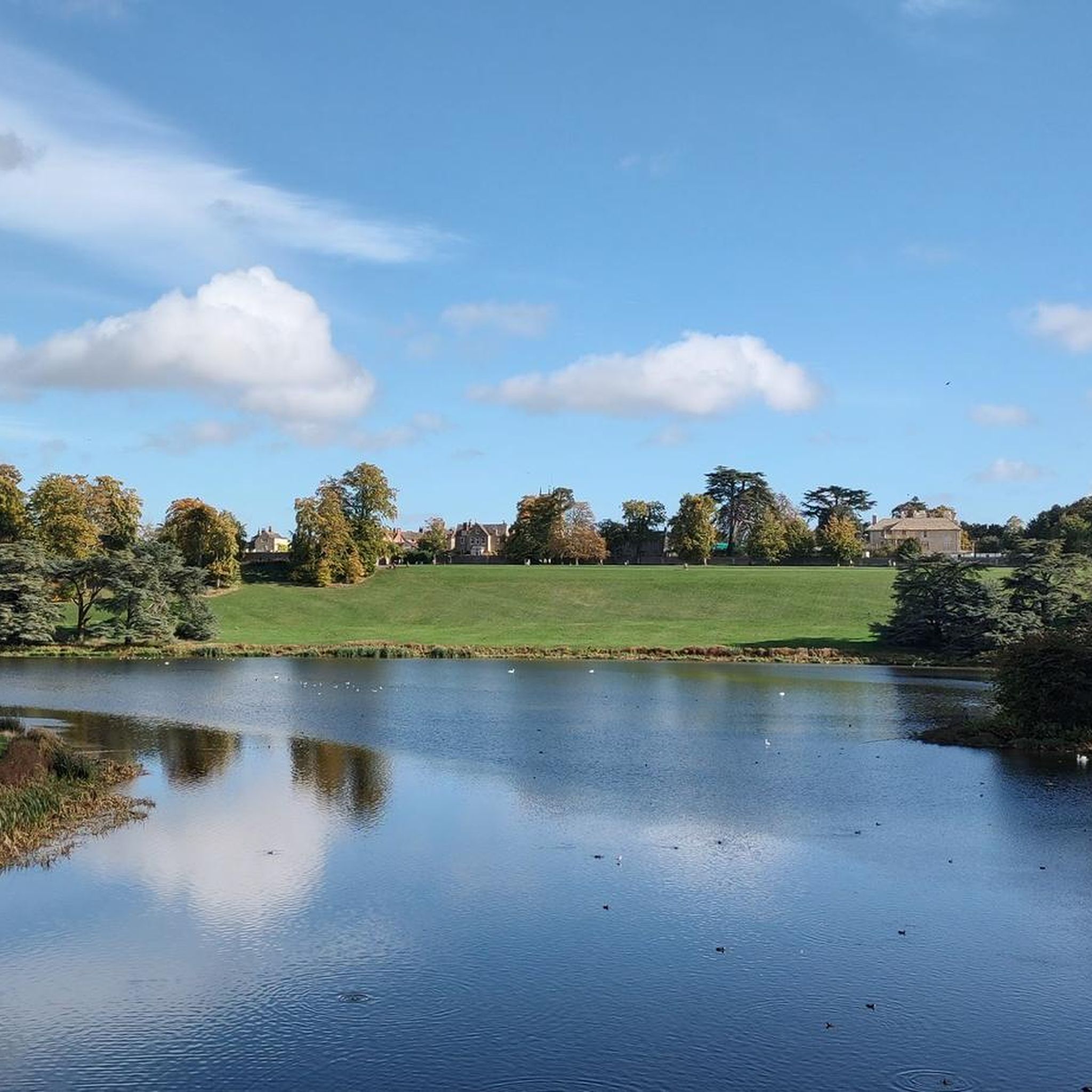
In 1704, Blenheim architect John Vanbrugh set out to create something spectacular across what was then just a marshy brook. The Grand Bridge was the outcome, containing no less than 30 rooms. In 1764, 'Capability' Brown set about improving and landscaping the grounds. His most notable work was the creation of Blenheim's Lake, which submerged the lower stories of the bridge.
1
0

The ruins of the 12th-century Godstow Nunnery have a wonderful atmosphere. The abbey was founded by Edith of Winchester in 1133. As the story goes, Edith had a vision telling her to settle near Oxford and wait for a sign from God. She lived at nearby Binsey for a short while, until one night she heard a voice that told her to go where a light from heaven reached the ground and build a nunnery for 24 women. She looked north and saw a light over Godstow. Edith went to Henry I and told him of her vision and the king approved of her new foundation.
3
0

Everything about the bridge is extraordinary and much of it is puzzling. No ground plan has survived. All we have is an elevation showing the proposed superstructure in the manner of a viaduct or of the Pont du Garde. Sarah 1st Duchess of M Marlborough vetoed the arcade. ÒI made Mr Vanbrugh my enemy', she wrote, Òby the constant disputes I had with him to prevent his extravagance.' The immensity of the Grand Bridge and its cost was one of the main subjects of their dispute. The Duchess scathingly told a friend that she had counted thirty-three rooms in it, that there was a house at each corner and that what made it so much prettier than London Bridge was that you might Òset in six rooms and look out at the window' while the coaches rumbled over your head. Vanbrugh in its defence went so far as to assure her that if, when it was finished, she found a house inside it she would go and live in it. Nothing was more unlikely; and indeed there is no evidence that it was ever lived in, though some rooms have fireplaces and chimneys, and one large windowless chamber has been plastered and fitted with an elliptical arch as though for a theatre. Old guidebooks describe the bridge as a cool retreat in summer, and no doubt many a picnic was enjoyed in the sunnier rooms. Unfortunately, it is no longer safe to enter now. http://www.camelotintl.com/heritage/historichouses/south_east/blenheim_palace/bpbridge.html
2
0
Frequently Asked Questions
What historical landmarks can I explore in Kirtlington?
Kirtlington offers several historical landmarks. You can see the magnificent 18th-century Palladian country house, Kirtlington Park, set in parkland landscaped by Capability Brown. The village's Church of St Mary the Virgin dates back to the Domesday Book, featuring Norman arches and medieval stained glass. Additionally, the ancient Portway and Akeman Street, pre-Roman and Roman roads, bisect the parish, offering a glimpse into its long history.
What natural attractions are there to visit in Kirtlington?
The primary natural attraction is the Kirtlington Quarry Nature Reserve, a geological Site of Special Scientific Interest. It's renowned for its rich diversity of Middle Jurassic fossils, woodland paths, and canal trails. The Oxford Canal and River Cherwell run west of Kirtlington, providing scenic routes for walking, cycling, and bird-watching, with a tea shop at Pigeon Lock.
Are there any family-friendly attractions in Kirtlington?
Yes, several attractions are suitable for families. The Kirtlington Quarry Nature Reserve offers opportunities for nature walks and fossil hunting. Exploring the scenic paths along the Oxford Canal and River Cherwell is also a pleasant family activity. Nearby, you can visit the monumental Blenheim Palace — UNESCO World Heritage Site, which is listed as family-friendly and offers tours and exhibitions. The Godstow Abbey Ruins also provide a peaceful, historical site for families to explore.
What outdoor activities can I do around Kirtlington?
Kirtlington is excellent for outdoor activities. You can enjoy walking and cycling along the Oxford Canal and River Cherwell. The Kirtlington Quarry Nature Reserve has woodland paths and canal trails ideal for hiking and nature walks. For more structured routes, you can explore various cycling options, including Road Cycling Routes around Kirtlington, Cycling around Kirtlington, and MTB Trails around Kirtlington.
Can I visit Kirtlington Park?
Kirtlington Park is a private Grade I listed country house. While it primarily serves as a wedding venue, it occasionally offers tours. Its extensive parkland, landscaped by Capability Brown, provides expansive views. For more information on visiting, you might check their official website or resources like Historic Houses.
What is special about Kirtlington Quarry Nature Reserve?
The Kirtlington Quarry Nature Reserve is a geological Site of Special Scientific Interest, globally recognized for its Middle Jurassic vertebrate fossils. It's one of the most important sites for extinct mammals, dinosaurs, crocodilians, pterosaurs, and shark teeth from around 166 million years ago. Beyond its paleontological significance, it offers woodland paths and limestone grassland for nature walks, though paths can be muddy after rain.
Are there any notable churches in or near Kirtlington?
Yes, the village is home to the historic Church of St Mary the Virgin, with parts dating back to the early 12th century. Nearby, you can find Holy Cross Church, Shipton-on-Cherwell, a medieval church rebuilt in the 19th century, and St Mary’s Church, Hampton Poyle, known for its lovely setting and 13th-century features.
What kind of wildlife can I spot in Kirtlington?
The Kirtlington Quarry Nature Reserve and the areas along the Oxford Canal and River Cherwell are excellent for wildlife spotting. The reserve features diverse habitats supporting various species, while the canal and river banks are ideal for bird-watching and observing aquatic life. The parkland around Kirtlington also provides habitats for local fauna.
What is the best time of year to visit Kirtlington?
Kirtlington is enjoyable throughout the year, but the summer season is particularly vibrant, especially for events like the weekly polo matches at Kirtlington Park Polo Club. Spring and autumn offer pleasant weather for walking and exploring the natural reserves and canal paths. Be prepared for muddy sections in the quarry, especially after rain, regardless of the season.
Are there places to eat or drink in Kirtlington?
Yes, Kirtlington provides traditional village amenities including public houses. You can find local pubs like the Oxford Arms and the Dashwood Arms. Additionally, a tea shop is located by the canal at Pigeon Lock, which is open on select weekends from April to October, offering a pleasant stop during walks or cycles.
What are some unique historical features of Kirtlington village itself?
Kirtlington village is characterized by its attractive cottages built from light honey-coloured stone with stone roofs, contributing to its historic charm. The L-shaped manor house in Church Lane dates back to 1563. The village also features two attractive triangular greens with ornamental trees, adding to its picturesque and historic character.
Is Kirtlington accessible by public transport?
While specific public transport details for Kirtlington are best checked with local services, the village is situated in Oxfordshire, which generally has bus routes connecting to larger towns. Planning your visit in advance and checking local bus schedules would be advisable for public transport access to Kirtlington and its attractions.
Most popular routes around Kirtlington

Get inspired with the komoot mobile app


Explore more
Still not found the Highlight you’re looking for? See guides of the top attractions in other regions:
