The best running trails around Foscott
4.3
(21)
4,788
runners
246
runs
Jogging routes around Foscott traverse a landscape characterized by rural settings and natural features. The region includes Foscott in Buckinghamshire, known for the Foxcote Reservoir and quiet country lanes, and Foscot in Oxfordshire, situated within the Cotswolds Area of Outstanding Natural Beauty with rolling hills and the Foxholes woodland nature reserve. These areas offer varied terrain, from gentle paths around water features to routes through traditional English countryside and alongside rivers. The elevation changes are generally modest, making the area…
Last updated: August 17, 2026
3.16km
00:20
10m
10m
Moderate run. Great for any fitness level. Mostly accessible paths. Some sure footedness required.
60
runners
17.9km
01:56
150m
150m
Hard run. Very good fitness required. Mostly paved surfaces. Suitable for all skill levels.

Sign up for free
36
runners
11.6km
01:14
80m
80m
Moderate run. Good fitness required. Mostly paved surfaces. Suitable for all skill levels.
18
runners
8.09km
00:51
80m
80m
Moderate run. Good fitness required. Mostly paved surfaces. Suitable for all skill levels.
15
runners
Moderate run. Good fitness required. Mostly paved surfaces. Suitable for all skill levels.
Get access to more routes and recommendations from other explorers.
Sign up for free
Already have an account?
Our route recommendations are based on thousands of hikes, rides, and runs completed by other people on komoot.
Start today with a free account
Your next adventure awaits.
Login or Signup



Tips from the Community

If you find yourself passing 10-12 on a Wednesday morning, pop in and you will be treated to homemade cakes and tea/coffee.
0
0

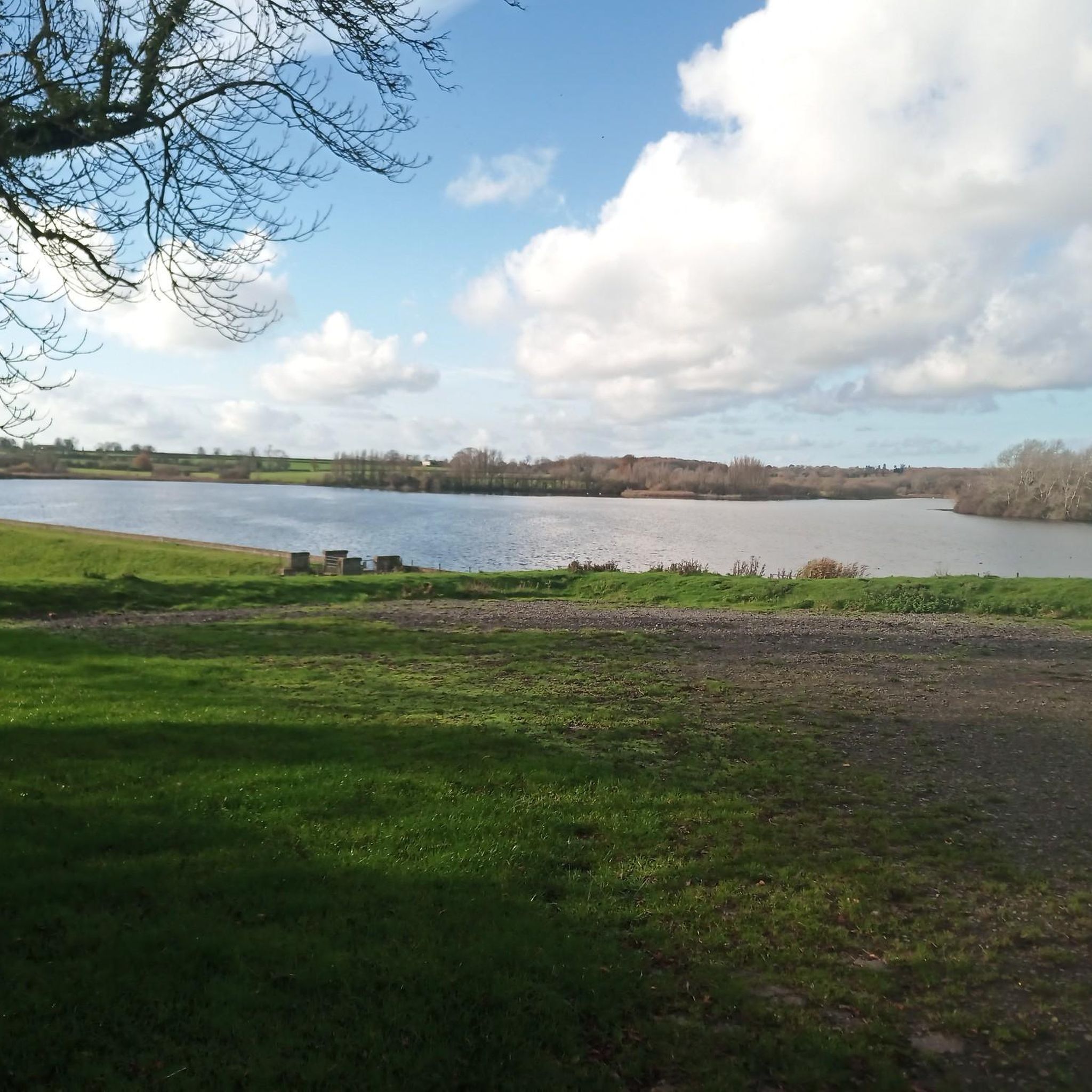
Lying in a rolling Buckinghamshire landscape of arable fields, pasture and woodland, Foxcote Reservoir is the kind of place that rewards patient visitors. Created in 1956 by damming a small tributary of the River Great Ouse, this site has become important for the numbers of wintering waterfowl, especially wigeon and coot. https://www.bbowt.org.uk/nature-reserves/foxcote-reservoir
0
0

Public school-boy favourite for stone-skipping and a spot of fishing on the sly. We had a picnic on the bank - it's a lovely place.
0
0

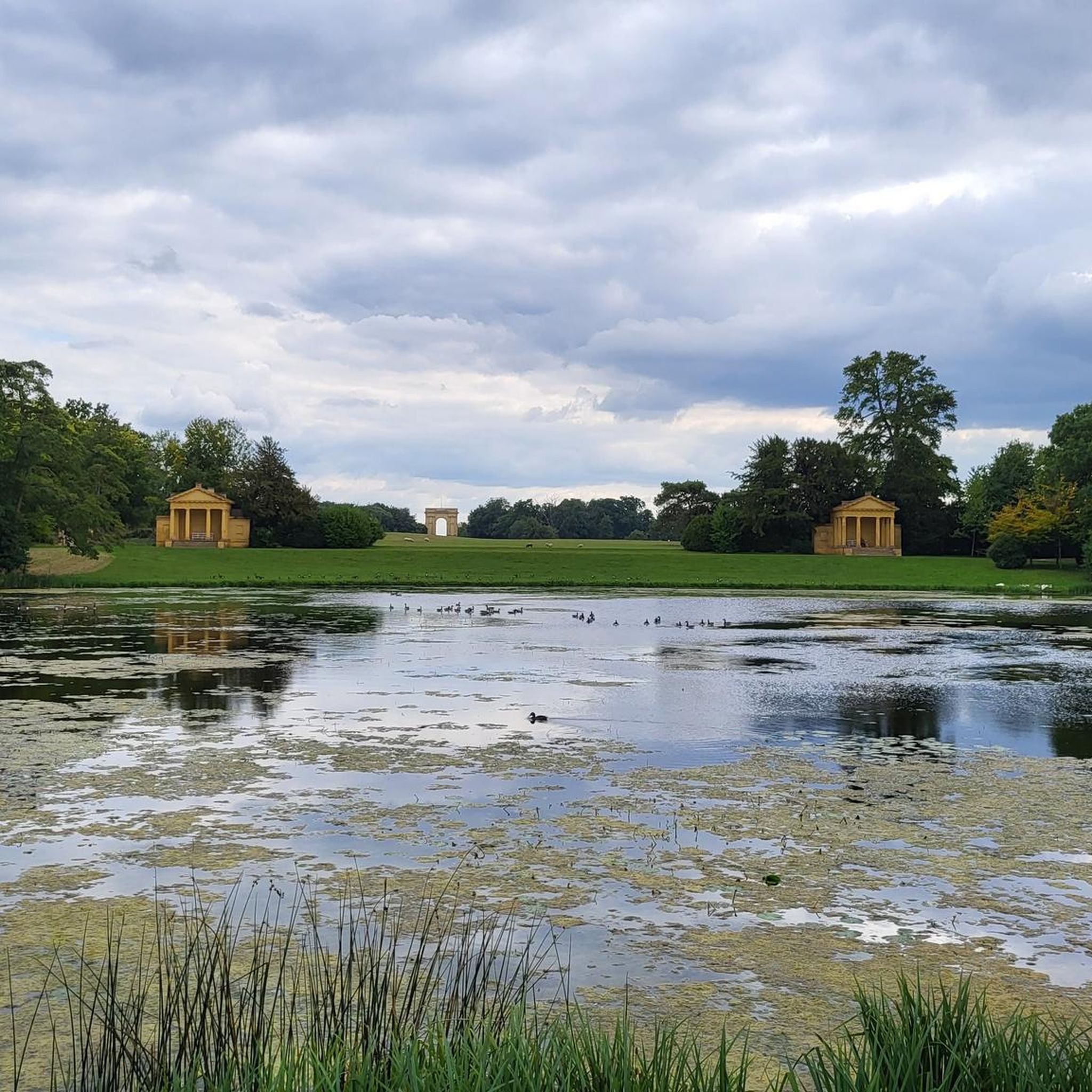
Beautiful lake at the bottom of Stowe Gardens by the main entrance. There is accessible paths all the way around too.
0
0

One of the first areas of the garden that visitors may encounter is the Octagon Lake and the features associated with it. The lake was originally designed as a formal octagonal pool, with sharp corners, as part of the seventeenth century formal gardens. Over the years, the shape of the pond was softened, gradually harmonising it within Stowe's increasingly naturalistic landscape. Source: Wikipedia
0
0
The Temple of Venus stands on the southern bastion of Bridgeman’s ha-ha overlooking the south end of the Eleven-Acre Lake. Dating from 1732. The Temple of Venus is a strictly Palladian building with a central pedimented block with a coffered ceiling flanked by arcaded Ionic colonnaded quadrant wings terminating in rusticated pavilions. Built in about 1731 and probably designed by Kent the interior was originally painted. Palladian building. Circa 1732 by Kent. Central pedimented block has arched central apsidal recess with coffered ceiling and Ionic collonade. Quadrant wings of three arches with ball finials to cornice, linking to rusticated stone pavilions with open arches and broken pediments. The Temple of Venus stands on the southern bastion of Bridgeman’s ha-ha overlooking the south end of the Eleven-Acre Lake. Dating from 1731, it marks the beginning of William Kent’s employment in the gardens at Stowe, and the completion of the garden as it then existed. Even after Kent had contributed several more temples, it kept the alternative name of ‘Kent’s building’. It is built of Helmdon limestone and consists of a central pedimented block with an apsidal Ionic portico in antis linked to corner pavilions by arcaded quadrant walls. Apart from the central block, it has only one façade; the rear walls were rendered and for the most part hidden by shrubberies, which in the late eighteenth century consisted of a garden of evergreens. No direct source for the design has been suggested. The careful siting of the building and the pronounced lean of the arcade piers were noticed by Thomas Whately in 1770, who observed that the ‘elegant structure, inclined a little from a front view, becomes more beautiful by being thrown into perspective; and though at a greater distance, is more important than before, because it is alone in the view.’ Within the Temple of Venus the goddess was represented by a painting in the centre of the ceiling by the Venetian Francesco Sleter; the room was furnished with what was described as a ‘pleasuring sopha’, and inscribed around the frieze was the encouraging couplet from a Renaissance adaptation of the Pervigilium Veneris: "Nunc amet, qui nondum amavit; Quique amavit, nunc amet. (Let him love, who never lov’d before; Let him who always lov’d, now love the more.) The other parts of the decoration emphasised Venus’s role in promoting sexual jealousy and strife. In the niches surrounding the portico were busts (copies recently reinstated) of the debauched emperors Nero and Vespasian and the adultresses Cleopatra and Faustina. The internal walls were once decorated with scenes from Spenser’s Faerie Queene, also provided by Sleter. They told the story of Malbecco, the octagenarian husband of the seventeen-year-old Hellinore. She soon sought alternative pleasures, which were portrayed with frankness in the murals. The stone domes to the pavilions collapsed before the end of the eighteenth century, and in 1827–8 the 1st Duke of Buckingham replaced them with pitched lead roofs. In 1827 the doorways were altered to form round-headed arches, but the recent restoration of the temple has reinstated Kent’s design. Sleter’s murals evidently perished or were painted over during the later eighteenth century and were replaced by the 1st Duke of Buckingham with a scheme of plain, pale-coloured walls bordered with wash lines in greenish blue. The recent restoration has included the excavation of the ground to the south in order to reinstate the original line of the ha-ha. The shrubberies to either side will be replanted in the ‘ranked’ manner of the mid-eighteenth century according to available evidence, and beyond the ha-ha there now appears a scene Lord Cobham himself would have recognised: files of ‘cased’ tree seedlings on the lines of his original plantings, swinging round the bastion to link up with the earlier replantings on Warden Hill to the west. Source: nationaltrust.org.uk
0
0
Eighteenth century shell-encrusted dam disguised as a bridge, formerly the site of a monument to Captain Cook. Grade I. A dam in the Elysian Fields, disguised as a low bridge. c1740 by Kent. Stone dressings, rendering encrusted with shells. Five bays with low arches, central bay projecting and pedimented, 2 smaller pediments each side above piers. Captain Cook's Monument, standing on the bridge, is a small monument with portrait medallion dated 1778 which was moved to Duck Island in th 1990s. The National Trust's Survey of Stowe undertaken in 1989 noted that the south front is encrusted with conch shells and that the overflow from the upper lake originally ran through channels in the centre and on either side creating a cascade. The abutments on either side may have supported a wooden footbridge giving views of the fake meander in the Styx and Worthies river. Source: Buckinghamshire.gov.uk
1
0
Frequently Asked Questions
How many running routes are available in the Foscott area?
The Foscott region offers a wide variety of running options, with over 250 routes available. These include 27 easy, 195 moderate, and 32 difficult trails, catering to all fitness levels.
What do other runners say about the trails in Foscott?
The running routes in Foscott are highly rated by the komoot community, holding an average score of 4.0 stars from over 15 reviews. More than 3,700 runners have explored the varied terrain, often praising the scenic beauty and tranquil rural settings.
Are there any circular running routes in Foscott?
Yes, Foscott features several excellent circular running routes. A popular choice is the Foxcote Reservoir – The Hand-Shaped Tree loop from Buckingham, a moderate 7.2-mile (11.6 km) path that circles the Foxcote Reservoir, offering beautiful water views. Another option is the Thornborough Bridge – Bench by the Stream loop from Thornborough, a moderate 5-mile (8.1 km) route.
What kind of terrain can I expect on Foscott's jogging paths?
The Foscott area offers diverse terrain for jogging. In Buckinghamshire, you'll find quiet country lanes and paths around the Foxcote Reservoir. In Oxfordshire, within the Cotswolds Area of Outstanding Natural Beauty, routes feature rolling hills and woodland paths, such as those in the Foxholes nature reserve. Elevation changes are generally modest, making the area suitable for various abilities.
Are there routes suitable for beginners or those looking for an easy jog?
Absolutely. Foscott provides 27 easy running routes, perfect for beginners or those seeking a relaxed jog. These routes typically feature flatter terrain and shorter distances, allowing for a comfortable experience.
What natural features or landmarks can I see while jogging in Foscott?
While jogging in Foscott, you can encounter several natural and man-made landmarks. In Buckinghamshire, the Foxcote Reservoir is a prominent feature, known for its birdlife. Nearby, you might also spot the Palladian Bridge at Stowe or the Octagon Lake Cascade and Artificial Ruins. The Stony Stratford Nature Reserve is another point of interest.
Are there dog-friendly running trails in Foscott?
Many of the rural footpaths and country lanes around Foscott are suitable for running with dogs, provided they are kept under control, especially near livestock. The natural settings, including woodland areas like Foxholes in Oxfordshire and paths around Foxcote Reservoir, offer pleasant environments for you and your canine companion.
When is the best time of year to go running in Foscott?
Foscott offers enjoyable running conditions throughout the year. Spring brings vibrant colors, especially with bluebells in woodlands like Foxholes. Summer provides pleasant temperatures for early morning or late afternoon jogs. Autumn showcases beautiful foliage, and even winter offers peaceful, crisp runs, particularly around the Foxcote Reservoir which attracts various wildfowl.
Where can I find parking for the running trails near Foscott?
While specific parking details for every trail aren't listed, given the rural nature of Foscott, you can often find roadside parking in hamlets or designated car parks near popular trailheads or attractions. For routes starting from larger towns like Buckingham, public car parks are available. Always check local signage for restrictions.
Is Foscott accessible by public transport for runners?
Foscott is a rural area, so public transport options might be limited compared to larger towns. However, routes originating from nearby towns like Buckingham, such as the River Great Ouse in Buckingham – Buckingham Old Gaol loop, may be more accessible via local bus services. It's advisable to check local bus schedules for connections to the Foscott hamlets or nearby starting points.
Are there any cafes or pubs along the running routes in Foscott?
While Foscott itself is a small hamlet, running routes often pass through or near larger villages and towns like Buckingham where you can find cafes and pubs. These establishments offer a great opportunity to refuel or relax after your run. It's recommended to plan your route to include stops in these areas if you wish to visit a cafe or pub.
Can I find routes that are family-friendly for a jog?
Yes, Foscott has several routes suitable for families. The 27 easy routes are generally shorter and have less elevation, making them ideal for family jogs. For example, the Stratford Fields to Bourton Park loop is a moderate 2.0-mile (3.2 km) trail that offers a pleasant run through local parklands, which can be a good option for families.
Most popular attractions around Foscott

Get inspired with the komoot mobile app


Explore more
Browse the best Running Trails & Routes in other regions.
