Attractions and Places To See around Wolvey - Top 20
Best attractions and places to see around Wolvey include a blend of historical landmarks, cultural sites, and natural features. This Warwickshire village is situated near the source of the River Anker and tributaries of the Little Soar and Withybrook stream. The area holds historical significance, with evidence of Neolithic and Bronze Age occupation, and the major Roman road, Watling Street, forming part of the parish boundary. Visitors can explore a variety of sites reflecting centuries of history and natural beauty.
Best attractions and places to see around Wolvey
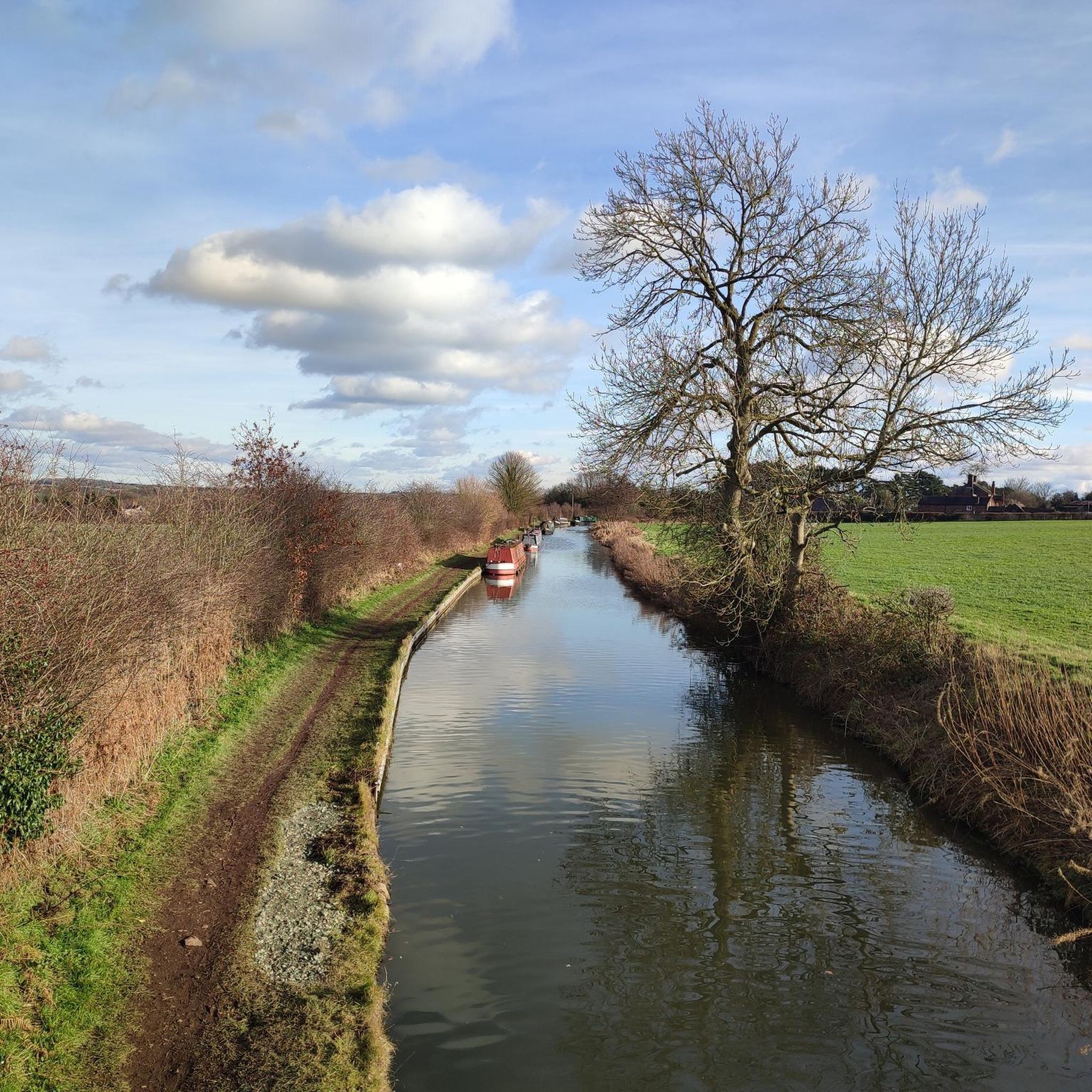
- The most popular attractions is Hawkesbury Canal Junction (Sutton Stop), a historical site that served as an important link in England's canal network for around 200 years. This junction marks the northern termination of the Oxford Canal where it meets the Coventry Canal, and features a traditional canalside inn.
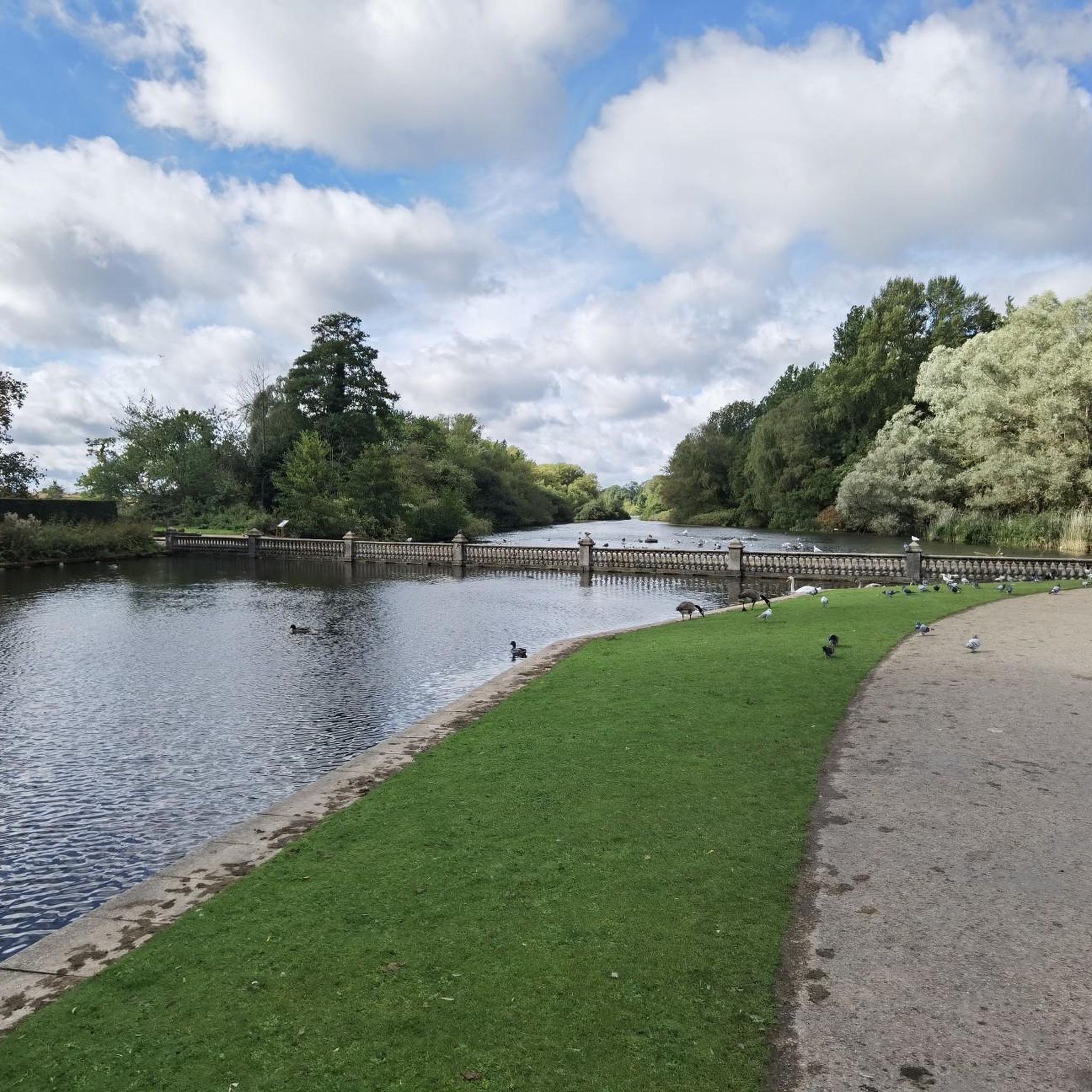
- Another must-see spot is Coombe Abbey, a country park developed from the grounds of a Cistercian abbey. The 500 acres of gardens, woodland, and lakeside areas were designed by Capability Brown, offering views of the abbey and lake with diverse bird life.
- Visitors also love New Close Wood, a forest predominately featuring oak woodland with ash and frequent silver birch. The ground flora includes bluebell, wood anemone, and foxglove, making it a notable natural feature.
- Wolvey is known for its historical sites, natural woodlands, and significant waterways. The area offers a variety of attractions to see and explore, from ancient churches to tranquil nature reserves.
- The attractions around Wolvey are appreciated by the komoot community, with 75 upvotes and 35 photos shared by visitors.
Last updated: July 6, 2026
Hawkesbury Canal Junction (Sutton Stop)
Highlight • Historical Site
Tip by

St John the Baptist Church
Highlight • Historical Site
The chancel is built of a mixture of limestone and sandstone rubble patched with bricks and tiles and has a modern steep-pitched tiled roof, modern coping and cross finial, and rebuilt buttresses. It is lighted on the east by a modern window of three pointed lights with a hood-mould and head-stops. The south side has a central buttress, and west of it are two restored lancet windows with a narrow doorway between them. The lancet to the west is divided by a transom to form a low side window. The doorway has a restored pointed arch, the splay carried down the jambs. The north side has a central buttress and another butting against the aisle wall, with a restored lancet window between them. The south aisle is built of red sandstone ashlar with a plinth of one splay, stepped down to conform with the slope of the ground. The wall is diminished in thickness by a weathered offset at sill level. It has a low-pitched lead-covered roof with a plain low parapet, with a moulded coping projected on a moulded stringcourse. The east gable is lighted by a partly restored traceried window of three cinquefoil lights under a hollow-moulded four-centred head. The south wall has buttresses at the angles, two intermediately, and a porch towards the western end. It is lighted between the buttresses by three windows similar to the one in the east wall. The porch has been rebuilt in brick and stone with a tiled roof and the entrance blocked to form a vestry. The south door, which has a four-centred arch under a square head, has been mutilated. The west end is similar to the east, but the coping is carried up as a lean-to instead of a gable. The buttress at the angle is diagonal, splayed to a point. The north aisle is built of rubble similar to the chancel and has a lean-to roof covered with lead, a battlemented parapet with trefoil panelled pinnacles at each end and crocketed finials. Originally there were two intermediate pinnacles, of which only the bases remain. The north side has diagonal buttresses at the angles, one intermediate and, towards the west, a porch. It is lighted by two three-light traceried windows with splayed fourcentred heads, the centre light trefoiled, the two outer cinquefoil; by a similar window on the east; and on the west by a trefoiled single light with a square head. The porch is timber-framed with a tiled roof, and the entrance has been fitted with a pair of modern doors. On both sides the timbering has been concealed, externally with roughcast and internally with plaster. The front retains its timbering, the entrance having a heavy moulded frame and four-centred head, carved spandrels and lintel, and a timber-framed gable plastered between the timbers. The door has a moulded four-centred head, square hood-mould, carved spandrels, and trefoil-panelled soffit and reveals which have been badly mutilated. In the centre of the hood-mould there is a shield with three swords (for Clarke).
The tower is built of light-coloured sandstone ashlar with a moulded plinth and battlemented parapet on a coved string-course; at each angle there are bases for pinnacles. It rises in four stages, diminished at each stage by weathered offsets on the north and south, and on the east and west at the first and half-way up the third only. At the angles there are diagonal buttresses rising in five stages and splayed off to a sharp edge, except at the third stages on the west side which have gabled trefoiled niches. The west doorway, in a deep wave-moulded splay, is constructed of red sandstone and has a moulded four-centred arch under a square head, with carved spandrels. It is flanked by wall aracading in two tiers of trefoil-headed roll-moulded panels. Above the doorway is a tall pointed traceried window of three cinquefoil lights with a hood-mould, the tracery and mullions being modern, and in the second stage a clock dial. The tower staircase is in the south-west angle, with a loop-light to each stage and a square-headed doorway opening on to the aisle roof. The belfry is lighted on each face by pointed traceried windows of two trefoil lights, and the ringing chamber by similar windows on the north and south.
Internally the floor of modern tiles has been laid to a continuous fall from east to west, probably taking the place of a series of steps, as the bases of the arcade pillars and windows are stepped down following the slope. The walls, except the arcades and tower, are plastered, the plaster being finished round all the aisle windows with scalloped edges.
The chancel (28 ft. 4 in. by 15 ft. 6 in.) has four steps from the nave and three to the altar in addition to the slope of the floor. The east wall has a dado of modern coloured embossed tiles, and the window a segmental pointed rear-arch. At the east end of the south wall there is a shallow recess with a segmental pointed stop-chamfered head, probably a blocked piscina. The lancet windows have splayed recesses with square heads, and the doorway a segmental pointed rear-arch. The roof is a modern hammer-beam, its trusses supported on carved stone corbels. It is continued under the chancel arch with twin trusses, panelled between with pierced panels and supported on slender stone shafts with carved capitals and moulded bases resting on moulded corbels.
The nave (48 ft. 3 in. by 17 ft. 7 in.) has a modern open roof with curved trusses resting on moulded timber corbels. Both arcades consist of five bays of pointed arches, of two splayed orders, supported on lozenge-shaped roll-moulded pillars, the arch splays dying out on the mouldings, which terminate in splayed stops on plain lozenge-shaped pedestals. At the junction of the south arcade with the chancel there is a circular stair up to a square-headed doorway which gave access to a rood, and half-way up there is a pointed opening to the aisle. It is lighted from the east by a small square-headed two-light window. The chancel arch is a modern pointed one, of two splayed orders, dying out on the north wall and on the south resting on a floriated corbel. The tower has a pointed arch of two splays to the tower and three to the nave, the inner order supported on three-quarter-round responds with moulded capitals and bases. The arch is of red sandstone with capitals of a light-coloured stone, and on the tower side in the apex there is a carving of an angel. The south-west angle is corbelled out in three steps for the tower staircase, the upper step being trefoiled, and below it there is a square-headed doorway. The pulpit and reading desk, of stone, are modern.
The south aisle (49 ft. by 12 ft. 9 in.) has a lowpitched open roof of five bays with moulded members and carved bosses in the centres of the tie-beams. It probably dates from the early 16th century; the boarding and some rafters are modern. The trusses rest on stone corbels on the south wall, and on the north the outer roll mouldings of the arcade pillars are carried up with capitals in place of corbels. At the east end, the north-east angle is splayed to accommodate the staircase to the rood. The windows have hollowmoulded reveals with four-centred rear-arches, the window to the east having its arch extended eastwards and carried down to form a recess. The east wall has an offset at sill level with a chamfered stone capping, and the window reveals are carried down as a recess. In the east window there are some fragments of early coloured glass consisting of two chalices and parts of a canopy.
The north aisle (45 ft. 7 in. by 9 ft. 11 in.) has a lean-to roof of five bays, of which two retain some of their original moulded members, probably early-16thcentury. The trusses are supported on stone corbels on the north wall and on square blocks of stone as capitals to the outer roll moulding of the arcade pillars. Over the door there is a painted coat of arms of George IV. The font, with a lead-lined basin, is built into the west side of the north arcade pillar opposite the door. It is of stone, with an octagonal moulded basin with paterae, and octagonal stem and base which has been rendered in cement. It has been re-dressed but is probably contemporary with the arcade. Near the door there is a small 17th-century oak chest with three hasps and fitted with lifting rings at each end. In the centre and east windows there are a few fragments of early glass, including a peacock and portions of a castle.
The tower (15 ft. 10 in. by 13 ft.) has a window with widely splayed reveals, and a rear-arch of two splayed orders; the recess is carried down to include the doorway.
In the chancel and aisles there are a number of 18thand 19th-century wall memorials.
There are five bells, all of 1705, by Joseph Smith of Edgbaston.
The registers begin in 1558.
Tip by

Sign up now to discover places like this
Get recommendations on the best single tracks, peaks, & plenty of other exciting outdoor places.
Sign up for free
Wolston War Memorial
Highlight • Monument
There was a difference of opinion as to where the Memorial should be located and the people subscribing to it were asked to choose between a site on the Derry next to the village pump and sign-post and the site opposite what we now call the Old Post Office.
The location chosen, away from the hustle and bustle of the Derry, on the piece of land opposite the Old Post Office near to the entrance to the road to the Church allowed people to stand to read the names and contemplate the sacrifice made in peaceful surroundings.
Tip by
Coombe Abbey
Highlight • Religious Site
Tip by

New Close Wood
Highlight (Segment) • Forest
Honeysuckle is generally quite frequent with its tangle of fraying stems creating a lacework of twisted branches between closely growing trees and shrubs. The ground flora is equally interesting with bluebell, wood anemone, wood sorrel, foxglove, lords and ladies, greater stitchwort, herb robert, wood avens, skull cap, enchanter's nightshade, red campion and an array of fern tussocks.
Tip by
Sign up for free to discover even more attractions around Wolvey.
Sign up for free
Already have an account?
Start today with a free account
Your next adventure awaits.
Login or Signup

Tips from the Community

The church isn't level inside! It's well worth popping in. The VE Day memorial is very well done and worth a closer look.
0
0

beautiful place to ride by, especially at sunrise or sunset. the greyhound pub is on the junction for a half time stop as well. can either head to Bedworth/nuneaton, back into Coventry Central or round to Longford.
0
0


Great place for views of Coombe Abbey and the lake with bird life.
0
0

Hawkesbury Junction is a major waterways place at the junction of the Coventry Canal (Main Line - Coventry to Hawkesbury) with the Coventry Canal (Main Line - Hawkesbury to Fazeley) and the Oxford Canal (Northern Section - Main Line). Coventry Basin (Canal Terminus) is on the Coventry Canal (Main Line - Coventry to Hawkesbury), 5 miles and 4 furlongs to the southwest. Hawkesbury Engine House is on the Coventry Canal (Main Line - Hawkesbury to Fazeley), ½ furlongs to the northeast. Sutton Stop is on the Oxford Canal (Northern Section - Main Line), ½ furlongs to the east. It is the centre of Hawkesbury Junction. The nearest place in the direction of Coventry Basin is Hawkesbury Services; ¼ furlongs away. The nearest place in the direction of Hawkesbury Engine House is Hawkesbury Junction Gauging Stop; ¼ furlongs away. The nearest place in the direction of Sutton Stop is Hawkesbury Junction Bridge; a few yards away.
0
0
Sutton Stop is a major waterways place on the Oxford Canal (Northern Section - Main Line) between Wyken Arm Junction (Old Colliery Branch) (1 mile and 3½ furlongs to the southeast) and Hawkesbury Junction (Junction of the Coventry Canal Main Line with the Oxford Canal Northern Section.) (½ furlongs to the west) It is part of Hawkesbury Junction. The nearest place in the direction of Wyken Arm Junction is Sutton Stop Changeline Bridge; a few yards away. The nearest place in the direction of Hawkesbury Junction is The Greyhound Inn; ¼ furlongs away.
0
0
Frequently Asked Questions
What historical landmarks can I explore in and around Wolvey?
Wolvey is rich in history. You can visit the medieval St John the Baptist Church, which features a Norman doorway and monumental tombs. Other notable historical sites include Wolvey Hall, a 17th-century Grade II listed house, the Baptist Chapel built in 1789, and the 'Old Thatched Cottage' dating back to the 18th century. The area also has evidence of early human occupation, with Neolithic flint tools and Bronze Age burial mounds discovered.
Are there any natural areas or nature reserves near Wolvey?
Yes, Wolvey offers several natural features. The Old Cricket Field Nature Reserve is a small wetland area with pools, reedbeds, and grassland, known for its bird life and butterflies. You can also explore New Close Wood, an oak woodland with diverse ground flora including bluebells and wood anemones. The village is also situated near the source of the River Anker and tributaries of the Little Soar and Withybrook stream.
What outdoor activities, such as cycling or mountain biking, are available near Wolvey?
The area around Wolvey is great for outdoor activities. You can find various cycling routes, including easy touring bicycle loops like the 'Bike loop from Hinckley' or the 'Whitestone to Stoney Cove – The Hanson Cab loop from Burbage'. For mountain biking, there are routes such as the 'Lime Kilns Pub – Rural Downhill Road loop from Nuneaton'. Gravel biking options are also available, like the 'St John the Baptist Church – View of St Edith's Church loop from Withybrook CP'. You can find more details on these and other routes in the Cycling around Wolvey, MTB Trails around Wolvey, and Gravel biking around Wolvey guides.
Are there family-friendly attractions or activities in the Wolvey area?
Absolutely. Coombe Abbey Park is a highly recommended family-friendly destination, offering 500 acres of gardens, woodland, and lakeside areas designed by Capability Brown. It's perfect for walks and enjoying diverse bird life. New Close Wood is also suitable for families looking for a gentle woodland stroll.
Where can I find historical sites related to England's canal network near Wolvey?
Just a short distance from Wolvey, you can visit Hawkesbury Canal Junction (Sutton Stop). This historical site was an important link in England's canal network for approximately 200 years, marking the northern termination of the Oxford Canal where it meets the Coventry Canal. It also features a traditional canalside inn, The Greyhound Inn.
What is the significance of Wolvey's location regarding rivers?
Wolvey holds a unique geographical position as it is situated near the source of the River Anker. Additionally, it lies close to the tributaries of two other important rivers: the Little Soar and the Withybrook stream, highlighting its connection to the region's waterways.
Are there any notable pubs or places to eat with historical significance in Wolvey?
Yes, The Blue Pig Pub in Wolvey is a historic inn dating back to the 15th century. It's known for its past connection to cockfighting and was reportedly visited by Warwick the Kingmaker and Duke Clarence around 1470, offering a glimpse into the village's rich past alongside refreshments.
What is the best time of year to visit Wolvey for outdoor activities?
While Wolvey's attractions can be enjoyed year-round, the spring and summer months (April to September) generally offer the most pleasant weather for exploring the nature reserves, woodlands, and walking trails. During these seasons, the ground flora in places like New Close Wood is vibrant, and bird life is more active at the Old Cricket Field Nature Reserve.
Can I find any Roman history in the Wolvey area?
Yes, the major Roman road, Watling Street, forms part of the parish boundary of Wolvey. This ancient road provides a direct link to the Roman history of the area, indicating its strategic importance in earlier times.
What do visitors particularly enjoy about the attractions around Wolvey?
Visitors appreciate the blend of historical sites and natural beauty. For instance, Hawkesbury Canal Junction is loved for its historical significance and the traditional canalside inn. Coombe Abbey Park is praised for its beautiful Capability Brown-designed landscapes, offering great views of the abbey and lake with diverse bird life. The tranquil woodlands of New Close Wood are also a favorite for their rich ground flora.
Are there any war memorials or sites of remembrance in the vicinity?
Yes, the Wolston War Memorial is a significant site of remembrance. It was erected as a tribute to villagers who fought in the Great War and is located in a peaceful setting, allowing for contemplation of the sacrifices made. Inside St John the Baptist Church, you can also find a well-done VE Day memorial.
What is the Gamecock Barracks and its historical connection to Wolvey?
Gamecock Barracks, located in the hamlet of Bramcote within Wolvey parish, has a rich military history. It was originally RAF Bramcote during World War II, later used by the Royal Naval Air Service as HMS Gamecock, and has been an army base since 1959. This site reflects a significant part of the area's more recent past.
Most popular attractions around Wolvey

Get inspired with the komoot mobile app


Explore more
Still not found the Highlight you’re looking for? See guides of the top attractions in other regions:
